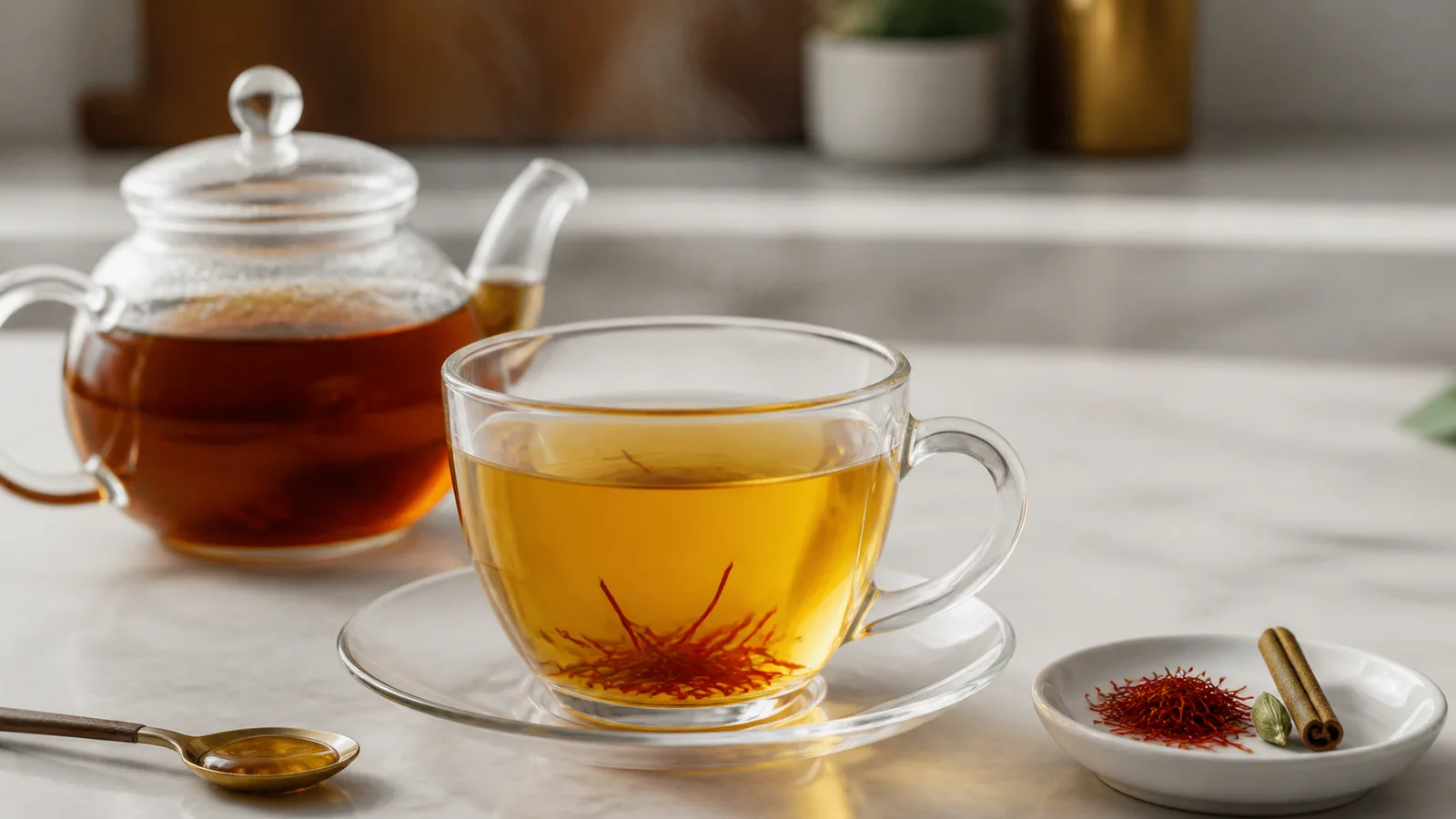
Saffron tea properties begin with flavour, aroma and colour. A simple infusion of genuine saffron threads is caffeine-free, fragrant and naturally golden yellow. When saffron is added to black or green tea, the drink also takes on the taste and caffeine of that tea.
The phrase can also suggest health benefits, but a cup of saffron tea is not the same as a standardised extract used in a clinical trial. Enjoy it as a drink. Do not treat it as a cure, and do not assume that making it stronger will make it healthier.
What is saffron tea?
There are two common drinks with this name:
- Pure saffron infusion: saffron threads steeped in hot water, sometimes with honey, lemon, cardamom or cinnamon.
- Iranian saffron tea: black tea scented and coloured with a small amount of saffron, often served with sugar, rock candy or honey.
Both are legitimate, but they taste different. A pure infusion is light and floral. Black tea adds tannin and a deeper tea flavour, while green tea can be fresher and more vegetal. Black and green tea contain caffeine; saffron threads by themselves do not.
Saffron Tea Properties in the Cup
Colour
A good yellow saffron tea develops gradually from pale gold to a clear amber-yellow. Genuine threads do not normally turn the water opaque red at once. Very rapid, intense red colour can be a reason to inspect the product for added dye, although colour alone is not a complete authenticity test.
Aroma and taste
Saffron has a distinctive dry-floral, hay-like aroma with a gently bitter edge. A well-made cup should smell clear and complex without tasting harsh. Honey softens the bitterness; cardamom or cinnamon adds warmth but can hide poor saffron if used heavily.
Caffeine
A water-and-saffron infusion is naturally caffeine-free. Adding black or green tea changes that. The US Food and Drug Administration gives typical caffeine amounts of about 71 mg for a 12-fluid-ounce black tea and 37 mg for the same volume of green tea, but the real amount varies with the leaf, portion and brewing time.
How to make pure saffron tea
The old recipe on this page called for “3 or 4 courses” of saffron. That was a translation error for threads. Three or four threads make a very delicate cup; use a few more if you want a clearer saffron character, without turning a culinary drink into a concentrated preparation.
- Place 5–10 saffron threads in a clean cup. Lightly crush them between clean fingers or with a small mortar if you want faster extraction.
- Add about 250 ml of freshly boiled water after it has rested for a few seconds.
- Cover the cup and steep for 5–10 minutes. The colour and aroma should develop gradually.
- Taste before sweetening. Add a teaspoon of honey only if you like it.
The previous instructions used boiling water and a three-to-four-minute steep. That works, but a slightly longer covered infusion gives a small quantity of threads more time to release aroma. There is no need to boil the saffron continuously.
How to make Iranian saffron tea with black tea
For two cups, brew 500 ml of black tea to the strength you normally drink. Bloom 8–15 saffron threads in two tablespoons of hot water for about 10 minutes, then stir the golden liquid and threads into the teapot. Taste after another minute or two.
Keeping the saffron bloom separate at first makes the result easier to control. It also prevents a long black-tea steep from becoming bitter while you wait for the saffron. Serve plain or with a modest amount of honey, sugar or rock candy.
Can you combine saffron with green tea?
Yes. Brew green tea at the temperature and time recommended for its variety, usually cooler and shorter than black tea, then add separately bloomed saffron. This preserves the greener aroma and limits bitterness.
The former page warned that green tea and saffron were both “hot” and could harm the body when combined. That comes from the hot-and-cold framework of traditional Persian medicine, not from the temperature of the drink or a demonstrated biomedical interaction. People may value that tradition, but it should not be presented as proof of liver damage or a reason that everyone must pair the drink with “cold” foods.
What about cinnamon, honey and other additions?
Choose additions for flavour, not to “balance” an illness:
- Honey rounds the bitter edge and adds sweetness.
- Cardamom suits Iranian black tea and lets the saffron remain recognisable when used lightly.
- Cinnamon creates a warmer, sweeter aroma but can dominate the cup.
- Lemon makes a pure infusion brighter and more acidic.
- Rose water can complement saffron, but one or two drops may be enough.
If you want to judge a new batch of saffron, make the first cup with water only. Added spices and sweeteners make it harder to assess aroma, bitterness and colour release.
Does saffron tea have proven health benefits?
Saffron and its constituents have been studied for several health outcomes, including mood. However, clinical research commonly uses a measured capsule, tablet or standardised extract over a defined period. The dose and composition of a home-brewed cup are not equivalent, and results from those studies cannot be promised for saffron tea.
The earlier article said herbal remedies treat many diseases, that saffron tea could prevent colds, and that spice combinations could “fix” illness. Those claims were not supported and have been removed. Tea can be a pleasant part of the day and contribute fluid, but persistent symptoms need appropriate medical care.
How much saffron should go in one cup?
For flavour, a small culinary pinch is enough. Starting with 5–10 threads lets you learn the strength of your saffron; thread size and potency vary. A darker cup is not automatically a better cup.
Human studies of medicinal saffron preparations generally involve measured milligram doses rather than an uncounted handful of threads. A 2026 systematic review found saffron preparations were generally well tolerated, but it also reported adverse events—most often minor gastrointestinal symptoms—and called for clinical monitoring with higher-dose or prolonged medicinal use.
Pregnant or breastfeeding people, anyone taking medicine or managing a health condition, and anyone considering a concentrated saffron supplement should ask a qualified clinician. The same caution applies if a drink causes nausea, headache, dizziness, an allergic reaction or other symptoms. Culinary tea and self-prescribed high-dose use are not the same thing.
How to choose saffron for tea
Whole red threads make it easier to inspect what you are buying and are less vulnerable to hidden fillers than anonymous powder. Look for a clean dry aroma, intact trumpet-shaped stigma tips and gradual golden colour release. Store the threads tightly closed, dry and away from light and heat.
When using saffron in tea, ingredient quality is easy to notice because there are few other flavours to cover it. Begin with intact threads and plain water, then add tea leaves or spices only after you know how the saffron behaves on its own.
If a sample turns water a dense red instantly, loses all colour in moments or smells mainly of another spice, investigate before using more. Our guide to identifying pure saffron explains what visual checks can and cannot tell you.
The best saffron tea is balanced: enough threads to notice the spice, enough steeping time to release it, and no claim that asks a warm cup to do the work of medicine.