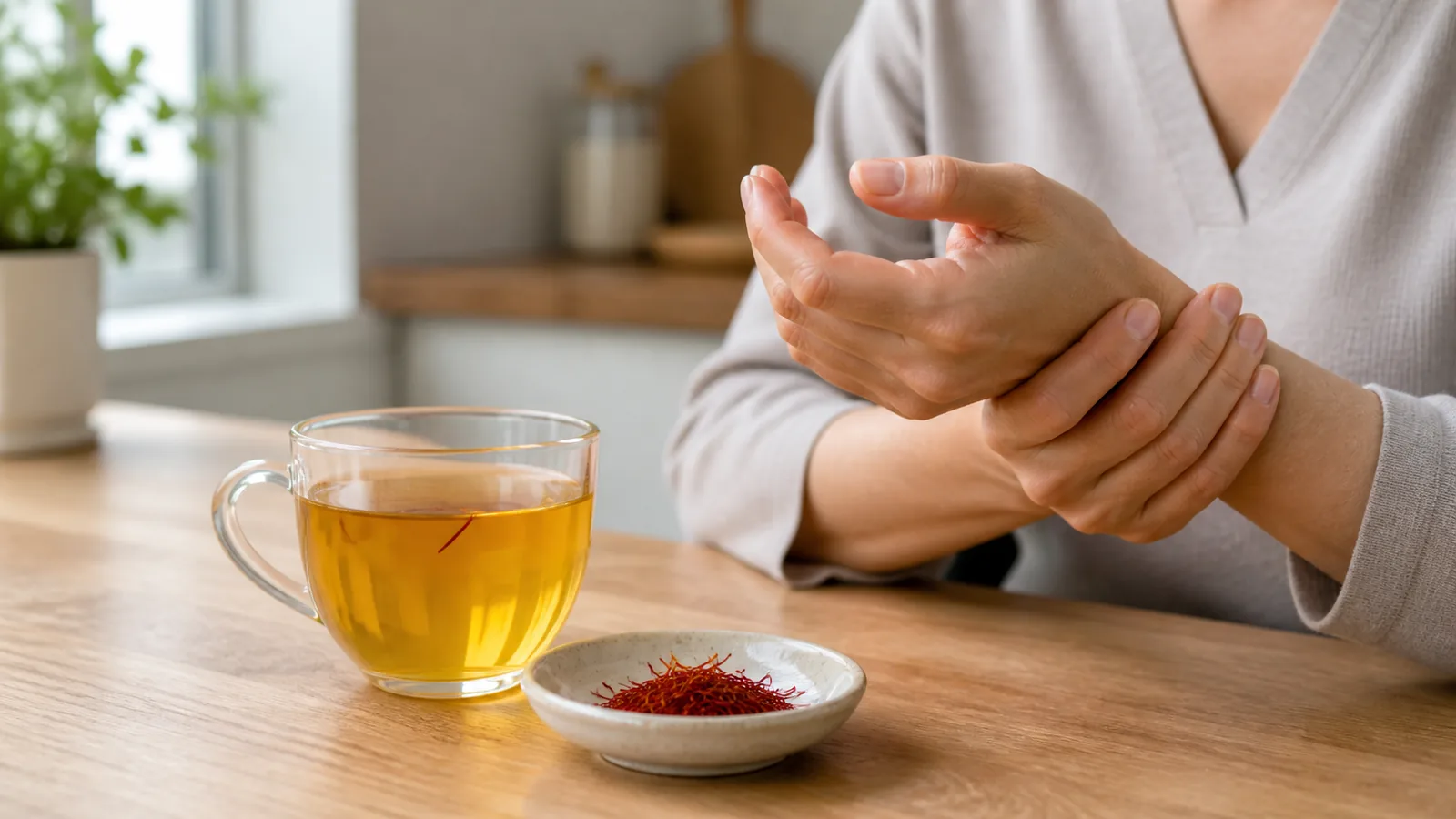
Knowing how to identify real saffron starts with the threads, but appearance alone cannot prove authenticity. Buy whole stigmas from a traceable seller, check their shape and aroma, and treat home experiments only as warning signs. Fire, gasoline, and other hazardous “tests” are neither necessary nor reliable.
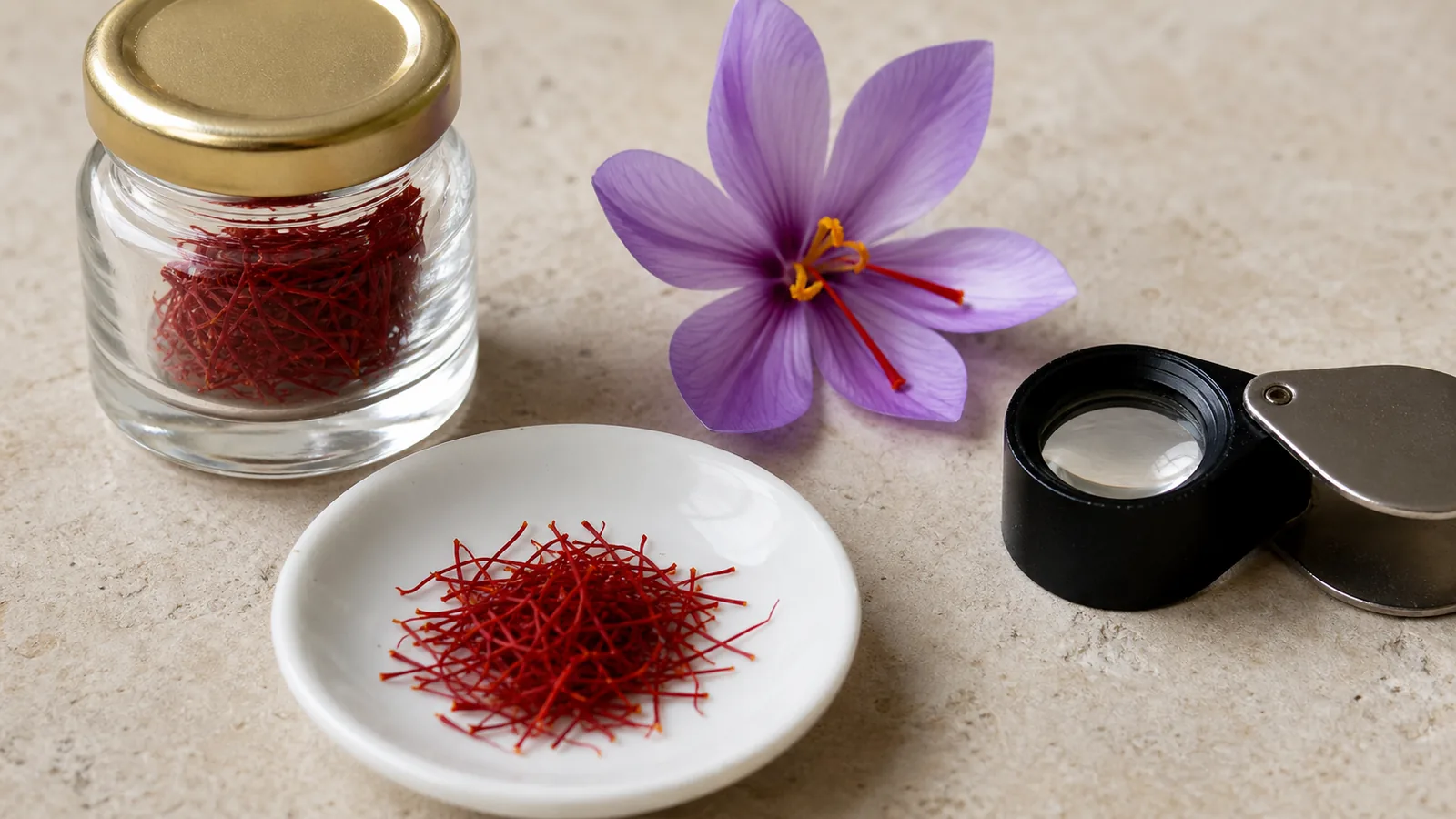
Saffron is the dried stigma of Crocus sativus. Each flower provides only three delicate stigmas, and they must be picked and separated largely by hand. Estimates vary with flower size and dried yield, but producing one kilogram can require well over 100,000 flowers; the UN Food and Agriculture Organization has reported figures around 150,000–170,000. That labor and low yield explain the price—and why saffron attracts substitutes, artificial color, and products padded with cheaper material.
1. Start with whole saffron threads
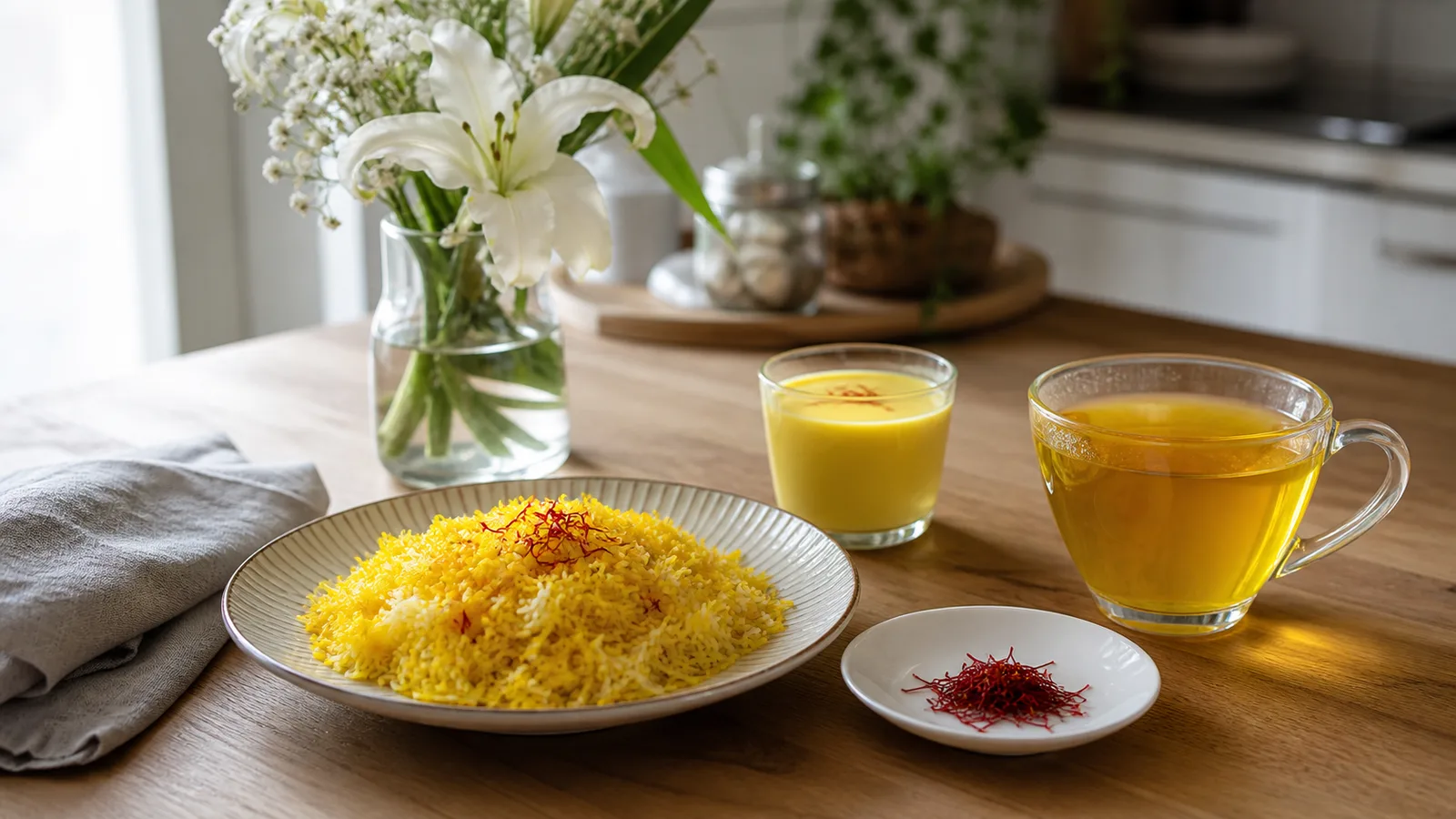
Whole saffron is easier to assess than powder. A genuine thread is not a uniform red fiber: the stigma generally widens or flares at one end and narrows toward the other. The color is deep red, sometimes with an orange-red transition or a small amount of pale style attached. Natural threads vary slightly in length and shape.
Aroma can also help. Good saffron smells warm, floral, hay-like, and slightly metallic or honeyed. Its taste is bitter, not sugary. These are useful sensory clues, not a certificate. Storage, age, drying method, and grade all change color and aroma, while a skilled adulterator can imitate one feature.
Powder hides the thread structure and makes botanical substitutes harder to see. If a recipe needs ground saffron, buying whole threads and grinding only the amount required gives you a better chance to inspect the product first.
2. Know what can be substituted or added
Published authenticity research documents several forms of saffron adulteration. Cheaper plant material may include safflower, calendula, turmeric, corn silk, or colored parts of other plants. Genuine-looking fibers may be dyed. Powder can contain plant fillers that disappear visually once everything is ground.
Weight can also be increased by added moisture or coatings. Older trading accounts mention oil or fat, sugar, salt, and honey. A buyer cannot identify every treatment by sight, and a suspicious texture does not reveal exactly what was added. The practical response is to avoid damp, sticky, unusually glossy threads and products with no batch identity or seller traceability.
Safflower is sometimes sold under names such as “American saffron,” but it is a different plant and should not be represented as Crocus sativus. It can be a legitimate ingredient in its own right when clearly labeled. The problem is substitution, not the existence of the plant.
3. Use home checks as clues, not proof
Many online guides promise a quick answer from water, paper, taste, or flame. None can confirm identity and purity as reliably as appropriate laboratory testing.
A cautious water observation
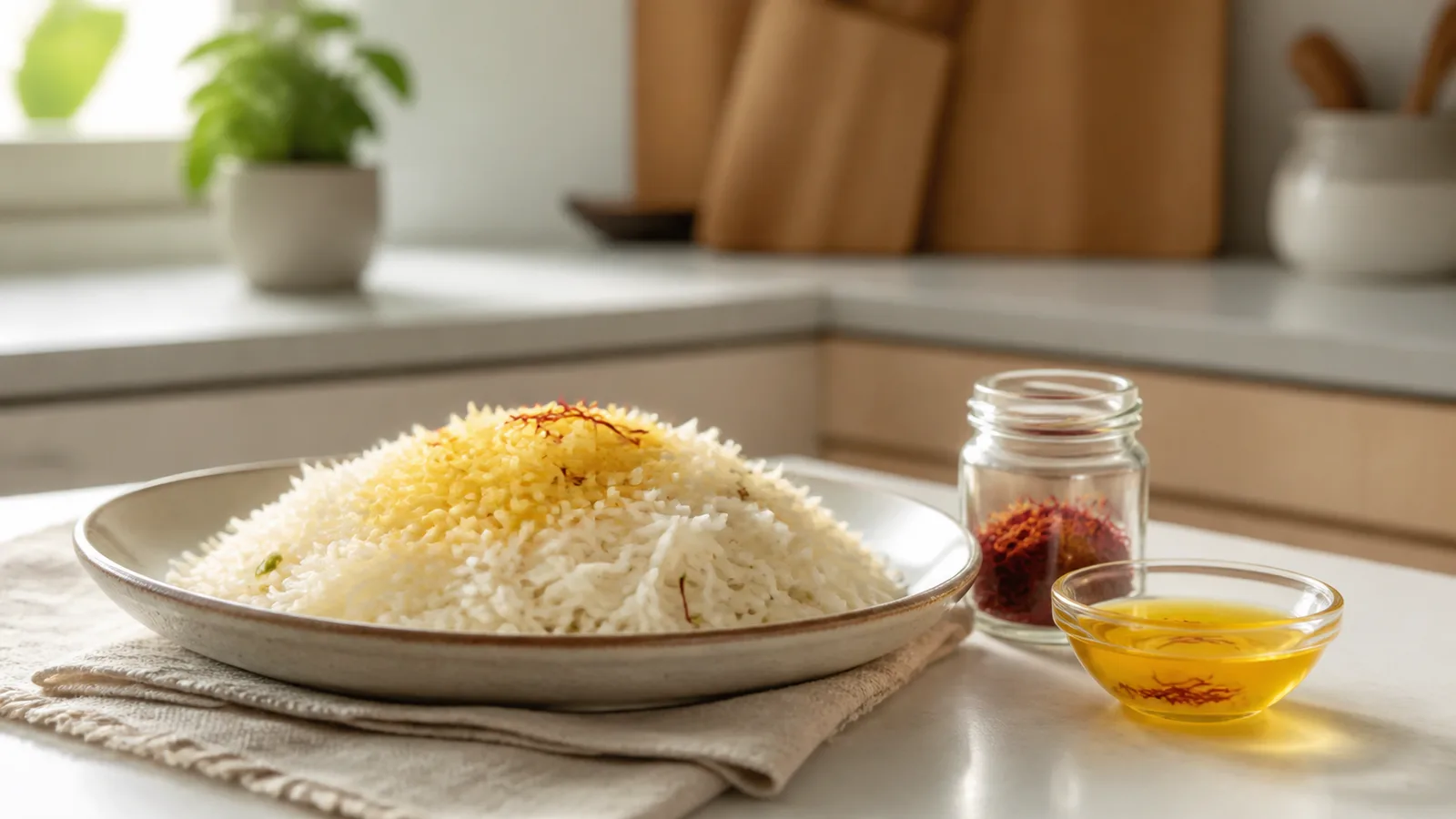
Place a few threads in cool or lukewarm water. Genuine saffron releases yellow-gold color as its water-soluble compounds disperse, while the threads usually retain recognizable form for a time. An immediate plume of bright red dye, completely colorless fibers, or material that disintegrates at once is a reason to question the sample.
This observation still cannot certify the product. Real saffron can release color at different rates depending on how it was dried, stored, or broken, and dyed plant fibers can be engineered to behave plausibly. Hot or boiling water makes comparisons even less useful because extraction happens faster.
Why paper, flame, and gasoline tests are poor choices
Pressing threads on plain paper may reveal an obvious oily coating, but a clean sheet does not rule out other adulterants. It is only a clue.
Do not burn saffron as an authenticity test. Flame introduces a fire and smoke hazard, while burn behavior varies with moisture and coatings. Do not put food into gasoline or another solvent. It creates avoidable exposure to toxic, flammable liquid and provides no trustworthy result for a home buyer. Neither test belongs in a kitchen.
What dependable verification looks like
The ISO 3632-1 saffron specification defines requirements for dried saffron in filament, cut-filament, and powder form. Its companion ISO 3632-2 test-method standard covers analytical testing. Laboratories may use spectroscopic, chromatographic, microscopic, or DNA-based methods when a simple quality measurement cannot answer an authenticity question.
A peer-reviewed review of saffron authenticity methods notes that basic physical screening can lack sensitivity, specificity, and reproducibility. For an ordinary customer, the best practical safeguards are a reputable seller, sealed packaging, a named origin, batch or lot information, and access to a recent analysis for the product being sold.
4. Store saffron so its quality lasts
Light, oxygen, moisture, and heat gradually damage saffron’s color and aroma compounds. Keep the threads in a clean, food-safe, tightly closed container in a cool, dry, dark cupboard. An opaque container is helpful; a small glass jar stored inside a closed cabinet also works well.
Do not store saffron above a warm cooker, near a kettle, or in a container that is opened repeatedly in humid air. Use a dry spoon or clean, dry fingers. Keep the threads whole until shortly before cooking, then grind or steep only what the recipe needs. Research on saffron quality during processing and storage supports controlling temperature, humidity, light, and oxygen rather than relying on a decorative package alone.
5. Separate culinary use from medicinal dosing
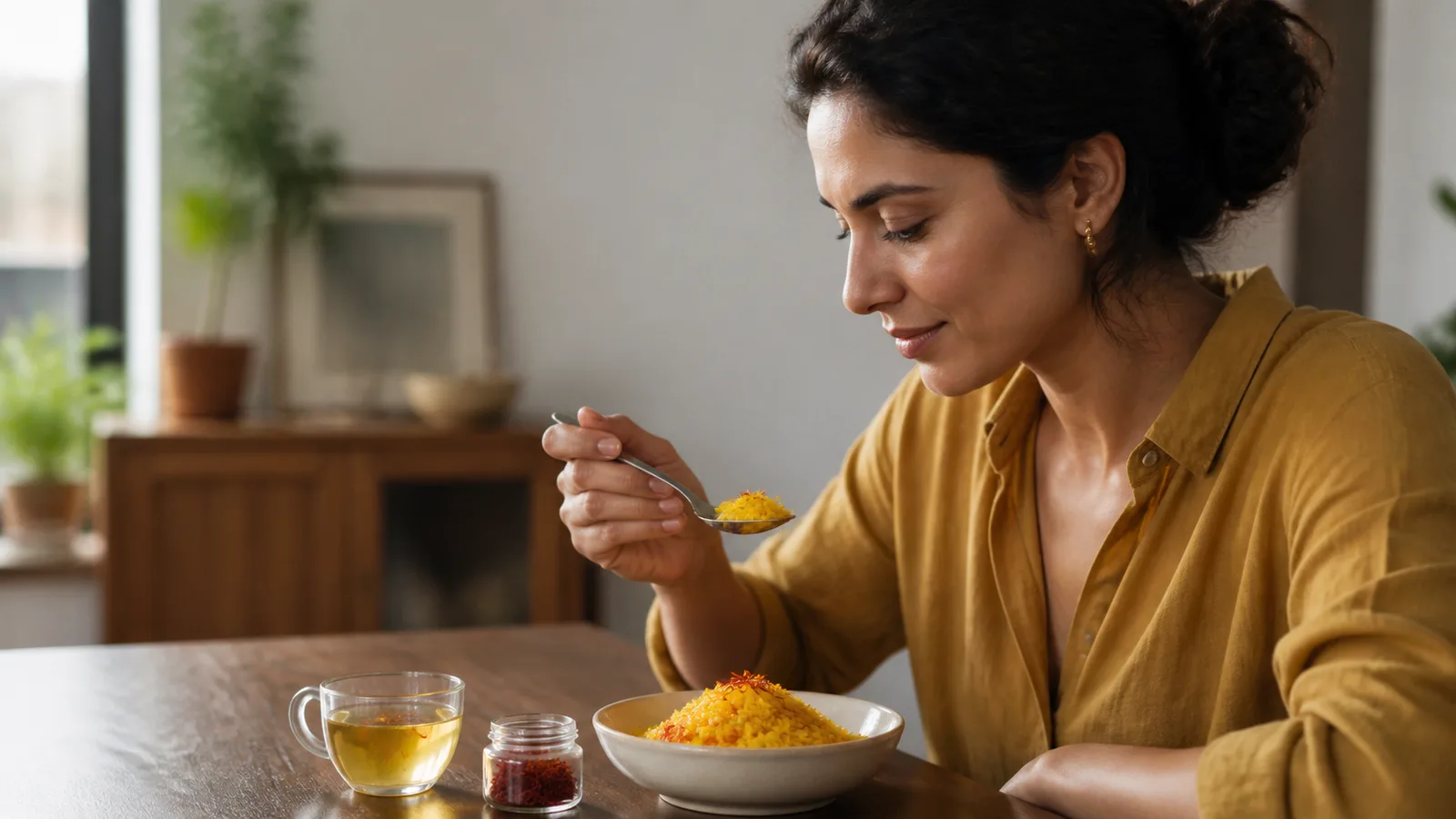
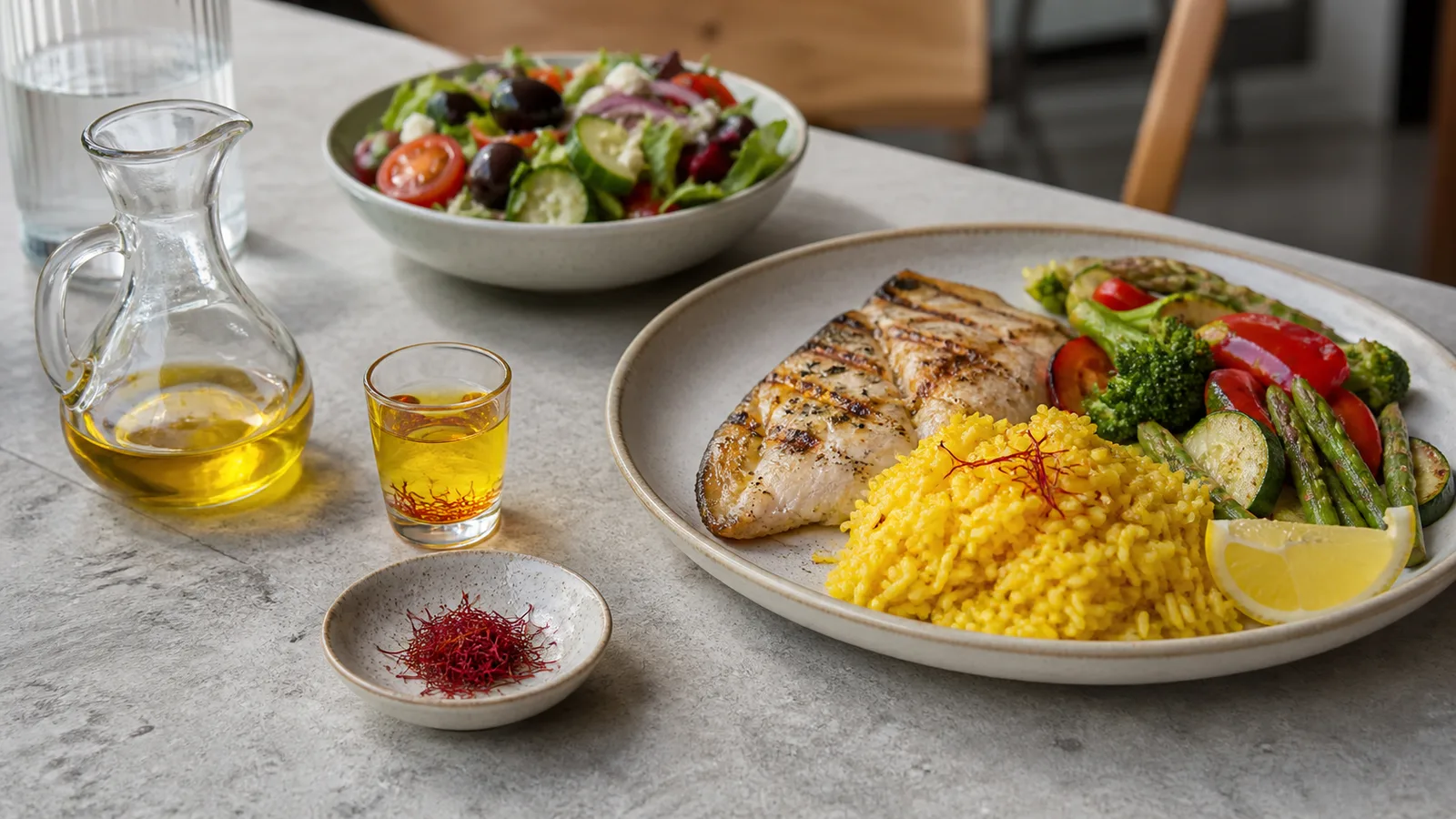
In cooking, saffron is normally used by the pinch to flavor and color an entire dish. The quantity depends on thread strength, recipe size, and personal taste. Start with a small amount; adding more does not automatically improve the food and may make it unpleasantly bitter.
That culinary use is not the same as taking concentrated extracts, capsules, or gram quantities for a claimed health effect. There is no responsible universal “allowable amount” that applies to every person, product, and medical situation. A systematic review of human clinical trials found saffron generally well tolerated in studied settings, while also concluding that higher or prolonged medicinal dosing warrants clinical monitoring.
Claims that saffron with honey dissolves kidney stones, or that inhaling saffron treats headache or insomnia, come from traditional-use accounts; they are not established instructions for self-treatment. Evidence also does not support declaring a single exact dose “fatal” for everyone. Such statements ignore product concentration, body size, pregnancy, medicines, and health conditions.
People who are pregnant or breastfeeding, take prescription medicine, have a medical condition, or intend to use a saffron supplement should speak with a qualified clinician. A recent review of saffron use in pregnancy describes the evidence as limited and advises caution with excessive or higher-dose exposure.
A practical buying checklist
- Choose whole threads when you want to inspect shape and consistency.
- Look for a sealed pack with origin, batch identity, and seller details.
- Expect a complex aroma and bitter taste, but do not rely on either alone.
- Treat suspicious water behavior or oily coating as a warning, not proof.
- Never use flame, gasoline, or another hazardous solvent for a food test.
- For commercial assurance, ask for analysis tied to the batch and ISO methods.
Learning how to identify real saffron is ultimately about combining sensible inspection with traceability. Whole, naturally varied threads and a credible seller reduce risk; documented testing provides the evidence that a kitchen trick cannot.