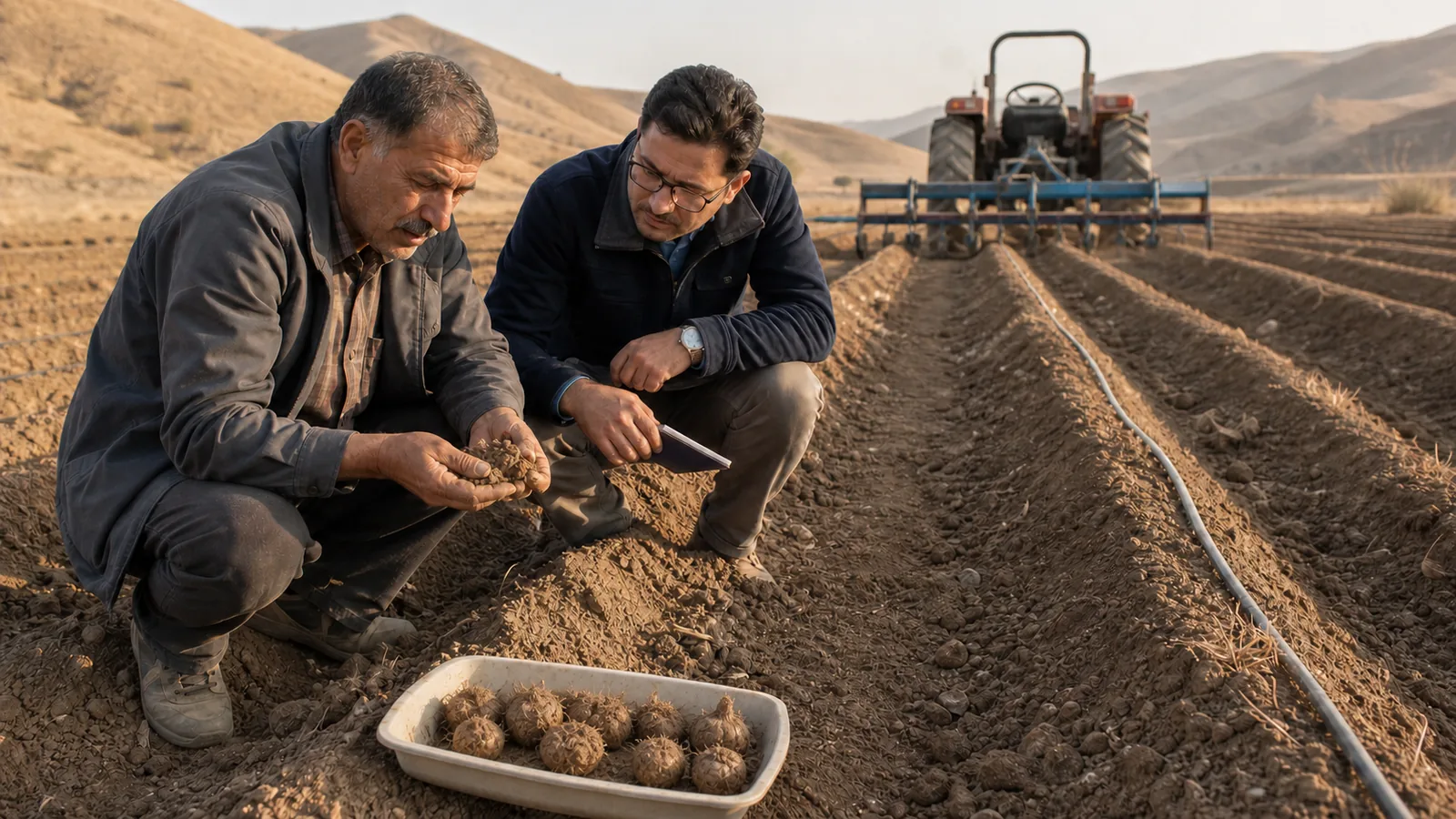
Before you plant saffron, the field has to do three things well: drain excess water, give the corms loose soil for roots and daughter-corm growth, and supply nutrients at rates based on evidence rather than habit. Good preparation is less about how many times a tractor crosses the land and more about correcting the particular limits found in that soil.
The work can begin months before planting. That gives a grower time to examine drainage, take representative soil samples, deal with perennial weeds and prepare a level bed without rushing machinery onto wet ground.
Assess the field before you plant saffron
Start by walking the site after heavy rain or irrigation. Note where water ponds, where runoff cuts channels and where the soil forms a hard crust. Dig several inspection pits rather than judging the field from its surface. A suitable root zone should allow air and water to move while still holding enough moisture for cool-season growth.
Saffron corms are particularly vulnerable to prolonged saturation. University of Vermont planting guidance for saffron recommends a light- to medium-textured soil with good drainage and relatively high organic matter. If standing water remains around the corms, rot can follow. On a heavy site, preparation may require drainage works, raised beds or a different field—not simply more fertiliser.
Check the soil profile for a compacted layer as well. A plough pan below an apparently loose surface can stop water and restrict roots. If testing confirms compaction, loosen the affected depth under suitable moisture conditions. Repeated deep cultivation without a diagnosed pan wastes fuel and can damage useful structure.
Take soil samples before choosing inputs
A laboratory analysis should come before a fertiliser order. Divide visibly different areas into separate sampling units and take multiple cores from each unit. Avoid unusual patches such as manure piles, field entrances and irrigation leaks unless they are being investigated separately.
A useful report covers pH, salinity or electrical conductivity, organic matter and plant-available nutrients, including phosphorus and potassium. Penn State Extension’s current explanation of soil testing describes the result as a management tool for determining fertility and crop-specific lime and fertiliser needs. The laboratory method and regional interpretation matter, so growers should use a service familiar with local soils.
Testing also helps prevent a common error: applying phosphorus or potassium because an old schedule lists it, even when the field already has enough. Excess nutrients cost money and may move off site. A written baseline lets the grower compare future results and distinguish a real deficiency from a problem caused by water, disease or compaction.
Choose the preparation window by soil condition
The older instruction said the main preparation could be completed in autumn or winter, with work delayed until late spring or early summer when field conditions prevented the earlier schedule. That broad window still has value, but trafficability and the planting date matter more than a month printed on a calendar.
The original article described two Iranian preparation sequences. In the traditional sequence, the land was ploughed after spring rain, left for 10 to 15 days, worked again and levelled while stones and clods were removed. Manure followed two or three weeks later, then the field was cultivated twice at right angles and cleaned of weeds.
Its mechanised sequence began with deep autumn ploughing, followed by a medium spring cultivation after rain to break the crust and remove weeds. Fertiliser was spread in August or September before planting. These schedules preserve useful local knowledge, especially the idea of starting early and separating major operations. They are not compulsory numbers of passes.
Do not cultivate merely because a date has arrived. Wet soil smears and compacts under equipment; excessively dry soil may break into hard clods and create dust. USDA Natural Resources Conservation Service guidance on protecting soil structure identifies both excessive tillage and tilling wet soil as causes of structure loss. A simple field check is useful: if a squeezed handful forms a sticky ball rather than crumbling under light pressure, the site may need more drying time.
Use tillage for a defined purpose
Every operation should have a job. Primary tillage may loosen a diagnosed compacted layer, incorporate a planned amendment or bury difficult residues. A shallower finishing pass may create a level planting surface and control a flush of weeds. Once those outcomes are achieved, another pass can do more harm than good.
Repeated inversion can accelerate organic-matter loss, leave the surface exposed to erosion and break stable aggregates. The USDA NRCS soil-health principles therefore emphasise minimising disturbance, keeping soil covered, maintaining living roots and supporting diversity. Saffron production may still require strategic cultivation, but the tool, depth and timing should match the problem.
On sloping or wind-exposed ground, plan traffic and beds to reduce erosion. Keep machinery out of the future corm rows where practical. If a cover crop precedes saffron, allow enough time to terminate or manage it without leaving a wet mat or a severe competition problem at planting.
Manage weeds before the corms go in
Saffron rows remain in place for several seasons, so perennial weeds are much easier to address before planting. Identify the species, root depth and seed pressure. One spring cultivation may kill small annual seedlings but spread a perennial whose underground fragments regenerate.
A stale seedbed can help with surface annuals: prepare the bed, encourage a weed flush with available moisture, then control those seedlings as shallowly as practical before planting. The method, timing and any product used must suit the farm, local law and certification status. “Clean land” should mean a documented management plan, not bare soil left vulnerable for months.
Record the starting weed population. That record will guide hand work, mechanical cultivation and future rotation decisions after the saffron canopy develops.
Apply manure and fertiliser from test results
The earlier post recommended 40 to 80 tonnes of manure per hectare, 200 kilograms of ammonium phosphate and about 250 kilograms of potassium sulphate. Those quantities are retained here as a historical local recipe, not a safe prescription. Manure nutrient content can vary widely, and a field with high phosphorus or salinity may be harmed by applying the upper rate.
Test the amendment when its composition is uncertain. Account for its available nitrogen, phosphorus, potassium, salts and maturity, then subtract the nutrients already supplied from any mineral-fertiliser plan. Fully decomposed material is easier to distribute evenly and less likely to bring viable weed seed or create a concentrated hot spot, but its suitability still depends on analysis and handling.
Ammonium phosphate supplies both nitrogen and phosphorus; potassium sulphate supplies potassium and sulphur. Neither is automatically required, and neither should be confused with a generic “soil improver.” The agronomist’s recommendation should name the nutrient need, product analysis, application rate, placement and timing. Organic production adds another layer: every input has to be allowed by the applicable standard and approved in the farm’s organic system plan.
Create an even planting bed
After drainage, compaction, weeds and fertility have been addressed, finish the surface so corms can be placed at a consistent depth. Break only the clods that would interfere with planting. Remove large stones where they obstruct rows or equipment, but avoid pulverising the soil into fine powder that seals after rain.
Mark beds or rows to suit the irrigation method, harvest access and planned cultivation. A level surface helps distribute water evenly; on a slope, bed design also has to manage runoff. Keep turning areas and wheel tracks out of the productive bed where possible.
Prepare only as much land as can be planted and watered properly. Corms should arrive healthy, firm and traceable, with no need to sit for weeks in heat while field work catches up. Our guide to saffron corms covers selection and handling, while the broader saffron farming sequence follows the crop from planting through storage.
Check the field before planting day
- Drainage paths and outlets work, with no unresolved ponding in the future beds.
- Soil-test recommendations have been translated into actual product and field rates.
- Manure or compost records show source, analysis, maturity, rate and application date.
- Perennial and annual weed plans match the species present.
- The soil is dry enough to work without smearing or compaction.
- The bed is level and friable, not pulverised, and row access is practical.
- Corm, labour, irrigation and planting equipment are ready at the same time.
Preparing the ground for plant Saffron is therefore a sequence of decisions, not a single ploughing event. The traditional spring and autumn schedules remain useful reference points, but the field itself determines the depth, number of passes and nutrient rates. Diagnose first, disturb only what needs correction, and leave the corms with a stable, well-drained bed for the seasons ahead.
Agronomy sources reviewed 28 August 2026. Soil conditions, regulations and input approvals vary; use representative tests and locally qualified advice for field-specific rates.