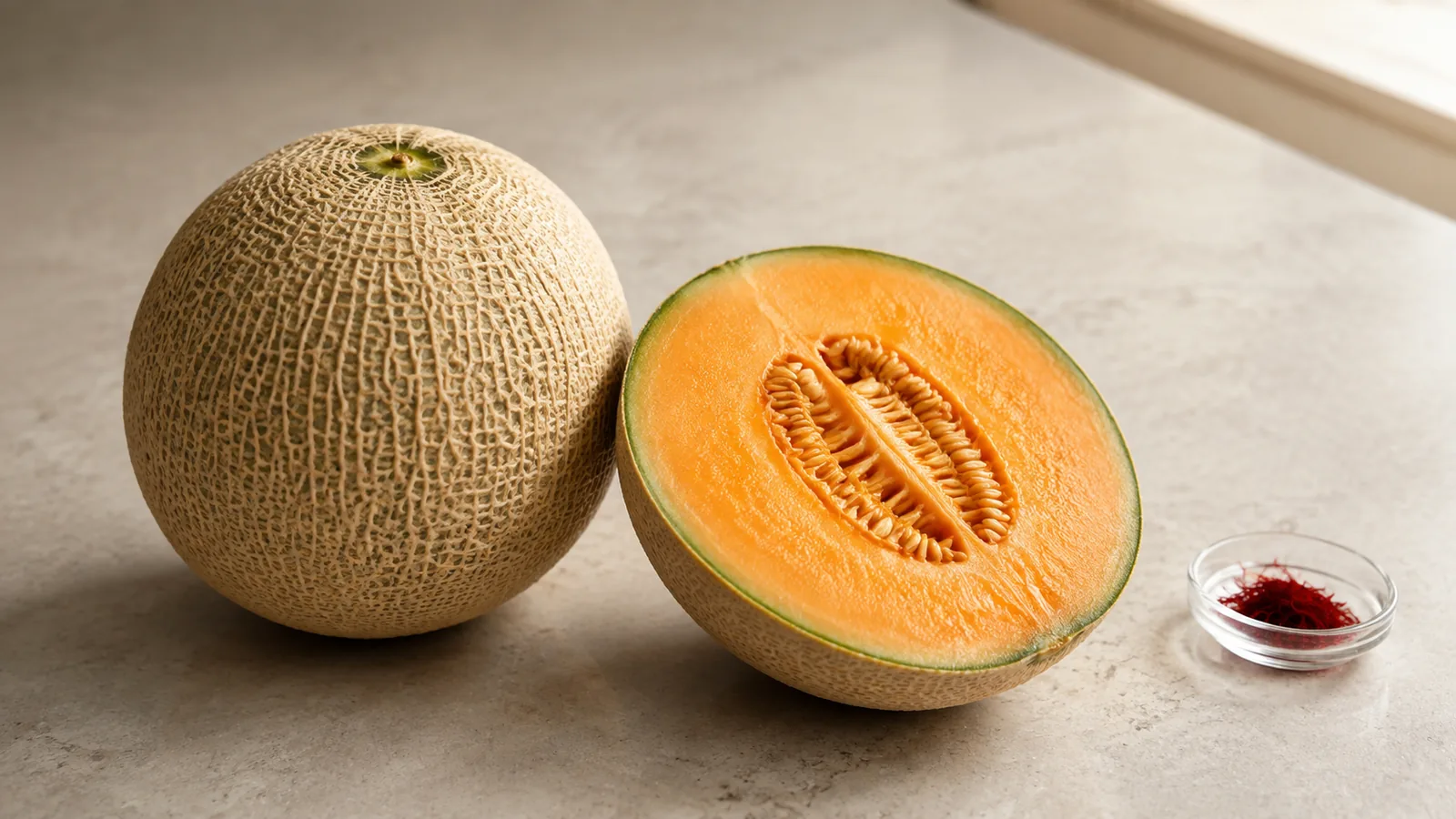
As of 2026, the clearest headline answer is Japan’s Yubari Melon: a pair sold for a record ¥5.8 million at the season’s first auction on 22 May 2026. That was a ceremonial auction lot, not the normal price of two melons in a shop.
What is the most expensive fruit in the world?
Yubari Melons are regularly described as the world’s most expensive fruit because their first-auction lots can attract extraordinary bids. In 2026, the official JA Yubari gift centre announced that two melons had sold for ¥5.8 million. The previous year’s opening pair sold for ¥1 million, showing how sharply a publicity auction can change from one season to the next.
The most accurate wording is therefore “the most expensive widely reported fruit auction lot,” not a permanent retail price. Records can be set by a pair, a box, a bunch of grapes or one piece of fruit, and those lot sizes are not directly comparable.
Most expensive fruit in the world 2026: the Yubari Melon record
The 2026 opening auction took place at the Sapporo Central Wholesale Market. A box containing two Yubari Melons brought ¥5.8 million, or ¥2.9 million per melon if the lot value is divided equally. The JA Yubari gift centre’s 2026 announcement records the pair price in yen; keeping the original currency avoids turning a moving exchange rate into part of the record.
This auction is held when early supply is limited and attracts attention for the new season. The winning bid carries promotional and ceremonial value as well as the value of the fruit. It should not be used to tell a shopper what an ordinary Yubari Melon costs.
A record bid is not the normal fruit price
The difference is dramatic. During the 2026 season, JA Yubari’s official shop listed individual melons in several grades at roughly ¥5,800 to ¥11,900. Its top special-grade melon in a wooden box was ¥11,900, while standard and higher everyday grades sat below that figure. Those listings are still premium gift-fruit prices, but they are far removed from ¥2.9 million per melon at the opening auction.
Any “most expensive fruits in the world 2026” list should separate auction records from retail. Whenever a list quotes a spectacular number, check whether it describes:
- one fruit, a pair, a bunch or a full box;
- the first auction of a season or normal retail;
- the winning bid for one exceptional lot or an average price;
- a current listing or an old record converted at a later exchange rate.
Why Yubari Melons command premium prices
Yubari Melon is a protected Japanese Geographical Indication. Japan’s Ministry of Agriculture, Forestry and Fisheries identifies the production area as Yubari City in Hokkaido and the registered producer group as JA Yubarishi. The official specification describes orange flesh, a soft and juicy texture, strong aroma and minimum sugar content requirements.
The Japanese agriculture ministry’s Yubari Melon register also links the fruit to the area’s large day-to-night temperature difference, relatively low rainfall, well-drained volcanic-ash soil and accumulated cultivation skill. Protected origin, controlled grading, limited season, presentation and gift demand all support a premium.
Careful cultivation matters, but a record auction price is not simply the grower’s labour converted into dollars. Scarcity at the opening sale, bidder competition and the publicity attached to the winning lot are major parts of the final number.
Other fruits that appear in high-price lists
Densuke watermelon
This dark-skinned Hokkaido watermelon is often included in luxury-fruit lists. Exceptional early-season auction lots can be expensive, while ordinary sale prices are much lower. It should not be assigned a permanent “over $6,000 per fruit” price without a named sale and date.
Ruby Roman grapes
These premium grapes from Ishikawa are graded and sold as bunches, which creates a different comparison problem: a bunch price cannot be presented as the price of one fruit without saying what the lot contained.
Premium Japanese mangoes
Top gift mangoes are selected for appearance, weight, sweetness and condition. Opening-auction pairs may attract large bids, but lower grades and normal seasonal retail occupy a very different price range.
Luxury apples
There is no stable, verified “most expensive apple fruit” at normal retail. A named cultivar, presentation box or one-off auction lot may command a premium, but the old claim that a Pink Pearl apple routinely costs $50 each lacks a reliable dated source and should not be repeated as fact.
What makes fruit expensive?
The price can reflect more than taste:
- limited geography or protected origin;
- short seasonal availability and small opening supply;
- labour, greenhouse control and crop selection;
- grade standards for sweetness, weight, shape and appearance;
- damage risk, refrigeration and fast distribution;
- gift culture, packaging and seller reputation;
- auction publicity and competition for a symbolic first lot.
Sweetness and appearance can explain why a fruit qualifies for a premium grade. They do not, on their own, explain why one bidder pays hundreds of times the shop price.
Where are the world’s most expensive fruits sold?
The most publicised records commonly begin at Japanese wholesale-market auctions. Yubari’s season opener is held in Sapporo, while the fruit itself comes from Yubari City. After the auction, a winning lot may be displayed or shared for promotion rather than resold at its bid price.
Consumers buy graded Yubari Melons through the agricultural cooperative’s gift centre, department stores and specialist fruit sellers during the season. Availability outside Japan adds freight, handling and import costs, but an overseas listing should still be separated from the official auction record.
Is saffron a fruit?
No. Saffron is a spice made from the dried stigmas of Crocus sativus flowers. Like luxury fruit, it can carry a high price because production is exacting and the finished yield is small, but the products are measured differently. Our article on the world’s leading spices explains why saffron is usually the answer when “number one” means price by weight, and the saffron price page gives current store context.
Questions about expensive fruit in 2026
What is the most expensive fruit ever sold?
Among well-documented public fruit auctions, the 2026 Yubari Melon pair at ¥5.8 million is a leading record. Describe it as a two-melon lot, not as the normal price of one melon.
How much did one record Yubari King Melon cost in 2026?
The lot cost ¥5.8 million for two. Dividing the bid gives ¥2.9 million per melon, although the auction sold the pair together.
Why do reports give different dollar prices?
They may describe different auction years, lot sizes or exchange rates. The yen bid and exact sale date are the stable facts.
What was the Yubari King price per kg?
The 2026 record lot was sold as a pair, not by weight. Without a verified total weight for those two melons, converting the bid to a price per kilogram would create a false precision.
Does the highest auction bid prove the best taste?
No. The fruit must meet its grade, but the winning bid also reflects scarcity, ceremony and publicity. Taste cannot be ranked reliably from price alone.
The short answer
For the most expensive fruit in the world in 2026, the strongest current answer is the pair of Yubari Melons sold for a record ¥5.8 million on 22 May. Normal Yubari Melons cost a small fraction of that amount, so always separate a first-auction record from an everyday retail price.