


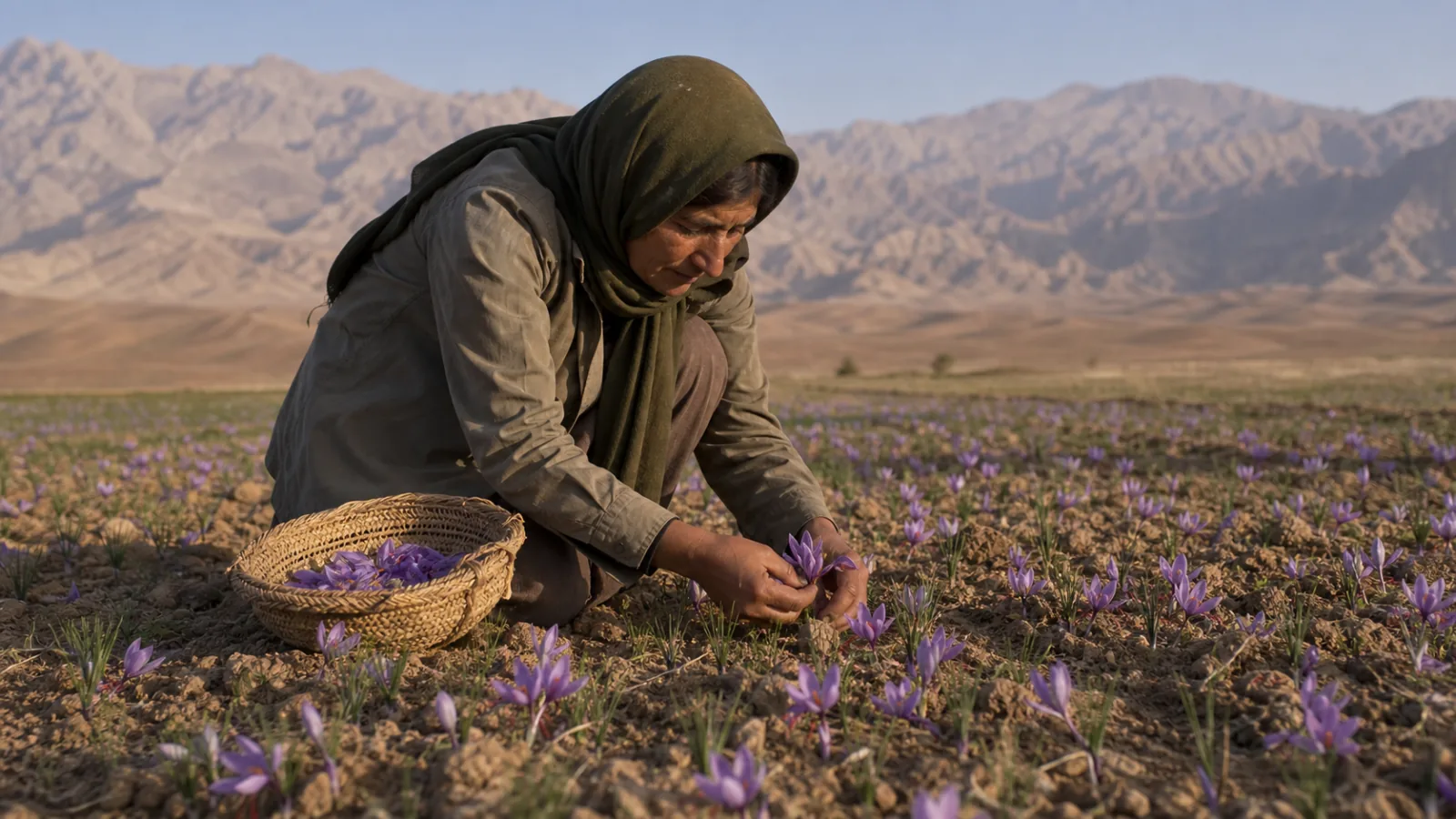
Picking saffron in Kohbanan is a short, concentrated harvest. Purple flowers have to be collected while they are fresh, then the three red stigmas are separated and dried with care. A 2018 report from Kerman’s Agricultural Jihad organisation used this local harvest to make a wider point: saffron can be a useful high-value crop in a province where groundwater is under pressure.
The report quoted Ali Akbar Majidi and put the average dry-saffron yield at 5 kilograms per hectare. It also said Kohbanan fields were commonly irrigated two to four times during the cooler part of the year. Those figures are worth preserving as a record of what local officials reported at the time, but they are not a universal recipe for every farm.
What the Kohbanan report actually said
Majidi linked the expansion of saffron cultivation with falling groundwater levels across Kerman’s plains. His argument was comparative: saffron generally needs less water than many competing field crops, so it may offer farmers more value from a limited supply. The report described the crop as an economically promising option for the region because of that combination of relatively modest irrigation demand and a high-value harvest.
“Low water use” should not be read as “no water.” Flowering, corm development and the following season’s crop still depend on the timing and adequacy of irrigation, as well as rainfall, soil and temperature. The FAO’s account of Iran’s qanat-based saffron system makes the same distinction: saffron does not require large quantities of water, yet reliable and well-managed irrigation remains part of the farming system.
Where the planting material came from
The original English version contained the phrase “pistachio saffron,” which does not describe a real saffron product or planting method. In context, the passage was referring to saffron corms supplied from nearby producing areas, especially Dashtkhak in Zarand County. Saffron is propagated with corms, not seed and not pistachio.
That distinction matters to a grower. Healthy, disease-free corms are the foundation of an even stand, while damaged or poorly stored material can carry problems into a field for several seasons. Our guide to choosing and handling saffron corms explains what to inspect before planting.
How to understand the 5 kg-per-hectare figure
A yield figure only becomes useful when its basis is clear. The 5 kg per hectare cited in the Kohbanan report appears to mean dried saffron stigma, not flower weight. It was presented as an average, so it should not be treated as a guaranteed result or a target that every new field will reach.
Farm age can change the comparison considerably. A newly planted plot, a mature field and an old field with crowded corms will not necessarily produce alike. Corm size and health, planting density, soil drainage, nutrition, weeds, irrigation timing, harvest speed and drying losses all affect the marketable amount. Weather during flower emergence can shift the result again.
For that reason, a farmer assessing a Kohbanan crop should keep more than one number:
- the planted area and age of each plot;
- the source, condition and size range of the corms;
- the date and amount of each irrigation;
- fresh flowers picked each day;
- dry saffron produced after separation and drying;
- labour, water, packaging and transport costs; and
- the grade and sale price of the finished saffron.
These records show whether the crop is truly using scarce resources well. They also make a season-to-season comparison far more informative than an isolated yield claim.
Why two to four irrigations is local context, not a fixed schedule
The historical report said Kohbanan saffron fields received two to four irrigations a year in winter. That description reflects local practice as it was reported, not a schedule to copy without checking the field. The right timing depends on local rain, soil moisture, drainage, corm dormancy, flower emergence and the water available to the grower.
Saffron’s seasonal rhythm helps explain why it can suit dry regions. The plant is dormant through the hot part of the year, then resumes growth as conditions cool. Even so, too little water at an important growth stage can limit the crop, while waterlogged soil can damage corms. A field should therefore be managed from actual soil and weather conditions, with local agricultural advice where possible. For a broader explanation, see our article on saffron in water-scarce regions.
What picking saffron in Kohbanan involves
The visible harvest is only the beginning. Flowers are normally picked early and moved out of the field promptly so heat, crushing and delay do not reduce quality. They then need a clean work area where the red stigmas can be separated from the rest of the flower without contamination.
Drying is the point at which a fragrant fresh stigma becomes a stable spice. The aim is controlled moisture removal, not scorching. Clean tools, food-safe surfaces and protection from dust and strong light are just as important as speed. Once dry, the saffron should be allowed to cool before it is packed in a clean, airtight container.
This labour is easy to overlook when comparing crops. Saffron may occupy a modest area and use water efficiently, but its flower season creates an intense demand for pickers and careful processing. A realistic farm plan needs enough trained hands for the peak days and a suitable place to separate, dry and store the harvest.
A sensible way to judge saffron for the region
The 2018 Kohbanan account remains useful because it records a local crop, a reported 5 kg-per-hectare average, corm movement from Dashtkhak in Zarand, and concern about declining groundwater. Its strongest lesson is not that saffron is automatically profitable. It is that crop choice should be judged against the region’s actual constraints.
Before expanding a field, a grower needs to compare water availability, soil suitability, planting material, labour at harvest and a credible route to market. A small trial plot can reveal local performance without committing an entire holding. If the records show sound yield, consistent quality and manageable costs over more than one season, expansion becomes an evidence-based decision rather than a promise.
That is the practical context behind picking saffron from Kohbanan: a valuable crop with a relatively light water demand, but one that still rewards careful irrigation, healthy corms and disciplined work from flower to finished spice.

![Exporting Saffron to Turkey + Price Guide [Complete 0 to 100]](https://img.rowhanisaffron.com/20260827003933/saffron-export-turkey-quality-inspection.webp)



