


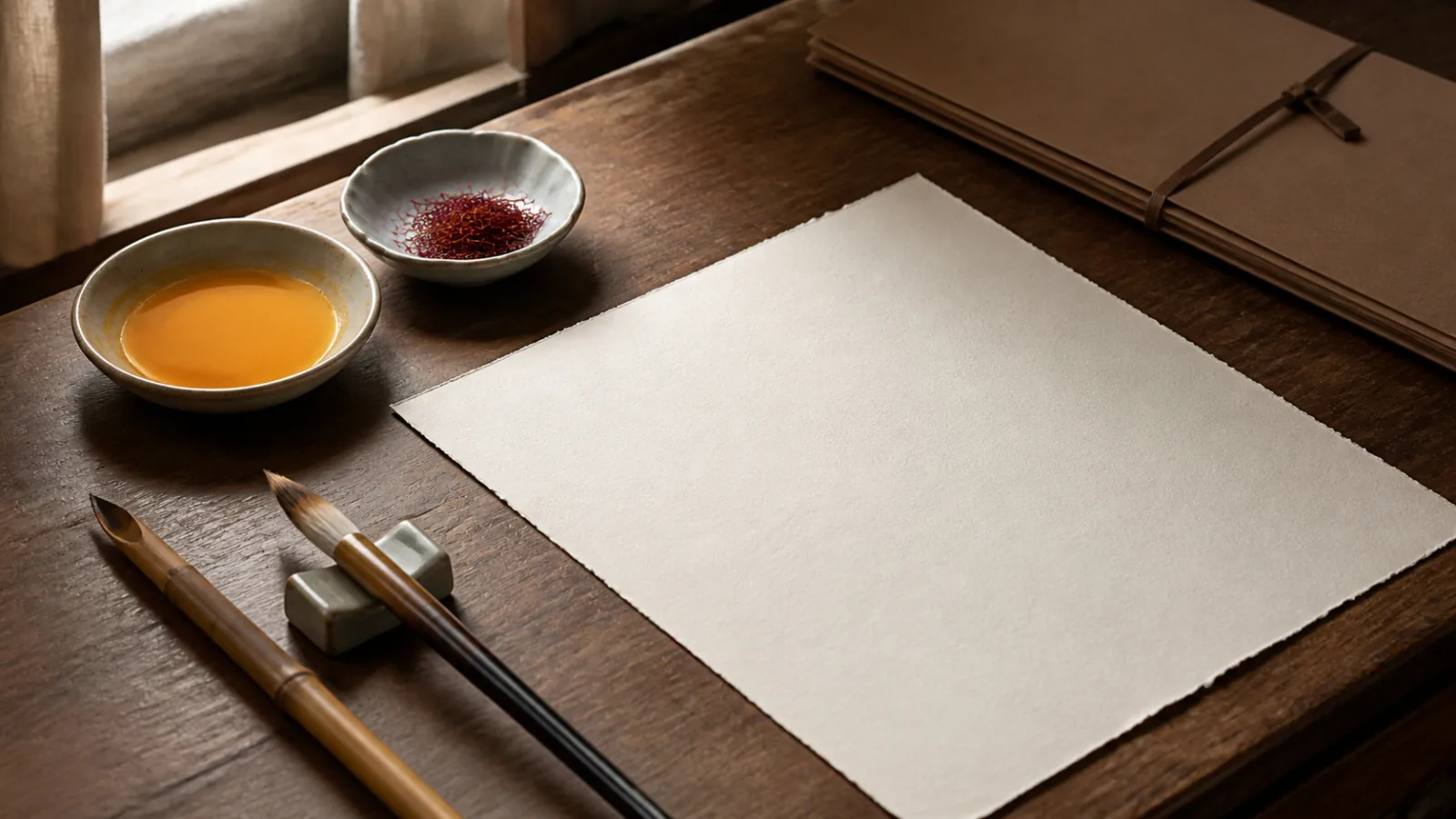
The “will written with saffron” was a commemorative calligraphy work based on the testament of Haj Qasem Mirhosseini, a military commander from Sistan and Baluchestan who died in the Iran–Iraq War. Artist Ramadan Noora reportedly used saffron as the colouring material and presented the finished work during Sacred Defense Week.
The old English title calls Mirhosseini a “sardar.” In this context, the Persian term means commander; it is not a second person’s name. The project should also be understood as memorial art, not a conventional legal will being prepared with spice.
Who created the saffron calligraphy?
The historical report identifies Ramadan Noora, an artist from Sistan and Baluchestan, as the maker. Hamzeh Dehghan, then described as the provincial director responsible for preserving and communicating the values of the Sacred Defense, explained the project to local media.
Dehghan said the cultural purpose was to introduce themes of sacrifice and remembrance to contemporary generations. The source does not reproduce the text of the will, give the dimensions of the finished work or describe the preparation of the saffron medium.
Those missing details matter. “Written with saffron” can describe saffron extract used as colour, but a durable writing medium usually also depends on preparation, binder, paper and storage. It should not be read as evidence that dry threads were simply rubbed across the page.
Where the work was shown
The account says the work was unveiled at Golzar Shohada, the martyrs’ cemetery in Zahedan. It was also displayed around Friday prayers and during a ceremony for veterans of the eight-year war at the University of Sistan and Baluchestan.
These venues connect the object to public remembrance. They also explain why the report focused on symbolism and ceremony rather than artistic technique or conservation.
What the world-record claim means
Noora was quoted as saying that 12 of his cultural works had reached Guinness or world-record status. The article mentioned a large handwritten Qur’an associated in scale with Tehran’s Milad Tower as another important project.
The saffron-written will was likewise described as entering a global record. The surviving report does not provide a record title, certifying body, measurement, certificate number or adjudication date. Without those details, the responsible wording is “reported as a record” rather than “a verified Guinness World Record.”
A record claim should be checked against the issuing organisation’s own database or certificate. Exhibition by public officials, however significant to the event, is not itself record certification.
Saffron has a real history as a manuscript colour
Using saffron in art is not an invented modern idea. The Metropolitan Museum of Art notes that saffron was prepared as a yellow pigment by manuscript illuminators and could be mixed with a binder for ornamental work and golden-toned glazes.
The colour comes from water-soluble compounds in the stigmas. Preparation affects the hue and how the material sits on paper. The exact recipe used for the Mirhosseini work is not documented in the source, so it would be misleading to reverse-engineer one from the photograph or headline.
Why preservation conditions matter
Saffron is a fugitive natural colourant: light and air can weaken it over time. Museum sources describe saffron pigments as vulnerable to fading. A commemorative manuscript made with saffron therefore benefits from limited light exposure, stable temperature and humidity, clean handling and suitable archival housing.
That is especially important for an object displayed at several public events. A high-quality digital record can preserve its appearance and context while allowing the original to spend less time under bright light.
The significance of the project
The project brought together a personal testament, regional remembrance, calligraphy and a material with deep cultural associations. Its meaning does not depend on an unverified superlative. The confirmed story is that a Sistan and Baluchestan artist used saffron colour to create and publicly display a memorial transcription of Mirhosseini’s will.
Our overview of the industrial and non-culinary uses of saffron places natural colouring alongside better-known food applications. In every use, material identity and the intended purpose should be stated clearly.
Art-material references: The Metropolitan Museum of Art on saffron as a pigment in manuscript illumination and the Getty Art & Architecture Thesaurus entry for saffron as a fugitive natural dye. Event details remain attributed to the historical Zahedan Press Club/YJC report.

![Exporting Saffron to Turkey + Price Guide [Complete 0 to 100]](https://img.rowhanisaffron.com/20260827003933/saffron-export-turkey-quality-inspection.webp)



