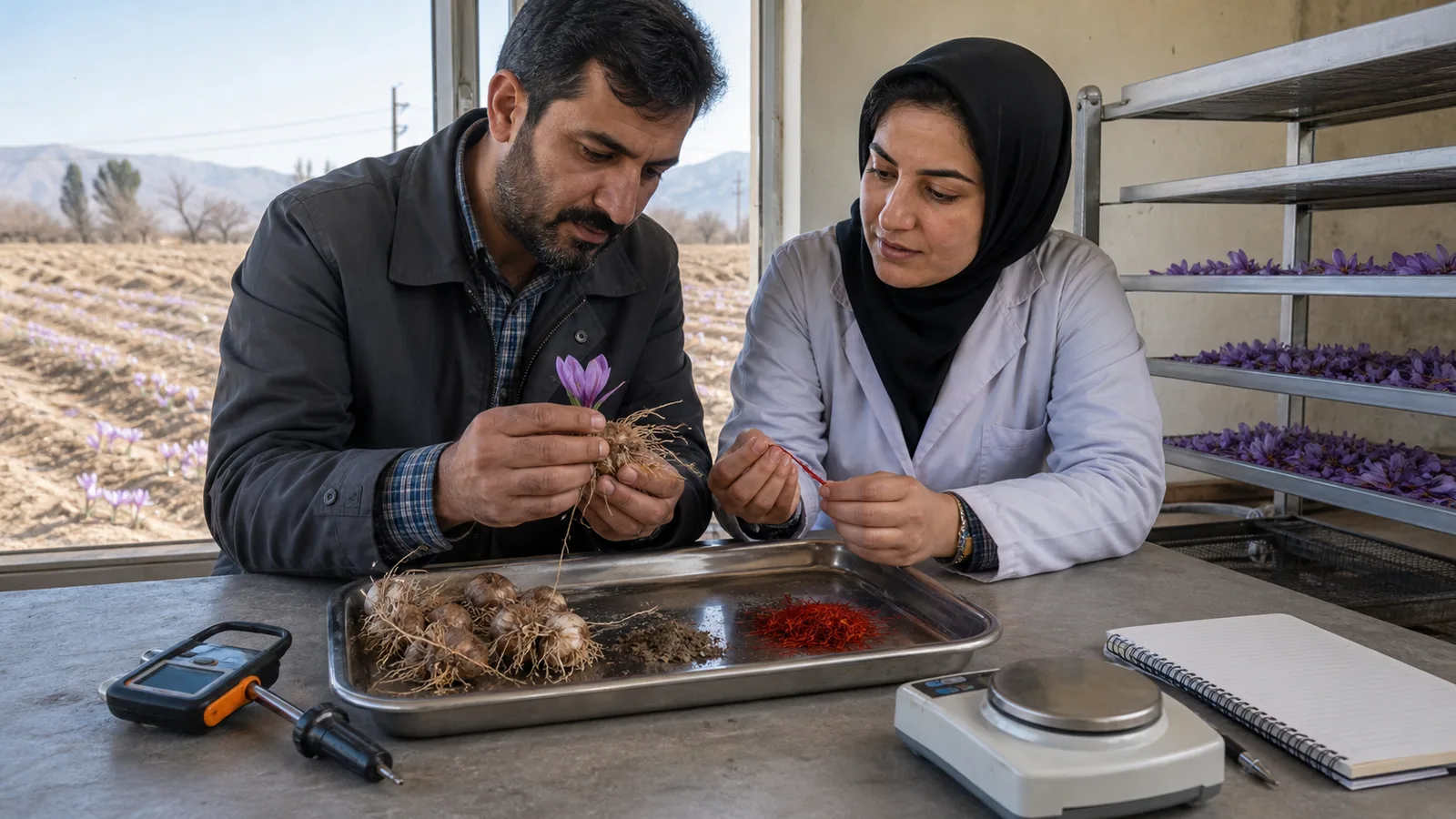


Saffron cultivation support companies can help growers with three practical needs: obtaining suitable corms, receiving field guidance and finding a buyer for the harvested crop. This page preserves a January 2017 regional report in which an agricultural official argued that such support was needed. Its figures describe that report, not today’s production or prices.
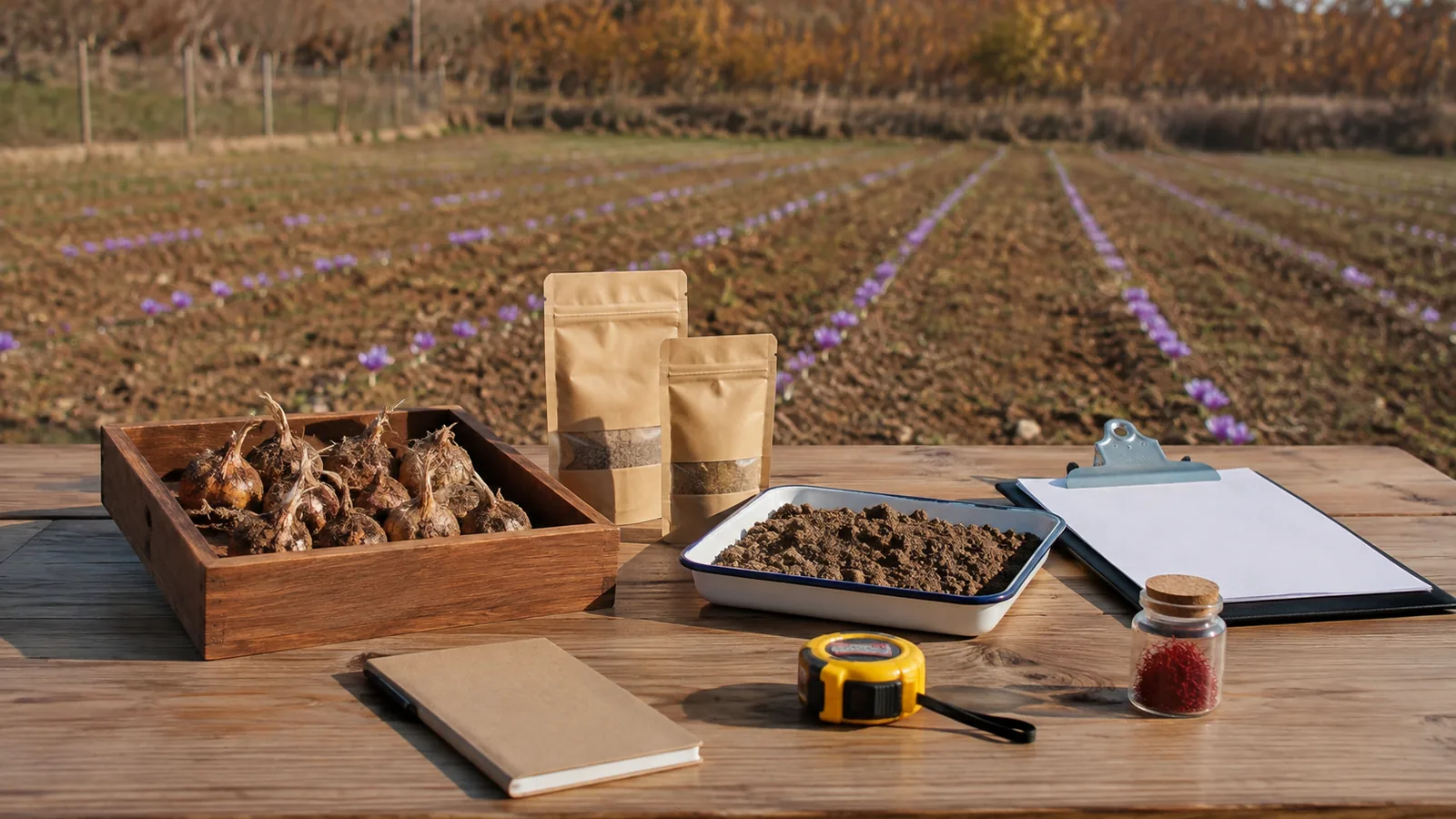
Why did the official call for a support company?
Jalali, identified in the surviving English version as a director of horticulture, spoke to the Iranian Students News Agency (ISNA) about expanding saffron cultivation in the region. He described a model in which a supporting enterprise would supply the corms needed for planting and then purchase the crop.
That model connects the beginning and end of a grower’s season. Reliable planting material matters before a field is established, while a clear route to market matters after the flowers have been picked and processed. The old article presented both as reasons for creating stronger local support.
The cultivation figures reported in 2017
The report said seven hectares of land were under saffron cultivation and that more than 30 growers were involved. One line in the machine-damaged translation inserts the word “Kashmir” into the description of the farmers. The surrounding article discusses Zanjan and support from Hamedan, so that word cannot safely be treated as the location of the project.
Jalali forecast a harvest of 55 kilograms for the year and a combined return of 350 million for farmers. The currency is missing from the preserved English text. A price of six to seven million per kilogram is also quoted without a reliable currency label. These numbers are retained as historical statements, but they are not usable as a current price comparison.
How the reported growing season worked
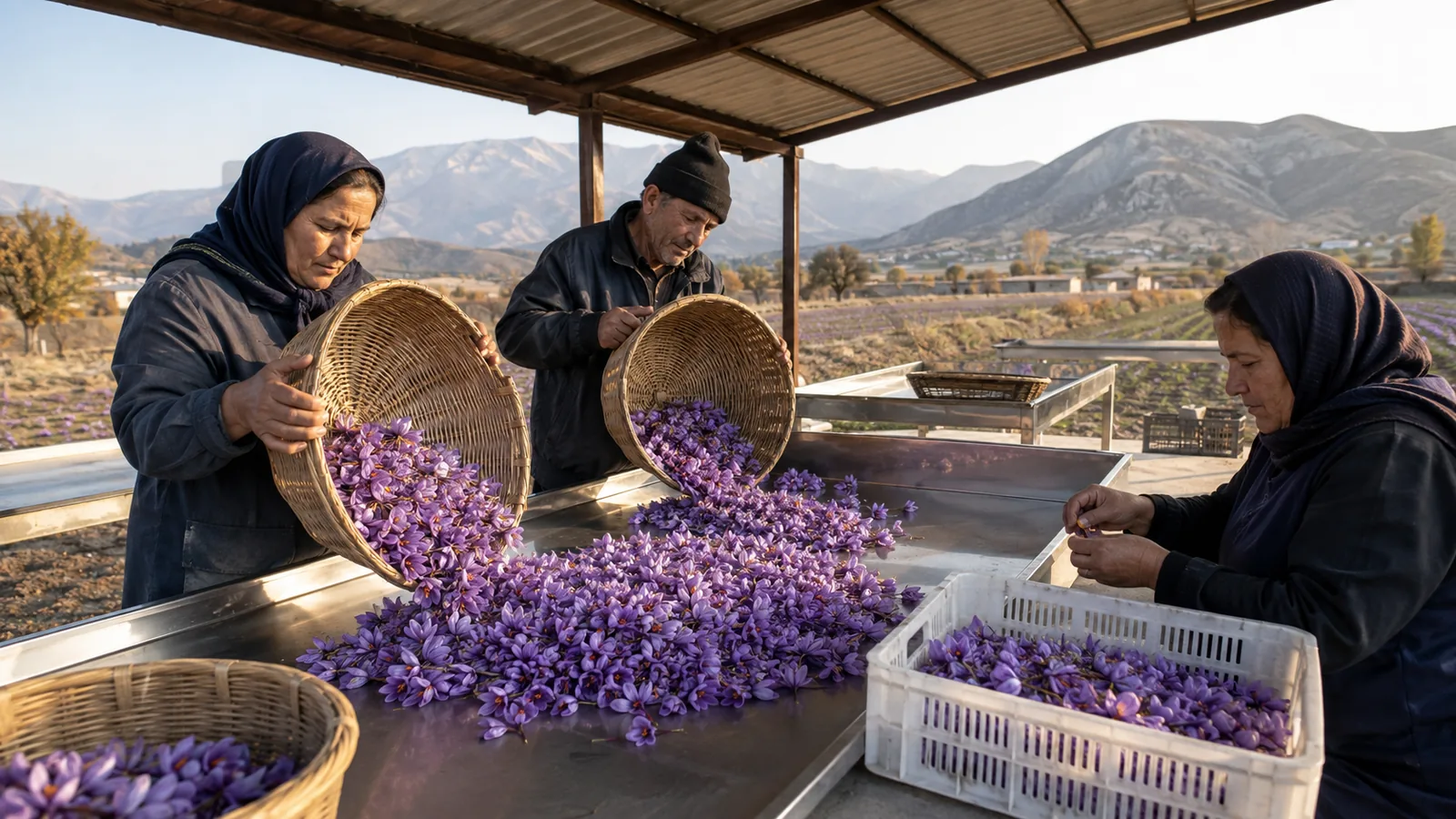
The article places planting in September and picking in early November. It also says Agricultural Jihad specialists provided technical guidance to growers. Depending on climate and field conditions, practical advice may cover corm selection, planting depth, irrigation timing, weed control and harvest handling.
Those examples explain the role of field support; they are not a reconstruction of services documented in the original programme. Growers planning a field today should use advice suited to their own soil, water and local climate. Our saffron cultivation tips provide a broader introduction to those decisions.
What a grower-support company should provide
A useful support company does more than sell planting material. Its responsibilities should be clear before a grower commits land or money.
- Traceable corm supply: the grower should know the source, condition and agreed quantity of the corms.
- Practical field guidance: recommendations should respond to the farm’s real soil, water and disease risks rather than use a single formula everywhere.
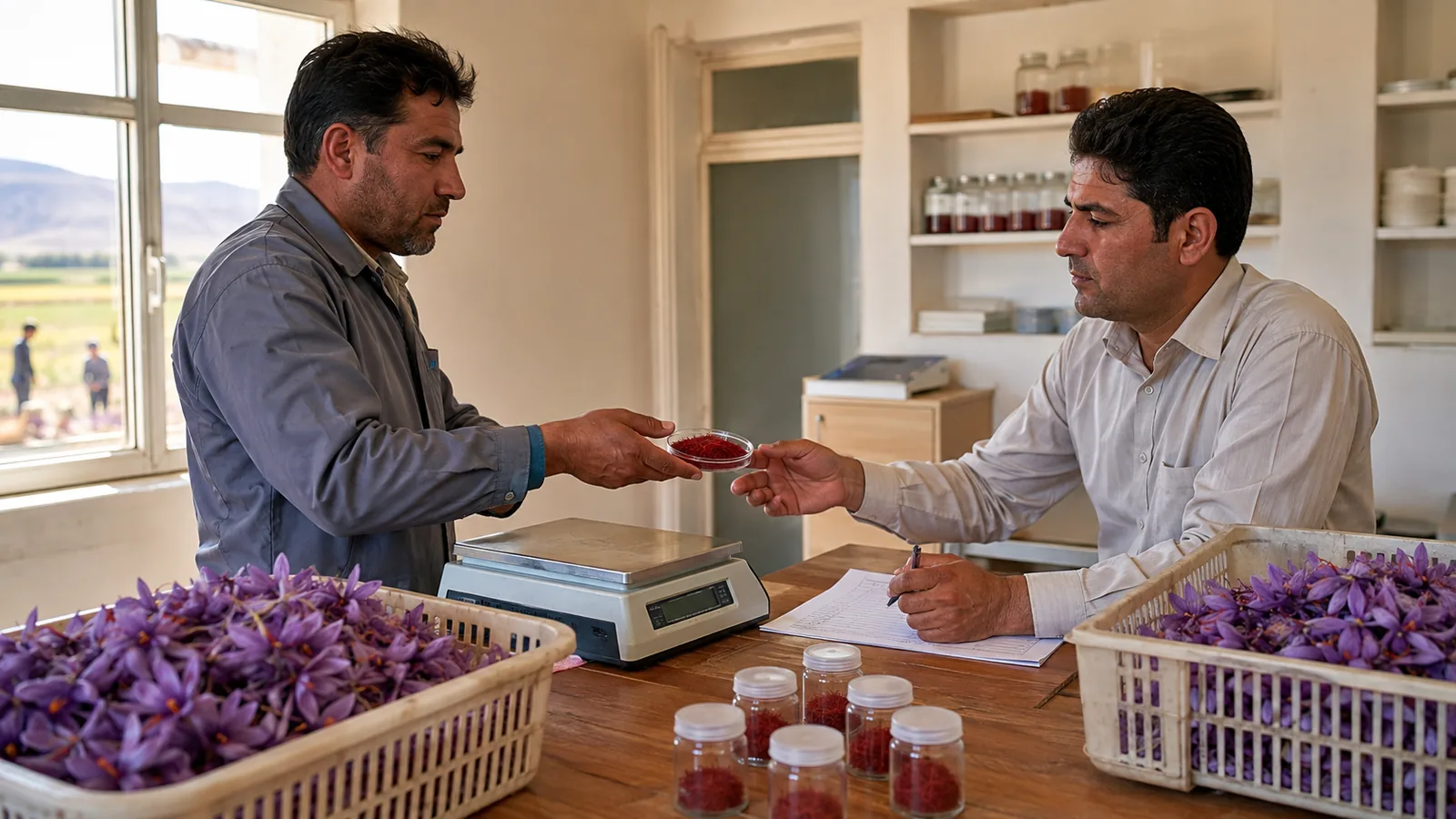
- Transparent purchasing terms: the parties should agree how dried saffron will be weighed, graded, priced and paid for.
- Training at the right time: instruction is most useful before planting, irrigation, picking and stigma drying—not after a problem has already reduced the crop.
A verbal promise to buy the harvest is not the same as a dependable market. A written agreement should identify the buyer, quality standard, delivery point, payment timetable and what happens if the crop or market changes.
One support company was reported in Zanjan
Jalali said that only one company in Zanjan Province was supporting saffron production at the time. The report also refers to the Hamedan Agricultural Jihad Organization as supporting cultivation and describes the saffron as good quality.
The relationship between those two provincial references is not explained clearly in the English text. Both are therefore preserved without claiming that they refer to the same scheme, company or location. The article also does not establish whether that company still operates.
Training and gradual expansion
Training courses were part of the expansion effort. The final line appears to say that the cultivated area was increasing by about 1.5 hectares each year, although its grammar is badly damaged. Read in that limited way, it points to gradual growth rather than an instant change in regional production.
Gradual expansion can give growers time to learn how the crop behaves in local conditions. Saffron is a real field crop with labour, drainage, disease and post-harvest demands; it should not be presented as an effortless source of income. Anyone evaluating a new plot should first ask how difficult saffron is to grow under the conditions available to them.
Safeguards for farmers and buyers
Support works best when neither side must rely on vague claims. Farmers need an agreed basis for corm quality, crop grading and payment. Buyers need traceable lots, careful drying and storage, and a way to check that delivered material matches the specification.
Records should follow the crop from the supplied corms through the field and into the finished lot. If the supporting company also supplies inputs, advises the farmer and grades the final saffron, the contract should explain how disputes and conflicts of interest will be handled.
What this historical report establishes
The 2017 article records a call for saffron cultivation support companies, a seven-hectare cultivated area, more than 30 growers, technical guidance, training and a proposed link between corm supply and crop purchasing. It also preserves a forecast of 55 kilograms and an apparent annual expansion of roughly 1.5 hectares.
It does not provide the project’s exact locality, a dependable currency unit, a named company, a copy of a purchase agreement or evidence that the programme continues today. Those limits matter. The enduring lesson is that growers benefit when planting material, expert guidance and market terms are organised transparently before the season begins.