Saffron pizza dough is a softly golden base with a warm aroma that works especially well with cheese, vegetables, chicken and seafood. The saffron is infused before it enters the dough, so its colour and flavour spread evenly rather than sitting in concentrated streaks. This recipe makes four small pizzas or two larger ones and serves about six.
Ingredients for saffron pizza dough
- 3 cups plain or bread flour, about 375g, plus more only as needed
- 1 cup warm water, 240ml
- 1 tablespoon instant yeast, about 9g
- 1 tablespoon sugar, optional
- 1 tablespoon olive oil, or neutral oil
- 1 tablespoon concentrated brewed saffron, cooled
- 1/4 teaspoon fine salt
- 1/4 teaspoon baking powder
- a small pinch of black pepper
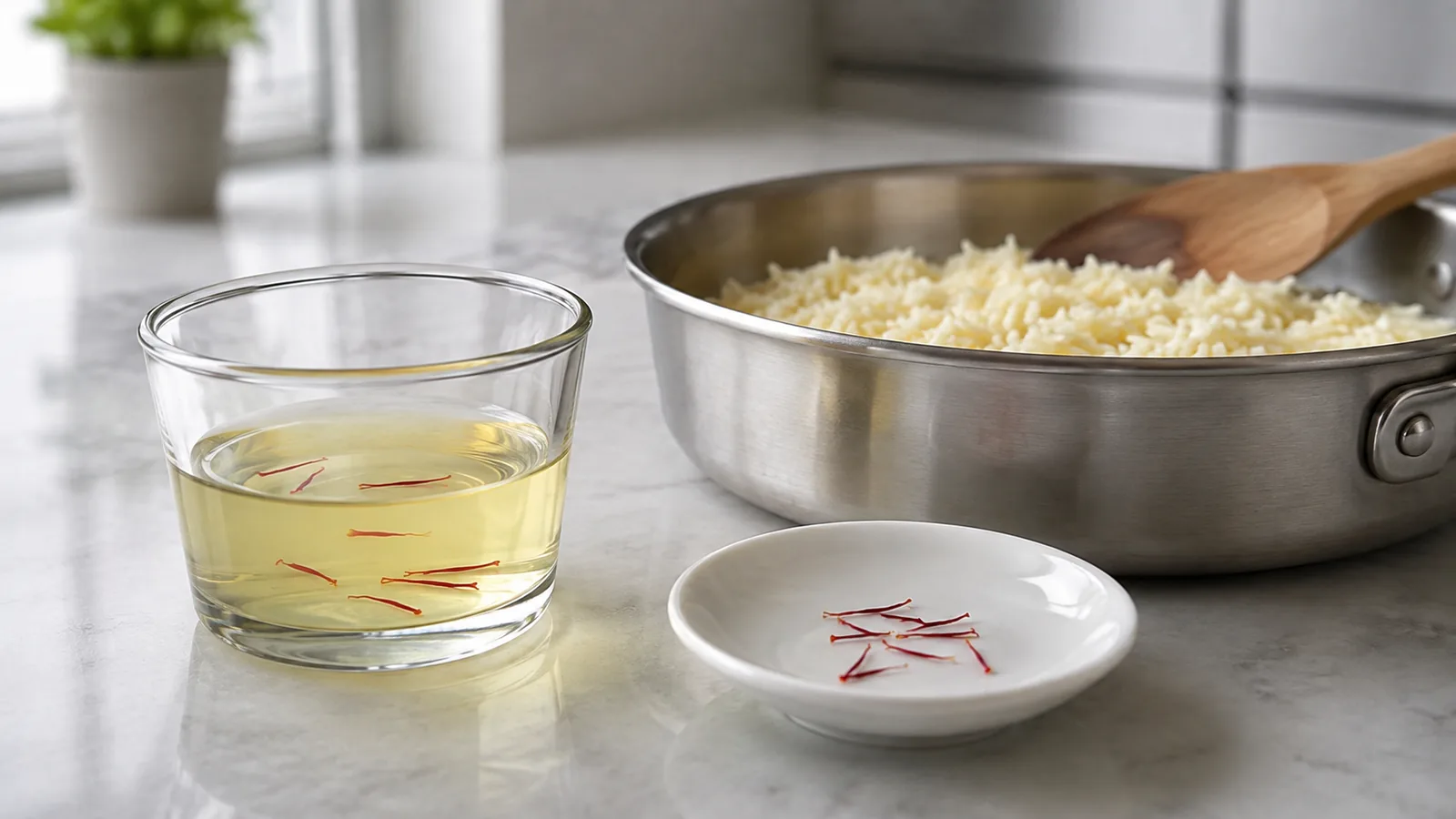
The water should feel pleasantly warm, not hot: roughly 38–40°C/100–104°F. Boiling water can damage the yeast. If your saffron is not ready, use the measured method in our guide to brewing saffron, then let the tablespoon needed here cool.
Activate the yeast
Stir the warm water, yeast and sugar together in a large bowl. Cover and leave for 10–15 minutes. A creamy or lightly foamy surface shows that the yeast is active. If nothing happens and the yeast is within date, the water may have been too hot or too cold; begin again before adding the flour.
Instant yeast can normally be mixed directly into flour, but this short test follows the original method and avoids spending two hours on inactive yeast. The sugar can be omitted, although it helps the yeast show activity quickly and encourages browning.
Mix and knead the dough
- Whisk the flour, salt, baking powder and black pepper in a separate bowl. Sifting is optional; breaking up compacted flour is enough.
- Make a well in the centre. Pour in the yeast mixture, olive oil and cooled saffron infusion.
- Mix from the centre outward until no dry flour remains. If the dough is very sticky, add flour one tablespoon at a time. It should feel soft and slightly tacky rather than dry.
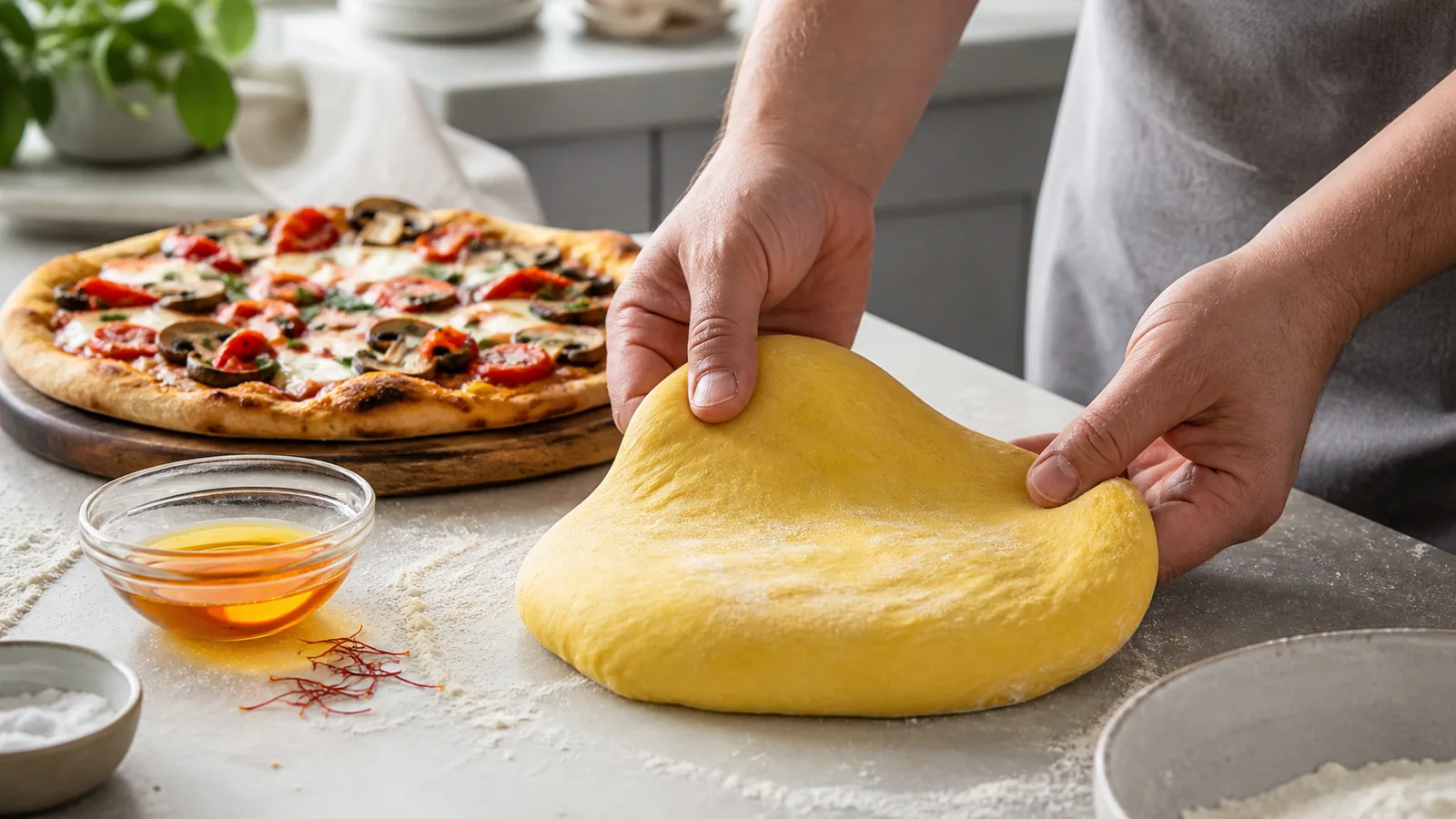
- Turn it onto a lightly floured surface and knead for 8–10 minutes. Push the dough away with the heel of your hand, fold it back and rotate it. It is ready when the surface is smooth and the dough springs back slowly when pressed.
A mixer with a dough hook can do the same work at low to medium-low speed for about six minutes. Resist adding a large amount of flour during kneading; a soft dough makes a lighter crust.
Let it rise twice
Lightly oil a clean bowl, place the dough inside and turn it once so the surface is coated. Cover with a damp towel or reusable cover and leave in a comfortably warm, draught-free place for 1–2 hours, until roughly doubled. Room temperature controls the clock, so watch the dough rather than forcing it into a very hot space.
Press out the largest gas bubbles gently. Divide the dough into four equal pieces for individual pizzas, or two for larger bases. Shape each piece into a tight ball, place on a lightly oiled tray, cover and rest for another 30 minutes. This second rest relaxes the gluten and makes the bases easier to stretch without snapping back.
Shape and prebake the bases
Heat the oven to 200°C/400°F with a heavy baking tray, pizza stone or steel inside. Stretch each dough ball from the centre outward, leaving a slightly thicker rim. If it resists, cover it and wait another five minutes instead of tearing it with a rolling pin.
Transfer the base to baking paper or a lightly floured peel. Prick only the central area with a fork, then prebake for 10–15 minutes, just until the surface is set and the underside has begun to colour. A very thin base will need less time. Remove it, add the toppings and return it to the oven until the cheese and crust are cooked to your liking.
If you prefer a softer first bake, place a heatproof pan of hot water on a lower shelf while the oven heats, taking care around the steam. It is optional; a well-fermented dough and a fully heated baking surface matter more.
Choosing toppings for saffron pizza
The flavour is aromatic rather than sweet. Mild mozzarella, feta, mushrooms, roasted peppers, artichokes, chicken, prawns and fresh herbs all leave room for the saffron to be noticed. Keep wet sauces and watery vegetables light, especially on a thin base.
People searching for saffron on pizza do not have to colour the crust. The same cooled infusion can be brushed sparingly over a white pizza or stirred into a sauce. In this version, however, putting it in the dough gives every slice an even golden crumb. For natural saffron pizza photos, use that real infused colour and soft window light rather than adding extra food colouring.
Make ahead and storage
After kneading, the covered dough can rise slowly in the refrigerator for up to 24 hours. Let it stand at room temperature for 45–60 minutes before dividing and shaping. Prebaked, untopped bases can be cooled completely, wrapped and refrigerated for two days or frozen for up to one month. Reheat from thawed, add toppings and finish in a hot oven.
The full process takes about two and a half hours at room temperature, including the two rises. Most of that time is unattended. Use the dough when it has visibly expanded and feels airy; that is a better guide than the clock alone.