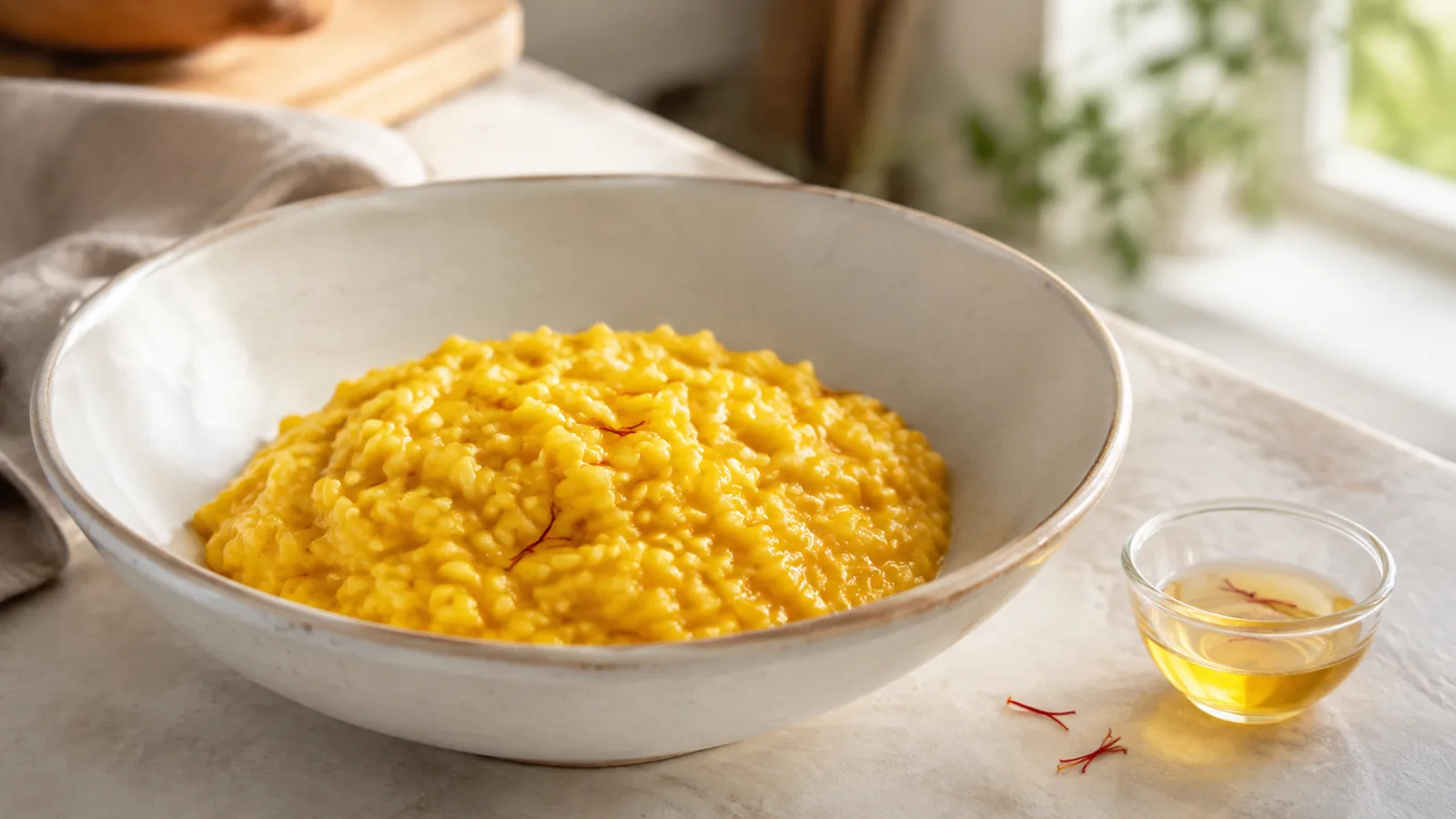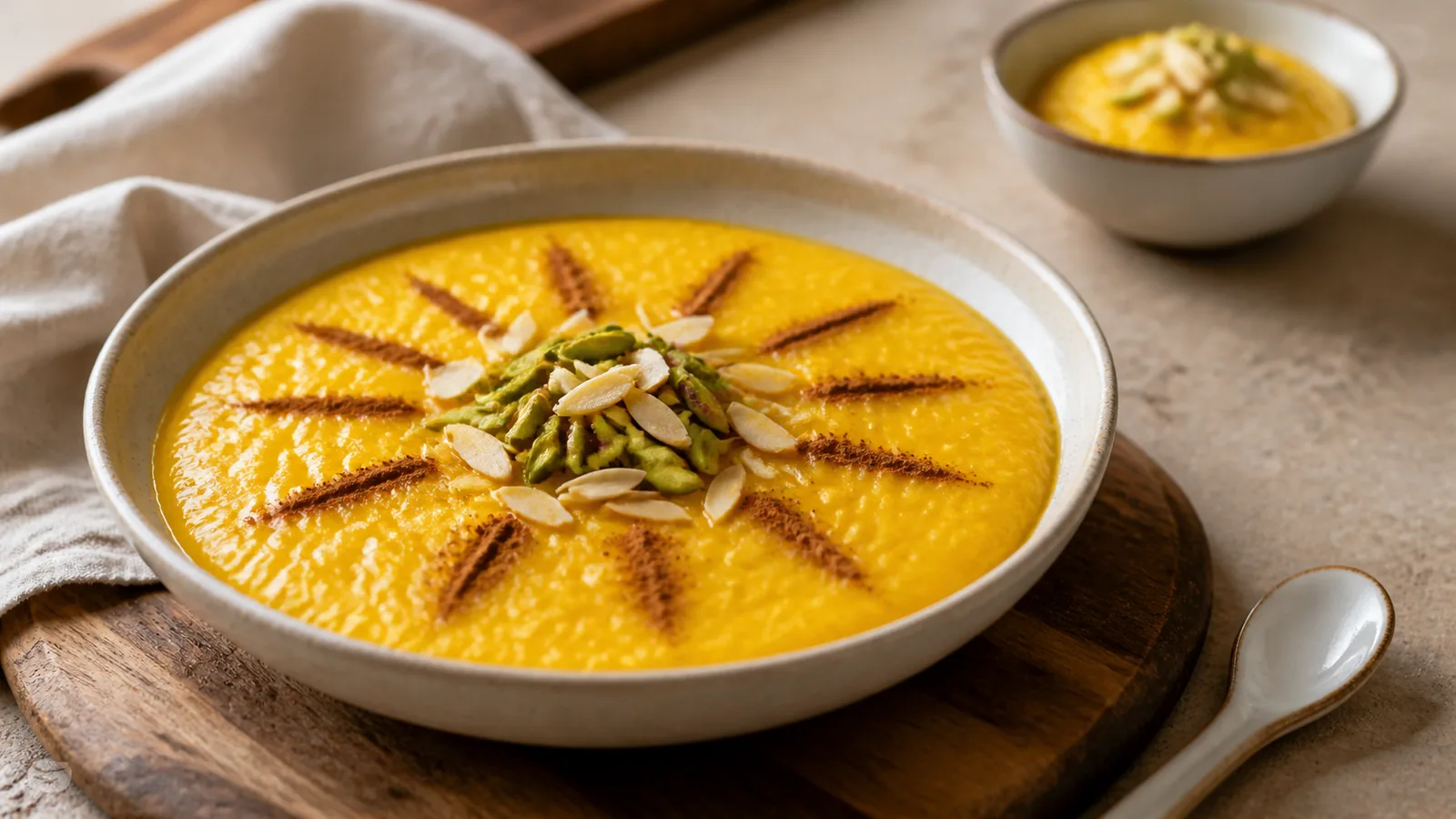
Persian yellow shole is a softly set saffron rice pudding scented with rose water and cardamom. Its usual Persian name is sholeh zard, which means “yellow flame.” The finished pudding should be creamy while warm and firm enough to hold a cinnamon decoration once cool.
This is a generous recipe: it fills about four medium serving dishes or 10–12 individual bowls. The rice needs time to soften and break down, so keep the heat low and stir more often as the pudding thickens.
Ingredients
- 2 cups short-grain white rice
- 14 cups water, plus up to 2 cups more if needed
- 4 cups sugar
- 1 cup rose water
- 5–6 tablespoons unsalted butter
- 3/4 cup slivered almonds
- 1/4 teaspoon saffron threads, finely ground, or enough for a deep golden colour
- 1/2 teaspoon ground cardamom
- ground cinnamon and slivered pistachios, for decorating
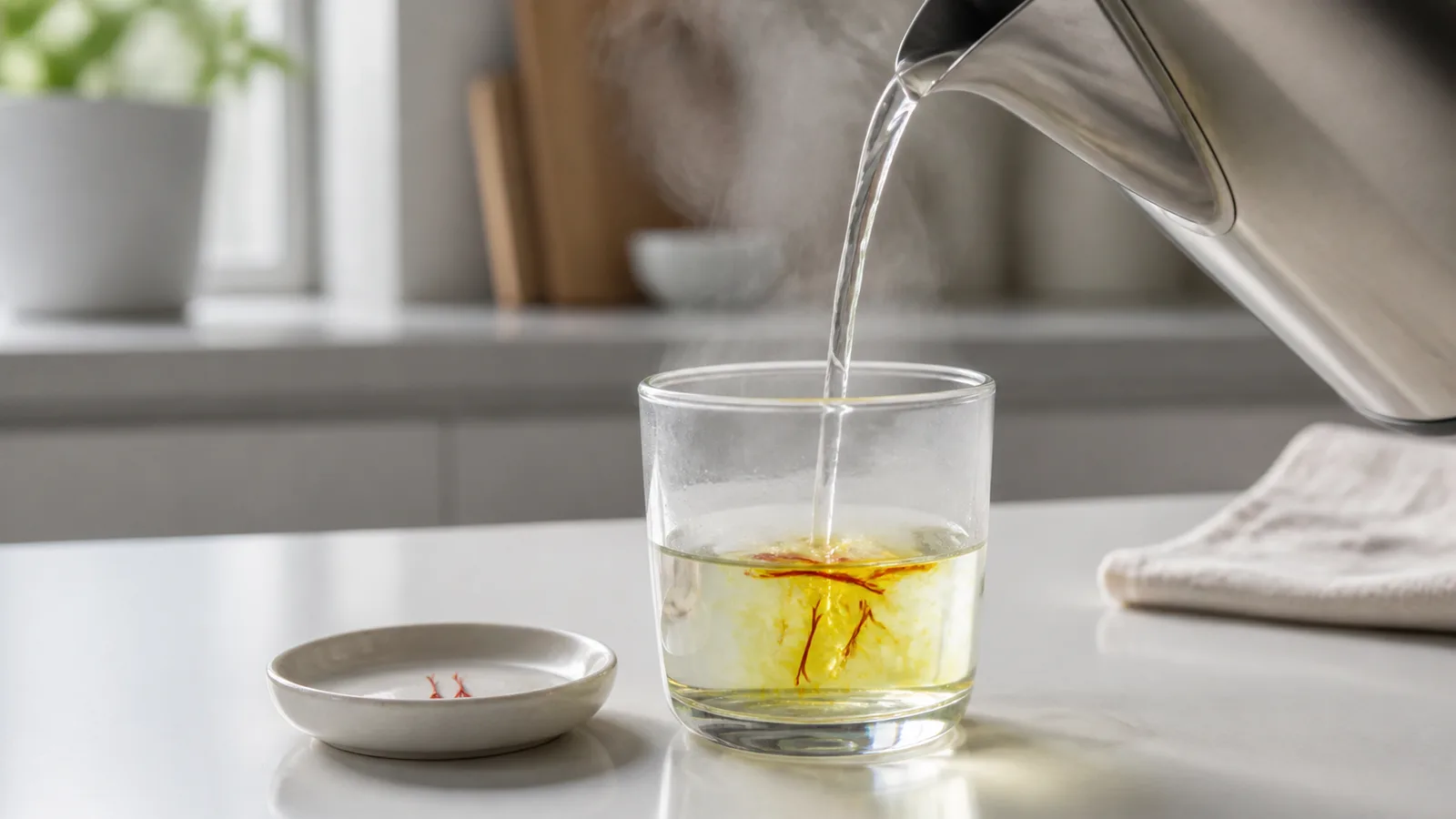
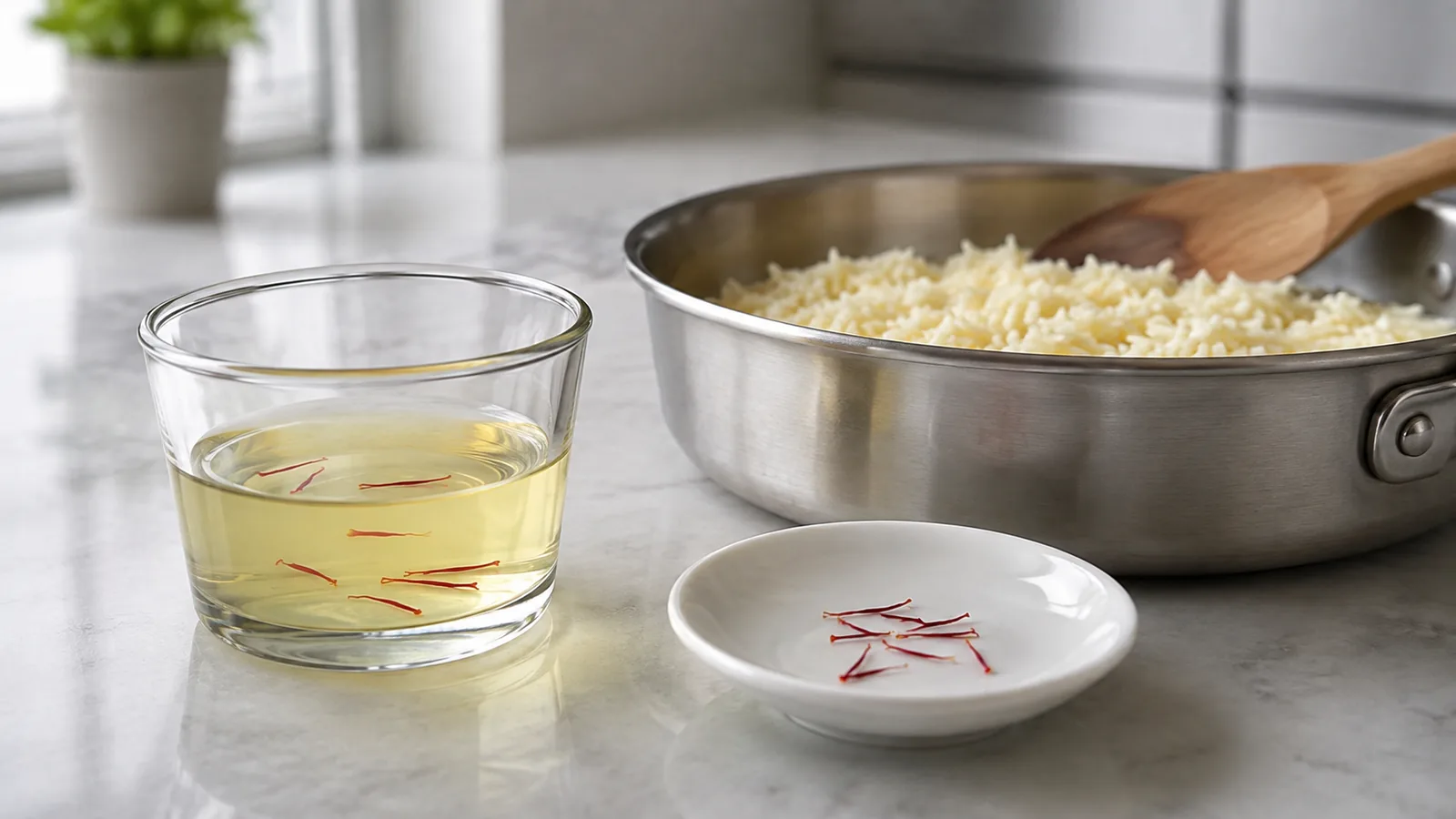
The traditional sugar-to-rice ratio is rich. If you prefer a less sweet pudding, reduce the sugar modestly rather than changing the water at the beginning. Brew the saffron in a small amount of hot water before cooking; the measured method in our saffron infusion guide will give an even colour without clumps.
Wash and soak the rice
Rinse the rice several times in lukewarm water, draining between rinses, until the water is much less cloudy. Cover it generously with fresh warm water and leave it to soak for 4–5 hours. Soaking helps the grains collapse into the soft texture this pudding needs.
Drain the soaking water. Put the rice and 14 cups fresh water in a large, heavy-based pot with plenty of room for stirring. Bring it just to a boil, then immediately reduce the heat.
Cook the rice until it breaks down
Simmer uncovered over low heat, stirring occasionally at first. The rice should move gently rather than boil hard. As it softens, press a few grains against the side of the pot: they should crush without resistance and begin to disappear into the liquid.
Add the brewed saffron in stages, stirring and waiting a minute before deciding whether the colour needs more. The pudding should become a clear, warm yellow, not orange. If the rice is still firm after most of the water has been absorbed, add warm water a little at a time. Different varieties absorb different amounts.
Stir across the entire base of the pot, especially near the end. A high flame can scorch the starch before the grains are ready, while steady low heat lets the mixture thicken evenly.
Add sugar, rose water and almonds
When the rice is very soft and broken down, stir in the sugar. The mixture will loosen as the sugar dissolves; that is normal. Add the rose water, cardamom and butter, then continue cooking gently until glossy and creamy.
Almonds can be handled in two ways. Add them early with the sugar if you like them tender, or simmer them separately in a little water and stir them in during the final few minutes if you want a firmer bite. Keeping a spoonful aside also gives you something to use on top.
How to judge the final texture
Spoon a little pudding onto a cool plate and wait for a minute. It should spread slowly, without releasing a ring of water. Stop cooking while it is still softer than the texture you want to serve, because sholeh zard firms considerably as it cools.
If it is soupy after the rice has fully softened, cook it a little longer and stir constantly. If it becomes too tight in the pot, work in a small amount of hot water. Do not add dry rice late in the process; it will not have time to cook down.
Pour, decorate and serve
Ladle the hot pudding into individual bowls or shallow serving dishes. Let the surface settle for 10–15 minutes, then decorate with cinnamon, pistachio slivers and the reserved almonds. Simple lines, dots or a small central pattern are enough; wait until the top has begun to set so the cinnamon stays visible.
Cool to room temperature, cover and refrigerate. Serve chilled or at cool room temperature. It keeps well in the refrigerator for three days, although the rose and saffron aroma is brightest on the first two.
Why this Persian yellow pudding works
The order matters more than forceful stirring. First the rice absorbs water and loses its grain structure. Sugar goes in only after that point, followed by the aromatic ingredients and fat. The result is one smooth pudding rather than sweet rice suspended in syrup.
Whether you know it as Persian yellow shole, yellow rice pudding or sholeh zard, look for the same signs: fully softened rice, a clean saffron colour, controlled rose water and a texture that is creamy in the pot but gently set in the bowl.