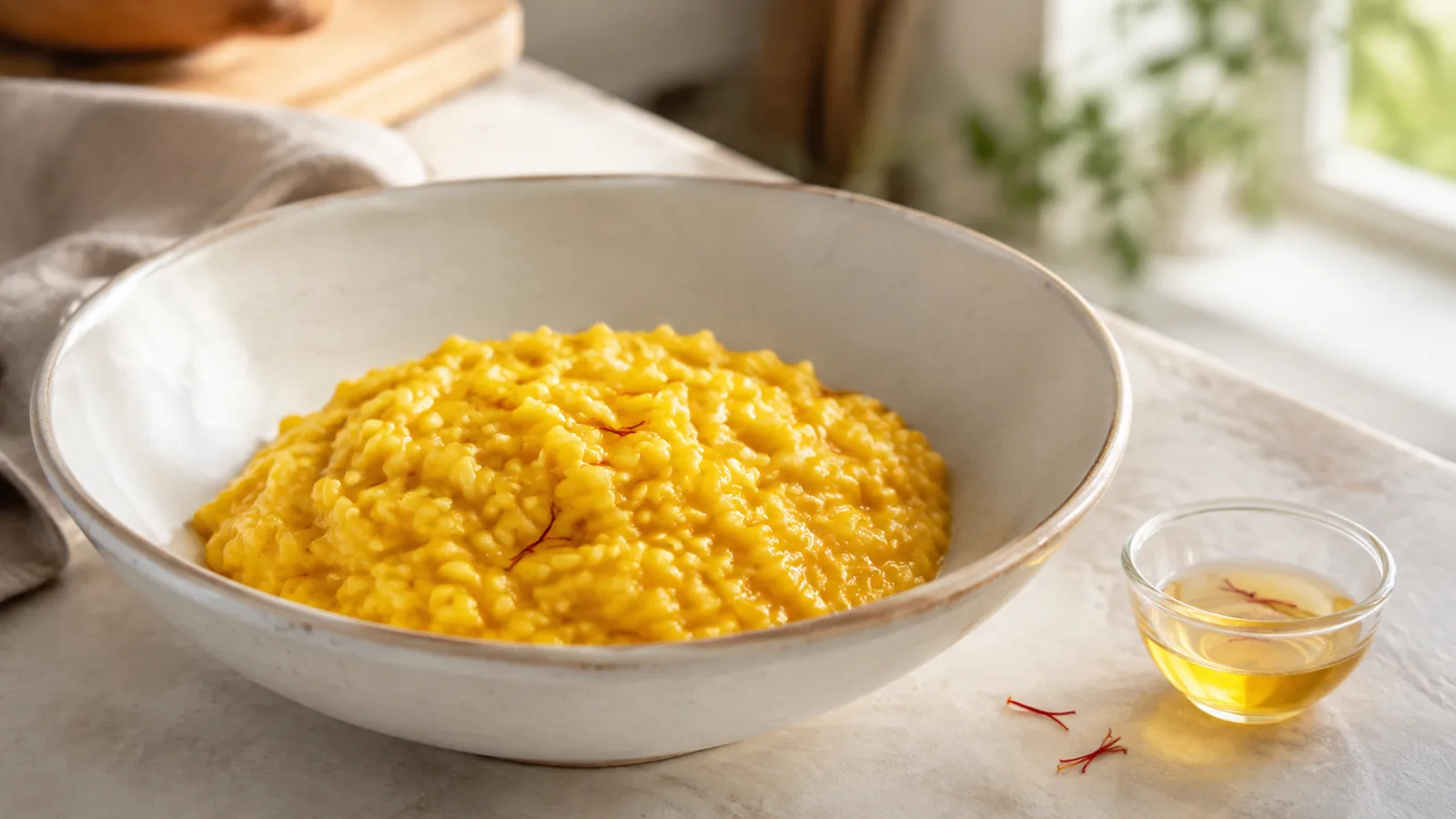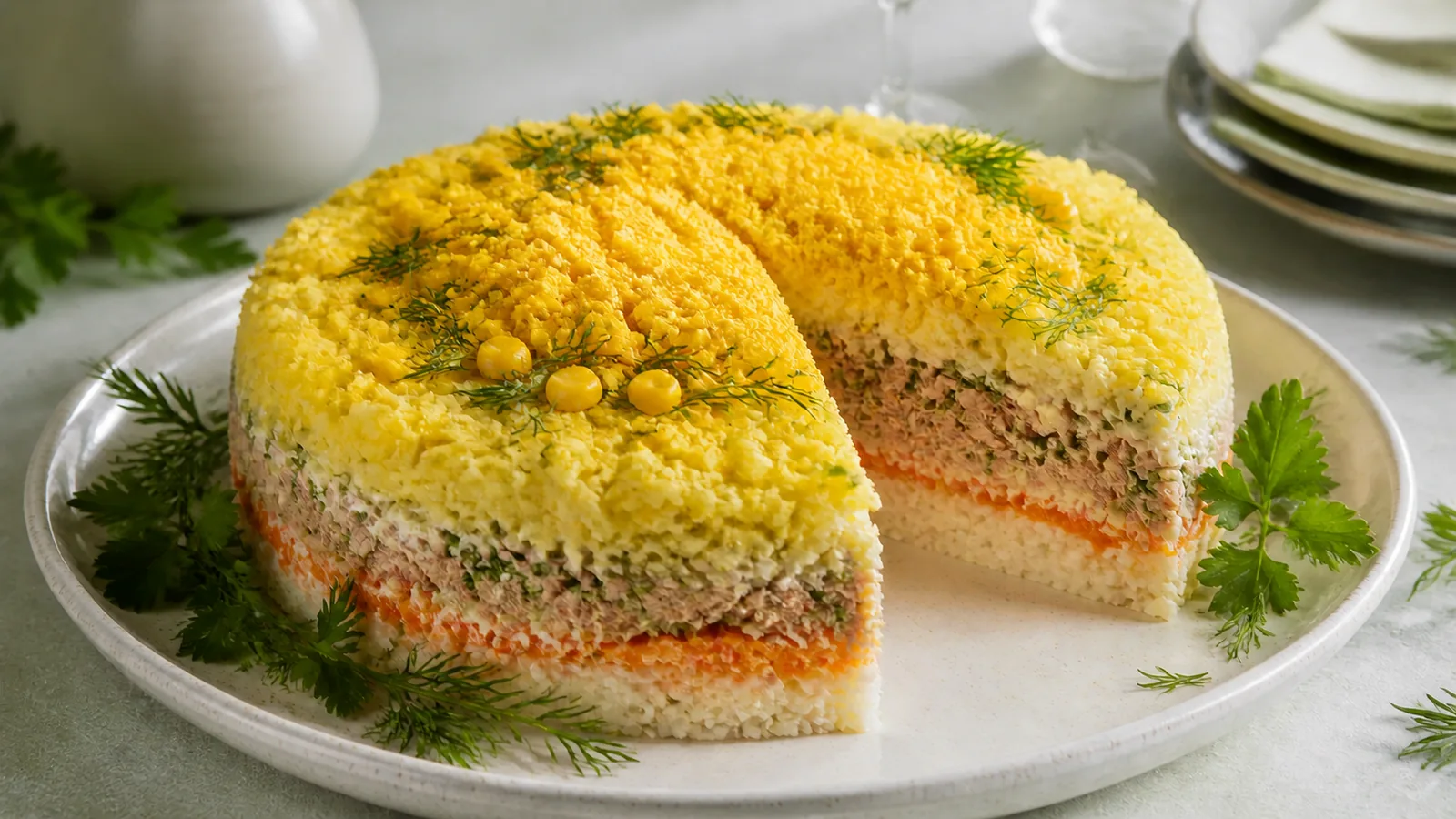
Saffron mimosa flower salad is a chilled layered tuna-and-rice salad decorated in the yellow and green colours of a mimosa bloom. It does not contain actual mimosa flowers. Saffron-coloured rice, sweetcorn or egg yolk forms the golden surface, while fresh herbs frame the plate.
The salad needs several hours to chill and hold its shape, which makes it useful for preparing ahead. This version serves about six.
Ingredients
- 1 cup uncooked rice
- 1 can tuna, drained well
- 3 medium carrots, peeled
- 3/4 cup mayonnaise, thick strained yogurt, or a mixture
- 1/2 cup finely chopped spring onion, parsley, dill or green pepper
- 1/2 cup sweetcorn, finely diced yellow pepper or 2 hard-boiled egg yolks
- 2 tablespoons concentrated brewed saffron
- salt, black pepper and lemon juice, to taste
Choose one or two green vegetables, not all of them in large quantities. The layers set more cleanly when each ingredient is dry and finely cut.
Cook and cool the rice
Rinse the rice and cook it by the absorption method until tender. Spread it on a clean tray so it cools quickly, then refrigerate. Do not pack hot rice into a mayonnaise salad.
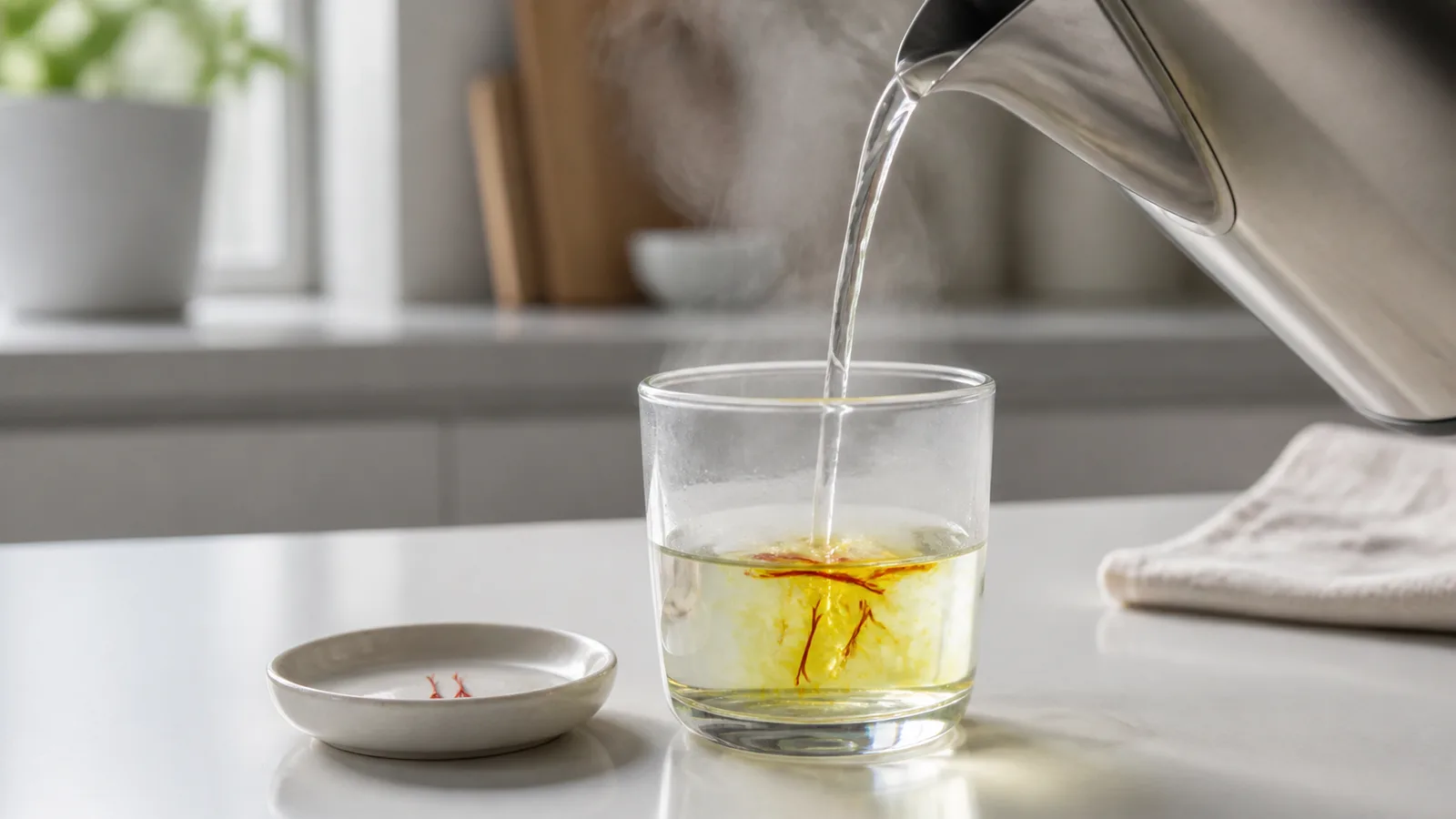
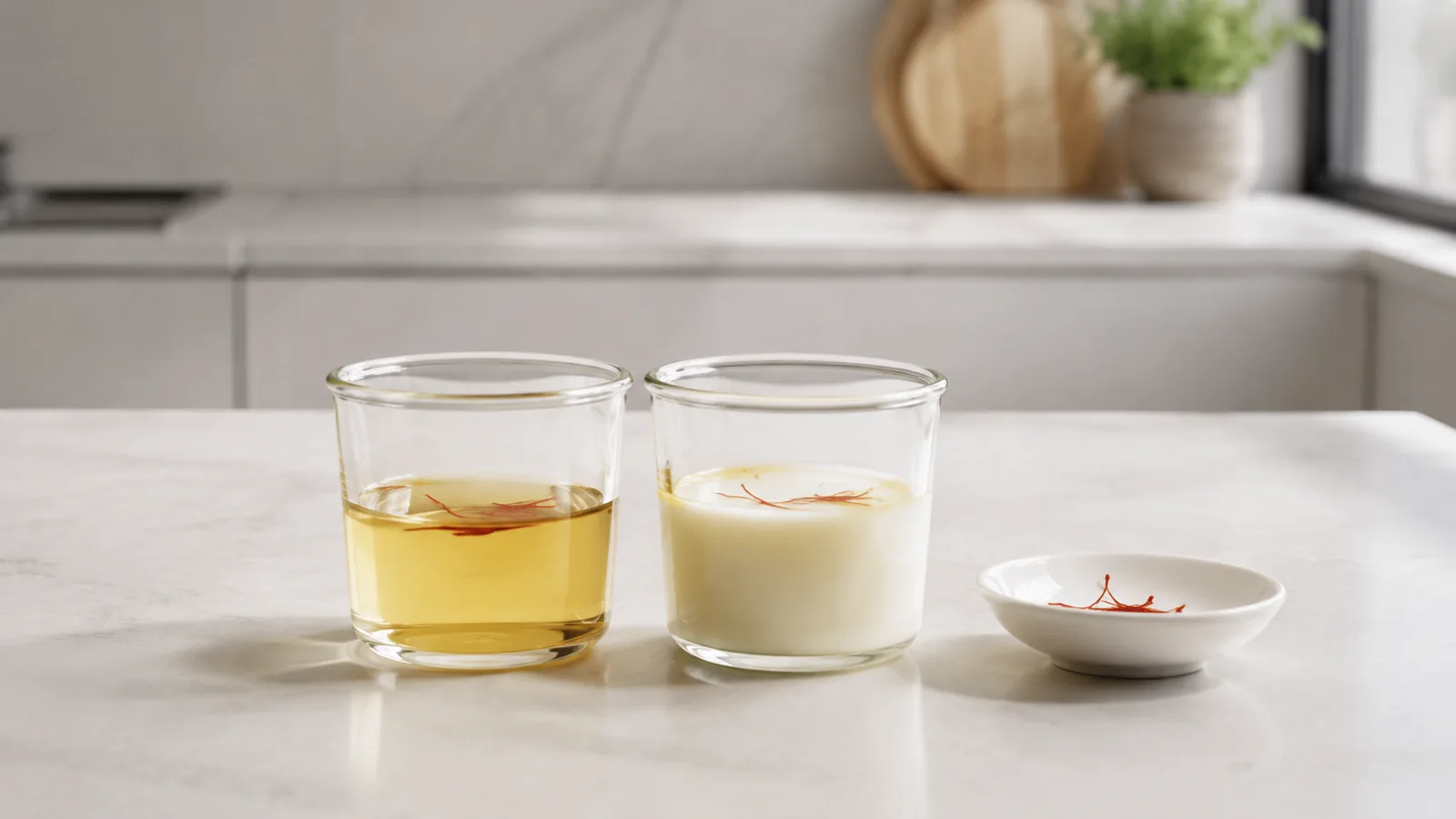
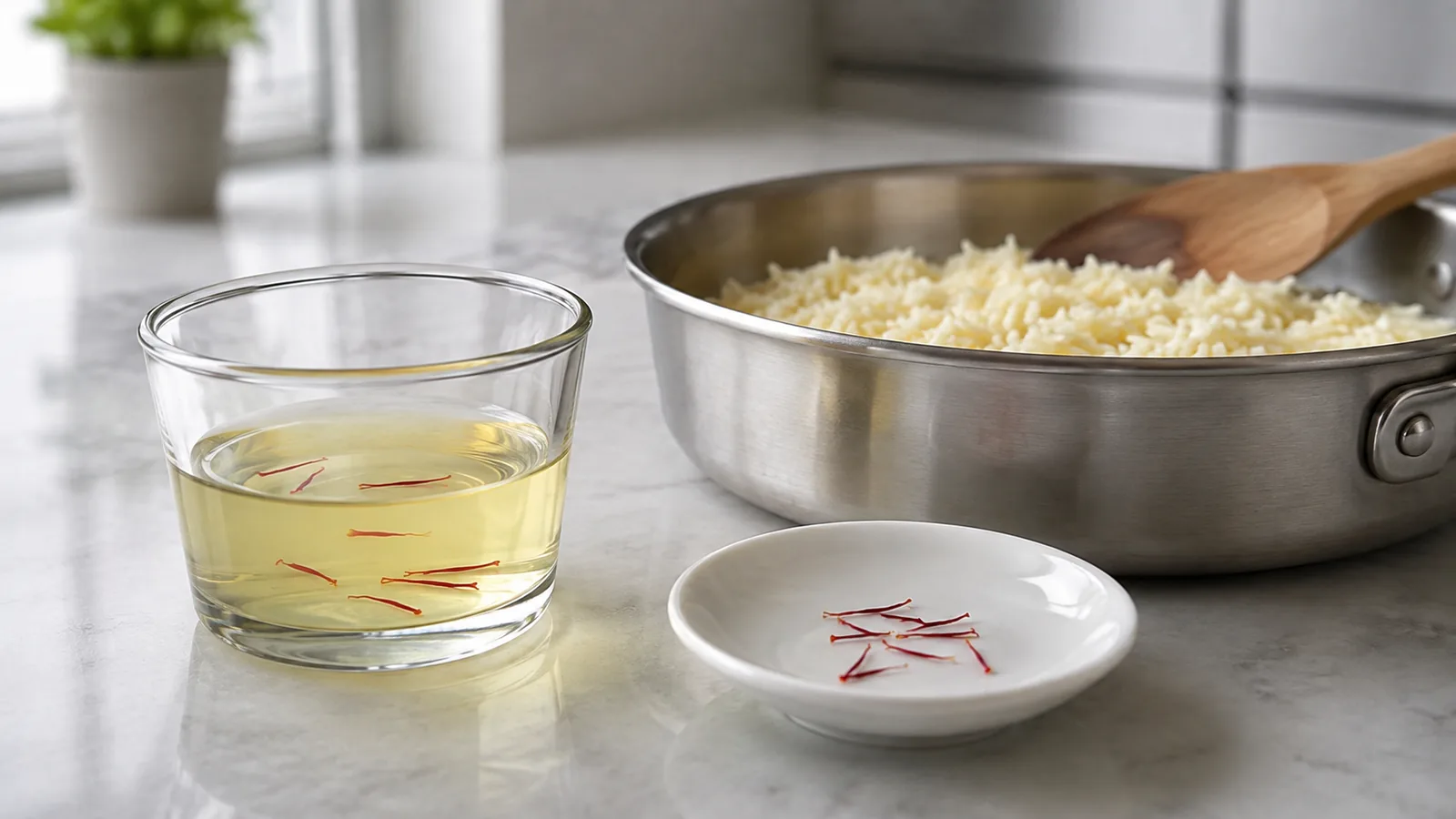
Set aside roughly one third of the cooked rice for the yellow decoration. Mix that portion with the saffron infusion and a pinch of salt until evenly golden. If you need an infusion, use our measured saffron brewing method.
Prepare the tuna, carrot and dressing
Drain the tuna and break it into small flakes. Canned tuna is already cooked; there is no need to boil the unopened can for 20 minutes. Keep it refrigerated once opened.
Grate the carrots. They may be used raw for a fresh crunch, or steamed until just tender and cooled completely. Season the mayonnaise or yogurt mixture with black pepper and a little lemon juice. Add salt only after tasting the tuna.
Line the mould
Line a 20cm bowl or dome mould with reusable food wrap, leaving enough overhang to cover the top. A lightly dampened bowl helps the lining stay in place.
Arrange a level layer of carrot across the base and lower sides. Press gently with the back of a spoon, then spread a thin layer of dressing. Too much sauce makes the finished shape slide.
Build the layers
- Add the drained tuna in an even layer and spread it with another thin coating of dressing.
- Add the chopped green herbs, spring onion or pepper. Press lightly so there are no large gaps.
- Mix the remaining plain rice with enough dressing to hold together, then use it as the final layer.
- Press the surface gently and level it. Fold the lining over the top.
Chill for at least three hours. The cold rest lets the rice and dressing bind without needing gelatine.
Turn out and make the mimosa pattern
Open the lining, place a serving plate over the mould and invert both together. Lift away the bowl and peel off the wrap. Smooth any small break with the back of a damp spoon.
Arrange the saffron rice over the top in loose clusters. Add sweetcorn, diced yellow pepper or grated cooked yolk for more yellow texture. Frame the base with dill, parsley or spring onion so the finished salad suggests mimosa flowers without using inedible blooms.
Mayonnaise-free option
Thick strained yogurt can replace the mayonnaise. Drain it first so the salad stays firm, then season it with lemon, pepper and a small spoonful of olive oil. A half-yogurt, half-mayonnaise dressing provides a lighter taste while keeping the mould stable.
Ingredient substitutions
Cooked, cooled potato can replace the rice. Fully cooked chopped chicken may replace the tuna, and cooked sausage can also be used if it is cooled and cut finely. Do not mix raw poultry or its utensils with the chilled ingredients.
These substitutions change the flavour, but the structure remains the same: a firm base, a savoury protein layer, fresh green colour and a golden mimosa-style finish.
Serve and store safely
Keep the saffron mimosa flower salad refrigerated until serving. Cut it with a sharp, damp knife and lift portions with a pie server. Return leftovers to the refrigerator within two hours and eat them within two days.