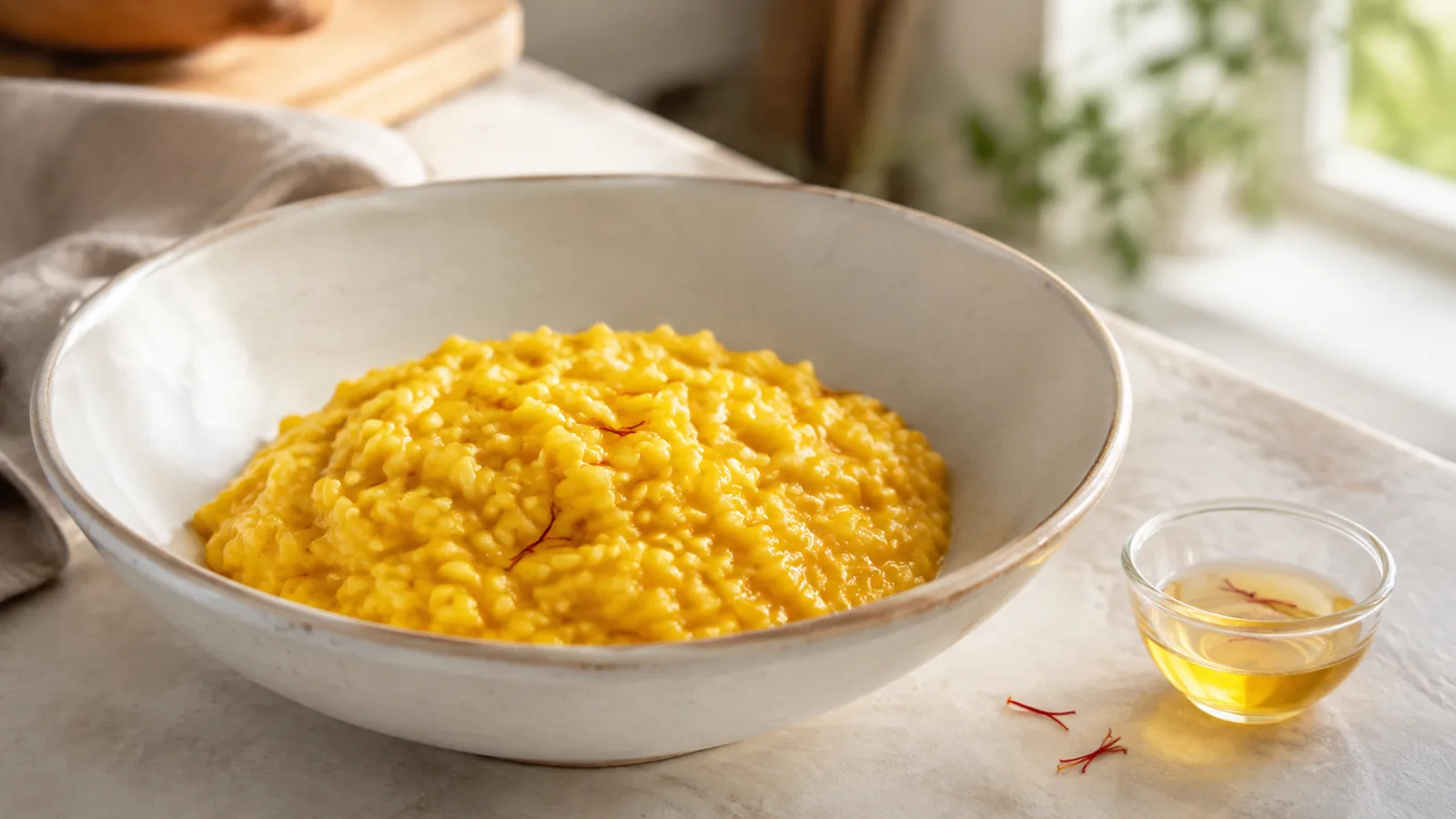
Persian saffron luz is a soft almond confection scented with concentrated saffron and finished with pistachios. It needs no oven: a cooked sugar syrup binds finely ground almonds into a smooth dough that firms in the refrigerator and is cut into small pieces.
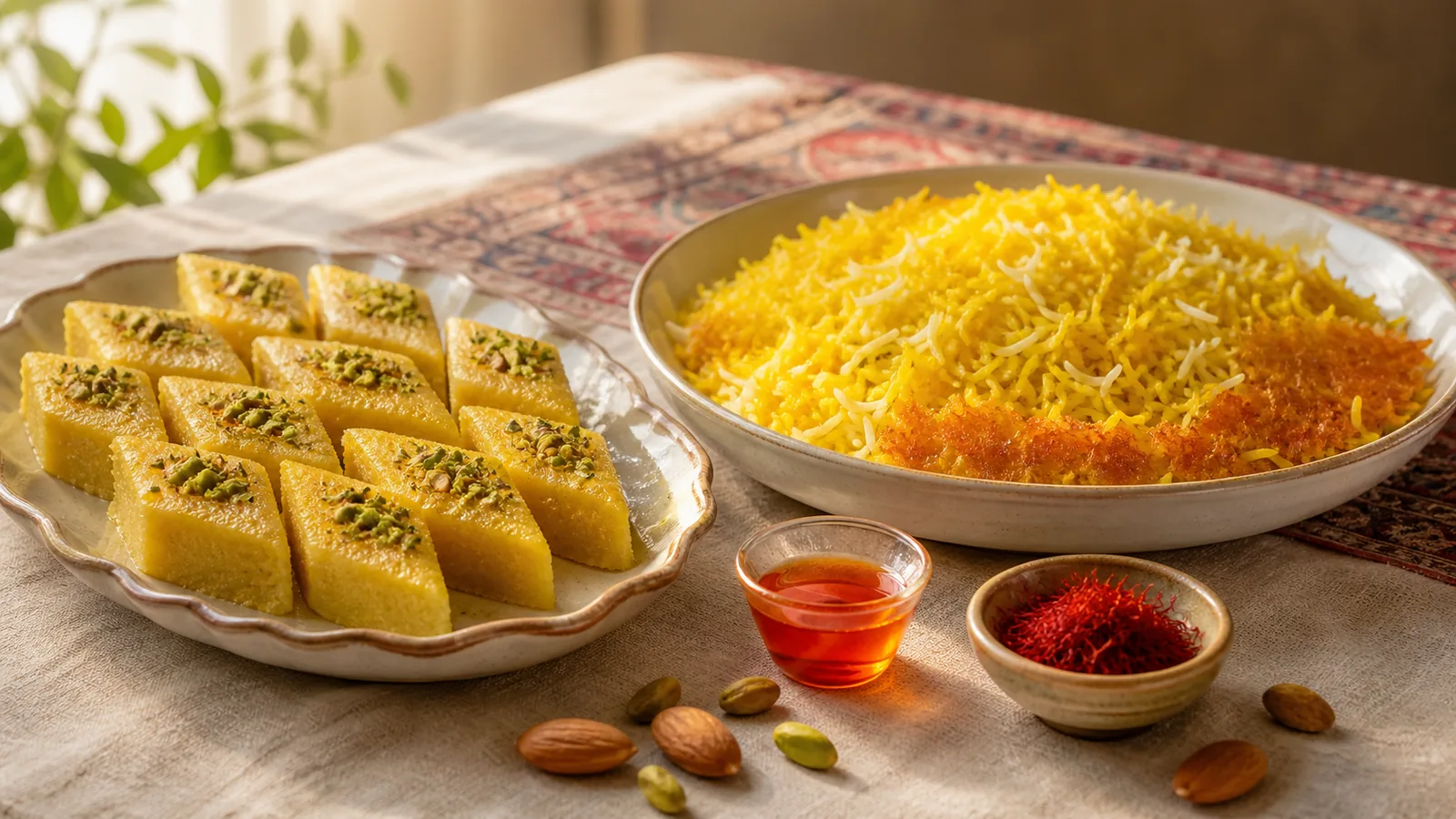
This guide also includes Persian saffron kate, the one-pot rice recipe assigned to this page for consolidation. Luz is sweet and rich; kate is savoury and comforting. What joins them is the same small cup of properly brewed saffron, added where it can give the most colour and aroma.
Persian saffron luz ingredients
This quantity makes about 20–24 small diamond or square pieces.
- 200 g blanched almonds or fine almond flour;
- 1 cup granulated sugar;
- ½ cup water;
- 2 tablespoons powdered sugar, sifted;
- 1 tablespoon strongly brewed saffron;
- 2–3 tablespoons finely chopped or slivered pistachios; and
- a little neutral oil for the paper or dish, if needed.
Use unsalted almonds and pistachios. Almond flour gives the most predictable texture. If grinding almonds at home, pulse them briefly and stop before their oils turn the powder into almond butter.
How to brew saffron for both recipes
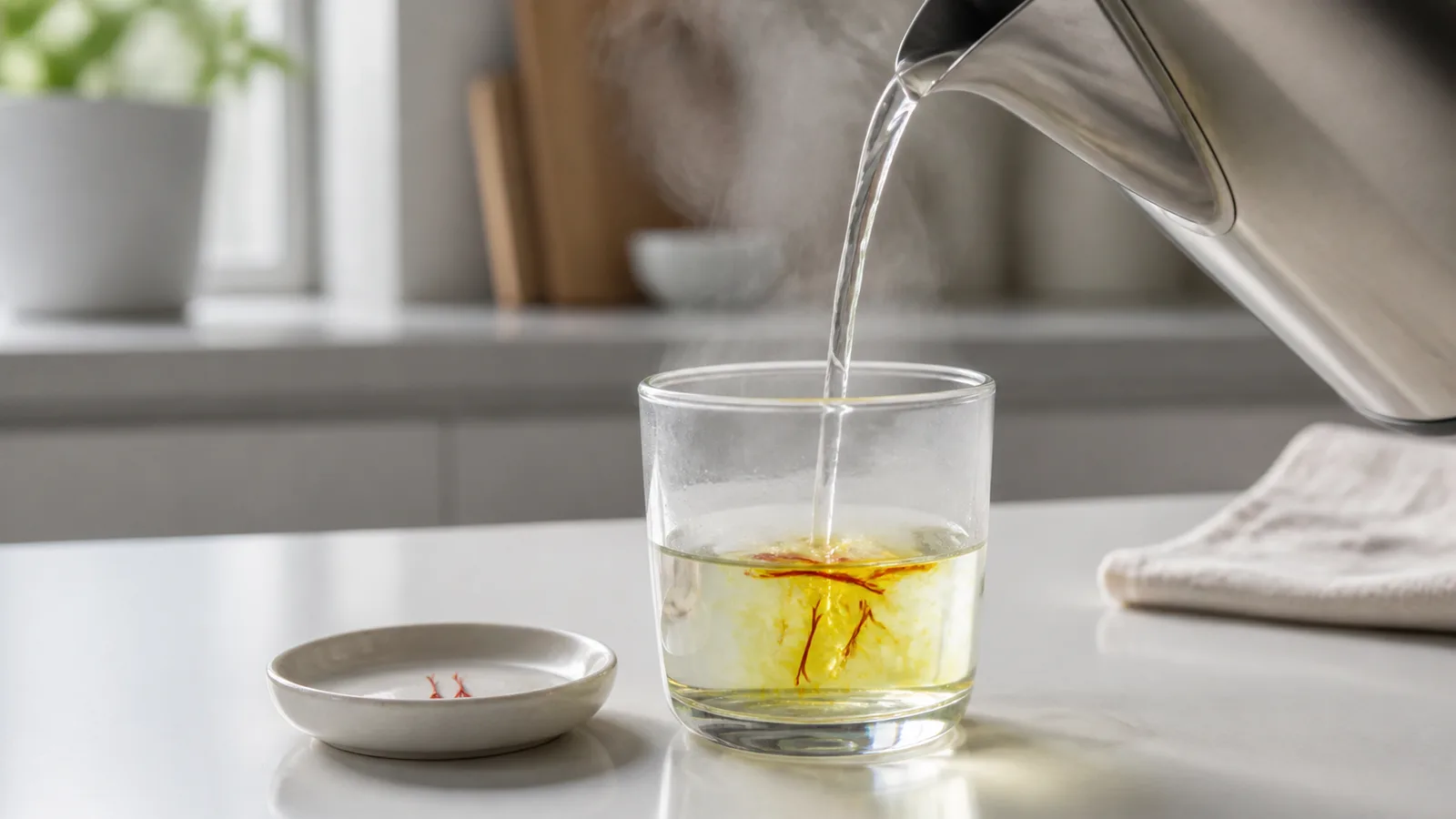
Grind a generous pinch of saffron threads with a small pinch of sugar. Pour over 3 tablespoons of hot—not violently boiling—water, cover, and leave for 10–15 minutes. The liquid should be a strong orange-red colour and smell clearly of saffron.
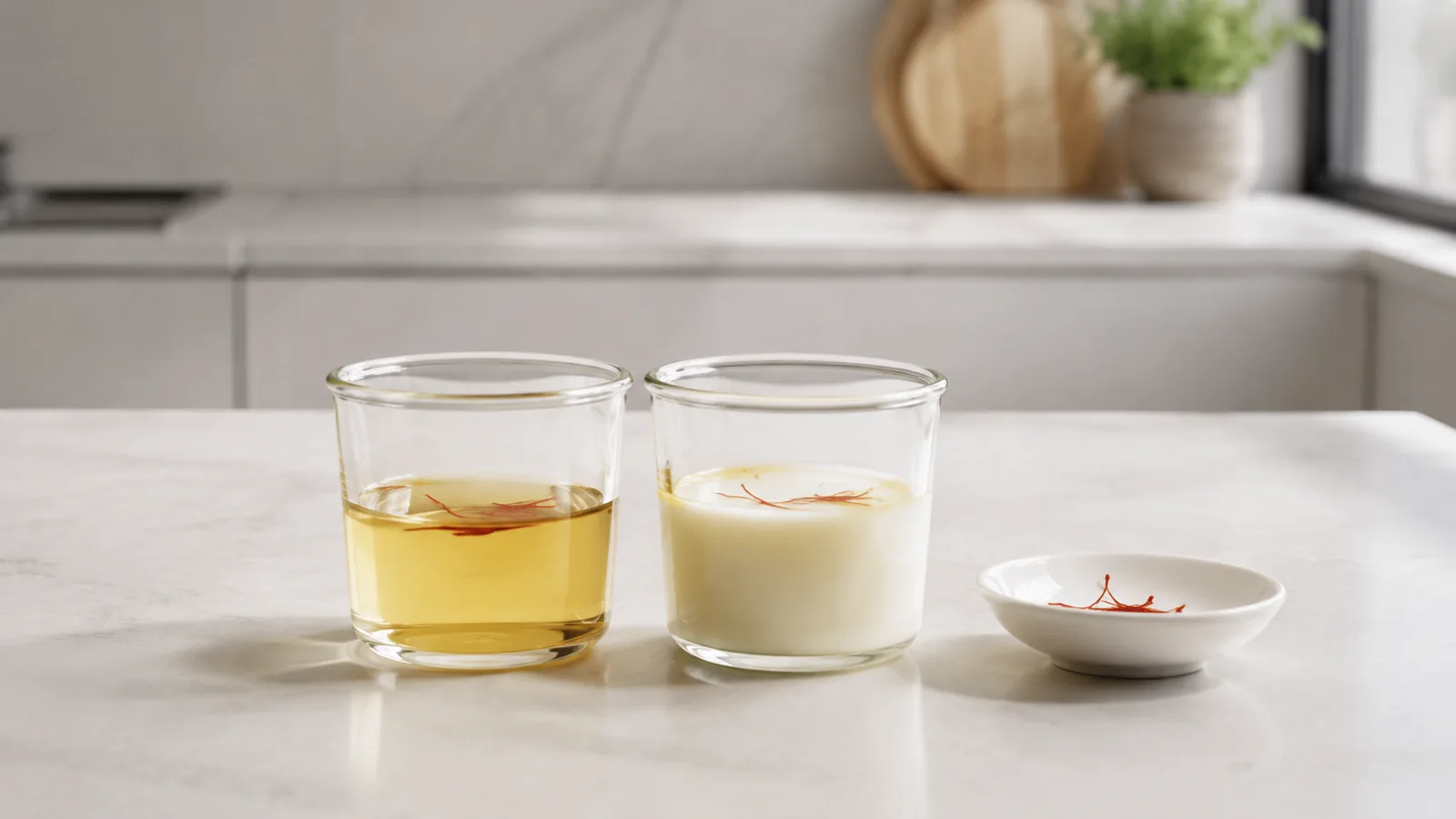
Measure 1 tablespoon for the luz. The remaining 2 tablespoons can go into the kate rice. Brewing one concentrated batch keeps both recipes simple and prevents wetting the almond dough with more liquid than it can hold.
How to make Persian saffron luz
- Prepare the pan. Line a small square or rectangular dish with parchment paper, leaving enough overhang to lift the confection out. Lightly oil the paper only if it is not non-stick.
- Prepare the almonds. Mix the almond flour and sifted powdered sugar until no lumps remain.
- Cook the syrup. Combine the granulated sugar and water in a small saucepan. Warm gently until the sugar dissolves, then bring to a steady boil. Avoid stirring once it boils. Cook until the syrup is slightly thick and reaches about 115–118°C if using a thermometer.
- Cool and beat. Remove the pan from the heat and let the syrup cool until warm rather than hot. Beat it with an electric mixer for several minutes until it becomes paler and more opaque.
- Add the saffron. Beat in 1 tablespoon of concentrated saffron. The mixture should be evenly coloured, without watery pockets.
- Form the dough. Add the almond mixture gradually, folding and stirring until a soft, cohesive dough forms. Stop when it holds together and no longer sticks heavily to the spoon; you may not need every last spoonful if the syrup reduced more than expected.
- Shape and chill. Press the mixture evenly into the lined dish. Smooth the top with the back of a spoon, scatter over the pistachios, and press them gently into the surface. Refrigerate for 8–12 hours.
- Cut and serve. Lift out the slab and cut it into small diamonds or squares with a sharp knife. Serve cool or let the pieces sit briefly at room temperature for a softer bite.
Getting the luz texture right
Syrup consistency controls the final texture. Undercooked syrup can leave the luz sticky and difficult to cut; heavily cooked syrup can make it dry or grainy. A thermometer removes much of the guesswork, but the visual cue is a clear syrup that has thickened slightly without taking on caramel colour.
Let the syrup cool before beating. Adding almond flour to very hot syrup can release too much almond oil. Add the flour in stages because almond fineness, humidity and syrup reduction all change how much the mixture absorbs.
If the dough remains loose after all the almond mixture is added, chill a spoonful for 10 minutes before changing it. If it is still too soft, fold in a little more almond flour. If it crumbles, work in brewed saffron or warm water a few drops at a time.
How to store saffron luz
Keep the pieces in an airtight container in the refrigerator, separated by parchment if stacked. For the best texture and aroma, make a modest batch and use it within about a week. Do not leave the almond confection in a warm room for long periods.
This recipe contains tree nuts. Use clean utensils and keep it separate from food prepared for anyone with an almond or pistachio allergy.
Persian saffron kate rice ingredients
The absorbed source supplied the outline of a one-pot kate recipe but its quantity line was damaged in translation. The practical proportions below serve about four people without carrying forward its excessive salt wording.
- 2 cups long-grain white rice, preferably Persian-style basmati;
- 3 cups water, plus a little extra if the rice needs it;
- 2–3 tablespoons strongly brewed saffron;
- 1½ teaspoons fine salt, adjusted to taste;
- 2 tablespoons neutral oil or melted butter; and
- 2 tablespoons plain yogurt, optional for a more defined bottom crust.
How to make Persian saffron kate
- Rinse the rice. Wash it gently in cool water several times until the water is much less cloudy, then drain.
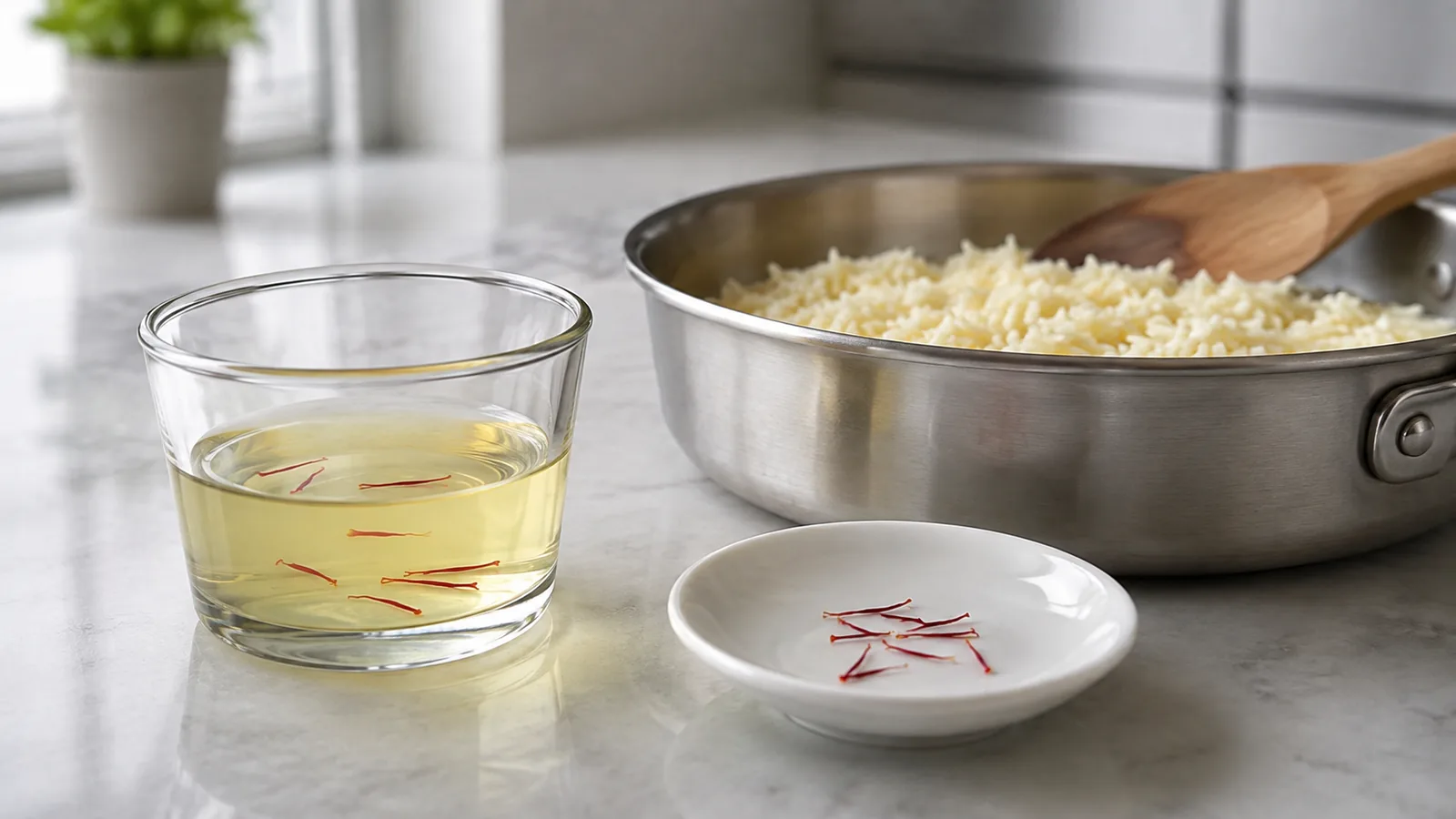
- Start the one-pot cook. Put the rice, 3 cups water, salt, oil and 2 tablespoons brewed saffron into a non-stick or heavy-bottomed pot. Bring to a boil over medium heat.
- Reduce the liquid. Cook uncovered at a lively simmer, stirring gently only two or three times so the grains do not break. When most of the water has been absorbed and small steam holes appear, reduce the heat to low.
- Steam. Shape the rice into a gentle mound, cover the lid with a clean kitchen towel, close the pot and steam for 25–35 minutes. Keep the cloth away from the flame.
- Check the grain. Taste from the centre. If it is still firm and the pot is dry, sprinkle in 1–2 tablespoons of hot water, cover and steam a little longer.
- Serve. Spoon out the rice for a soft kate, or leave it over low heat for another 10–15 minutes to develop a deeper golden crust before inverting it onto a platter.
Optional yogurt crust
For a firmer base, mix the yogurt with about 1 cup of partially cooked rice and a teaspoon of saffron liquid. Briefly lift the remaining rice from the pot, spread the yogurt mixture across the oiled base, return the rest of the rice and steam as above. This is an optional tahdig-style variation, not necessary for everyday kate.
Kate is not the same as drained Persian rice
Kate cooks by absorption, so its starch stays in the pot and the grains are usually softer and more cohesive. In the drained method, rice is parboiled, drained and then steamed for a lighter, more separate texture. Both are Persian techniques; neither is a failed version of the other.
For a sweeter, more elaborate rice dish with citrus peel and nuts, see our Shirin polo and saffron rice guide. The kate here is deliberately simpler and works as a side for stews, grilled vegetables or kebabs.
Two recipes, one saffron habit
Use saffron sparingly, brew it strongly and add it with a clear purpose. In luz, too much liquid can loosen the almond dough. In kate, concentrated saffron colours the rice without changing the water ratio. A little care at that stage gives both recipes a cleaner aroma and a more even golden colour.
Start with the luz if you want a make-ahead sweet that can chill overnight. Choose kate when you need a straightforward one-pot rice. Together they show two very different sides of Persian saffron cookery without turning either dish into a complicated project.