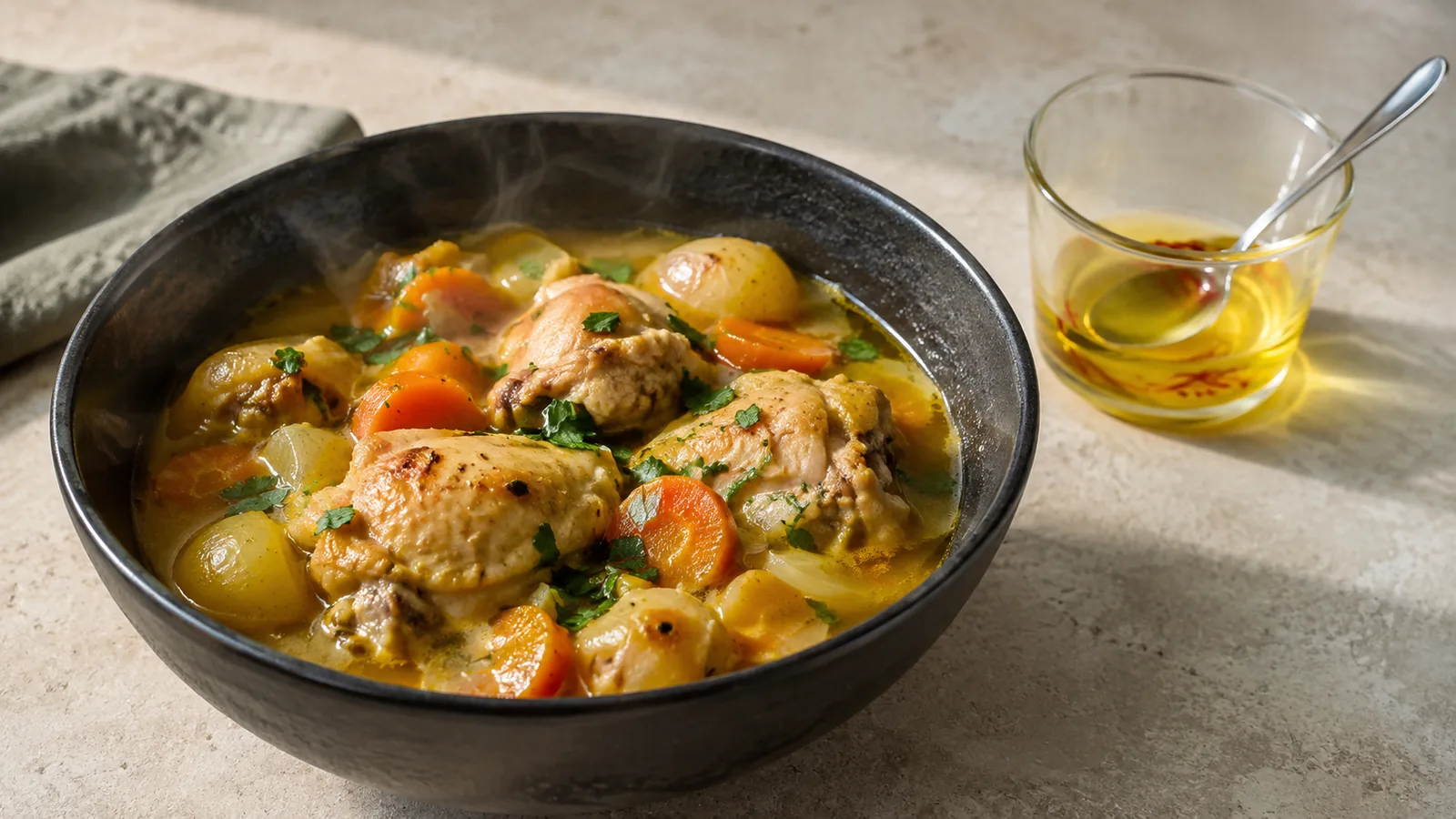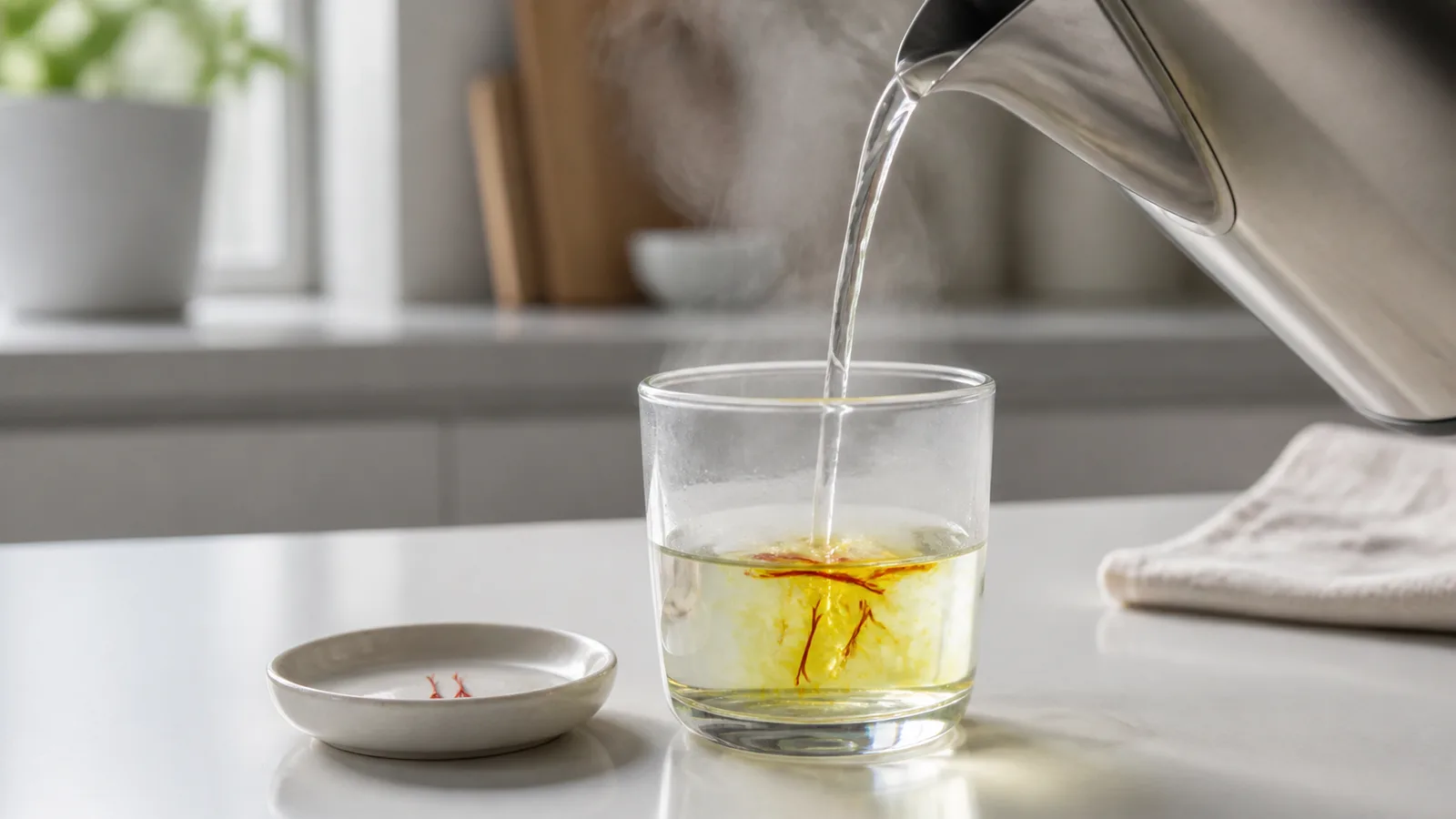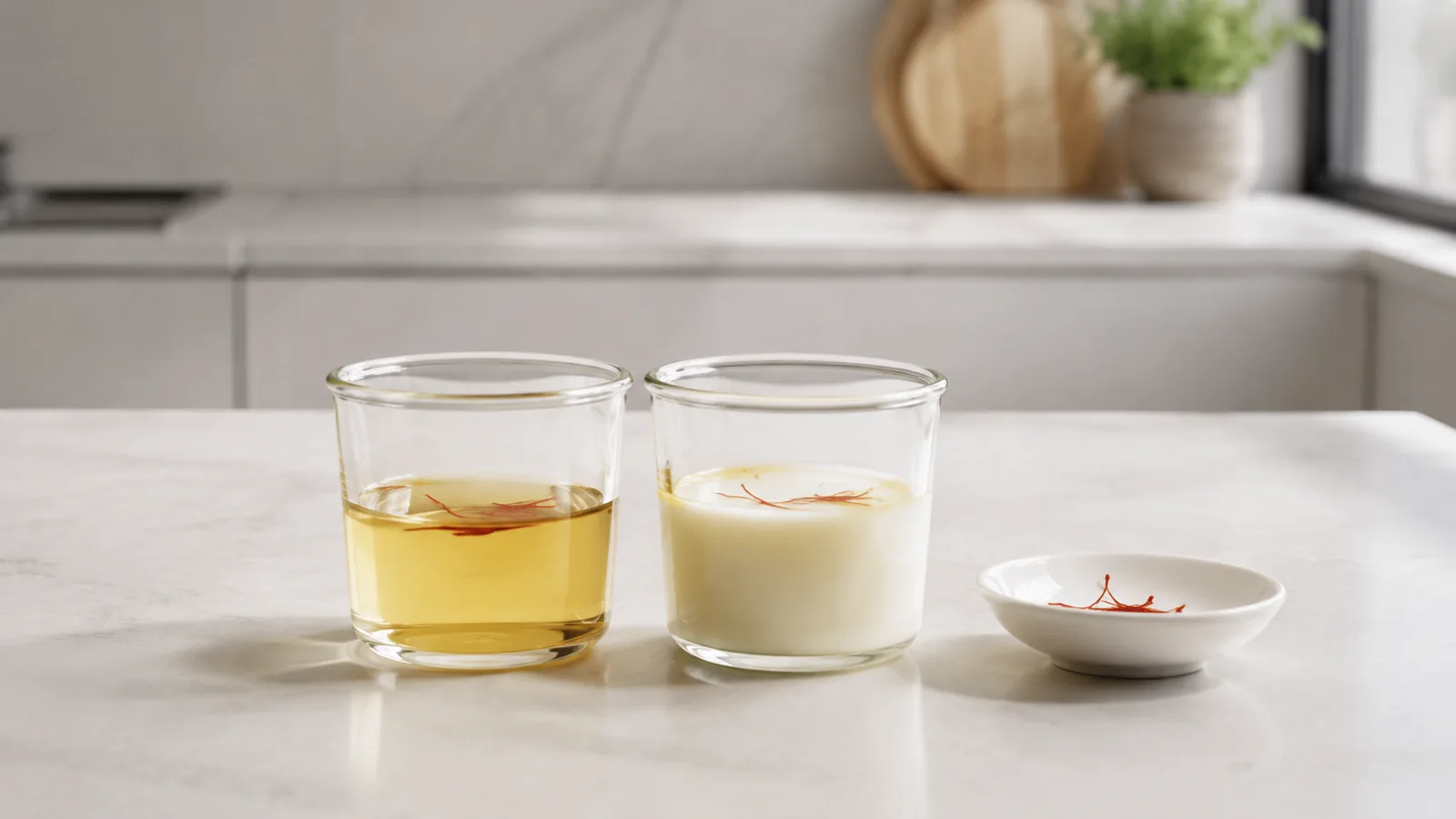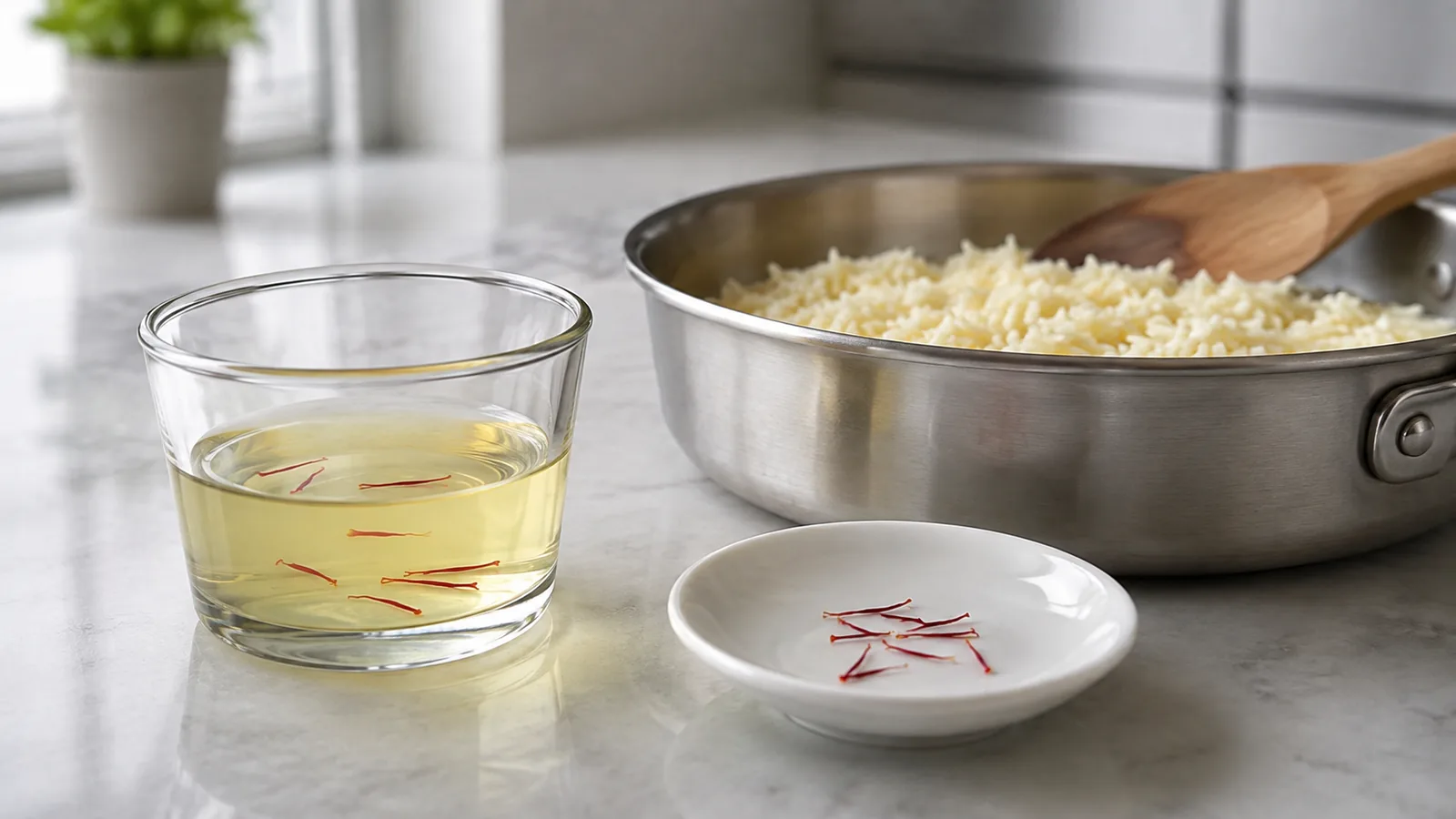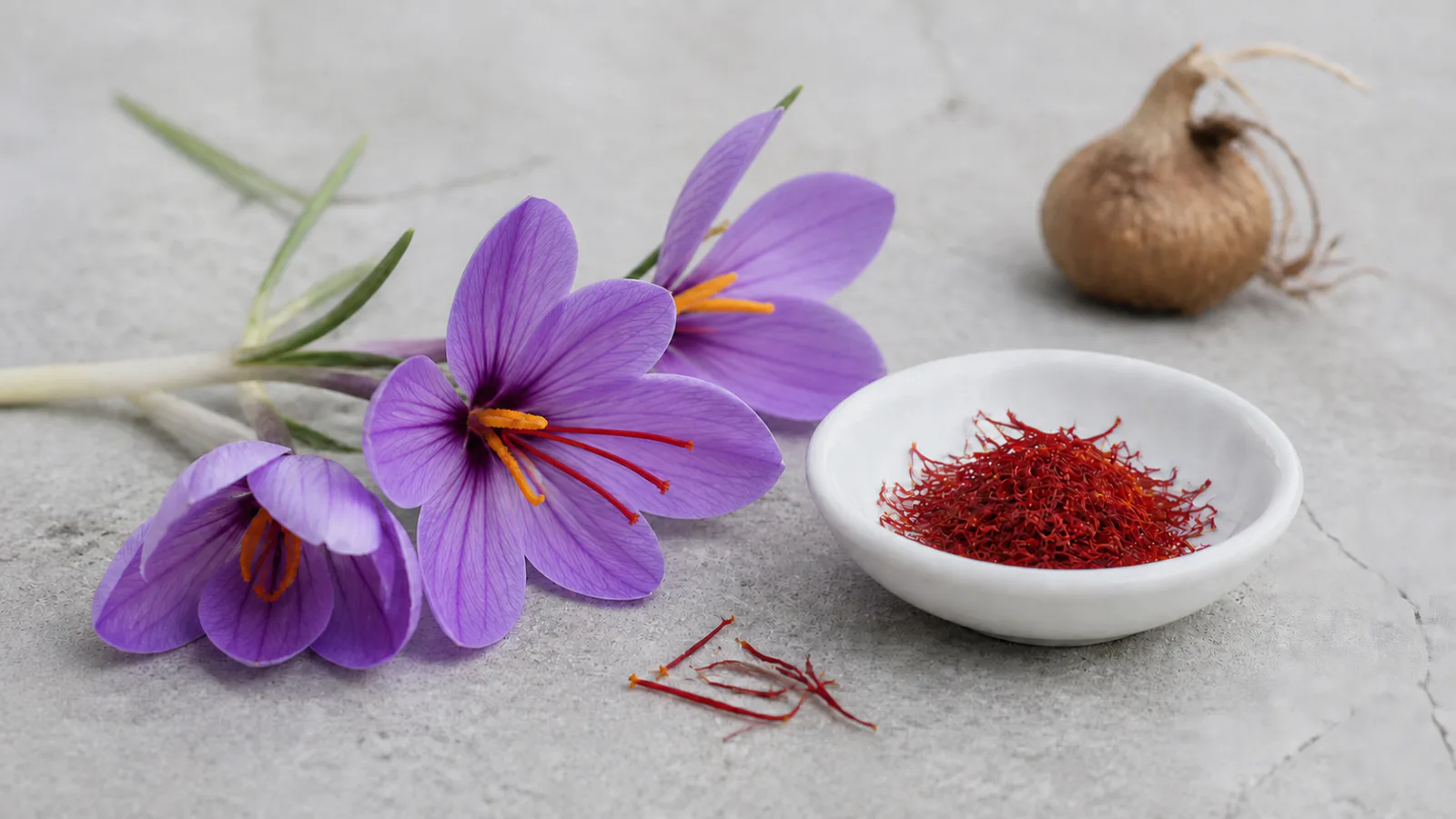
What are the properties of saffron? Saffron is the dried red stigma of Crocus sativus. Crocin-related pigments provide colour, picrocrocin contributes bitterness and safranal is central to the aroma. These chemical and sensory properties make saffron useful in cooking, drinks and quality testing.
Saffron compounds are also studied for mood, cognition, eye health and other medical questions. Some human findings are promising, especially for defined extracts, but that evidence does not make culinary saffron a treatment. Physical properties, traditional uses and clinically demonstrated effects must be kept separate.
Saffron plant properties
Crocus sativus is a perennial flowering plant grown from an underground corm rather than a true onion or bulb. It is propagated by dividing corms. The flower usually has six purple tepals and a style that divides into three red stigmas; those stigmas are harvested and dried as saffron.
The plant is associated strongly with Southwest Asia and cultivation in Iran, but saffron is also grown in parts of southern Europe, South Asia and other suitable regions. Geography alone does not determine grade. Cultivar material, growing conditions, harvest timing, drying, storage and adulteration all affect the finished spice.
Why saffron is expensive
Each flower contributes only three stigmas, and flowers must be collected and separated within a short harvest window. Estimates often place the number of flowers needed for one kilogram of dried saffron around 150,000, though yield varies. The important property is the labour-to-weight ratio: a large volume of delicate flowers becomes a small mass of dry spice.
The old page suggested that five kilograms of flowers become one kilogram of saffron. That conversion is not a reliable general ratio. Flower size, stigma weight, moisture and drying loss differ, so provenance and measured dry yield matter more than one universal figure.
Colour, taste and aroma
Colour
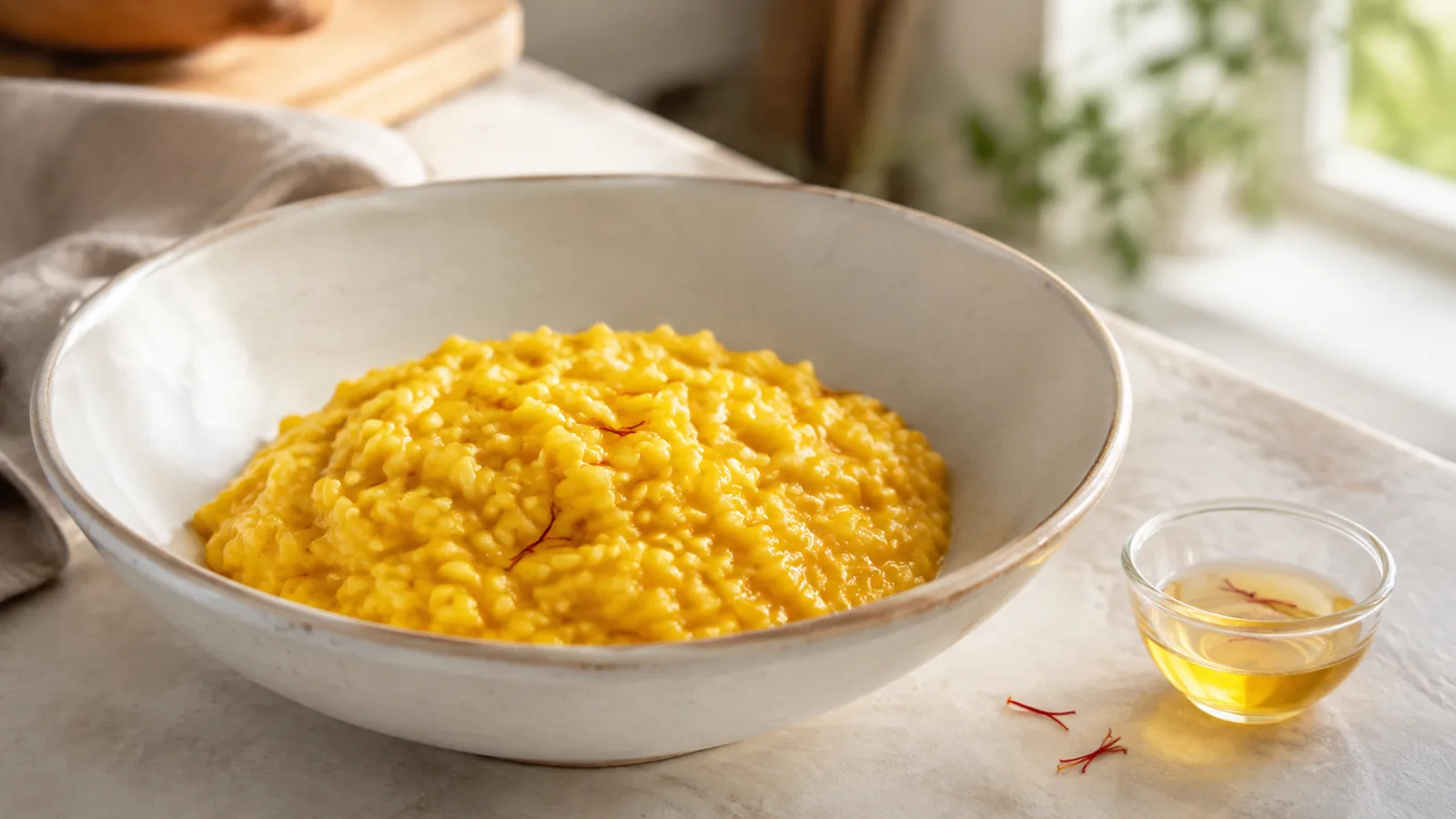
Crocin-family compounds are water-soluble carotenoid pigments responsible for saffron’s golden colour. A few threads can colour an entire dish after blooming. Immediate, unnaturally intense red dye running from a thread is not proof of quality and may justify closer inspection.
Taste
Picrocrocin contributes saffron’s characteristic bitterness. The finished food should not taste aggressively bitter; that usually means the amount is too high, the dish is unbalanced or the material is poor.
Aroma
Safranal is a major contributor to the dried spice’s aroma. It develops during post-harvest processing and is volatile, which is why open, warm or damp storage causes sensory quality to fade.
The current ISO 3632-1:2025 specification defines requirements for dried saffron, while ISO 21983:2019 addresses testing for selected synthetic, water-soluble acid colourants. A rich colour alone cannot verify authenticity; identity and adulteration need appropriate inspection and testing.
Nutritional properties in a real serving
Nutrient databases can list carbohydrate, minerals and vitamins per 100 grams of saffron. That serving basis is misleading for daily nutrition because a whole recipe commonly uses only a fraction of a gram. Saffron is not a practical way to correct iron, potassium, vitamin or calorie deficiency.
Its culinary contribution is concentrated aroma, colour and taste. It can make food appealing without needing a large quantity, but it does not lower the fat or cholesterol already present in a recipe.
What health properties have human evidence?
A systematic map of saffron clinical evidence identified trials across mood, cognition, eye conditions, metabolic outcomes and other topics. The number, quality and consistency of studies vary, and products are often standardised powders or extracts rather than normal food.
Mood
Mood is one of the better-studied areas. A 2024 systematic review of neurological and psychiatric trials reported favourable results for depression and anxiety in studied preparations. This does not prove that one cup of saffron tea prevents depression, and saffron should not replace professional care or prescribed treatment.
Memory and neurodegenerative disease
Small trials and reviews have explored cognition and Alzheimer’s disease. The evidence is not sufficient to say saffron prevents Alzheimer’s or Parkinson’s disease, restores damaged nerves, treats nerve pain or cures low-back pain. These are research questions, not established culinary benefits.
Eyes and age-related macular degeneration
Defined saffron preparations have been tested in small studies of retinal function and age-related macular degeneration. That does not establish restored sight, repaired eye cells or prevention of genetic eye disease. Anyone with visual changes needs prompt eye care; delaying assessment can cost vision.
Blood pressure, cholesterol and digestion
Meta-analyses have investigated modest changes in blood pressure and metabolic markers, but results do not make saffron a substitute for hypertension or cholesterol treatment. Traditional use for digestion, stomach discomfort, menstrual symptoms, coughs, asthma, urinary problems, jaundice, anaemia, gum pain and skin disease is not the same as clinical proof.
Antioxidants and cancer claims
Crocin, crocetin and other saffron compounds show antioxidant and antitumour activity in laboratory models. A cell or animal result cannot demonstrate that eating saffron prevents cancer, repairs damaged DNA in people or treats an existing tumour.
The National Cancer Institute explains that no herb or special food has been proved to slow cancer, cure it or prevent it from returning. Saffron may be a subject of research, but it must not displace screening, diagnosis or oncology care.
Disadvantages and possible side effects
Culinary use and medicinal exposure are different. Concentrated saffron can cause nausea, vomiting, headache, dizziness, dry mouth, drowsiness, gastrointestinal problems and allergic reactions. A 2026 systematic review of adverse events found saffron was generally tolerated in trials but noted potentially significant events with higher doses or prolonged medicinal use.
Seek urgent help for breathing difficulty, swelling, fainting, severe vomiting or unusual bleeding. Keep saffron and supplements away from children. Anyone taking antidepressants, blood-pressure medicines, anticoagulants or antiplatelet medicines should ask a clinician or pharmacist before using a concentrated product.
Saffron and pregnancy
The previous article said saffron in the first trimester could cause abortion but recommended it later to make childbirth easier. That is unsafe self-treatment advice. A 2026 review of saffron in pregnancy found limited and inconclusive evidence, possible effects at term and concern about higher or occupational exposure. It called for standardised preparations and longer-term safety data.
The old explanation referred specifically to prostaglandins, uterine smooth muscle and cervical relaxation, but it did not provide a clinical basis for a home dosing schedule. A plausible biological mechanism is not proof that self-administered saffron will safely start or ease labour.
Pregnant people should not use saffron extracts or medicinal amounts unless their obstetric clinician specifically recommends and supervises them. Normal food seasoning is a separate question, but high-risk pregnancies still need individual advice. Evidence for concentrated use while breastfeeding is insufficient.
How much saffron is appropriate?
There is no recognised rule that every person should consume three grams per month or that five grams per month is a universal dividing line between benefit and harm. The old statement that five grams in one meal necessarily causes death should not be used as a safety threshold. Individual response, product form and exposure differ, and deliberately testing gram-level amounts is dangerous.
Use a small culinary amount for flavour and colour. Do not convert a supplement study into loose-thread dosing. Our focused guide explains how much saffron to eat in a month without inventing a health quota.
Storage properties
Light, heat, moisture, oxygen and time weaken saffron’s colour and especially its volatile aroma. Keep dry threads in a tightly closed food-safe glass or metal container in a cool, dark cupboard. Do not store them above a steaming stove, and use a dry utensil.
An open lid lets aroma escape; it does not remove every property at once, but repeated exposure lowers quality. Whole threads are easier to examine and retain aroma better than pre-ground material.
Culinary and industrial uses
Saffron is used in rice, sauces, soups, confectionery, cakes, dairy foods, tea and other alcoholic or non-alcoholic drinks. It has also been used as a textile dye and fragrance material. Pharmaceutical research may isolate or standardise compounds, but a researched extract is not equivalent to spice added to food.
The most defensible summary of saffron properties is simple: a distinctive flower part with powerful colour, aroma and taste; a complex chemistry worth studying; promising but product-specific clinical evidence; and real safety limits when culinary use becomes concentrated self-dosing.