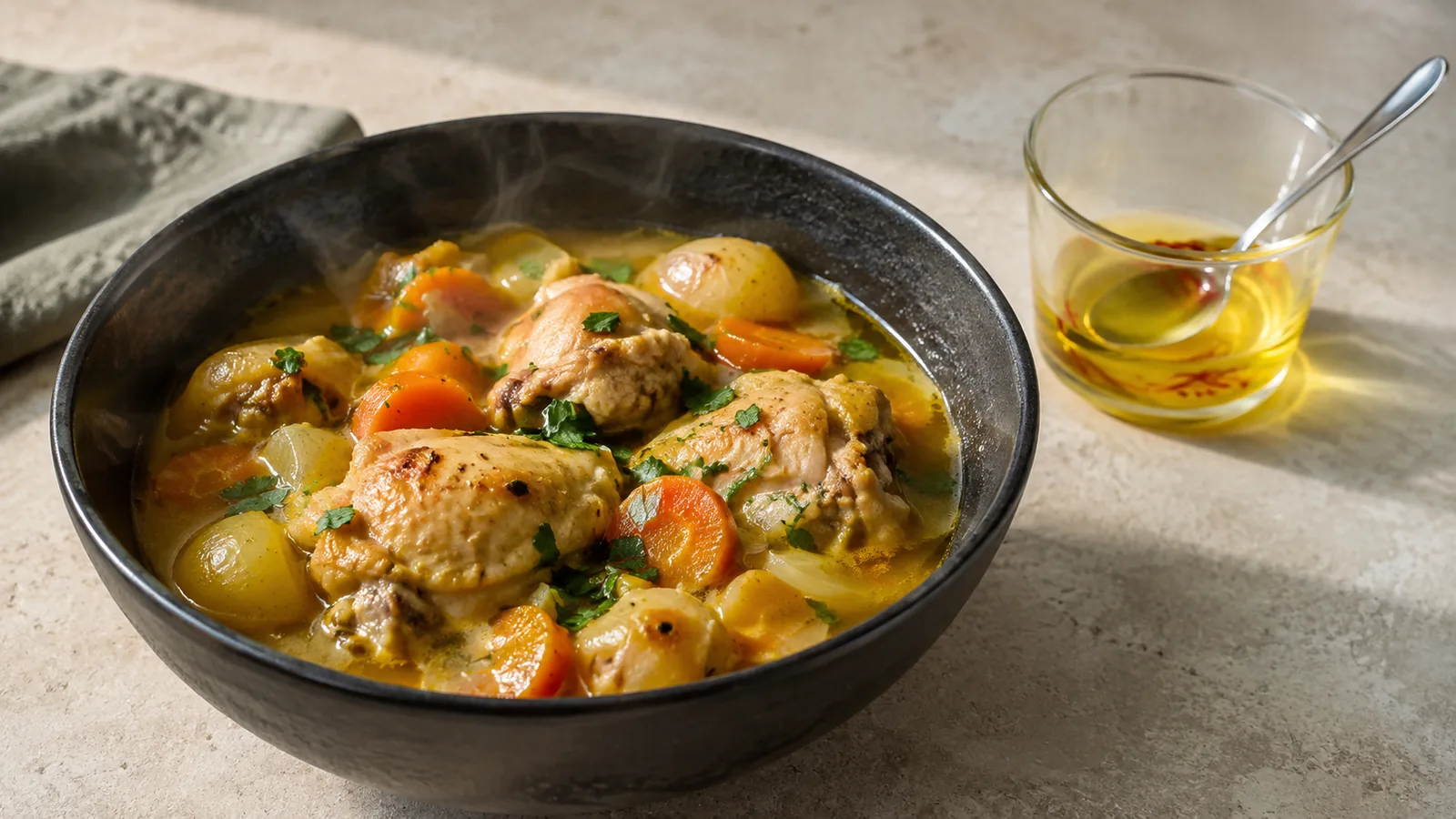
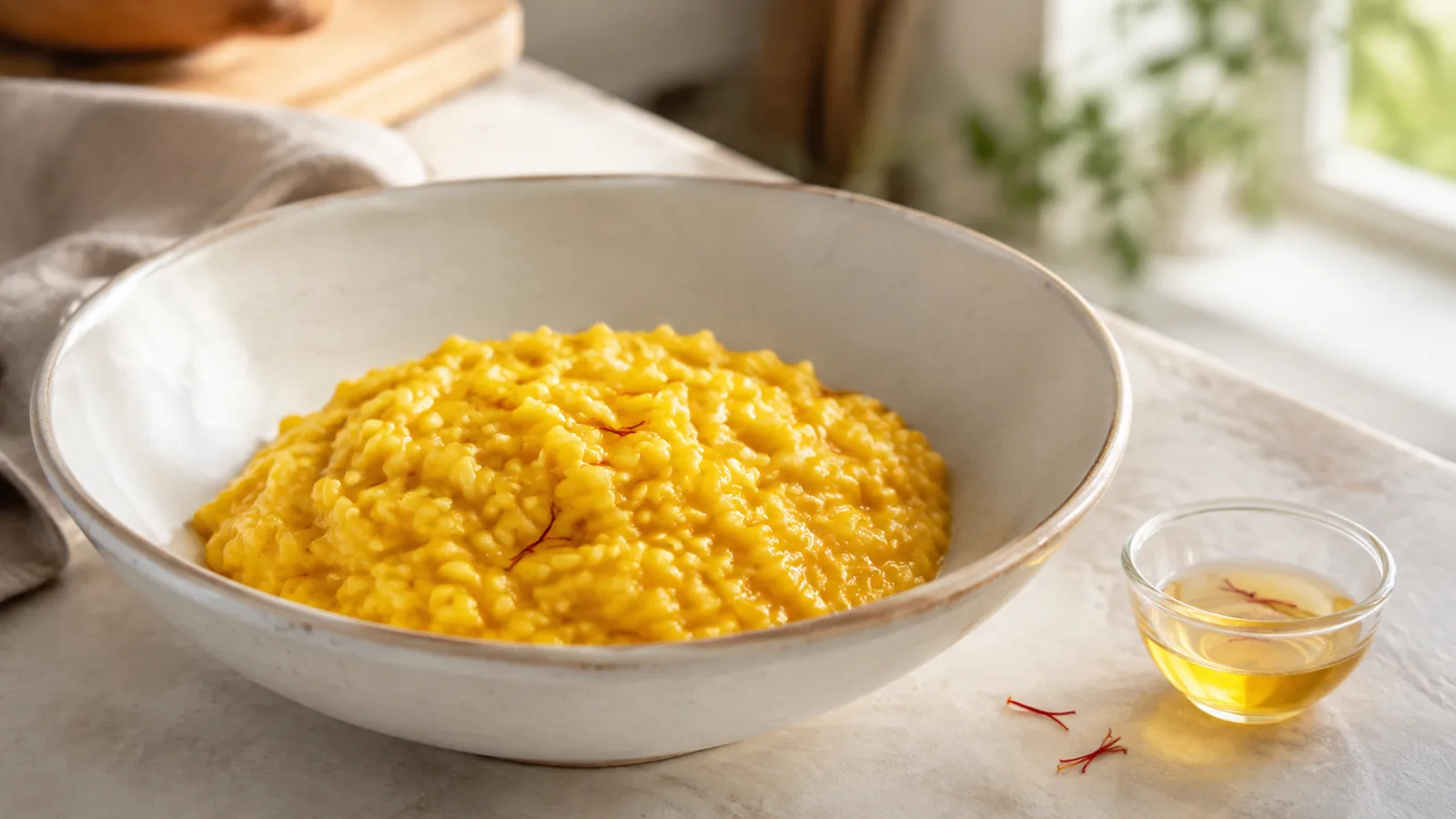
This Kari saffron rice Shirazi recipe makes a savoury platter of curry-spiced chicken, pea rice and crisp potato tahdig. “Kari” is the spelling retained from the original title; in the recipe, it refers to curry. The method had been reduced to a few mistranslated lines, so the steps below make the same ingredients practical to cook.
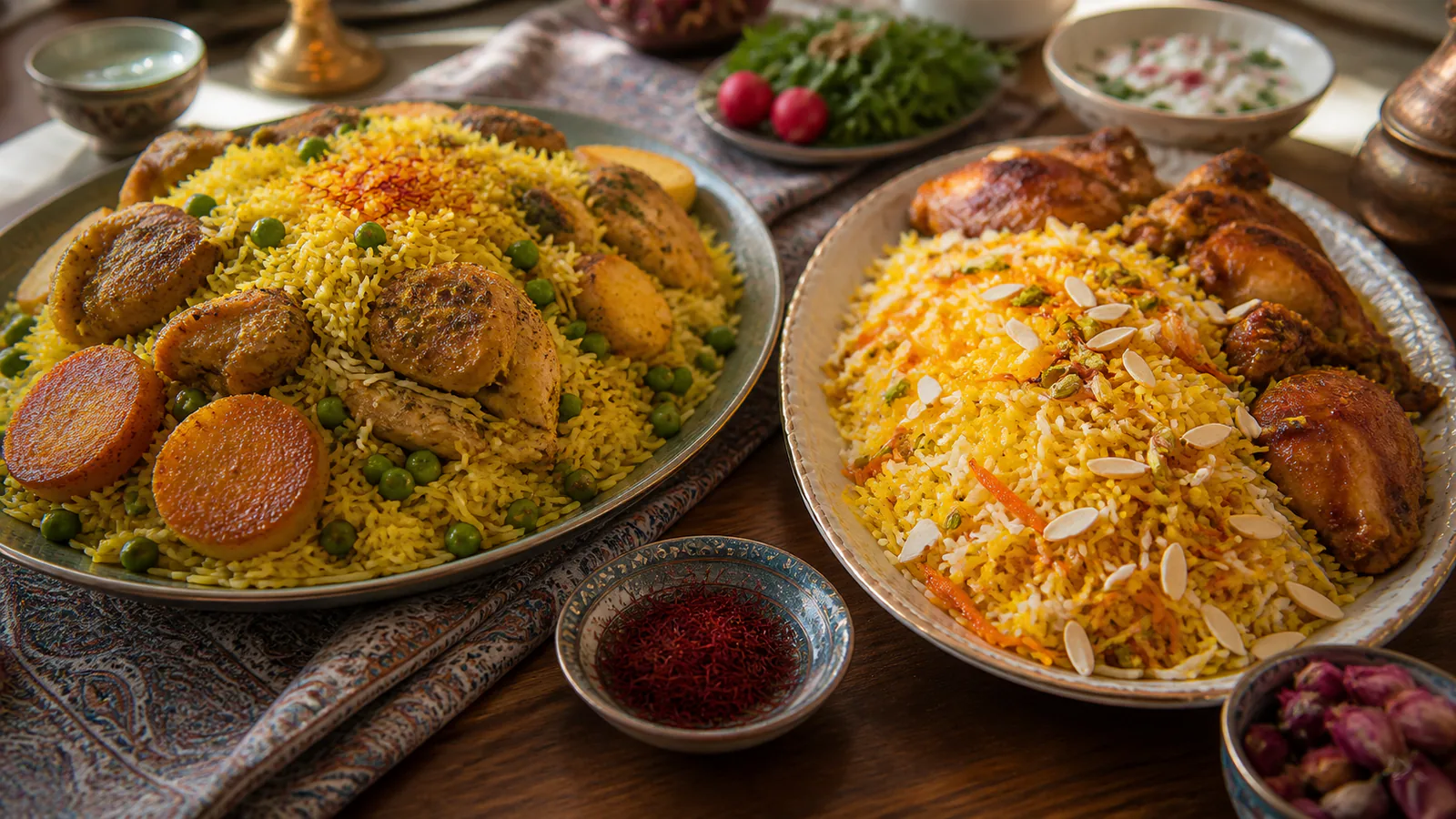
The second half of this guide gives a contrasting Iranian saffron rice: shirin polo, a sweet celebration dish with candied citrus peel, almonds, pistachios and chicken. The two recipes share the techniques that matter most—parboiled rice, properly bloomed saffron and gentle steaming—but the finished flavours are completely different.
Before you start: rice and saffron
Use long-grain basmati rice if possible. Rinse it several times until the water is much clearer, then soak it in salted water for 30 minutes to 2 hours. Soaking helps the grains lengthen and cook evenly.
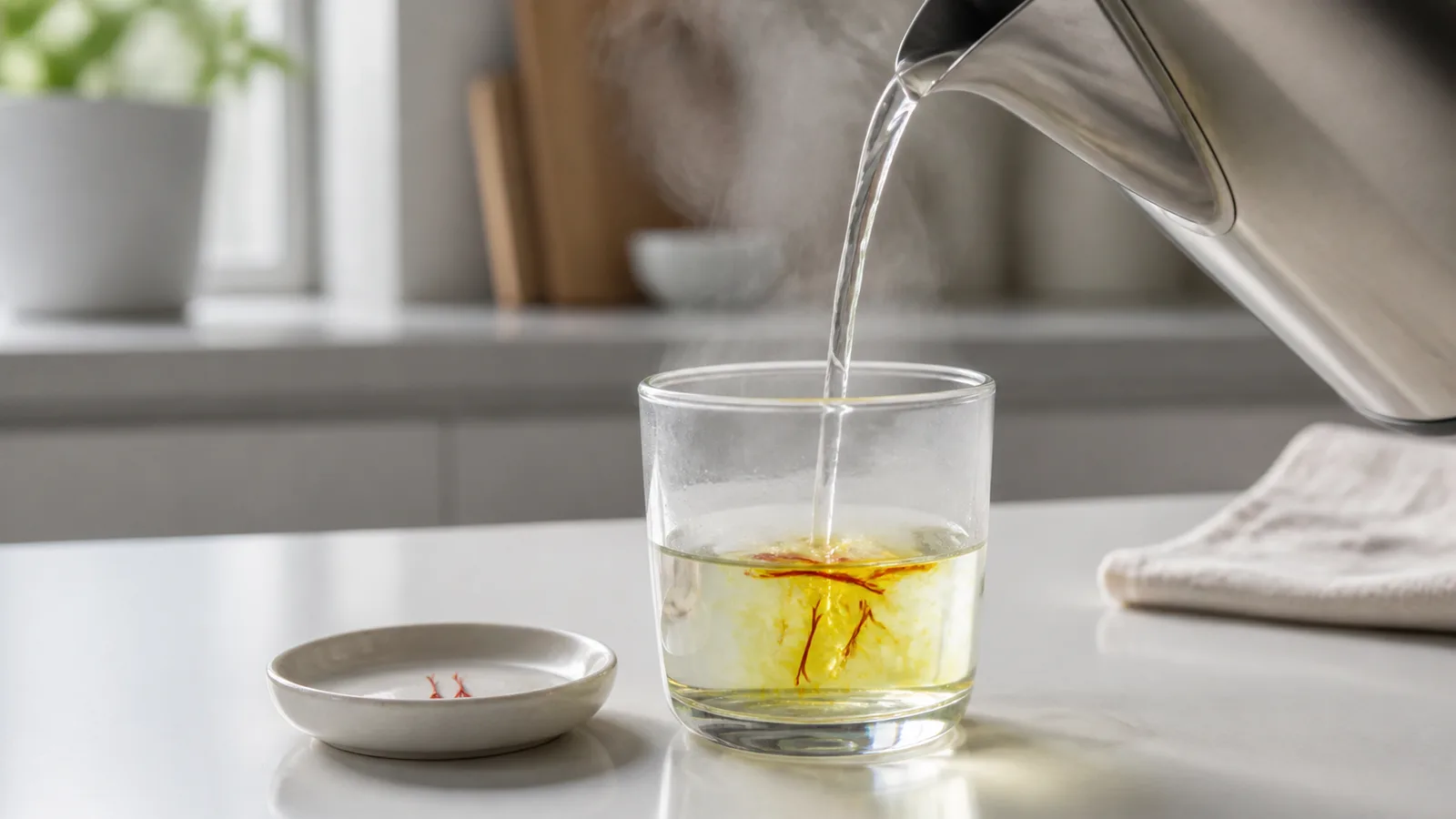
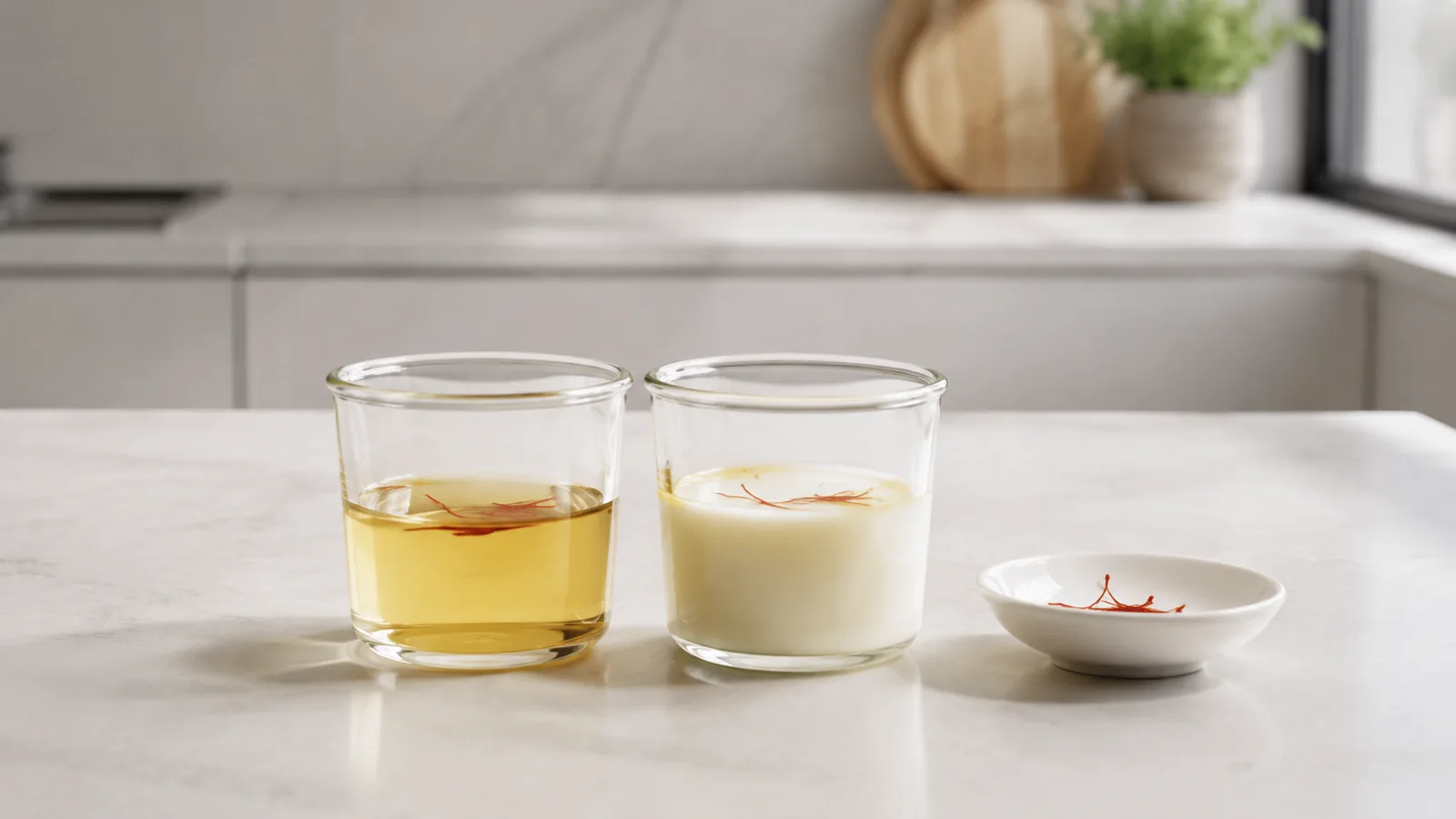
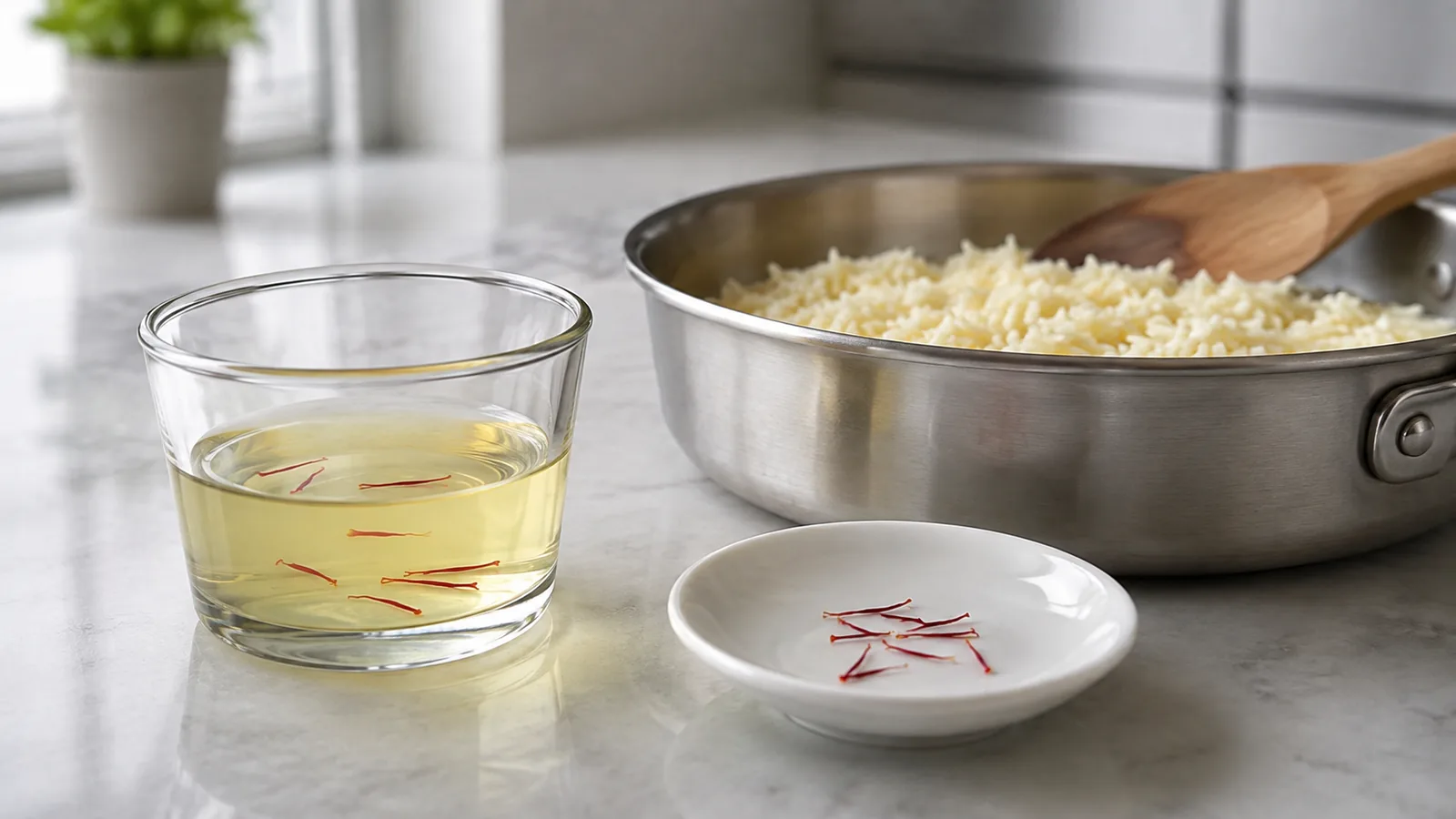
For either recipe, grind the measured saffron threads gently and cover them with a few tablespoons of hot, not violently boiling, water. Leave the cup covered for 10 to 15 minutes. This produces an even golden infusion without leaving dry clumps in the rice.
Kari saffron rice Shirazi recipe
This is a home-style savoury rice rather than a standardized restaurant dish. The archived recipe identifies it as Shirazi and combines curry, saffron, chicken, peas and potato. It serves about six.
Ingredients
- 4 cups basmati rice
- 6 bone-in chicken pieces, about 1 to 1.2 kg total
- 100 g green peas, fresh or frozen
- 2 medium onions
- 3 medium potatoes
- 2 tablespoons mild curry powder
- 1 teaspoon ground saffron, bloomed in 4 tablespoons hot water
- 3 tablespoons ghee, clarified butter or neutral oil, plus a little more if needed
- 1 teaspoon turmeric
- salt and black pepper
- water for cooking the chicken and rice
1. Cook the saffron-curry chicken
Quarter one onion and place it in a saucepan with the chicken, turmeric, 1 teaspoon salt and enough water to come halfway up the pieces. Bring to a gentle simmer, cover and cook until the chicken is done and tender, usually 35 to 50 minutes depending on the cut. Transfer the chicken to a plate and strain the cooking liquid. You need about 1 cup; simmer it briefly if there is much more.
Thinly slice the second onion. Heat 1 tablespoon of the fat in a wide pan and cook the onion until golden. Stir in the curry powder for 30 seconds, then add the chicken, about ½ cup of the reserved liquid and half the saffron infusion. Turn the pieces in the sauce and simmer uncovered until glossy and well coated. Keep warm.
2. Parboil the rice and peas
Bring a large pot of well-salted water to a rolling boil. Drain the soaked rice, add it to the pot and stir once. Cook until the grains are soft on the outside but still firm at the centre, usually 5 to 7 minutes. Add the peas for the final minute, then drain immediately and rinse briefly with lukewarm water to stop the cooking.
3. Make the potato tahdig and steam
Peel the potatoes and cut them into slices about 5 mm thick. Dry them well. Heat the remaining fat in a clean heavy pot and arrange the slices in a single layer. Season lightly, then spoon the rice and peas over them in a loose mound. Do not pack the rice down.
Make several steam holes with the handle of a wooden spoon. Wrap the lid in a clean tea towel, cover tightly and cook over medium heat for about 5 minutes, until steam builds. Reduce the heat to low and cook for 35 to 45 minutes.
4. Finish and serve
Mix a scoop of cooked rice with the remaining saffron infusion. Turn the plain rice onto a platter, scatter the golden rice over it and arrange the curry chicken alongside or on top. Loosen the crisp potato tahdig with a thin spatula and serve it in whole pieces. Spoon over only enough reduced sauce to flavour the chicken; flooding the rice will soften the separate grains and crust.
Sweet saffron rice: shirin polo
Shirin polo is the sweeter, more elaborate companion recipe absorbed into this guide. Fragrant rice is layered with candied bitter-orange or orange peel and nuts, then served with saffron chicken. It is traditionally associated with wedding and celebration tables, where it usually appears beside other dishes rather than standing alone.
The source quantities make a large party batch for roughly 10 to 12 people. Halve every ingredient for a family meal. The listed sugar makes a full preserving syrup; you do not have to pour all of that syrup into the rice.
Ingredients for shirin polo
- 1 kg basmati rice
- 1 medium chicken, jointed, about 1 kg
- 100 g slivered almonds
- 50 g slivered pistachios
- 500 g thinly sliced bitter-orange peel, or peel from untreated oranges
- up to 1 kg sugar, according to the traditional large-batch recipe
- 3 cups water for the syrup
- 1 tablespoon ground saffron, bloomed in about ½ cup hot water
- oil or ghee
- salt and black pepper
1. Remove bitterness from the citrus peel
Cut away most of the thick white pith, then slice the coloured peel into fine strips. Put the peel in a saucepan, cover with water and boil for 3 to 5 minutes. Drain and repeat twice with fresh water. Taste one cooled strip. If it remains sharply bitter, soak the peel in cold water for several hours or overnight, changing the water two or three times. Drain thoroughly.
Bitter orange needs this treatment. Ordinary sweet orange peel may need fewer cycles, so taste rather than following the clock blindly.
2. Make the peel syrup
Combine the sugar and 3 cups water in a wide pan. Heat gently until clear, then simmer for 5 minutes. Add the drained peel and cook at a gentle simmer for another 5 to 10 minutes, just until glossy and sweet. Do not cook it into marmalade. Lift out the peel with a slotted spoon and reserve the syrup separately.
Mix the warm peel with most of the almonds and pistachios. Keep a small handful of each nut for the final garnish.
3. Cook and glaze the chicken
Season the chicken with salt and pepper and simmer it in a covered pan with enough water to come halfway up the pieces. Cook until tender, 35 to 50 minutes. Let the remaining liquid reduce to a small amount.
Add 2 to 3 tablespoons oil or ghee, 3 tablespoons citrus syrup and about one-third of the saffron infusion. Turn the chicken over low heat until it is golden and lightly glazed. The sauce should cling to the meat rather than run into the rice.
4. Parboil, layer and steam
Rinse and soak the rice as described above. Parboil it in salted water until tender at the surface and firm in the centre, then drain.
Add 2 to 3 tablespoons oil and a splash of water to a clean heavy pot. Spoon in half the rice. Scatter over half the candied peel and nut mixture, keeping it away from the pot wall where the sugar could scorch. Add the remaining rice in a mound and make several steam holes.
Cover with a towel-wrapped lid, build steam over medium heat for 5 minutes, then reduce the heat to low. Steam for 40 to 50 minutes. Warm the remaining peel and nuts gently while the rice finishes.
5. Balance the sweetness and assemble
Mix a generous scoop of rice with the remaining saffron infusion. Fold the rest of the candied peel and nuts through the plain rice with a light hand, then transfer it to a platter. Taste before adding syrup. If you want a sweeter finish, drizzle a few spoonfuls over the rice; do not assume the entire batch is needed.
Top with the saffron rice and reserved nuts. Arrange the glazed chicken beside the rice or partly underneath it. This keeps the grains distinct and lets each guest choose how much sweetness to combine with the savoury chicken.
Common problems and simple fixes
- Mushy rice: drain sooner. A parboiled grain should still resist at its centre before steaming.
- Burnt potato or peel: use low heat after steam forms, and keep sugary peel away from the pot wall.
- Pale saffron colour: grind and bloom the threads before adding them; dry threads will not spread evenly.
- Bitter citrus: repeat the blanching and soaking steps, tasting a cooled strip between cycles.
- Overly sweet shirin polo: treat the syrup as an adjustable seasoning. The original quantity is a syrup recipe, not an instruction to use every drop.
- Soft tahdig: dry the potato slices, use enough fat to coat the base, and do not add chicken sauce to the pot.
Which saffron rice should you make?
Choose the Kari saffron rice Shirazi recipe when you want a savoury main dish with curry warmth, peas, chicken and crisp potato. Choose shirin polo for a celebration platter where floral saffron, sweet citrus and nuts are the point.
Both recipes reward the same patient habits: rinse and soak the rice, parboil only to a firm centre, bloom the saffron, and let low steam finish the grains. Once those steps are under control, neither dish is as difficult as its long ingredient list suggests.