Saffron cream in this recipe is a chilled, softly set milk-and-cream dessert—not a cosmetic skin cream. Milk, sugar, breakfast cream and brewed saffron are held with a measured amount of gelatine, then chilled in individual moulds. The result sits between panna cotta and a Persian milk dessert, with a clean saffron aroma and a gentle wobble.
The recipe serves four. Allow about 30 minutes to prepare it, plus 4–5 hours in the refrigerator.
Ingredients
- 3 cups whole milk, 720ml
- 1 cup sugar, 200g
- 200ml breakfast cream or whipping cream
- 3 tablespoons concentrated brewed saffron, cooled
- 8g powdered gelatine, about 2 1/2 teaspoons
- 1/2 cup cold water, 120ml
The inherited translation says “8 teaspoons” of gelatine. That amount would make this volume of dairy very rubbery; the likely original measure is eight grams. Weighing it is more reliable than converting between spoon sizes.
Bloom the gelatine
Pour the cold water into a small heatproof bowl. Sprinkle the gelatine evenly over the surface rather than tipping it in one mound. Leave for 5–10 minutes, until every granule is hydrated and the mixture looks spongy.
Set the bowl over a pan or cup of hot water and stir gently until clear and fluid. Do not let the gelatine boil. Keep it warm enough to remain liquid while preparing the dairy base.
Dissolve the sugar in the milk
Combine the milk and sugar in a saucepan over medium-low heat. Stir until the sugar has completely dissolved and the milk is steaming. It does not need a full boil.
Take the pan off the heat. Whisk a ladle of hot milk into the cream, then pour that tempered cream back into the saucepan. This gradual warming reduces the chance of the cream separating.
Add the saffron
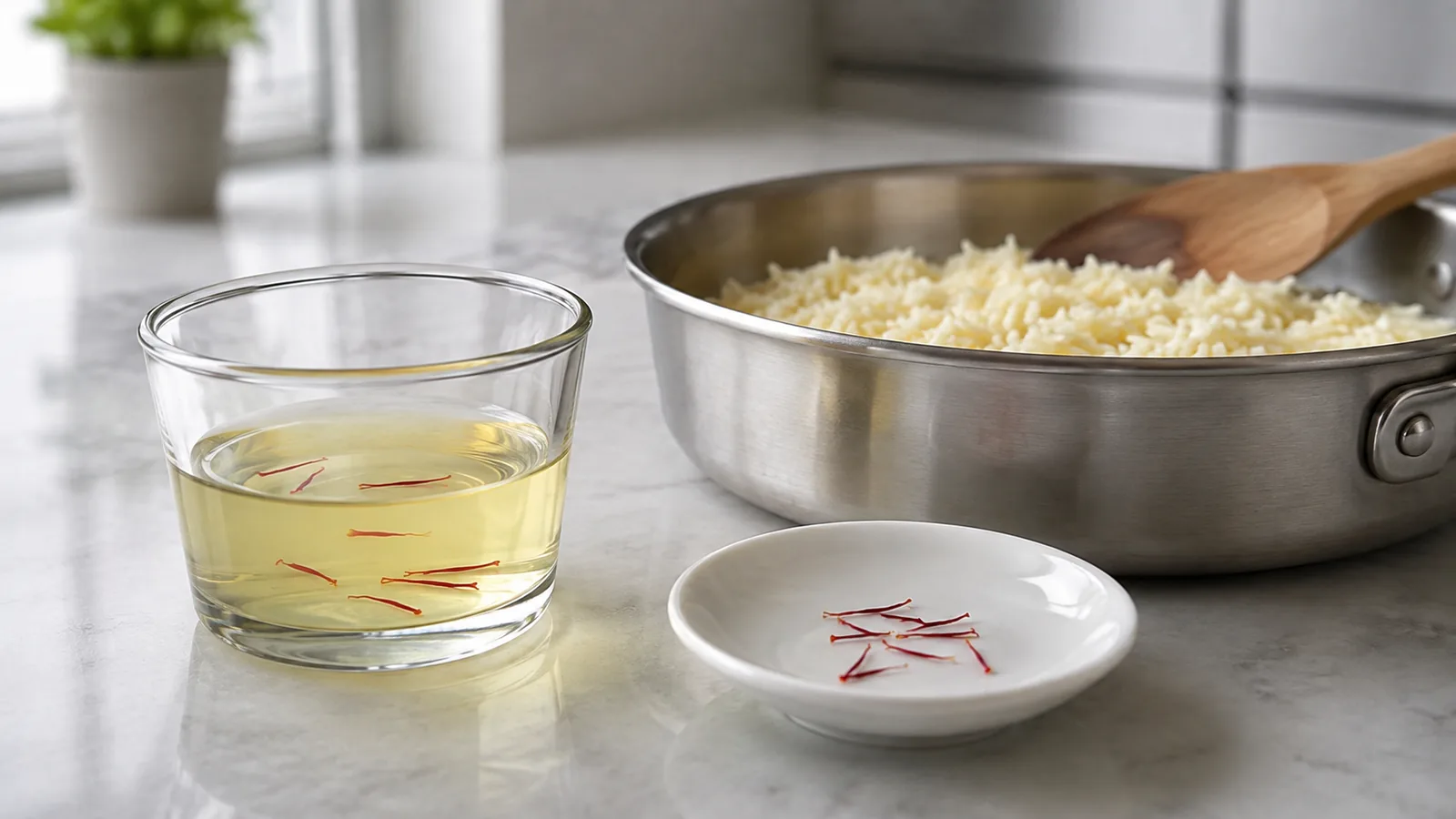
Stir in the cooled saffron infusion until the colour is even. Three tablespoons are enough if the infusion is concentrated; adding a large volume of weak saffron water can soften the final set.
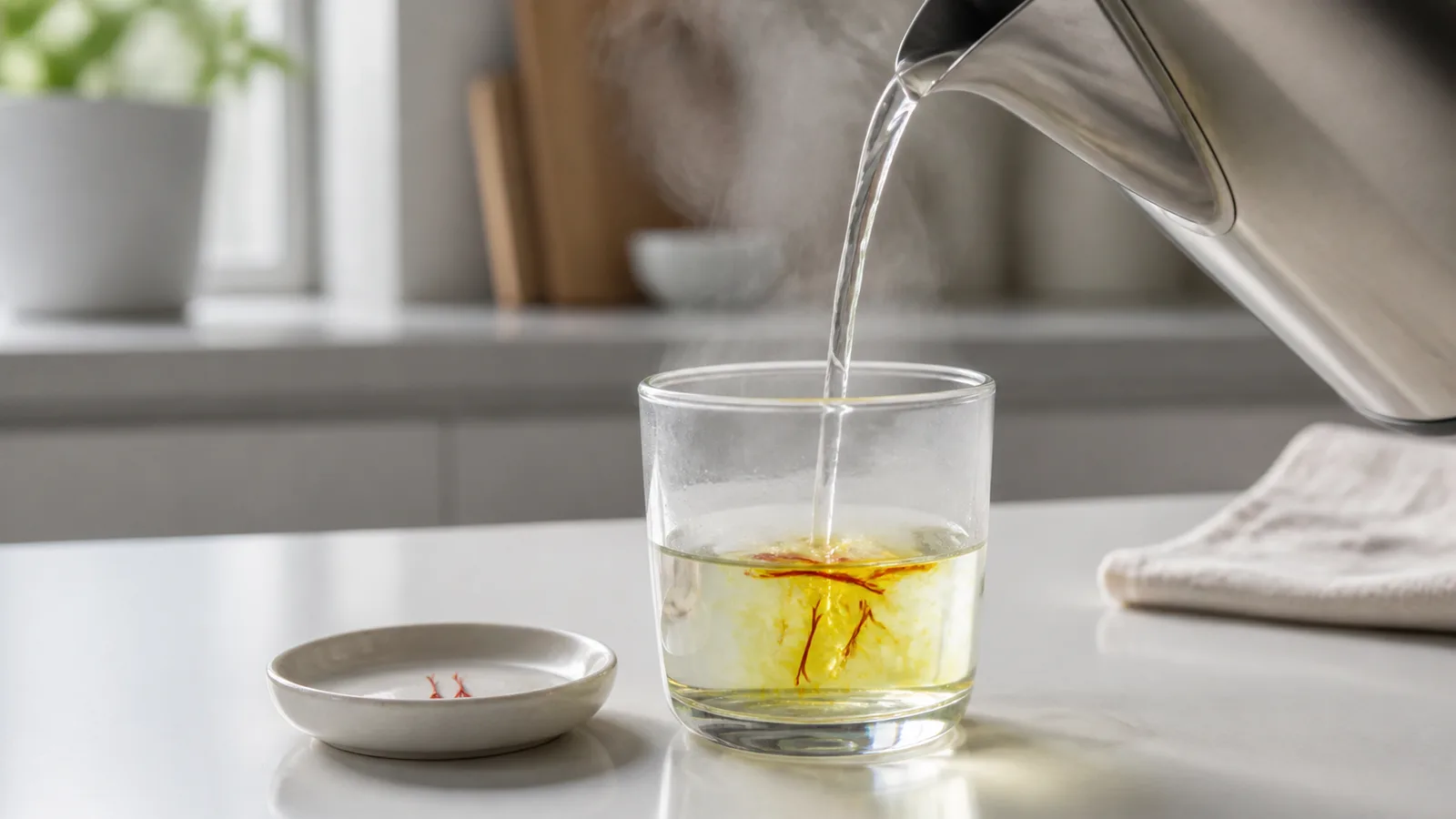
If your infusion is not ready, use the measured method in our guide to brewing saffron. Let it cool before measuring so it does not change the temperature abruptly.
Combine and strain
Whisk the dissolved gelatine into the warm cream-saffron mixture. Stir for a full minute, reaching the base of the pan. Pour through a fine sieve into a jug to catch any undissolved gelatine or milk skin.
Divide among four lightly oiled moulds or simply use serving glasses. If you plan to turn the desserts out, neutral oil wiped almost completely away gives the surface a clean release.
Chill for four to five hours
Let the portions cool until they no longer steam, cover and refrigerate for 4–5 hours. Do not freeze to hurry the process; ice crystals can damage the smooth texture.
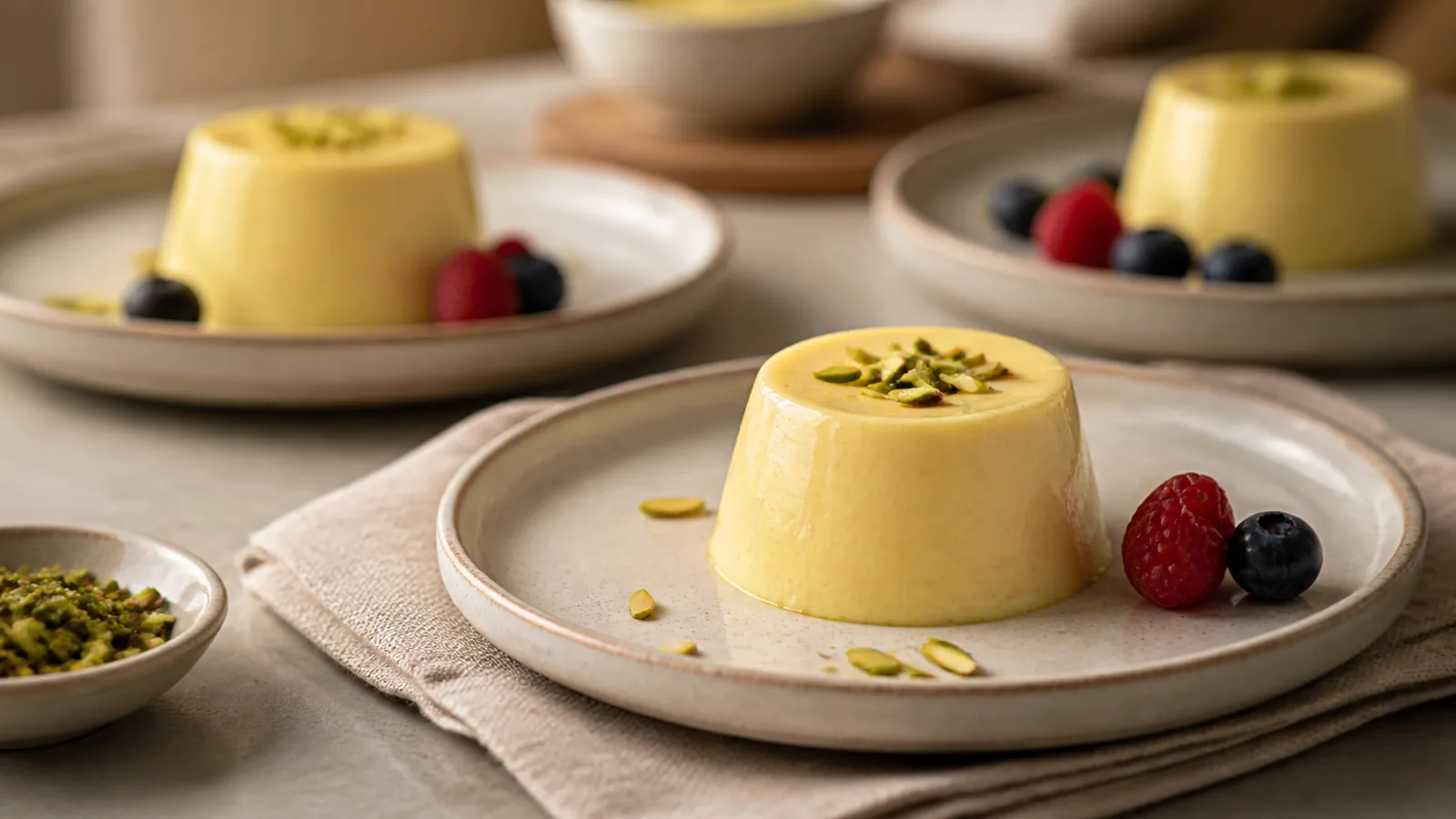
To unmould, dip only the outside of each mould in warm water for a few seconds, loosen the edge with a fingertip and invert onto a plate. If it does not release, warm the outside again briefly rather than forcing it with a knife.
What is saffron cream?
The name can describe several edible preparations. Searches for cream saffron or saffron creme may refer to a set dairy dessert like this one, a cake filling, or cream flavoured with saffron. The ingredients and method determine which it is.
This saffron cream recipe uses gelatine and is designed to hold a moulded shape. It is not interchangeable with custard or whipped cream in a pastry recipe.
Saffron whipped cream and pastry cream
For saffron whipped cream, chill 240ml whipping cream, the bowl and beaters. Whip with two tablespoons icing sugar, then fold in one tablespoon of very concentrated, fully cooled saffron infusion. Stop at soft or medium peaks. No gelatine is needed unless the topping must remain stable for a long display.
Saffron pastry cream is different again: it is a cooked custard thickened with egg yolk and starch. The moulded dessert on this page cannot be substituted directly because it sets with gelatine and melts differently when used inside warm pastry.
Serving and storage
Serve cold with pistachio slivers, berries or a little orange zest. Keep the garnish restrained so the saffron remains the main aroma.
Cover and refrigerate the dessert, using it within three days. Do not leave dairy portions at room temperature for more than two hours, and discard any serving that develops an unusual smell or separated, watery surface.