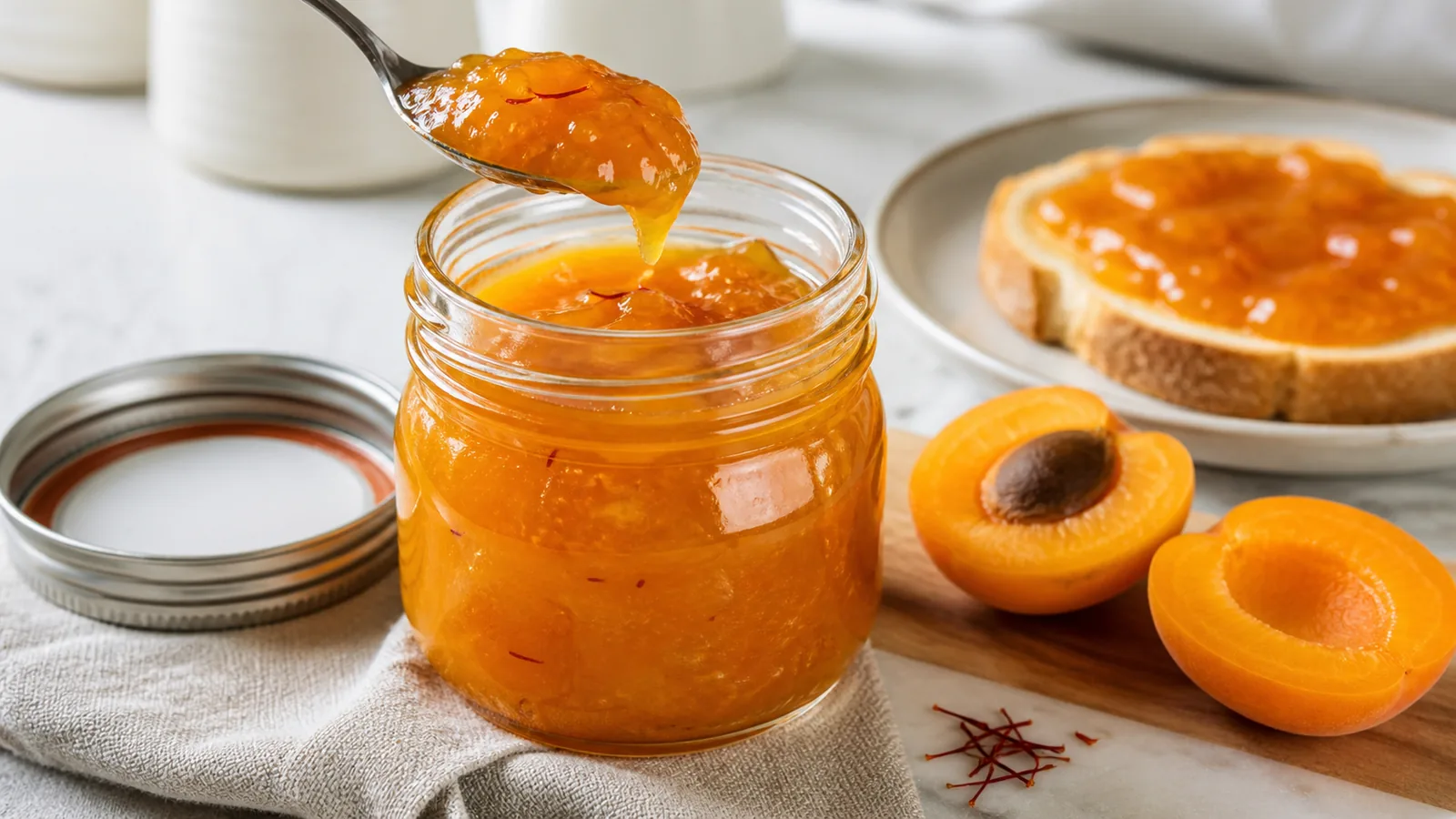
This apricot saffron jelly is a soft-set refrigerator jam made from ripe apricot pulp, sugar, saffron, lemon and rose water. A teaspoon of gelatine gives it a gentle spoonable set after cooling. Because the fruit remains in the mixture, it is closer to jam than a clear strained jelly; “marmalade” is retained from the historical title, although that term is normally used for citrus preserves.
Ingredients
- 1kg ripe apricots, weighed before stoning
- 1kg granulated sugar
- 2 tablespoons concentrated brewed saffron
- 1 tablespoon fresh lemon juice
- 1 tablespoon rose water
- 1 teaspoon powdered gelatine
- 2 tablespoons cold water, for blooming the gelatine
This is a traditional high-sugar ratio. A reduced-sugar version needs a recipe designed and tested for that balance; simply removing a large amount of sugar changes both the set and the keeping time.
Prepare the apricots
Wash the apricots, cut them in half and remove every stone. Pulse the fruit in a food processor until finely chopped or puréed to the texture you prefer. Do not add water.
Put a small plate in the freezer for the set test. Wash the storage jars and lids in hot soapy water, rinse them well and keep the jars warm until needed. This prevents a hot preserve from meeting cold glass.
Bloom the gelatine
Sprinkle the gelatine evenly over two tablespoons cold water in a small heatproof bowl. Leave it for five minutes, until the granules absorb the liquid. Set the bowl over hot water and stir just until clear. Do not boil it.
The source mixed gelatine directly with the small measure of rose water. Blooming it separately in cold water is more reliable and lets the rose aroma stay fresh when added off the heat.
Cook the apricot and sugar
Combine the apricot pulp and sugar in a wide heavy saucepan. Warm over low heat, stirring until the sugar dissolves. Raise the heat gradually and bring to a steady boil.
Stir often and skim any excessive foam. As water evaporates, the bubbles become slower and the mixture thickens. Keep the pan no more than half full because hot jam rises and spits.
Add the saffron
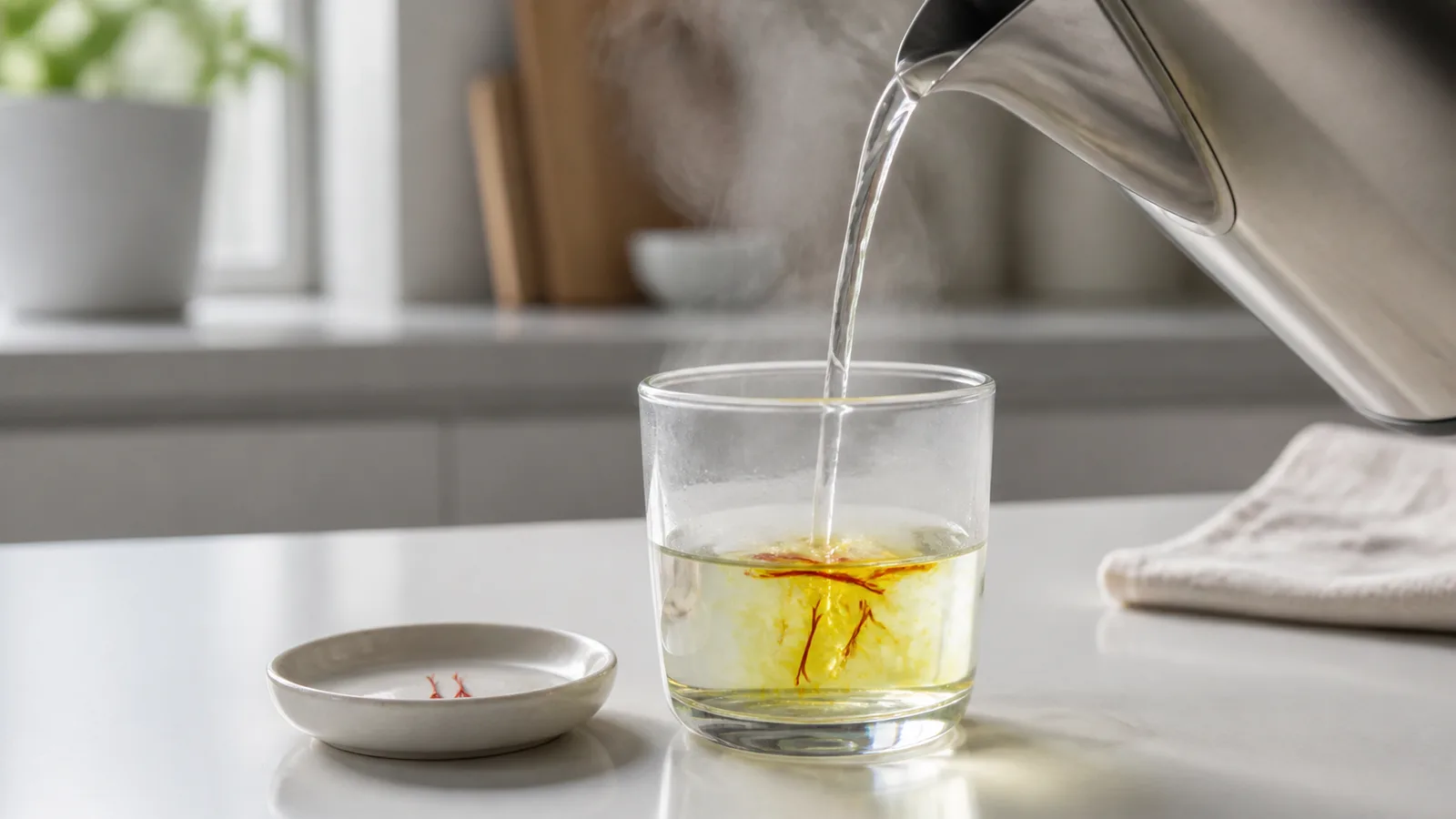
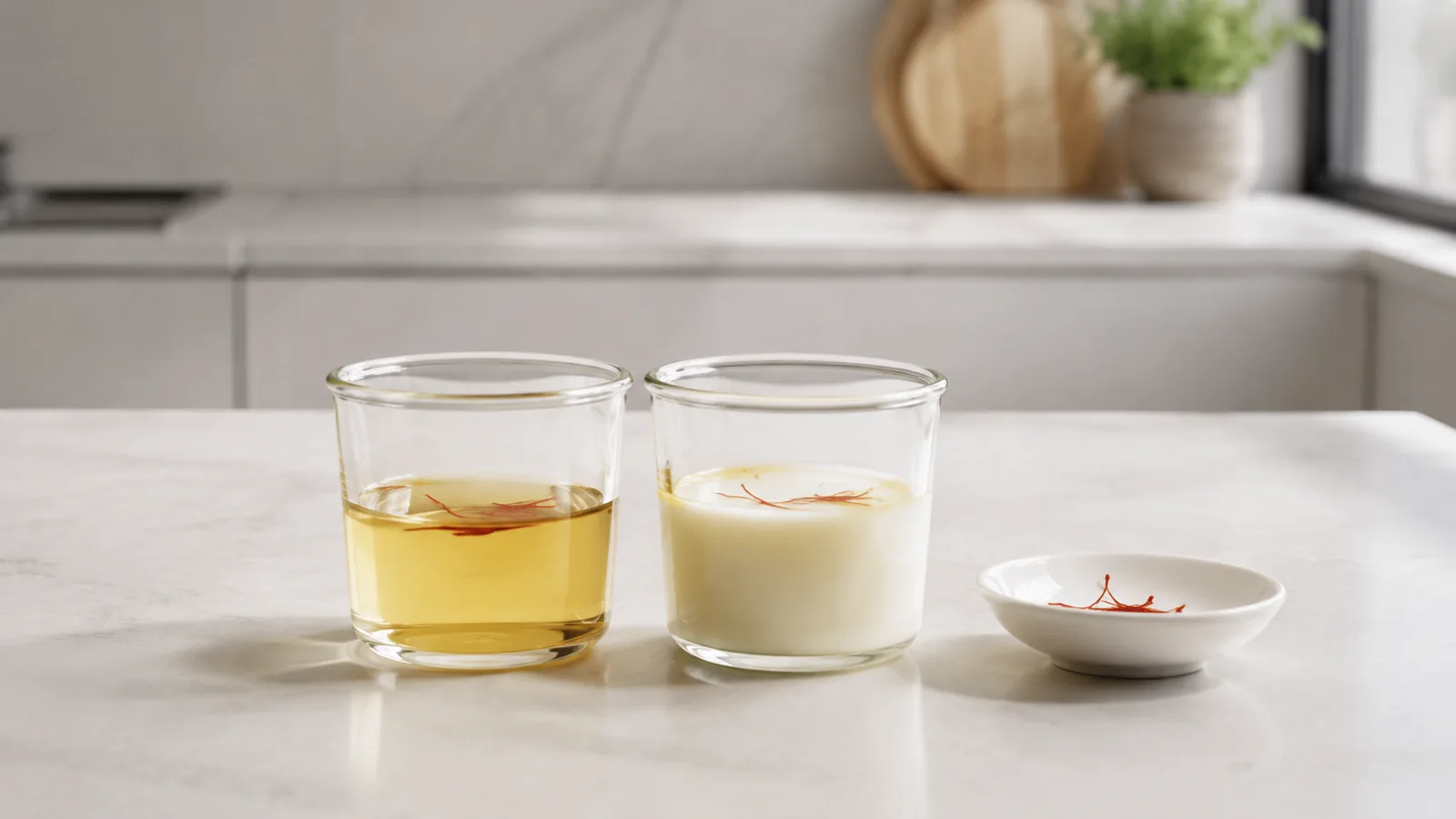
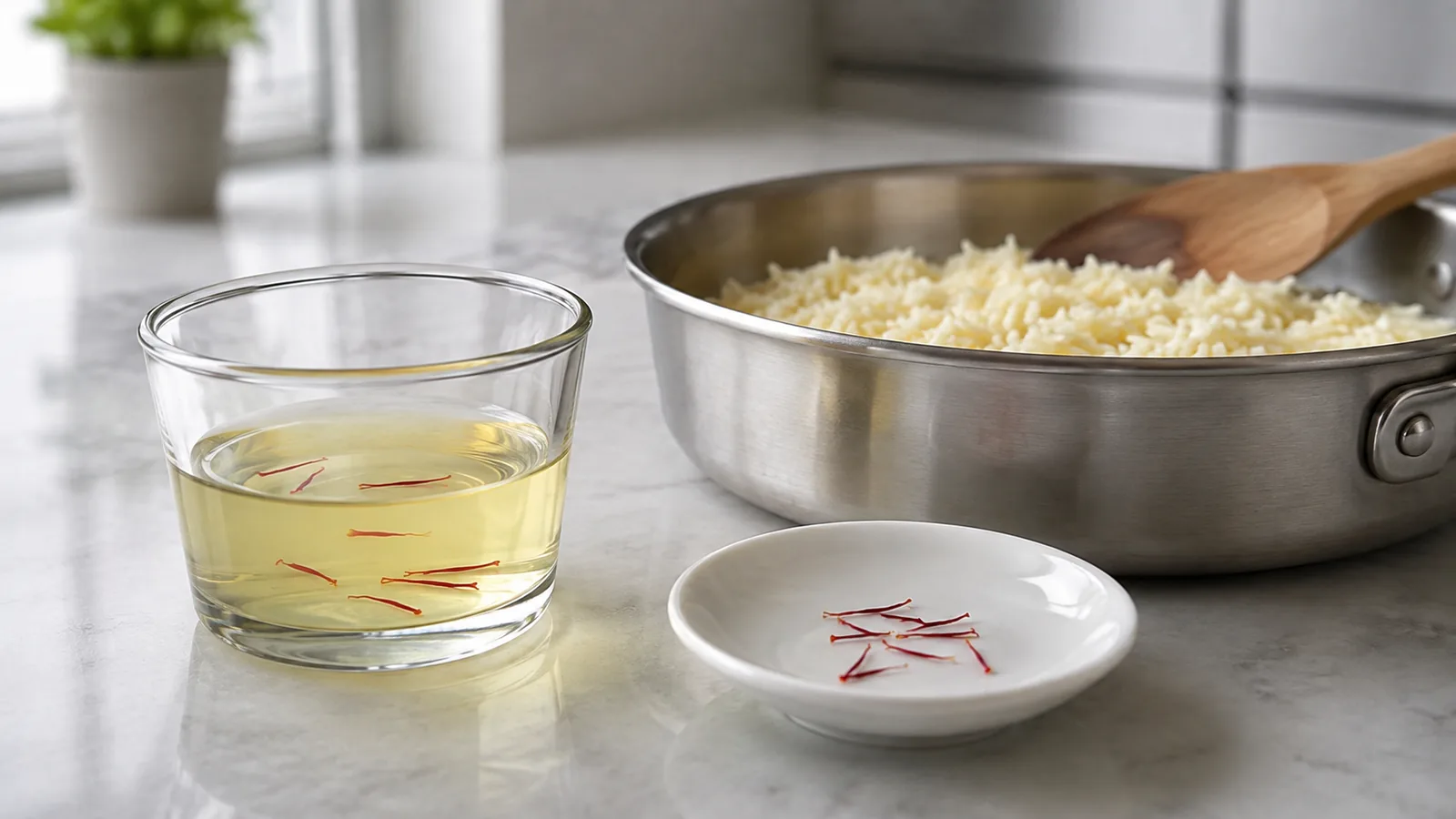
Stir in the concentrated saffron once the fruit has begun to thicken. Two tablespoons should colour the full kilogram without thinning it. If you need to prepare the infusion, use our measured saffron brewing method.
Continue cooking until the jam reaches roughly 104–105°C/219–221°F, or passes a cold-plate test: place a small spoonful on the frozen plate, wait 30 seconds and push it. The surface should wrinkle lightly rather than run back like syrup.
Finish with lemon, rose water and gelatine
Stir in the lemon juice, simmer for one final minute and remove the pan from the heat. Wait until the fierce bubbling settles, then mix in the rose water and dissolved gelatine thoroughly.
Do not return the mixture to a hard boil after adding gelatine. Its final set appears only after the preserve is cool, so the hot jam will still look looser than it does the next day.
Jar and chill safely
Ladle the hot mixture into the clean warm jars, leaving a little room at the top. Wipe the rims, close the lids and let the jars cool away from draughts. Once cool, refrigerate.
This recipe has not been presented as a tested shelf-stable canning process. A closed lid alone does not make a low-acid preserve safe for room-temperature storage. Keep the jars refrigerated and use clean spoons each time.
Texture and serving
Allow at least six hours in the refrigerator before judging the set. If it is very firm, let the jar stand for five minutes before spooning. If loose, it still works as a sauce for yogurt, cake or ice cream.
Serve the apricot and saffron jelly on toast, with cheese, between cake layers or alongside plain yogurt. Rose water should remain in the background; adding more can cover the fresh apricot.
For the best flavour and texture, use the refrigerated jam within two weeks. Discard it if you see mould, fermentation, a bulging lid or an unusual smell.