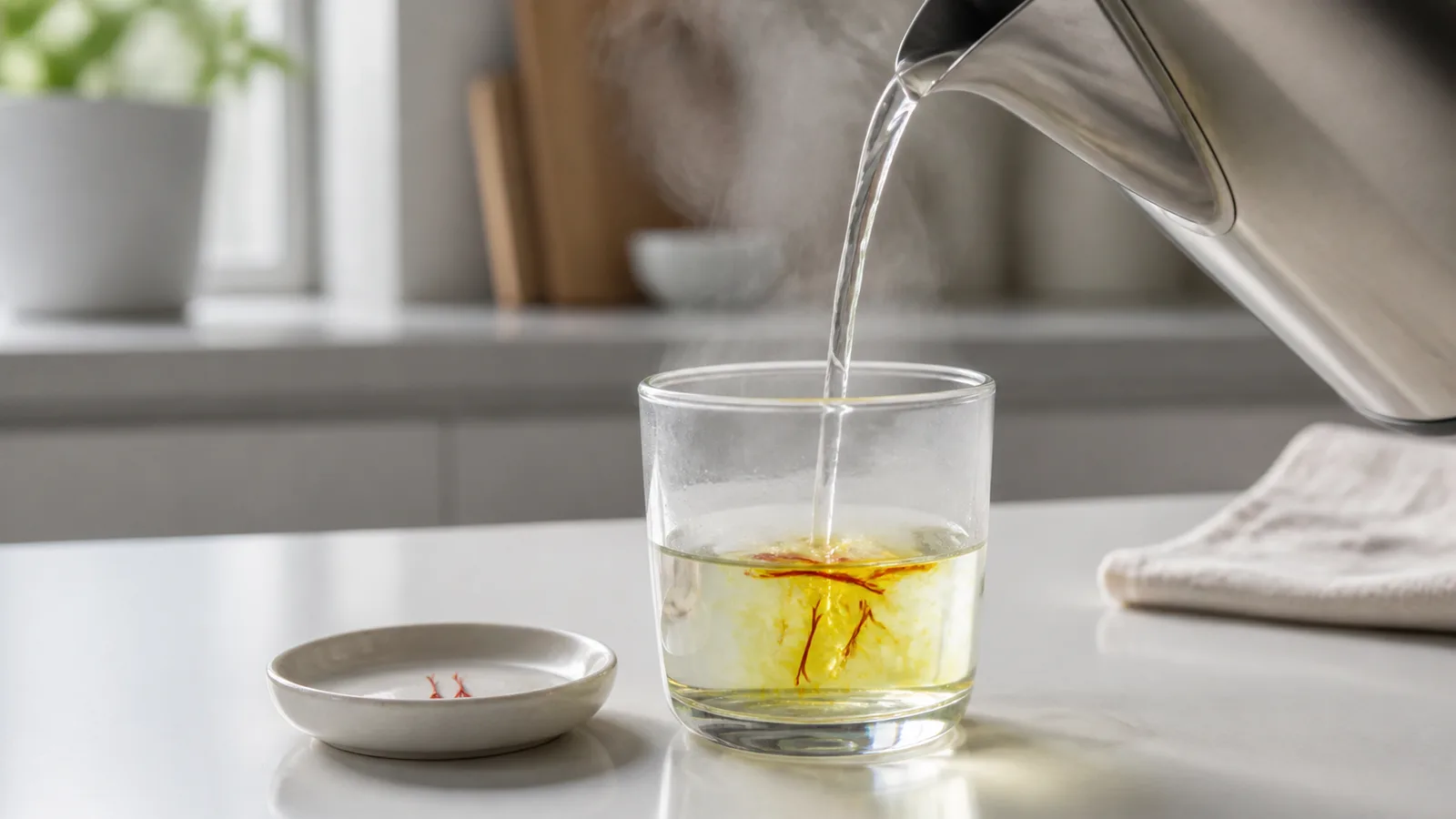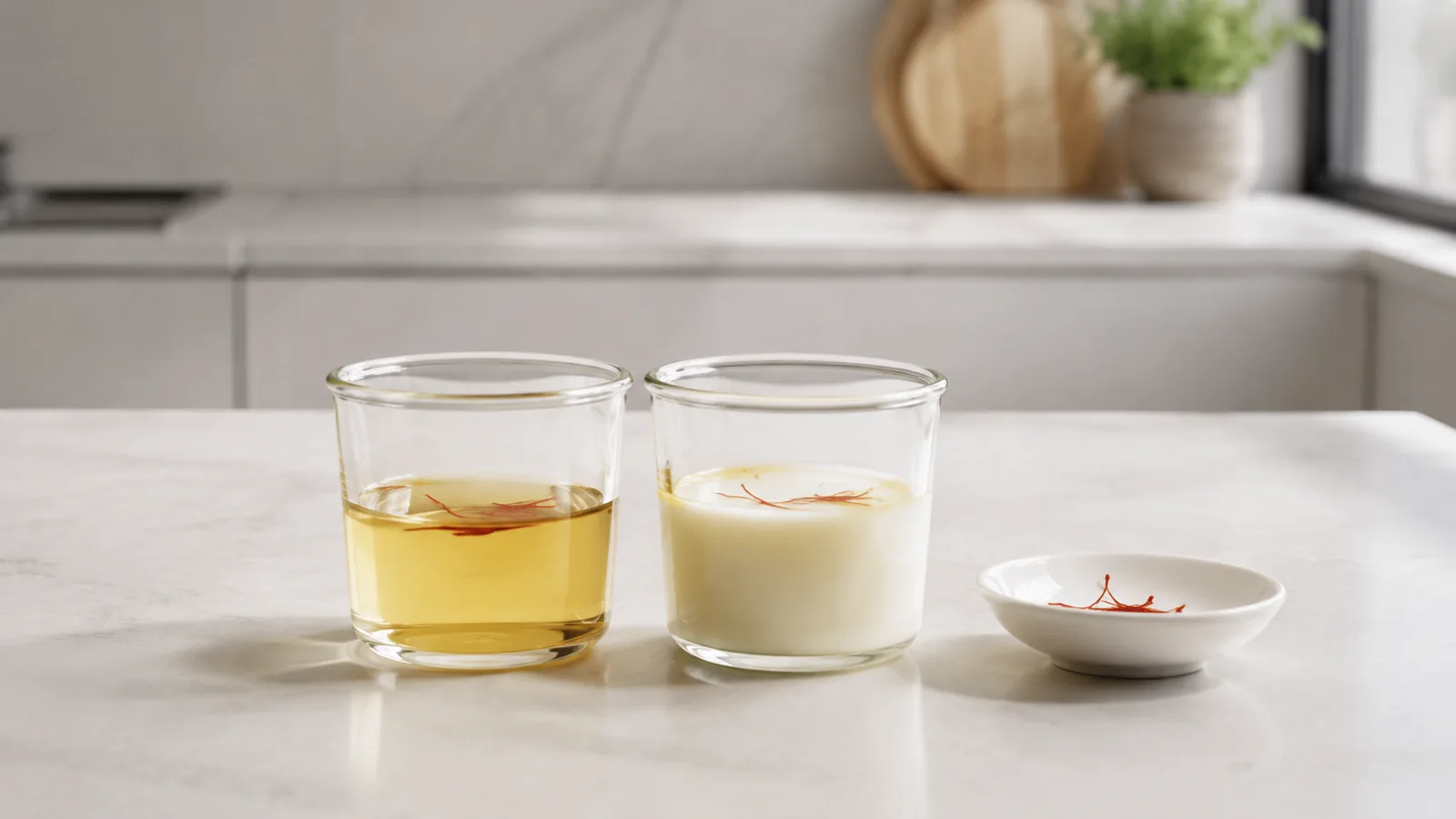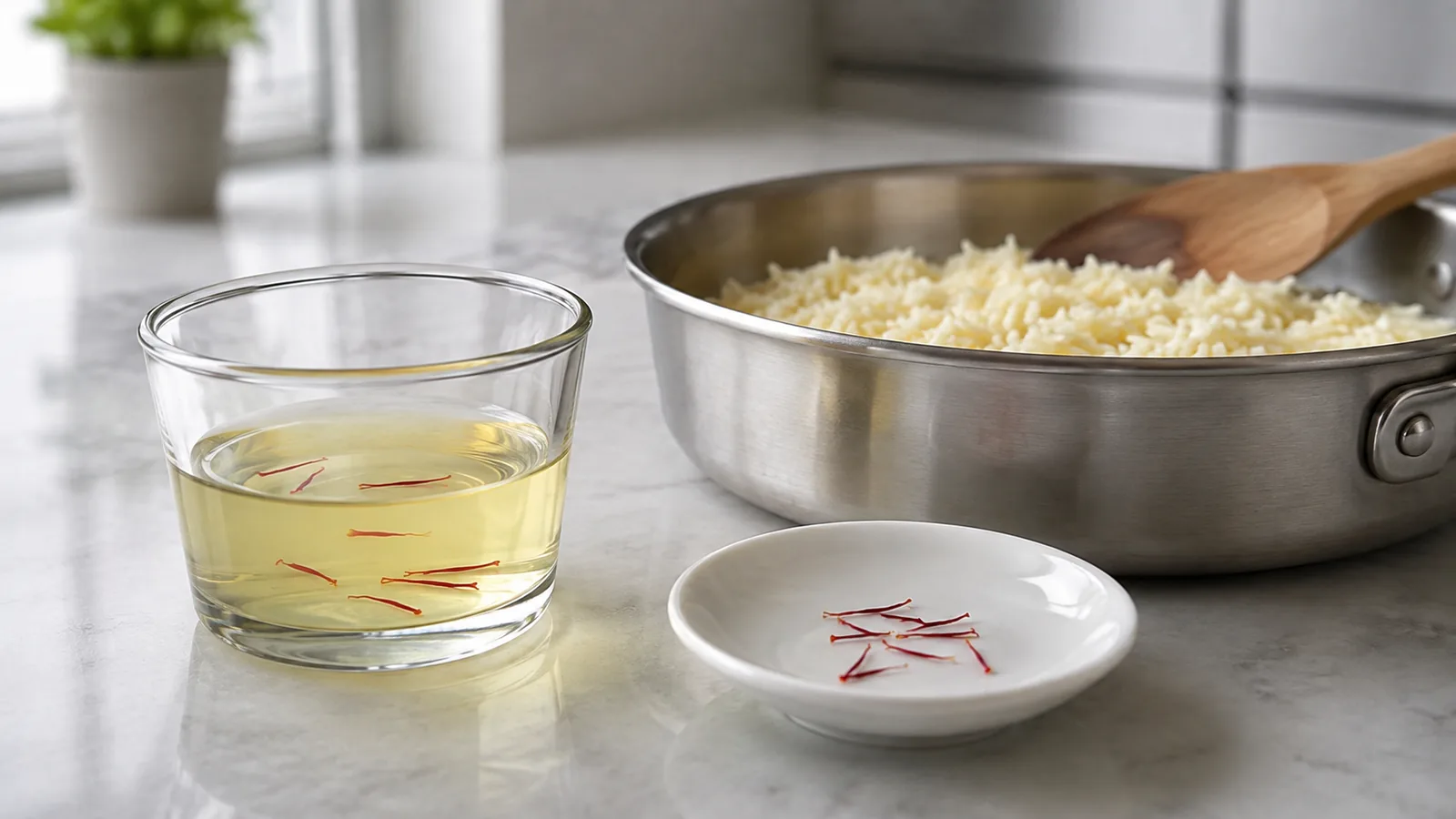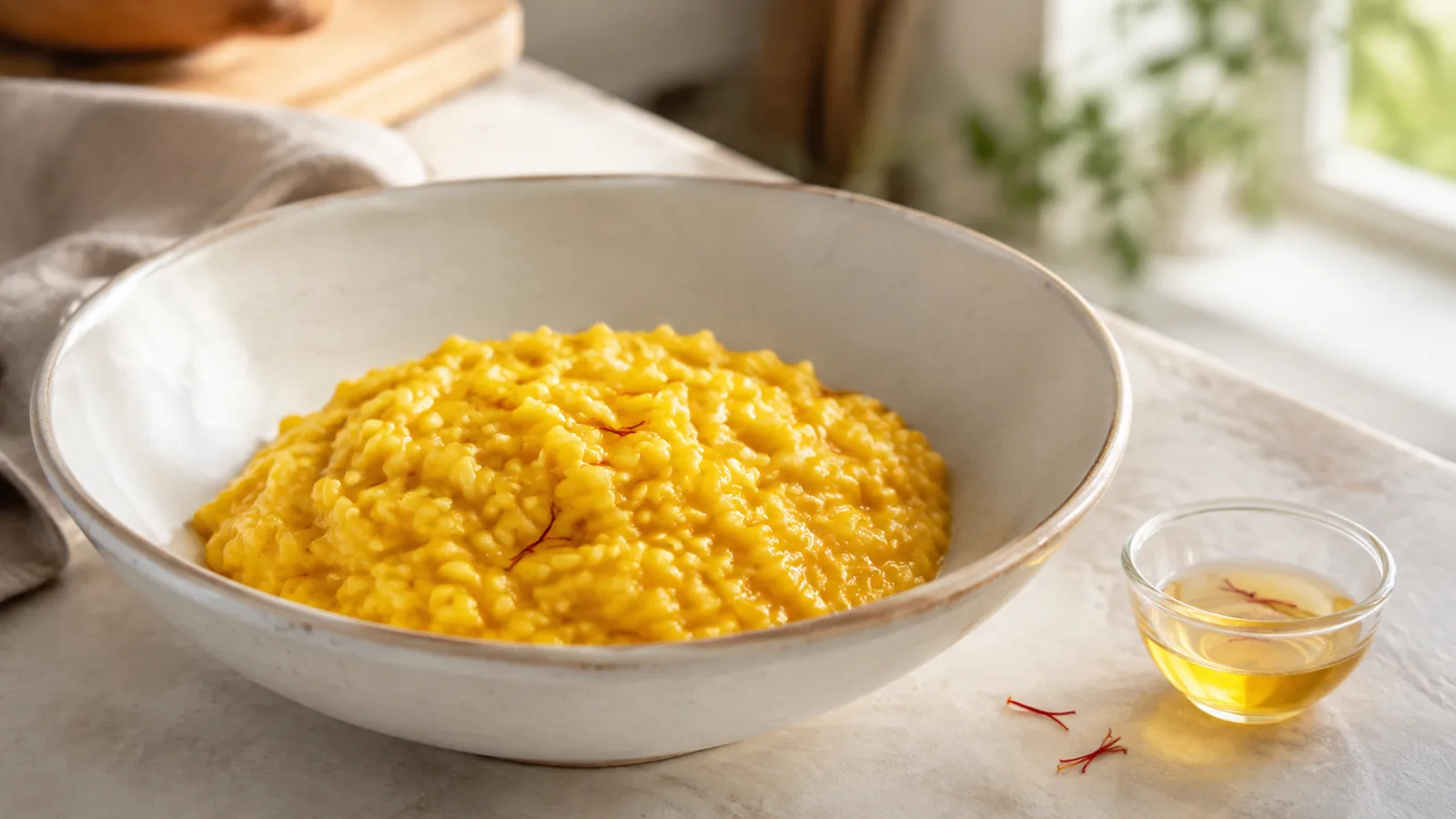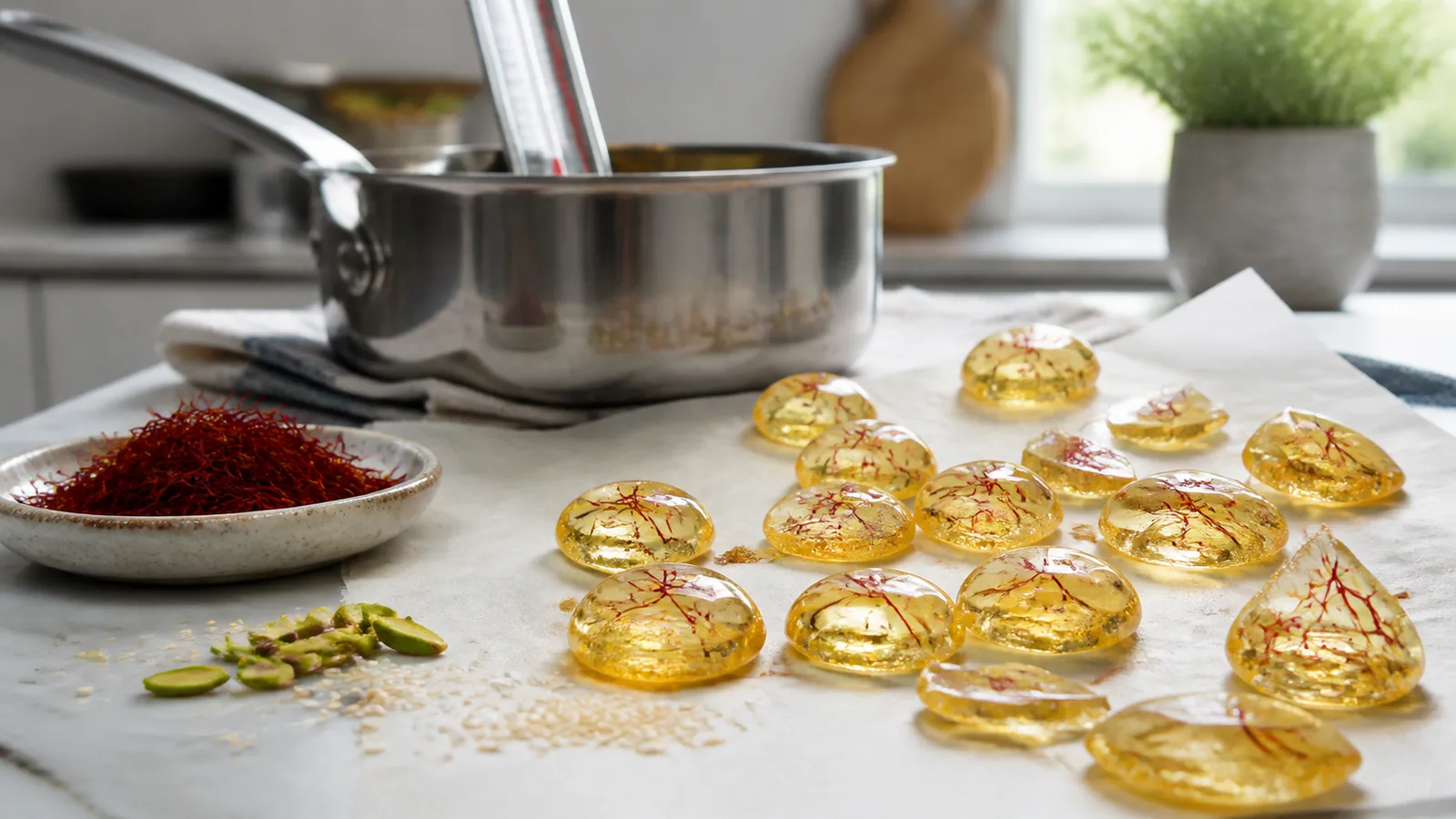
Saffron candy is a crisp, amber hard candy scented with real saffron. The most reliable version uses a thermometer: cook the syrup to the hard-crack stage, remove it from the heat, add the saffron, then shape it before it sets. The result is brittle rather than chewy and is lovely beside tea or coffee.
This recipe makes about 30 small pieces. Hot sugar can cause serious burns, so prepare the tray before cooking, keep children away from the stove and never touch or taste the syrup until it has cooled completely.
Saffron candy ingredients
- 400g granulated sugar (2 cups)
- 120ml water (1/2 cup)
- 1 teaspoon white vinegar or lemon juice
- 1/4 teaspoon saffron threads, finely ground
- 1 tablespoon sesame seeds, chopped pistachios or crushed dried barberries, optional
- a little neutral oil for the tray or silicone mat
The acid helps limit unwanted crystallisation; it should not make the finished candy taste sharply sour. Use a light-coloured, heavy saucepan so you can see if the syrup starts to darken.
How to make saffron candy
- Prepare the surface. Lightly oil a metal tray, or place a silicone baking mat on a heatproof surface. Arrange any sesame, pistachio or barberry garnish nearby.
- Dissolve the sugar. Put the sugar, water and vinegar in the saucepan. Warm gently, stirring only until the sugar has dissolved. Brush stray crystals from the sides with a wet pastry brush.
- Boil without stirring. Raise the heat and let the syrup cook undisturbed. Fit a candy thermometer without letting its tip touch the bottom.
- Reach hard crack. Cook to 150°C/302°F. The syrup should remain pale gold. If it smells burnt or turns dark brown, start again.
- Add saffron carefully. Remove the pan from the heat. When the strongest bubbling subsides, stir in the finely ground saffron with a long-handled heatproof spoon. Keep your face and hands clear of steam.
- Shape the candy. Spoon small rounds onto the prepared tray. For thin shards, pour a narrow ribbon, scatter the optional garnish and score it with an oiled knife as it begins to firm.
- Cool completely. Leave the pieces untouched until hard, then lift them with a thin spatula. If they cling to a metal tray, 20 to 30 seconds in the freezer can help release them.
The cold-water test
If you do not have a thermometer, drip a small amount of syrup into a bowl of iced water. At the hard-crack stage, it forms rigid threads that snap cleanly. A soft or bendable piece needs more cooking. This test is less precise than a thermometer and still involves very hot syrup, so use a spoon rather than your fingers near the pan.
Do not keep boiling simply to make the candy darker. Saffron has a delicate aroma, while overcooked sugar tastes bitter. Adding the spice after the pan leaves the heat protects more of its character.
How to stop hard candy crystallising
Grainy candy usually begins with crystals on the pan wall or stirring after the syrup starts to boil. Dissolve the sugar fully, clean the sides, add the small amount of acid and then leave the syrup alone. A clean pan and dry utensils make a noticeable difference.
If the candy stays sticky rather than brittle, it probably did not reach hard crack or absorbed humidity while cooling. Cook to temperature and transfer the cold pieces to an airtight container promptly.
Thin pieces, thick drops and flavour additions
Freshly poured syrup spreads into thin pieces; after a short pause it thickens and makes rounder, marble-like drops. Work in small batches because the change happens quickly. Do not reheat the finished pieces in a microwave, where hot spots are hard to control.
Sesame is a traditional, dry addition. Finely chopped pistachios, a pinch of dried lime powder or a few crushed barberries also work, but all additions must be dry. Dates, raisins and other moist fruit make stored candy sticky. If you want a clean saffron flavour, leave the candy plain.
How this differs from a nabat recipe
Nabat is Persian rock candy. It forms as large sugar crystals grow slowly on a stick or string; it is not made by pouring hard-crack syrup into drops. A traditional nabat recipe therefore takes several days, while this saffron candy cools in minutes.
For simple saffron nabat, dissolve three parts sugar in one part water by volume, simmer until completely clear and add a small pinch of ground saffron. Pour the hot syrup into a clean heatproof jar. Suspend a sugar-coated wooden skewer without touching the bottom, cover loosely and leave it undisturbed for five to seven days. Remove the crystal-coated stick and let it dry. Keep the jar away from children while the syrup is hot.
DIY saffron gummies
People searching for how to make saffron gummies need a different method because gelatin should never be cooked to hard crack. Bloom 21g powdered gelatin in 120ml cold water for five minutes. Warm gently until dissolved, then stir in two tablespoons of honey or sugar and a small pinch of finely ground saffron. Do not boil. Pour into silicone moulds, chill until firm and keep refrigerated.
These DIY saffron gummies are soft and perishable; the hard candy above is dry and shelf-stable when protected from humidity. Neither recipe is a medicine, and saffron should be used as a culinary flavour in modest amounts.
Storage
Once completely cool, wrap the hard candies individually or separate layers with baking paper. Store them in an airtight container in a cool, dry cupboard. Do not refrigerate, because condensation can make the surface tacky. In humid weather, adding a food-safe desiccant packet to the container helps.
For the clearest colour and aroma, begin with clean, genuine threads and grind only what you need. Our guide to brewing saffron explains how heat and water release the spice, while identifying real saffron covers sensible authenticity checks.