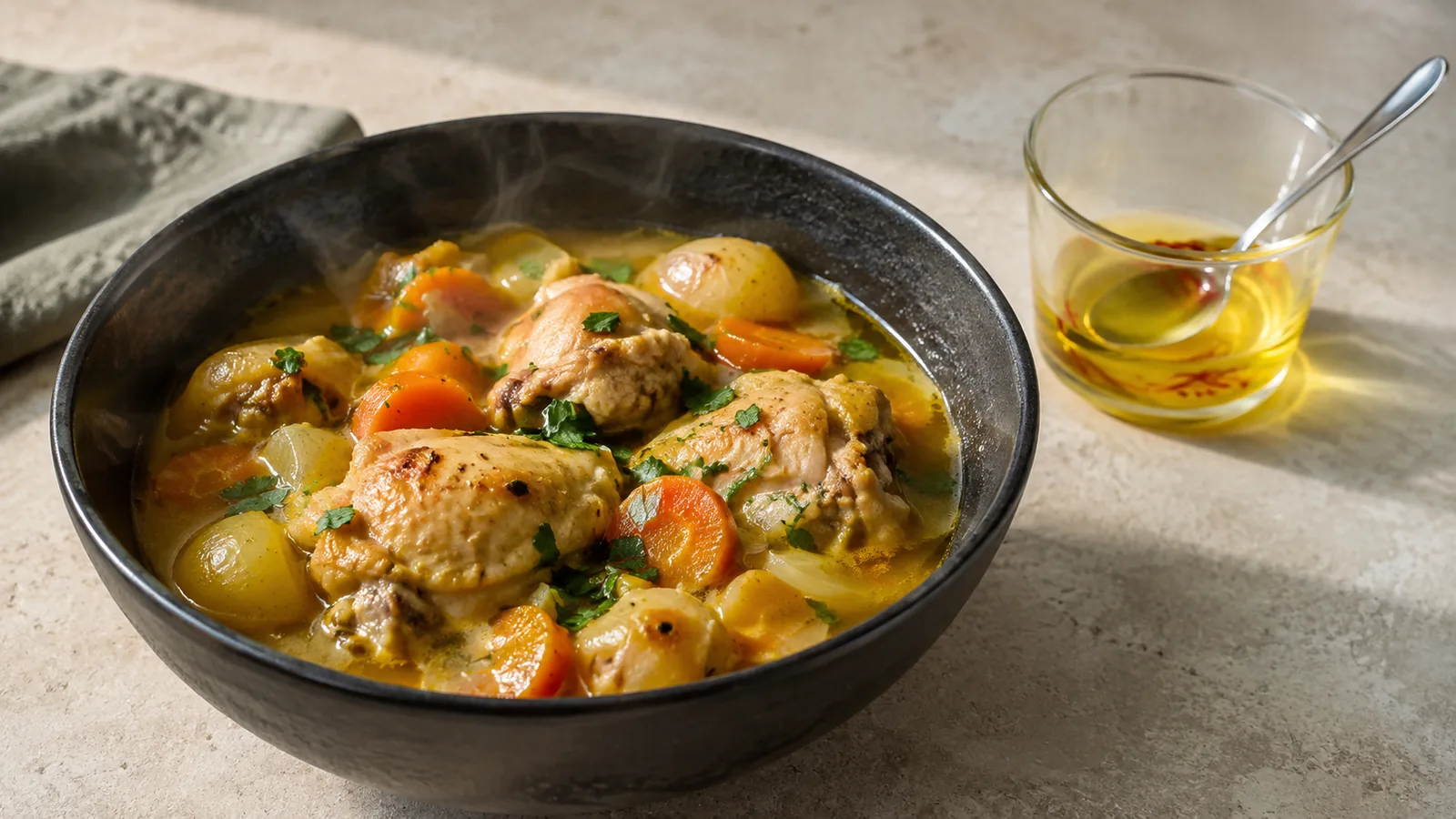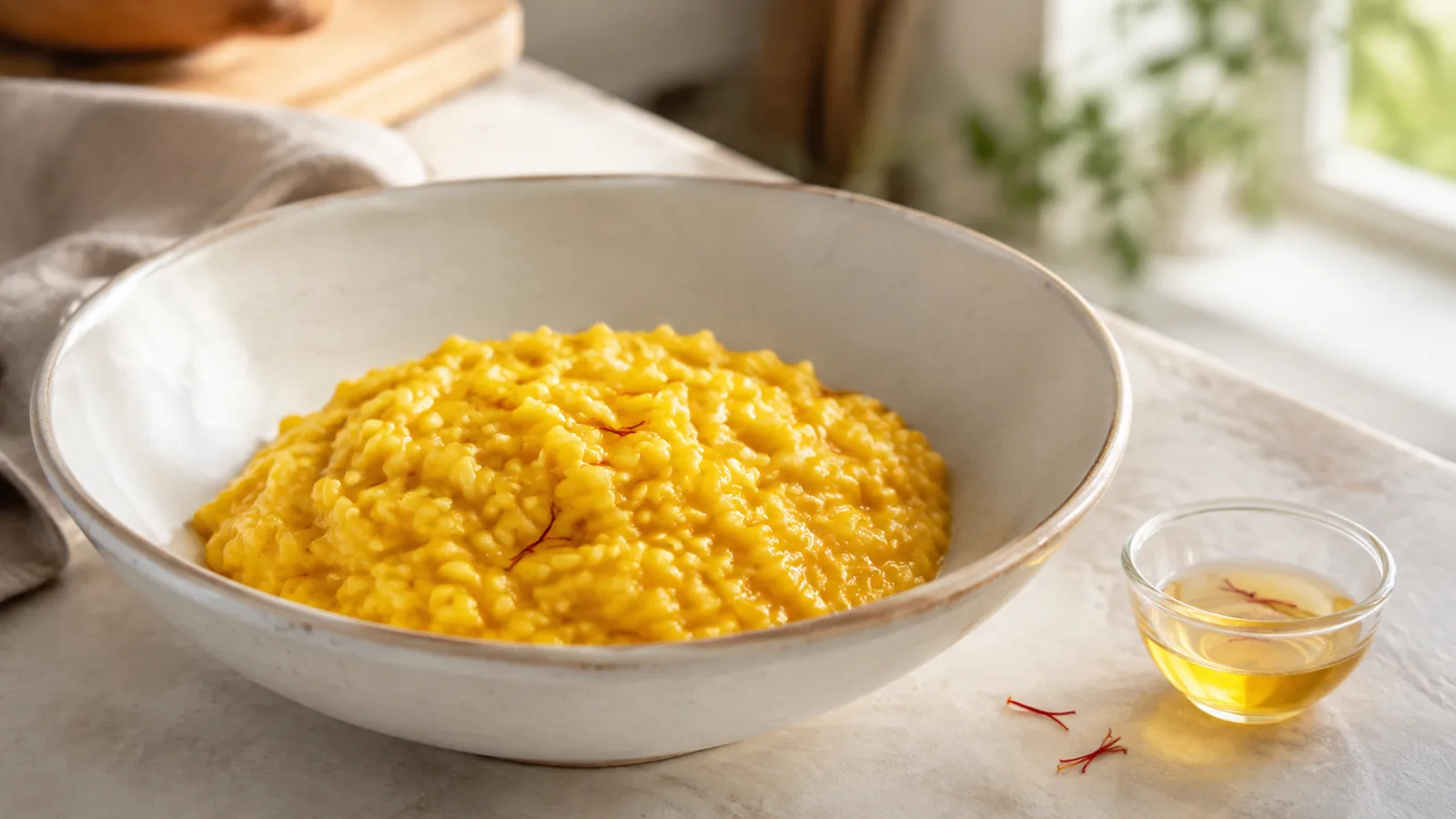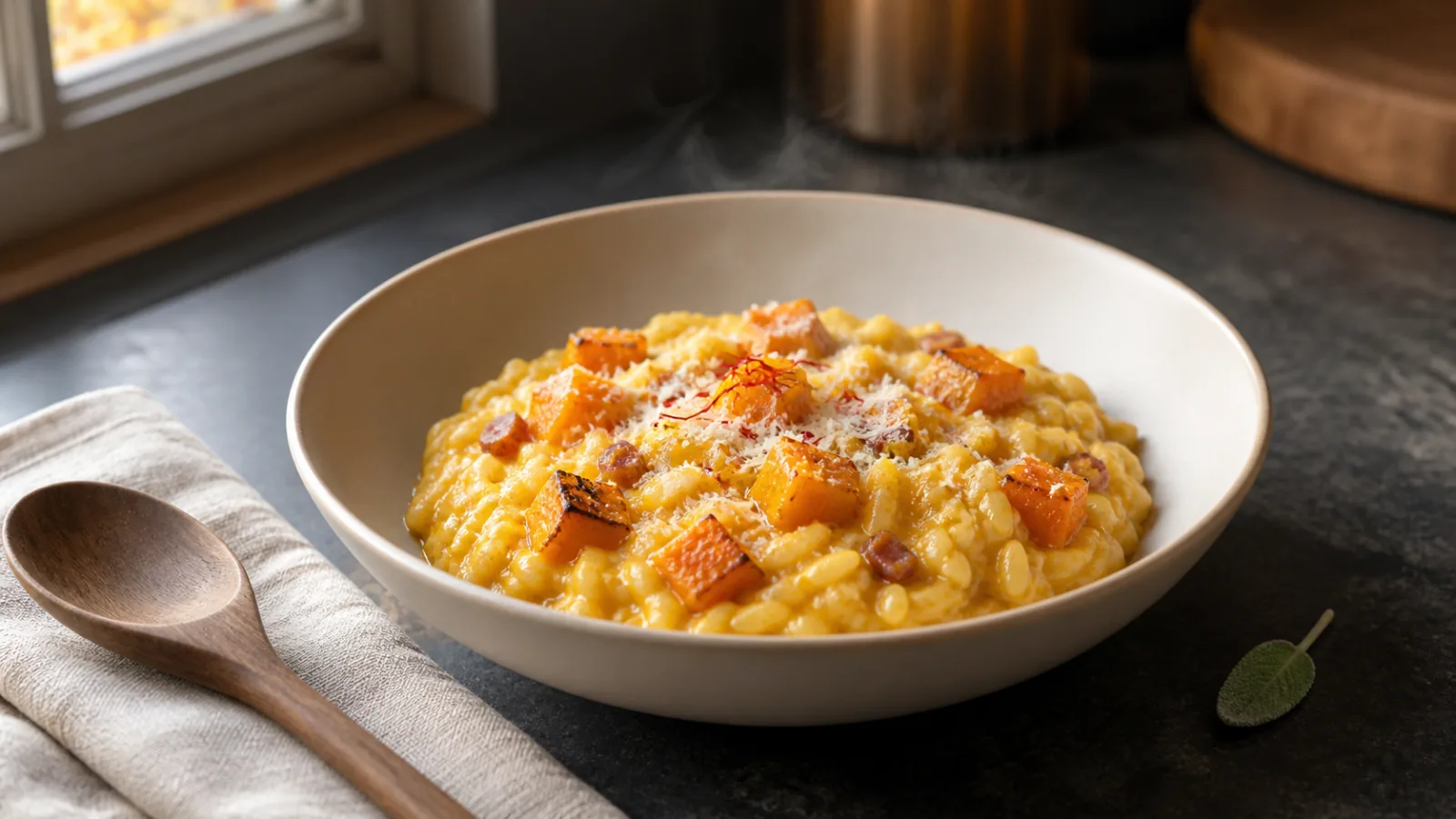
Learn how to cook saffron with squash in a risotto where each ingredient has a clear job. Roasted butternut squash brings sweetness and soft edges; saffron gives the rice a warm aroma and golden colour; Arborio rice releases enough starch to make the dish creamy without adding cream.
The old version of this recipe was badly damaged in translation. “Butter, 6th of August” meant six tablespoons of butter, “mustache” meant minced shallots, and the “bacon” was pancetta. Its ingredient pattern can be traced to Ina Garten’s Saffron Risotto with Butternut Squash. The method below is written afresh, restores the missing white wine and explains the points that decide whether risotto turns silky or heavy.
Saffron squash risotto at a glance
Serves: 4 as a main dish or 6 as a side
Preparation: about 20 minutes
Cooking: about 40 minutes
Use butternut squash if possible. Its flesh holds its shape after roasting, yet becomes tender enough to fold through the rice. Other firm winter squash can work, but watery summer zucchini will give a different result.
Ingredients
- 1 butternut squash, about 900 g
- 2 tablespoons olive oil
- fine salt and freshly ground black pepper
- 1.4 litres (6 cups) chicken or vegetable stock
- 85 g (6 tablespoons) unsalted butter
- 56 g pancetta, cut into small cubes; bacon can be substituted
- ½ cup finely minced shallots, about 2 large shallots
- 300 g (1½ cups) Arborio rice
- 120 ml (½ cup) dry white wine
- 1 teaspoon loosely measured saffron threads
- 100 g (about 1 cup) finely grated Parmesan
For a meat-free risotto, use vegetable stock and leave out the pancetta. Add an extra tablespoon of olive oil when softening the shallots. Parmesan is made with animal rennet in many traditional versions, so choose an appropriate hard cheese if you need the dish to be vegetarian.
Prepare the squash and saffron
- Heat the oven to 200°C (400°F). Peel the squash, scoop out the seeds and cut the flesh into roughly 2 cm cubes. You should have close to six cups.
- Spread the cubes on a large tray. Add the olive oil, 1 teaspoon salt and ½ teaspoon black pepper, then turn everything until the pieces are lightly coated.
- Roast for 25–30 minutes, turning once, until the squash is tender and browned at a few edges. Keep the pieces intact; they will soften slightly when folded into the rice.
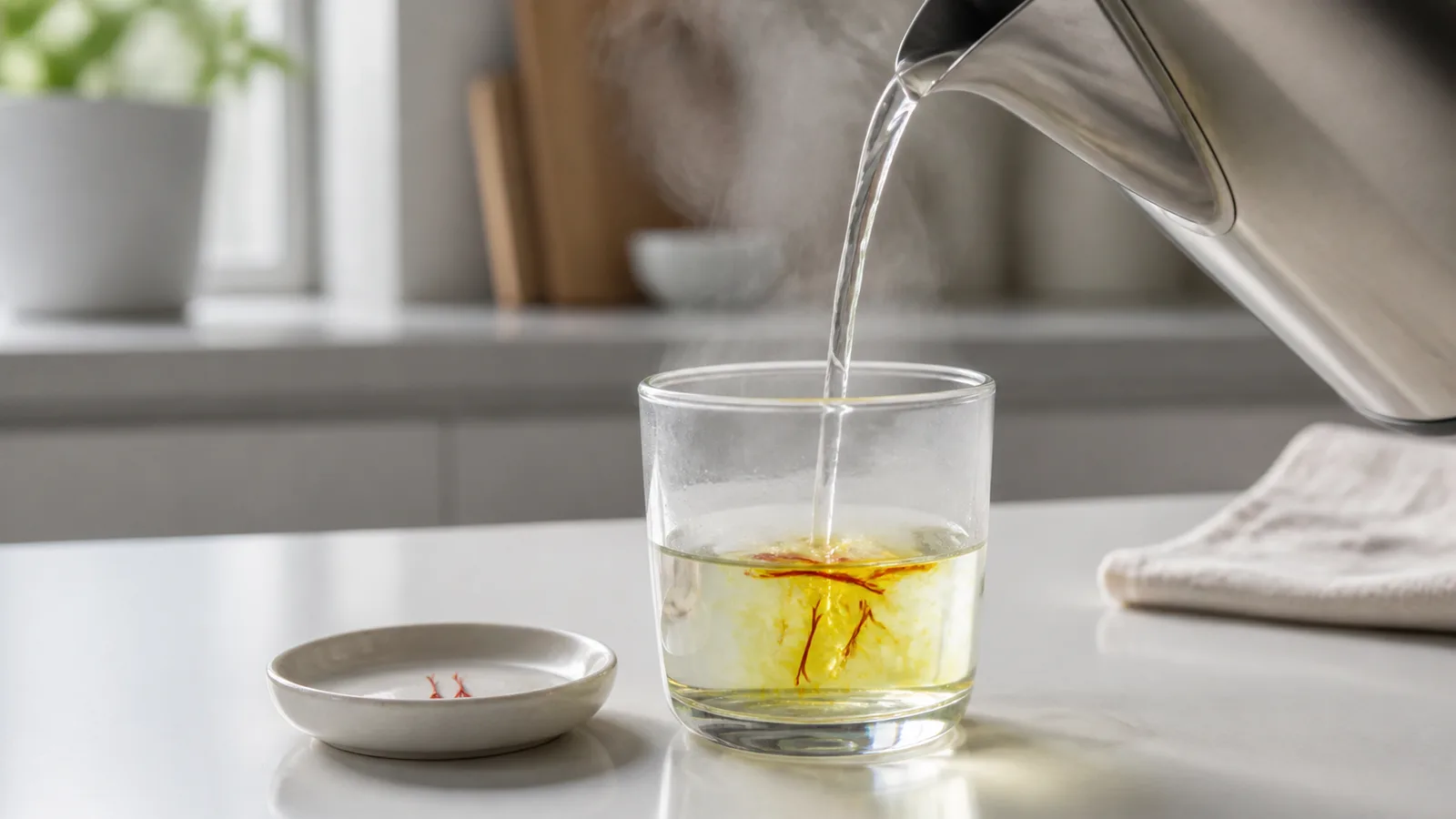
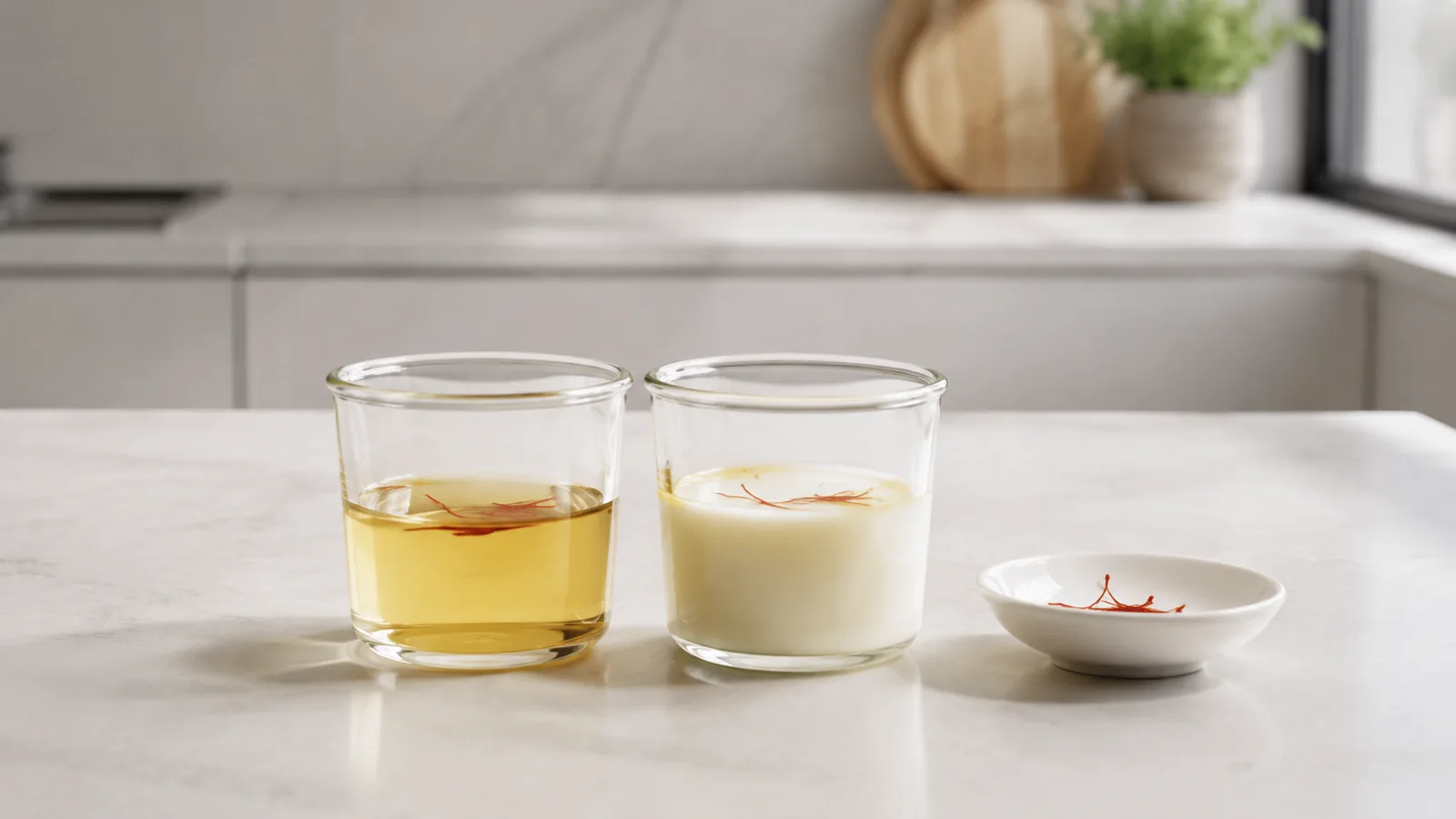
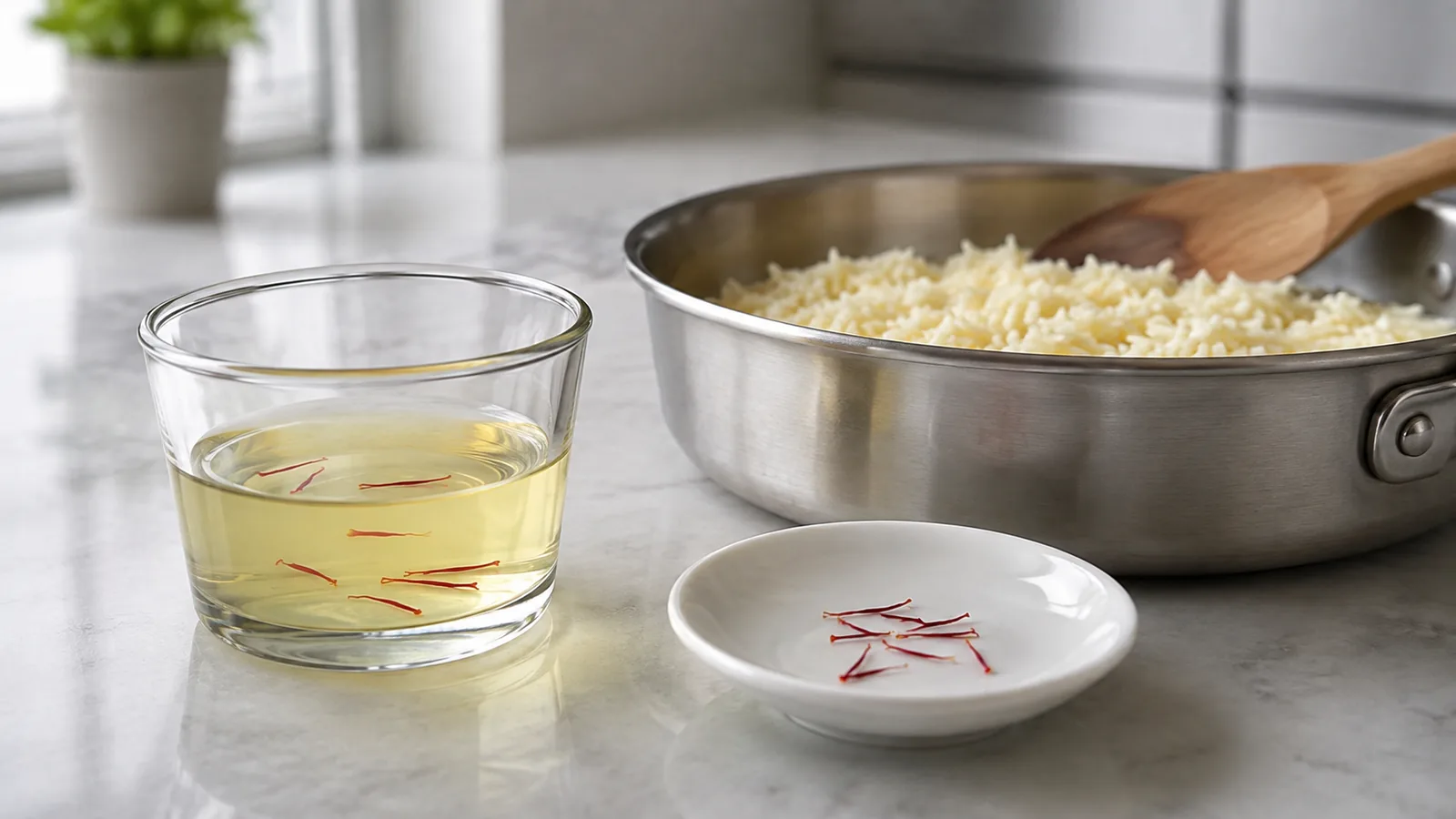
- Meanwhile, warm the stock in a separate saucepan and keep it at a quiet simmer. Take about ½ cup of warm stock, crumble the saffron into it and leave it to infuse for 10 minutes.
Blooming the saffron separately spreads its colour and aroma more evenly. Do not fry the threads in hot fat: direct heat can flatten their delicate aroma before the rice is ready.
Cook the risotto
- Melt the butter in a wide, heavy saucepan over medium-low heat. Add the pancetta and shallots. Cook for about 8–10 minutes, stirring occasionally, until the shallots are soft and translucent but not browned.
- Add the Arborio rice. Stir for 1–2 minutes so every grain is glossy and warm. The rice should not toast darkly.
- Pour in the wine. Stir until most of it has evaporated and the sharp alcohol smell has faded.
- Add the saffron infusion, including the threads, followed by one ladle of hot stock. Stir often, allowing the liquid to be mostly absorbed before adding the next ladle.
- Continue gradually for about 25–30 minutes. Keep the pot at a lively simmer, not a hard boil. You may not need every last drop of stock, or you may need a little hot water if the rice is still firm.
- When the rice is creamy and tender with a slight bite at the centre, take the pan off the heat. Fold in the roasted squash and Parmesan. Taste before adding more salt because the stock, pancetta and cheese are already seasoned.
- Rest for 2 minutes, then serve while the risotto still moves softly on the plate.
How to get the texture right
Risotto should not sit in a stiff mound. The finished rice ought to spread slowly when spooned into a warm shallow bowl. If it tightens before serving, stir in a splash of hot stock.
Constant aggressive stirring can break grains and make the surface gluey; ignoring the pan lets it catch. Stir regularly and scrape the base, especially just before each addition of stock. A wide pan helps the rice cook evenly.
The squash goes in at the end so the cubes do not disappear. Fold rather than beat. A few pieces may break and enrich the sauce, while the rest should remain visible.
Saffron, squash and useful substitutions
Use whole saffron threads rather than an unspecified yellow powder. Threads are easier to dose and bloom, and the dish needs their aroma as much as their colour. Our guide to brewing and blooming saffron explains the same technique for other recipes.
If you avoid wine, replace it with an equal amount of stock and finish with a teaspoon or two of lemon juice for balance. Carnaroli rice can replace Arborio and tends to hold its centre well. Do not use ordinary long-grain rice and expect the same creamy texture.
Fresh sage is optional rather than essential. A few crisp leaves suit the squash, but too much can cover the saffron. The same restraint applies to garlic and strong spice blends: this is a gentle, aromatic risotto, not a heavily seasoned rice pilaf.
Serving and storing
Serve saffron squash risotto immediately as a main course with a sharp green salad, or in smaller portions beside roast chicken or fish. Keep extra Parmesan at the table rather than burying the saffron under it.
Cool leftovers promptly and refrigerate them in a covered container. Reheated risotto will be softer than the freshly cooked dish; add a spoonful of stock and warm it thoroughly. Leftovers also make good risotto cakes when chilled, shaped and browned in a pan.
Recipe source
The original ingredient set and core method come from Ina Garten’s Saffron Risotto with Butternut Squash. This version repairs the damaged translation, explains the technique in original wording and adds practical substitutions.