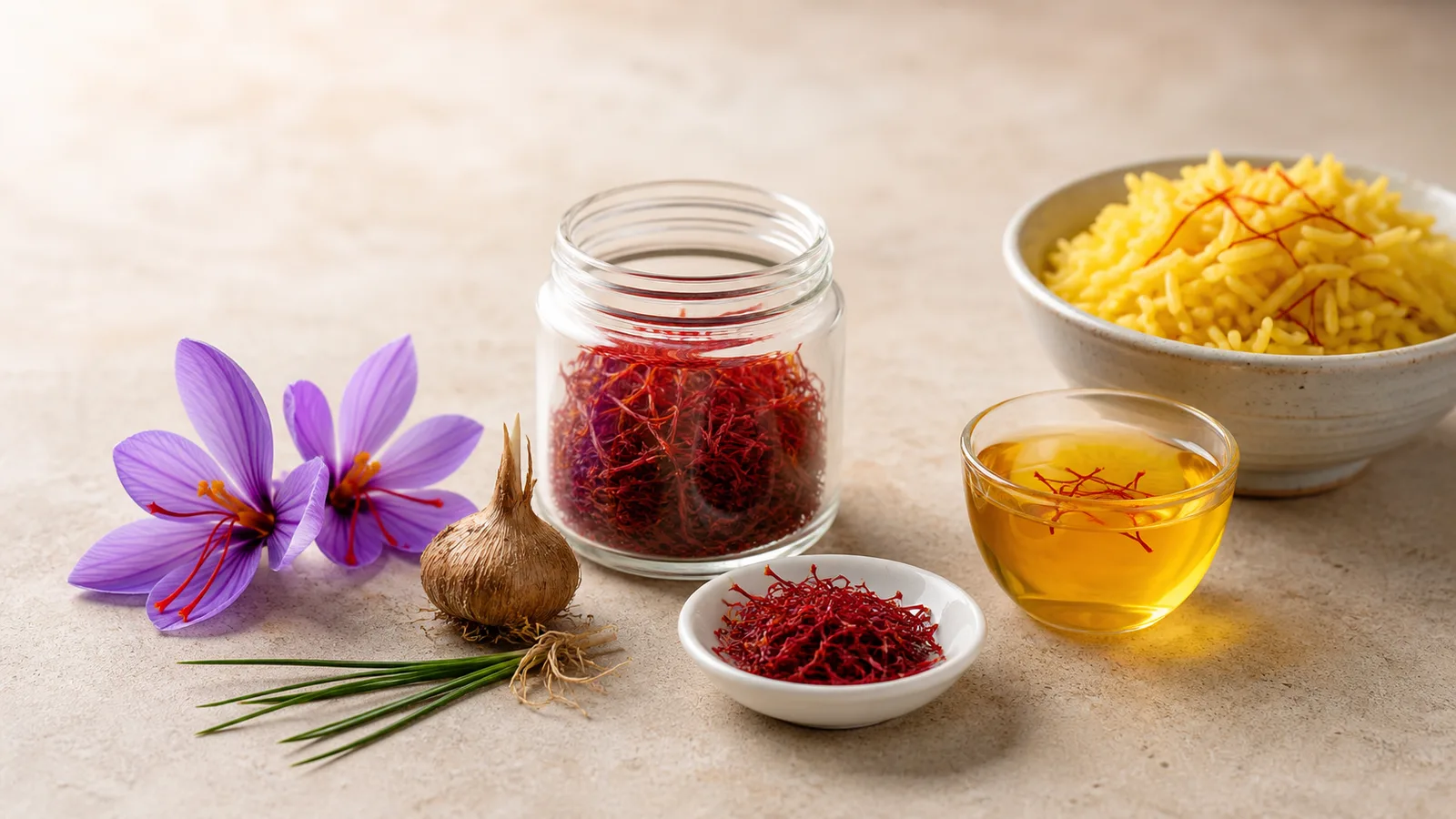
Everything about saffron! begins with a small but important fact: saffron is the dried red stigma of Crocus sativus, not the whole purple flower. Each blossom normally has three stigma branches. They are picked, separated and dried to make a spice valued for its golden colour, distinctive aroma, bitter edge and the labour required to produce it.
This guide covers the plant, its history and chemistry, how it is grown and harvested, the evidence behind health claims, safety, storage, cooking, packaging and trade. It also separates established uses from traditions and early research. Saffron can be a remarkable ingredient without being described as a cure.
Saffron at a glance
- Botanical source: Crocus sativus L., in the Iridaceae family.
- Part used as spice: dried stigma, sometimes with part of the style depending on the commercial form.
- Main sensory compounds: crocins for colour, picrocrocin for bitterness and safranal for aroma.
- Main commercial forms: filaments, cut filaments and powder.
- Primary uses: food colour and flavour, with historical use in medicine, cosmetics, perfumery and textile dyeing.
- Storage: airtight, dry, cool and protected from light.
- Production reality: the flowers and stigmas are handled in a short harvest window, making labour and clean drying central to quality.
Where the name and plant came from
The word “saffron” passed through several languages. Its immediate route into European languages is commonly connected with Arabic, while deeper links to Persian and older regional terms are debated; attempts to force one certain Sanskrit or Persian root go beyond the evidence. Persian medical and scientific writing, including work associated with Avicenna (Abu Ali Sina) and Razi, helped carry saffron knowledge across languages and centuries.
The crop’s biological origin is clearer than it once was. Modern genetic research identifies cultivated saffron as a sterile triploid derived from wild Crocus cartwrightianus, with evidence pointing to Attica in Greece. It then travelled widely and became deeply rooted in Persian, Mediterranean and South Asian agriculture and culture. Calling the plant simply “native to Iran and India” confuses ancient cultivation with evolutionary origin.
Saffron has been cultivated for more than 3,000 years. Iran developed one of the world’s most enduring and economically important traditions, while India, Greece, Spain, Morocco, Afghanistan, Italy and other countries maintain distinctive regional systems.
What the saffron plant looks like
Crocus sativus is a stemless autumn-flowering plant that grows from a corm rather than a true bulb. It is often about 10–30 centimetres tall. Narrow leaves emerge around flowering or continue through the cool growing season. The purple flower has six tepals, three yellow stamens and the three red stigma branches collected for spice.
The crop is sterile and does not produce useful seed, so growers propagate it by lifting, selecting and replanting daughter corms. Corm health, size, density, field age and disease control influence later flowering.
Older descriptions call saffron “semi-tropical,” yet its real adaptation is more specific: dry summer dormancy, autumn flowering and cool-season leaf growth. It can tolerate cold under suitable soil and planting conditions. Mild winters and hot, dry summers describe many traditional areas, but successful cultivation also exists in colder climates.
Climate, altitude and water
Good drainage matters more than a single climate label. Dormant corms are vulnerable to prolonged wet soil, while the active plant still needs water at the right stages. Summer rain or irrigation is not automatically harmful; the result depends on temperature, soil, drainage, disease pressure and timing.
Iranian guides often describe favourable zones at roughly 1,300–2,300 metres and note that the crop is uncommon in humid Gilan and Mazandaran or the hottest southern districts. Those observations fit certain local systems, not a universal altitude rule. Saffron is also grown below and above that band elsewhere.
Open, sunny, tree-free ground is common, with protection from damaging wind. Some villages around Birjand and Qaen have also grown saffron among barberry bushes or almond trees and managed summer water locally. Such intercropping should be evaluated for shade, roots, harvest access and disease rather than copied as a formula.
Why saffron is expensive
Each flower contributes only three stigmas, and harvest cannot wait. Flowers are usually gathered quickly, the stigmas separated, and the fresh material dried with care. Roughly 150,000–170,000 flowers may be required for one kilogram of dried saffron, depending on flower and stigma size.
A commonly used processing ratio says about 5 kilograms of fresh stigma material yield around 1 kilogram after drying. That is not five kilograms of whole flowers; the flower mass is far larger. Final yield varies with moisture and how much style remains.
The price therefore reflects much more than rarity. Corm production, field care, seasonal labour, clean separation, drying, sorting, testing, storage, packaging and financing all contribute. Limited quantities and a compact, high-value product also create fraud risk.
The chemistry behind colour, taste and aroma
Saffron quality is not one molecule. Harvest maturity, drying and storage change a family of compounds:
- Crocins are water-soluble crocetin glycosides that give an infusion its yellow-orange colour.
- Picrocrocin contributes the characteristic bitter taste and is related to aroma development.
- Safranal is a volatile compound strongly associated with saffron’s aroma.
- Crocetin is the aglycone related to the crocin family and is often studied in research extracts.
The old article also described about 10% fixed oil, including oleanolic acid, and small quantities of riboflavin (vitamin B2). Composition estimates vary substantially by whether a study tests fresh stigma, dried spice, an extract or another flower part, so they should not be treated as a lot specification.
Nutrition in a realistic serving
Food-composition databases can list manganese, vitamin C, iron, potassium, vitamin B6, calcium and other nutrients per 100 grams. A cook uses a tiny fraction of that amount. Saffron is therefore a flavour and colour ingredient, not a practical source of daily vitamins, minerals, calories or iron.
Vitamin C supports normal immune and collagen functions, iron is needed for red blood cells, potassium contributes to normal physiology, calcium supports bone, and vitamin B6 contributes to nervous-system function. Those statements describe the nutrients, not a clinical effect from a pinch of saffron.
Common culinary and industrial uses
In food, a small amount of saffron colours and flavours rice, bread, confectionery, dairy foods, sauces, tea and other drinks. Industry also uses it in selected sausage and poultry preparations, cake mixes and extracts. Both alcoholic and non-alcoholic beverages may use saffron where local law permits.
Beyond food, saffron has historical roles in silk and yarn dyeing, perfumery and cosmetics. Modern products may contain stigma extract or compounds recovered from purple flower residues. Each use needs its own identity, purity, stability and regulatory assessment; a cosmetic extract is not automatically food grade.
What health research does and does not show
Human trials have examined standardised saffron powders and extracts for several outcomes. A meta-research review found signals across some mood, cognitive, metabolic and sexual-function measures, but also concluded that the quality of reviews and trials needs improvement. Products, doses, populations and study lengths differ.
A culinary infusion cannot be assumed to reproduce a capsule trial. No section below is a recommendation to diagnose or treat a condition with saffron.
Mood, anxiety, relaxation and sleep
Some trials and meta-analyses report promising changes in depression, anxiety or sleep scores. That is stronger than a purely traditional claim, but it does not prove that saffron prevents depression or replaces psychotherapy or medicine. Research often concerns defined extracts over several weeks, not an occasional cup of tea.
Saffron’s traditional reputation as a mild sedative or relaxing ingredient may explain why some people enjoy it in an evening drink. Anyone with severe anxiety, persistent insomnia, mania, worsening depression or thoughts of self-harm needs professional help rather than self-treatment.
Memory, Alzheimer’s and Parkinson’s disease
Small studies have explored cognition, including people with mild-to-moderate Alzheimer’s disease, and laboratory work examines neuroprotective mechanisms. Evidence remains insufficient to say saffron prevents or treats Alzheimer’s, Parkinson’s disease, memory loss or nerve pain. New cognitive or movement symptoms need clinical assessment.
Blood sugar, blood pressure and heart health
Research has investigated glucose, lipids and blood pressure. Pooled results sometimes show small changes, while other analyses are inconsistent; the clinical importance is uncertain. The potassium and iron present in a normal culinary amount do not make saffron a treatment for hypertension, heart disease, poor circulation, diabetes or anaemia.
Do not alter insulin, diabetes medicine, blood-pressure medicine, anticoagulants or cardiac treatment because of a saffron claim. Supplements can create additional effects or interactions that a pinch in food does not.
Antioxidants, inflammation and cancer
Crocin, crocetin and safranal show antioxidant or biological activity in laboratory systems. Researchers have studied saffron in cells and animals for inflammation and cancer mechanisms. These models do not establish cancer prevention, treatment or slower tumour growth in people.
Saffron oil and cream are also promoted for sports injuries, arthritis or gout, but clinical evidence is limited. They should not replace diagnosis, physiotherapy or medical treatment.
Digestion and appetite
Traditional medicine uses saffron as a digestive and appetite aid and for bloating or stomach discomfort. Reliable evidence for ulcers or other gastrointestinal disease is lacking. Persistent pain, vomiting, bleeding, weight loss or jaundice requires medical evaluation.
Eyes and bone
Early trials have examined saffron in age-related macular degeneration, but an eye-care professional should manage any retinal or visual problem. Claims that saffron prevents osteoporosis because it contains a little calcium are not supported; bone health depends on total diet, activity, hormones, risk factors and appropriate testing.
Side effects, supplements and high doses
Culinary saffron is used in small quantities. Medicinal extracts and supplements concentrate exposure and should be treated differently. A recent systematic review of human trials found saffron generally well tolerated but reported adverse events, most often mild gastrointestinal problems, and advised clinical monitoring for higher-dose or prolonged medicinal use.
Reported effects in studies and poisoning accounts include nausea, dry mouth, appetite or taste changes, dizziness, anxiety, tiredness, drowsiness, vomiting, a fall in blood pressure, slower heartbeat and bleeding such as a nosebleed. Yellowing of the skin or eyes is not a normal “detox” effect; it needs medical attention. Very high intake can be dangerous.
Consult a clinician or pharmacist before a supplement if you take anticoagulants, blood-pressure medicine, psychiatric medicine or several other products, or if you have a bleeding disorder, low blood pressure, liver disease or a planned operation. A qualified clinician is preferable to relying on the broad title “herbalist” for interaction decisions.
Saffron during pregnancy and breastfeeding
High medicinal amounts have traditionally been avoided during pregnancy because of concern about uterine stimulation and bleeding. Evidence is limited, so the right conclusion is caution rather than a claim that every exposure causes abortion.
Small amounts used to flavour food are different from extracts, repeated strong drinks or supplements. Anyone pregnant, trying to conceive or breastfeeding should discuss medicinal use with a doctor or midwife. Saffron should not be used to induce labour. Pain, contractions, bleeding or illness after exposure requires prompt advice.
How much saffron is safe?
There is no single safe quantity for every person and every preparation. For cooking, use the small amount the dish needs. The former page referred to a “pinch” while later recipes used a teaspoon; a full teaspoon of powdered saffron is far beyond what many dishes require and is not a sensible universal instruction.
For a commercial supplement, follow the labelled directions only after checking that the product, dose and health context are appropriate. Do not extrapolate from a clinical extract to loose spice by eye.
How to identify and store good saffron
Whole threads reveal more than powder. Genuine stigma branches taper toward the lower end and broaden near a trumpet-like, finely serrated tip. Appearance can reveal obvious substitutes, but it cannot prove purity or origin. Traceable lot information and competent testing matter for high-value purchases; our guide to identifying healthy saffron explains the distinction.
Keep saffron in a clean, food-safe, airtight container in a cool, dry, dark place. Opaque metal can work if its lining and closure are suitable; dark glass is also effective. Clear glass needs a dark cupboard. Food-grade plastic is not automatically unsafe or inferior, but it must provide an adequate moisture, oxygen and aroma barrier. Container quality matters more than the material name alone.
Close the container promptly and keep wet spoons out. Light, air, heat and moisture weaken aroma and colour and can encourage quality loss. A musty smell, condensation, insects or visible mould is a reason not to use the product.
How to grow saffron
Choose a site and test the soil
Saffron performs best in friable, well-drained soil. Loam, sandy loam and some calcareous clay-loam soils can work when structure and drainage are suitable. Neutral pH is often recommended, but successful ranges vary. Waterlogging and severe salinity are risks; organic matter and fertility should be assessed rather than guessed.
Because corms remain for several seasons, investigate drainage, soil-borne disease, rotation history, weeds, salinity and irrigation water before planting. Deep soil preparation in autumn or winter is traditional; late-spring or early-summer preparation is also used where the field and weather permit.
Use soil tests, not inherited fertiliser recipes
The former guide prescribed 40–80 tonnes of well-rotted animal manure and about 200 kilograms of ammonium phosphate without stating area, nutrient analysis, soil result or environmental limits. Those appear to be legacy per-hectare figures, not a universal recipe.
Manure rate depends on maturity, salinity, pathogens, nutrient content and local regulation. Phosphorus should respond to a soil test. Excess inputs can waste money, raise salinity, contaminate water or favour disease. A local agronomist should adapt fertility to the site and expected nutrient removal.
Select and plant healthy corms
New fields begin with healthy, disease-free corms. They are commonly lifted and replanted during summer dormancy, from late spring to late summer. Early-summer planting has been studied in Khorasan, but ideal timing depends on climate, corm storage and the production system. Long, warm or humid storage can reduce first-year flowering and increase losses.
The old method placed several corms in a hole 15–20 centimetres deep with growing points upward. Research shows planting depth and density interact with soil, climate, corm size and whether the field is annual or perennial; successful depths range broadly. Use a proven local layout rather than assuming 15–20 centimetres suits every field.
Irrigate for the growth stage
In Khorasan practice, a major autumn irrigation helps synchronise flowering and may be followed by light soil loosening where crusting occurs. The former guide gave ten to fifteen days after planting and later intervals of one to two weeks through spring. Calendar rules cannot account for rain, soil water, rooting depth, salinity or weather.
Monitor soil moisture and crop stage. Pre-flowering water, active cool-season growth and the final period of daughter-corm development have different needs. Avoid standing water and irrigation that increases corm rot. The first-year field often yields little because the corm population is still establishing.
Manage weeds and field age
Weeds compete with saffron during its active season and interfere with hand harvest. Use cultivation, mulch or registered controls appropriate to the production system, while protecting shallow roots and daughter corms. Record flowering and yield by block so declining areas can be rotated or renewed instead of kept indefinitely.
Harvesting, drying and packaging
Harvest flowers promptly, keep containers shallow and clean, and avoid heat or compression before separation. Stigmas should be dried with a controlled method that reduces moisture without burning the threads or stripping aroma. Keep each harvest lot identifiable.
Codex CXS 351-2022 defines filaments, cut filaments and powder and sets quality, contaminant, hygiene and labelling expectations. ISO 3632-1:2025 provides a current specification for dried saffron, supported by test methods in ISO 3632-2.
Good packaging protects from moisture, light, oxygen, contamination and crushing. It should identify the food, net quantity, responsible producer or packer, batch, relevant dates and origin information required by the market. The former article correctly stressed country of origin, production and expiry dates, and producer/product names, though exact legal wording differs by jurisdiction.
Iran’s production, exports and saffron as a gift
FAO describes Iran as producing roughly 85–90% of the world’s saffron, particularly in Khorasan Razavi and South Khorasan. Torbat Heydarieh, Bakharz, Gonabad and Sabzevar are well-known names in Khorasan Razavi; Birjand is prominent in South Khorasan, with cultivation also established or expanding in Fars, Kerman, Lorestan and other provinces.
The former guide said about half of Iran’s saffron went to the United Arab Emirates and Spain and listed Turkey, China, the UAE, Spain and Gulf states as leading buyers. Those are historical trade statements without a year. Bulk shipment, repacking and re-export have long been industry issues, but current destination shares should come from a dated customs dataset rather than be repeated as permanent facts.
Saffron’s high value and low shipping weight make it an important export, but profitability depends on yield, labour, quality, finance, market access, authenticity and how much value remains with the producing region. As a gift or souvenir, a small traceable pack from a known harvest is more meaningful than elaborate packaging with no lot evidence.
Saffron and homemade face masks
Historical and commercial skincare uses do not prove that a homemade mask brightens skin, removes blemishes, softens fine lines or “rejuvenates” tissue. The Cleopatra story is often repeated but is not evidence for a formulation.
The old page suggested milk and saffron with geranium oil, or yoghurt and oatmeal, and a second mixture of saffron, yoghurt or sour cream, honey and optional ylang-ylang or coconut oil. It advised leaving these on for 20–30 minutes and removing a yellow tint with oats and yoghurt. Those recipes are retained here as the subject of the correction, not as instructions.
Essential oils, dairy, honey and botanical powders can irritate skin or trigger allergy; homemade mixtures lack preservative and contamination controls. Do not apply them near the eyes or to broken skin. Choose a properly assessed cosmetic, patch-test as directed and seek dermatology advice for persistent acne, rash, pigment change or scarring.
How to prepare saffron for cooking
Warm infusion
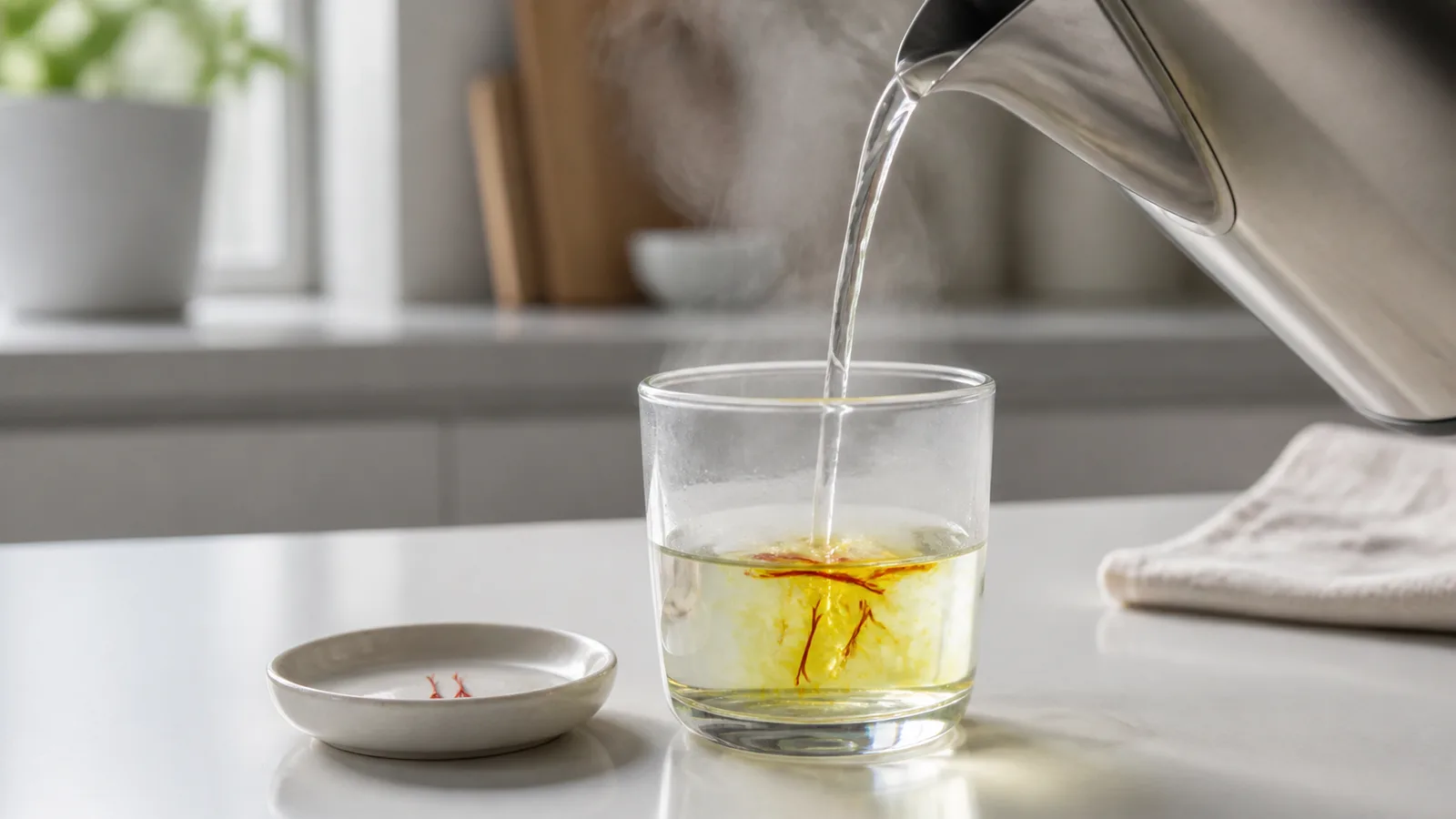
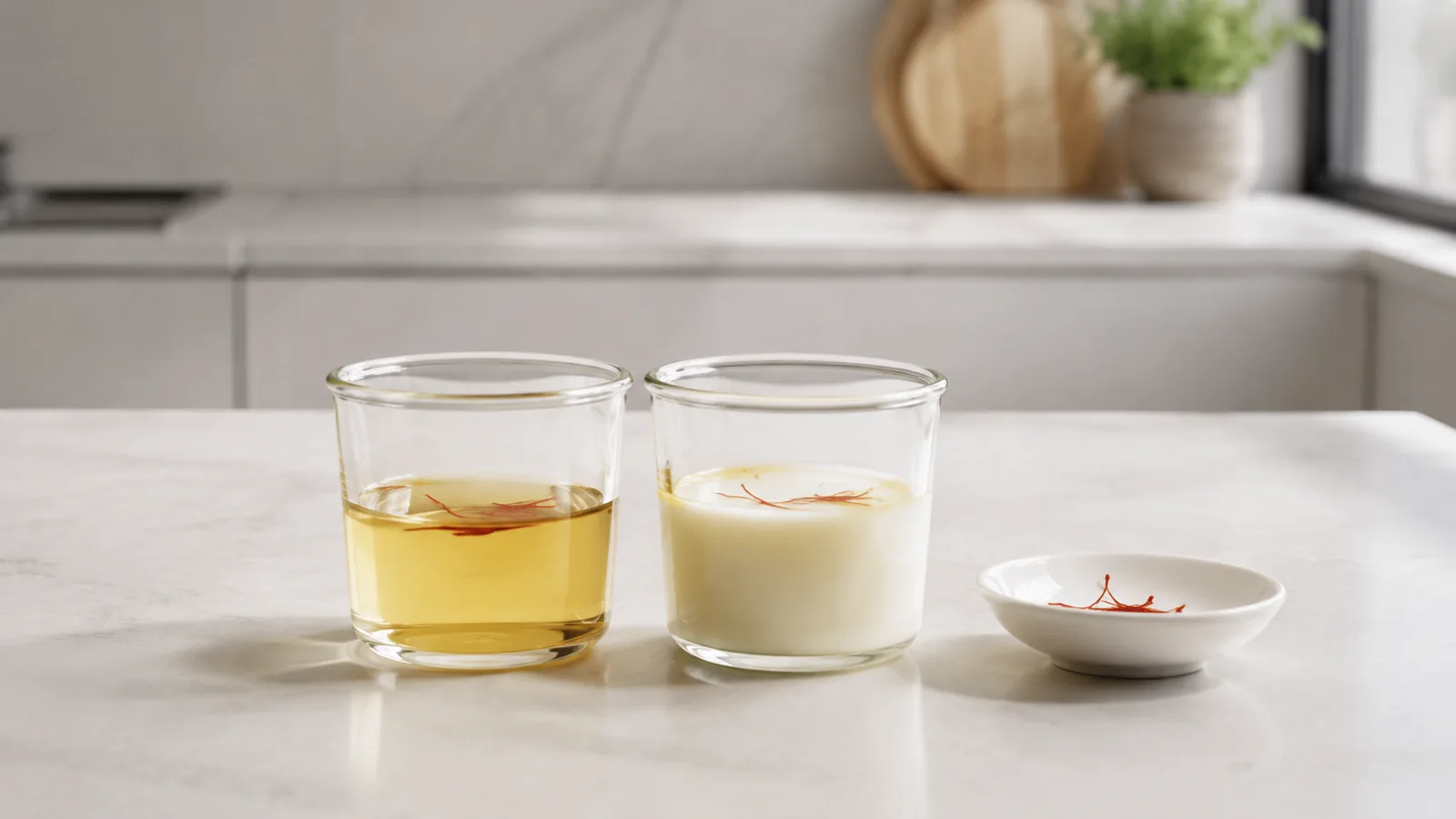
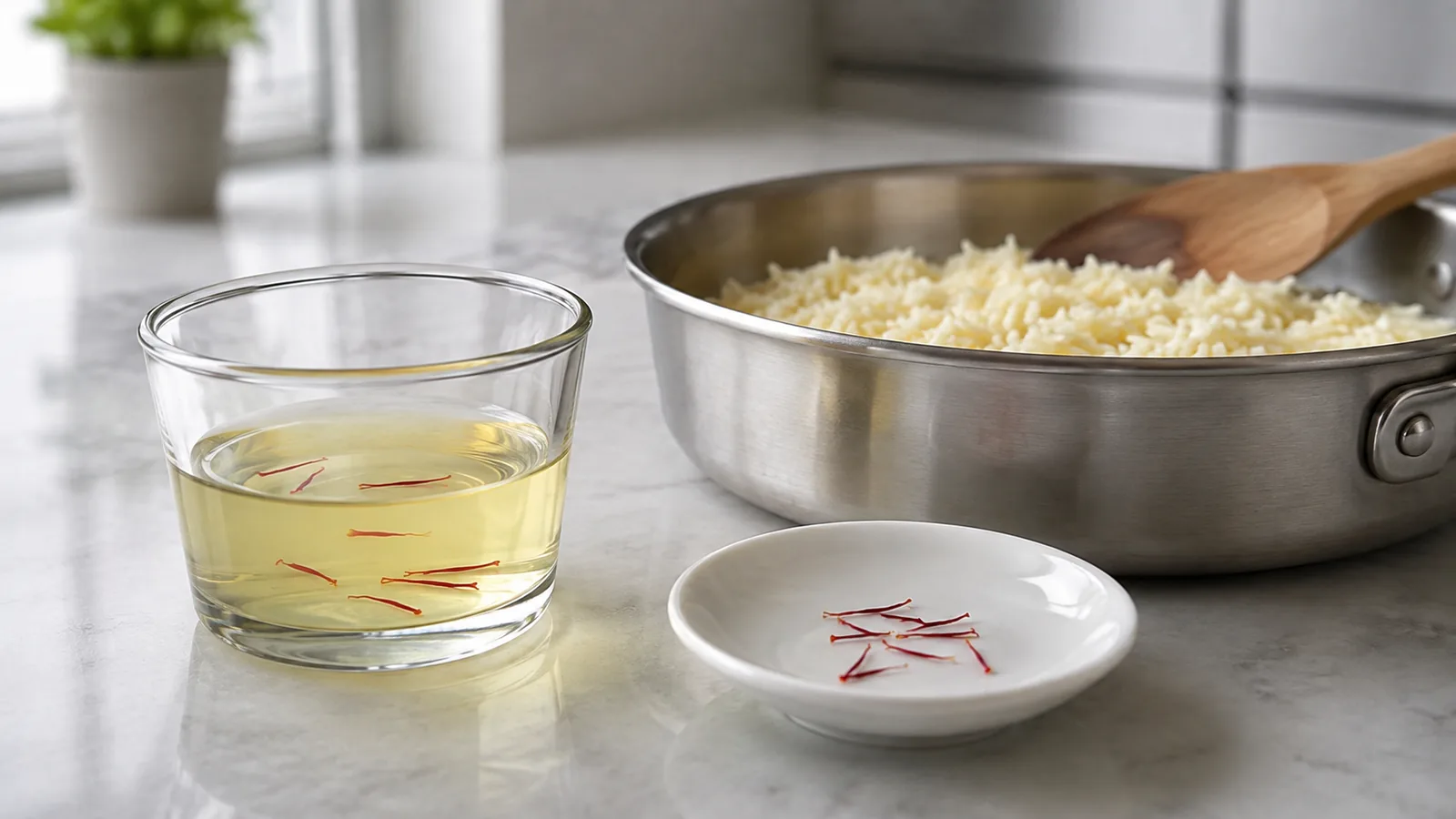
Lightly crush a small measured portion of threads, cover with a little warm—not violently boiling—water, and let it infuse while preparing the dish. The former method used a teaspoon in a small teapot for 20–30 minutes over indirect heat and suggested one third of a teaspoon in tea. Those quantities can overwhelm flavour and are unnecessary for many recipes; scale the saffron to the number of servings.
The ice method
Another common method places crushed saffron under a few ice cubes and lets them melt at room temperature. The old guide suggested two cubes for half a teaspoon and claimed deeper colour and fuller aroma than hot water. The method can extract colour, but superiority depends on time, temperature, grinding and the food; it is not guaranteed.
Use clean utensils and only make what you need. If preparing saffron water in advance, refrigerate it promptly in a sealed container and use it as a perishable infusion. Freezing small portions can preserve convenience, but repeated thawing and room-temperature storage are poor practice.
The practical meaning of “everything”
No article can contain literally everything about saffron, and trying to do so can blur important boundaries. The durable picture is simpler: Crocus sativus is a sterile, corm-grown crop; its three stigmas become a powerful culinary ingredient; quality is created in the field and protected through harvest, drying, testing and storage.
Its history is rich, its chemistry is distinctive and some clinical research is promising. Those qualities deserve accurate language. Use saffron for the colour, aroma, flavour and cultural meaning it genuinely offers, and treat agricultural, medical and commercial claims as questions that need their own evidence.
Sources
- Codex CXS 351-2022: standard for dried floral parts—saffron.
- ISO 3632-1:2025: specification for dried saffron.
- FAO: Iran’s saffron production and value-chain quality.
- Genomic study of the origin and vegetative lineage of Crocus sativus.
- Meta-research review of saffron and health outcomes and systematic review of human adverse-event evidence.
- Peer-reviewed review of saffron agronomy.