Kebab Sultani Saffron Recipe is the name this page has carried since 2019. It is also searched as sultani kebab, kabab sultani and soltani kabab. Those spellings refer to the same Persian name, but the food itself needs one useful clarification before you light the grill.
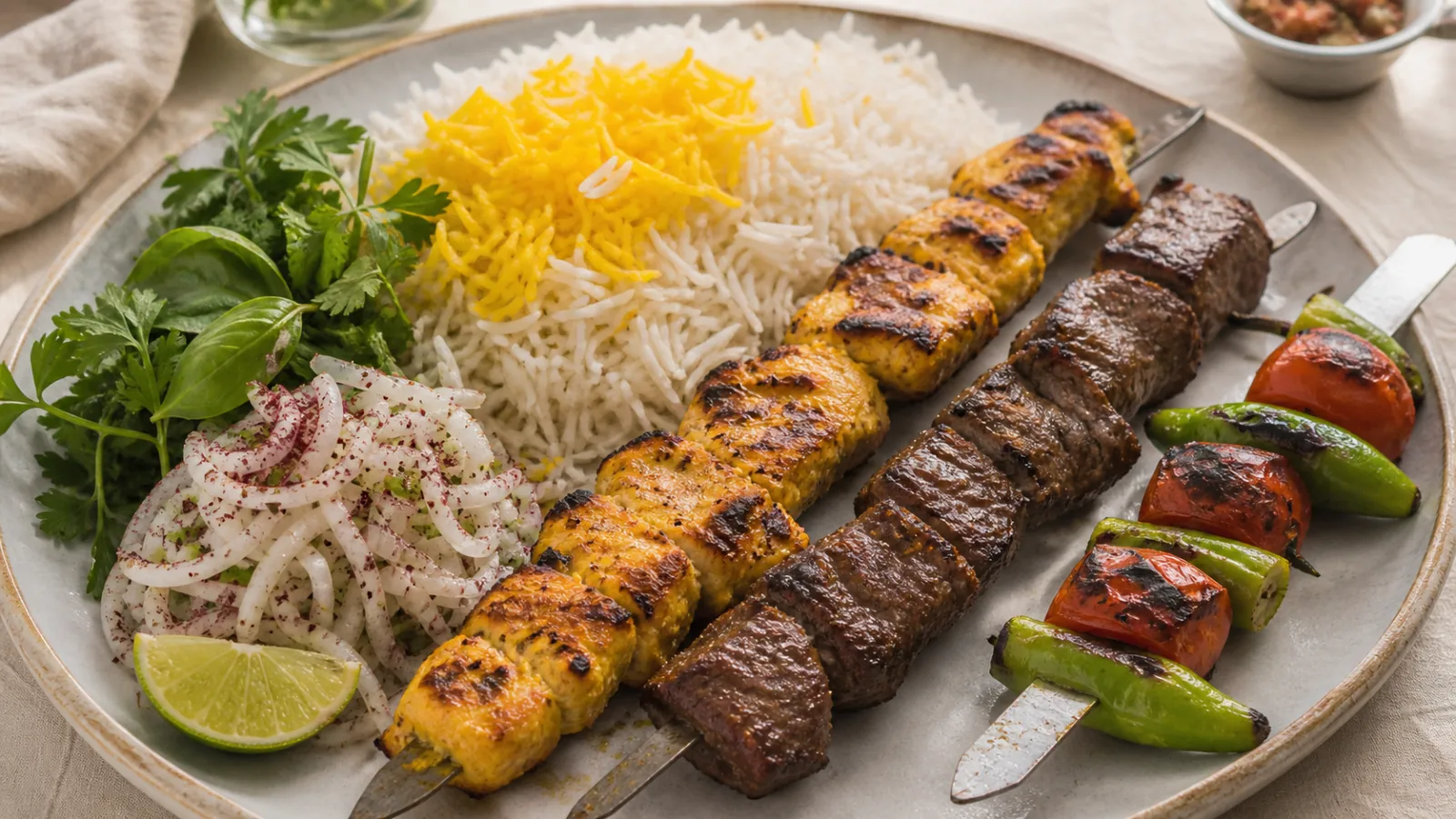
In the established restaurant sense, chelo kabab soltani is a generous plate combining barg—thin, tender pieces of whole meat—with koobideh, the seasoned minced-meat kebab. The archived Rowhani recipe used beef fillet and saffron chicken instead. We have kept that appealing home-cook variation below, clearly identified as a mixed beef-and-chicken kebab rather than pretending it is the strict restaurant combination.
What Is Sultani Kebab?
The spellings change with transliteration: sultani, soltani and soltānī all appear in English. The defining idea is a mixed kebab plate. Encyclopaedia Iranica describes soltani as a combination of barg and koobideh, usually served with steamed rice, butter, sumac, grilled tomatoes and herbs.
That distinction matters if you are looking for a traditional sultani kebab recipe. You need two preparations: a tender whole-meat kebab and a koobideh skewer. This page’s older ingredient list paired beef fillet with chicken breast instead. It works well as a lighter mixed grill and preserves the saffron, onion, pepper and lemon flavours readers came here for.
Kebab Sultani Saffron Recipe: The Beef-and-Chicken Variation
Serves: 2 generously
Preparation: 25 minutes, plus marinating
Cooking: about 10 minutes
Ingredients
- 150 g beef fillet or tender lamb, cut into pieces about 3 cm wide
- 150 g boneless chicken breast, cut into similar-sized pieces
- 1 medium onion
- 1 small green sweet pepper, cut into 3 cm pieces
- 1 tablespoon fresh lemon juice, plus a little more for serving if wanted
- 1 tablespoon strong saffron infusion, cooled
- 2 tablespoons olive oil or another neutral cooking oil, divided
- 25 g softened butter
- 1/2 teaspoon black pepper
- Fine salt, as needed
Marinate the Two Meats Separately
Grate the onion, then press it through a fine sieve. Keep the onion juice and discard the dry pulp. Dividing the marinade keeps raw chicken separate from the beef and lets you cook each meat to the right point.
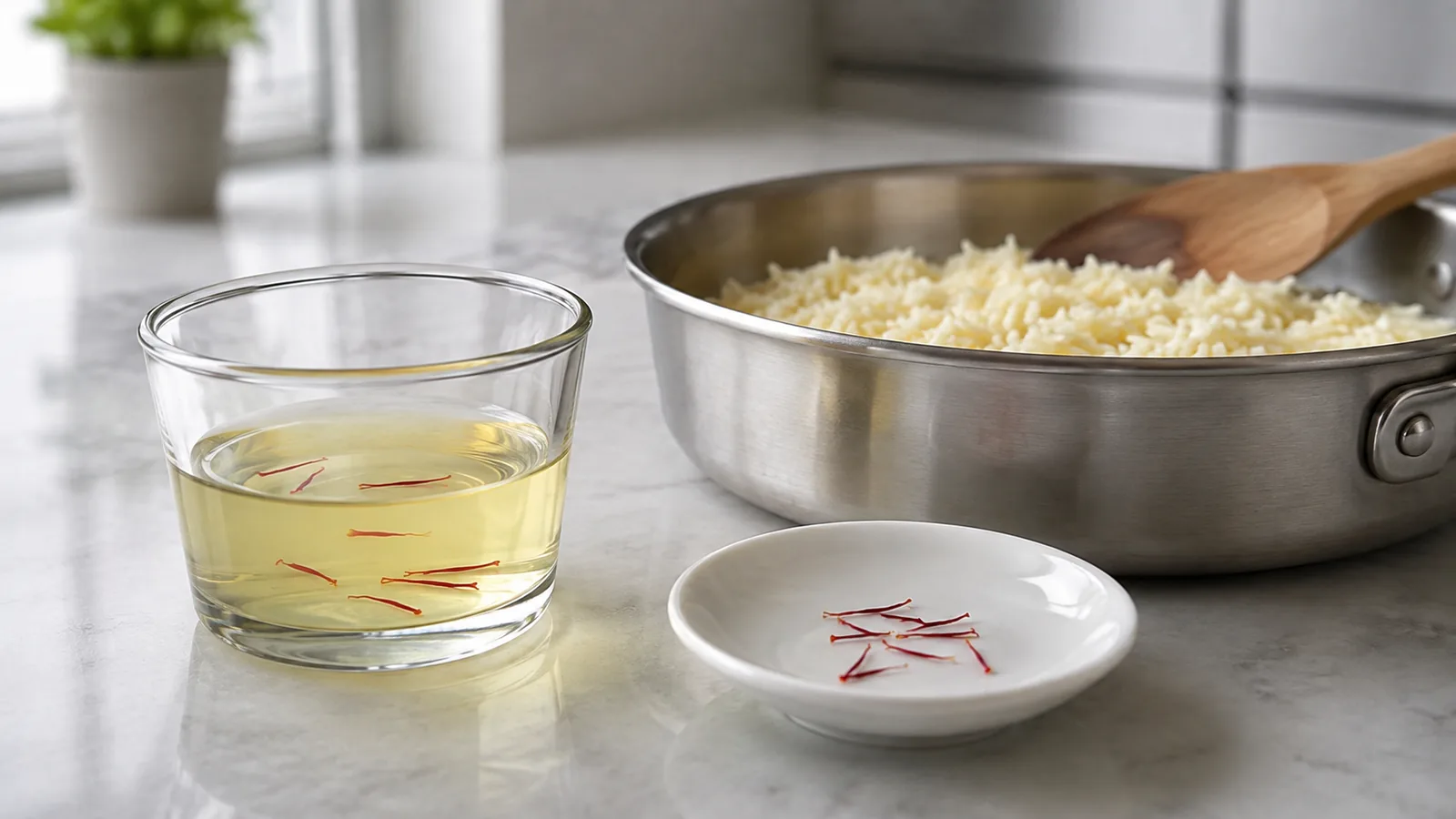
Put the chicken in one non-reactive bowl. Add half the onion juice, the saffron infusion, 1 tablespoon oil and half the black pepper. Cover and refrigerate for 2–4 hours. Saffron is easier to distribute when it has already been infused; our guide to brewing saffron explains a reliable method.
Place the beef in a second bowl with the remaining onion juice, oil and pepper. Cover and refrigerate for 2–4 hours. The old directions suggested holding the meat for as long as 24 hours, but a shorter marinade is enough for small, tender pieces and gives the cook more control over texture. Add lemon juice and salt to both bowls only during the final 20–30 minutes.
Skewer and Grill Without Drying the Chicken
- If you use wooden skewers, soak them in water for at least 30 minutes. Prepare a hot charcoal or gas grill with a clean, lightly oiled grate.
- Thread the beef on its own skewer and the chicken on another, leaving a narrow gap between pieces. Put the green pepper on a separate small skewer. Separate skewers are safer and more predictable than alternating meats that finish at different times.
- Melt the butter and brush a little over the meat. Grill over high heat, turning regularly. The exact time depends on thickness and heat, so use temperature rather than the clock alone.
- Remove whole cuts of beef or lamb once the thickest piece reaches at least 145°F/63°C, then rest it for three minutes. Cook the chicken to 165°F/74°C. These are the USDA safe minimum temperatures.
- Brush the hot kebabs lightly with the remaining butter and let them rest for three minutes before serving.
Pan or Broiler Method
No outdoor grill is required. Heat a heavy ridged pan until properly hot, add only enough oil to prevent sticking, and cook the skewers in uncrowded batches. You can also arrange them on a rack over a foil-lined tray and broil close to the heat, turning once. In either case, check the beef and chicken separately with a thermometer.
How to Serve It
Slide the kebabs onto hot basmati rice, adding a small patch of saffron rice on top. Grilled tomatoes, raw onion, sumac and fresh herbs suit the dish without masking it. Flatbread is an equally good choice when you want a simpler plate.
For a more traditional restaurant-style Kebab Sultani Saffron Recipe, serve one barg skewer beside one koobideh skewer rather than combining beef and chicken. For the Rowhani variation, present the beef and saffron chicken as two distinct skewers. Either way, keeping the meats separate through marinating and cooking is the small decision that makes the finished plate noticeably better.
Useful Troubleshooting
Why is the beef tough?
Use fillet or another naturally tender cut, cut across the grain and avoid very small pieces. A long acidic marinade will not rescue a tough cut; it can make the surface soft while the centre remains chewy.
Why does the chicken stick?
Dry excess marinade from the surface, heat the grate fully and oil it lightly. Once the chicken has browned it should release more readily. Forcing it too soon tears the surface.
Can I prepare it ahead?
You can marinate both meats in separate covered containers earlier the same day. Keep them refrigerated and do not reuse raw-meat marinade as a finishing sauce. Refrigerate cooked leftovers within two hours and use them within three to four days.