Saffron is not a treatment or cure for multiple sclerosis (MS). A compound in saffron called crocin has produced interesting results in laboratory, animal and small human studies, but that evidence does not show that eating saffron can replace an approved MS therapy. The research is best understood as an early investigation of inflammation, oxidative stress and myelin damage.
Medical note: anyone with MS should discuss saffron extracts or other supplements with their neurologist. Do not stop or change a disease-modifying treatment because of this article.
What happens in multiple sclerosis?
MS is a chronic autoimmune disorder of the central nervous system. The immune system attacks myelin, the protective covering around nerve fibres in the brain and spinal cord. The resulting inflammation and damage can disrupt nerve signals. Symptoms vary widely and may include fatigue, changes in vision, numbness or tingling, weakness, muscle stiffness or spasms, balance problems, bladder symptoms and changes in memory or concentration.
Those symptoms are not specific to MS, so they cannot diagnose the condition on their own. The U.S. National Institute of Neurological Disorders and Stroke explains that there is currently no cure, but disease-modifying therapies can reduce relapses and delay progression for some forms of MS. Read the NINDS overview of MS and its treatments.
Crocin, not “crocrin”
The older versions of this article called the saffron compound “crocrin.” The research paper uses crocin. Crocin is one of the carotenoid compounds responsible for saffron’s red color and the yellow color it releases into water.
A chemical studied in a controlled experiment is not automatically an effective food-based therapy. Researchers can use a measured concentration of purified crocin, while a culinary serving of saffron contains a variable mixture of compounds. The dose, purity, route and duration all affect what a result means.
The 2011 Journal of Immunology study
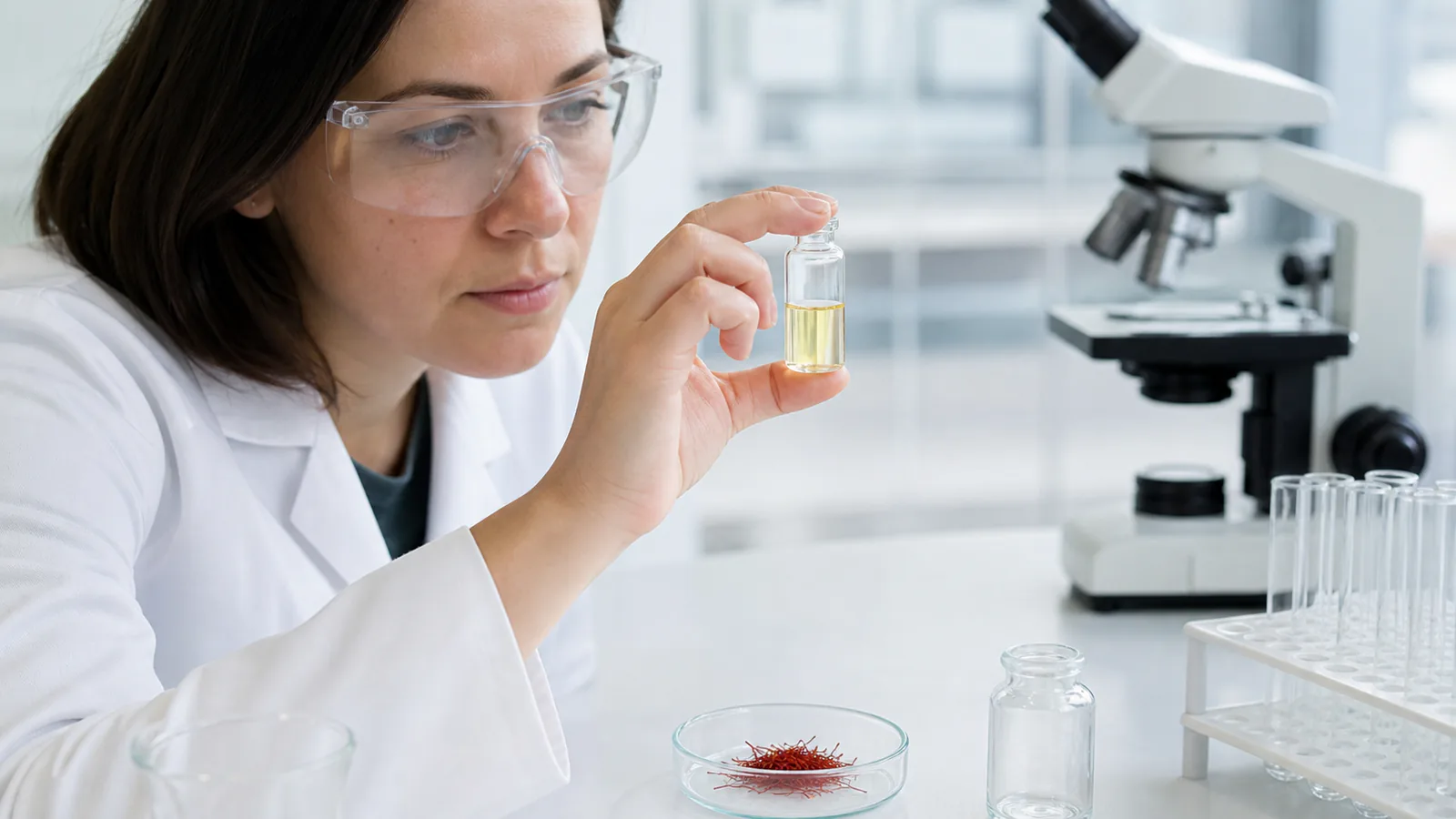
The research behind the original news reports was published in The Journal of Immunology in 2011—not a journal called the “American Journal of Immunology.” Scientists examined cellular stress and inflammation in MS brain tissue, cell experiments and experimental autoimmune encephalomyelitis (EAE), a commonly used animal model of MS.
In cell experiments, crocin protected oligodendrocytes exposed to damaging conditions. Oligodendrocytes are the cells that produce myelin in the central nervous system. In the mouse model, daily crocin treatment was associated with lower expression of stress and inflammatory genes, preserved myelination and axonal density, and reduced immune-cell activity in the spinal cord.
These are meaningful preclinical findings because they identify a pathway worth studying. They are not proof that saffron treats people with MS. Cell cultures and EAE reproduce selected parts of a complex human disease, and many promising preclinical findings do not become safe, effective therapies. Review the 2011 paper on PubMed.
What early human research found
A small randomized, double-blind, placebo-controlled trial published in 2019 studied 40 people with MS. Participants received crocin capsules or placebo for 28 days. The crocin group showed changes in blood markers related to oxidative damage, inflammation and antioxidant capacity.
The trial helps move the question beyond cells and animals, but it remains preliminary. It was small and short, and the measured outcomes were biomarkers. It did not establish that crocin prevents relapses, repairs disability, changes MRI lesions or safely replaces disease-modifying therapy. See the human trial record on PubMed.
Later trials have continued to examine crocin-related formulations and outcomes such as inflammatory markers, mental health or cognition. Different formulations cannot be treated as interchangeable, and a positive secondary measure is not the same as demonstrating control of MS itself.
Does crocin protect myelin?
The careful answer is that crocin protected myelin-producing cells under laboratory conditions and was associated with preserved myelination in an animal model. That supports the biological hypothesis described in the source posts. It does not show that culinary saffron rebuilds damaged myelin in a person.
The original pages also described myelin as “fat” or “insulin” around brain cells. Both translations were misleading. Myelin is a lipid-rich, protein-containing sheath around nerve fibres. In the central nervous system it is made by oligodendrocytes. MS involves immune-mediated injury to myelin and other nervous-system structures; it is not simply swelling of “brain cells.”
Why “treating MS with saffron” is too strong
A treatment claim should be supported by clinical evidence showing outcomes that matter to patients, such as fewer relapses, less disability progression, improved function or an acceptable safety profile. The research cited here does not meet that standard for saffron or crocin as an MS treatment.
The old headline promised more than its underlying study showed. The accurate conclusion is narrower: crocin has demonstrated anti-inflammatory and cell-protective effects in experimental research, and small clinical studies have found changes in selected biomarkers. Further trials would need to establish dose, interactions, long-term safety and meaningful clinical benefit.
Can someone with MS use saffron as food?
Using a normal culinary amount of saffron in food is different from taking a concentrated extract or crocin capsule. A supplement may deliver a higher, more standardized dose and may interact with medicines or health conditions. Product purity also varies.
NINDS advises people with MS to discuss complementary approaches, particularly herbal supplements, with their doctor because biologically active ingredients can cause harm or interact with conventional therapy. A neurologist or pharmacist can assess a specific product against the person’s medication list, pregnancy status, blood pressure and other medical factors.
Questions to ask before considering a supplement
- Is the product whole saffron, a standardized extract, purified crocin or a combined formulation?
- Does the label state the amount per dose and provide independent quality testing?
- Was that exact formulation studied in people with MS?
- Did the study measure patient outcomes or only laboratory markers?
- Could it interact with current medicines or complicate monitoring?
- Who will track benefits and adverse effects?
The evidence-based conclusion
Crocin research has helped scientists investigate how inflammation and cellular stress may contribute to demyelination. The 2011 study offered a plausible experimental mechanism, and a later small human trial found changes in several biomarkers. That is a reason for further research—not a reason to describe saffron as an MS cure or substitute it for neurologist-directed care.