Saffron is not automatically healthier than turmeric, and turmeric is not a cheaper version of saffron. They come from different plants, taste different, and have been studied for different purposes. The useful choice depends on the dish you are making and, if health is the concern, the specific outcome and product being considered.
A saffron vs turmeric comparison can easily become misleading when it treats two colourful powders as interchangeable supplements. Turn the wording around to turmeric vs saffron and the answer is the same: neither is the universal winner. In cooking, saffron contributes a delicate floral aroma and a clear golden hue. Turmeric is earthy, warm, and slightly bitter, with a stronger yellow-orange colour. In research, saffron extracts and isolated curcumin products are also very different from the amounts used to season food.
Saffron vs Turmeric: Which Spice Is Healthier?
Neither spice wins every category. A few saffron threads can transform a dish through aroma, while turmeric is practical in larger quantities and works naturally in curries, soups, lentils, and savoury blends. Both contain biologically active compounds, but the presence of an antioxidant in a laboratory does not prove that eating the spice will prevent disease.
Are saffron and turmeric the same? No. The difference between saffron and turmeric starts with the plant. Saffron is the dried stigma of Crocus sativus, and each flower produces only three stigmas. Turmeric is the underground stem, or rhizome, of Curcuma longa. That botanical difference explains much of the contrast in price, appearance, strength, and normal serving size.
The practical differences are easy to recognise:
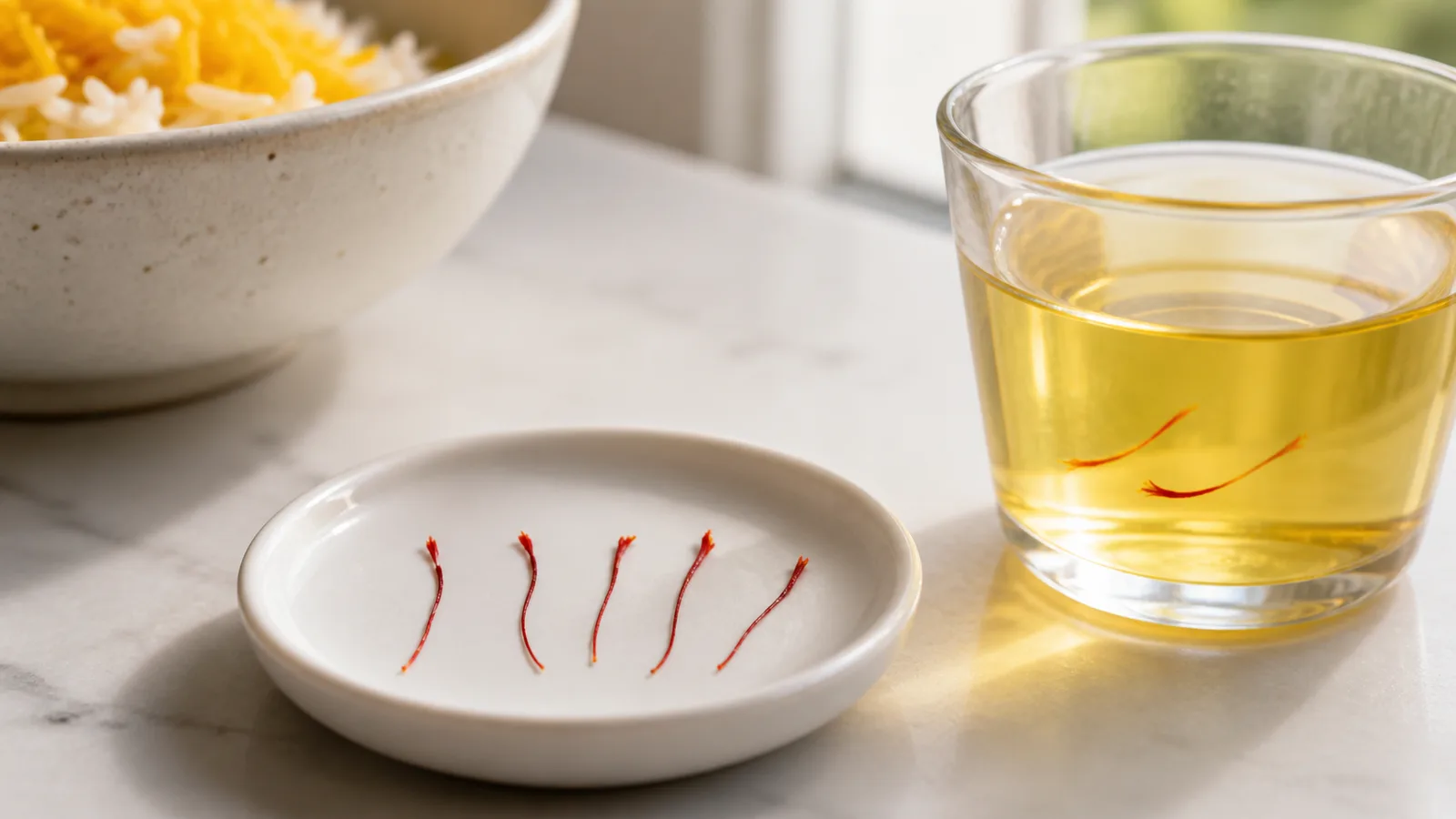
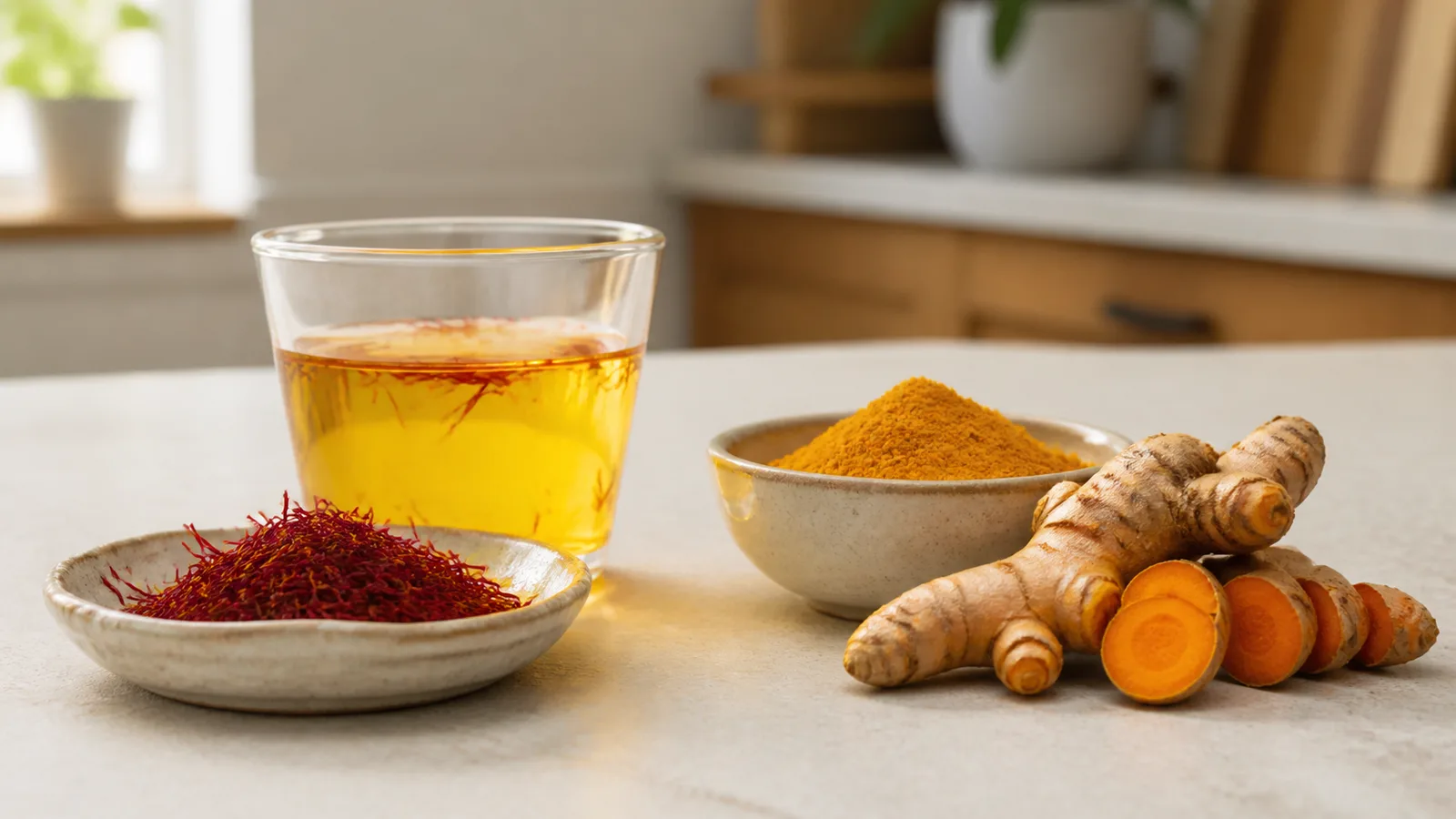
- Form: genuine saffron is commonly sold as fine red threads; turmeric is usually sold as a bright ground powder or a fresh root.
- Flavour: saffron is floral and honeyed with a faint bitterness; turmeric is earthier and more assertive.
- Use: saffron is steeped and added sparingly; turmeric is often cooked directly into a dish.
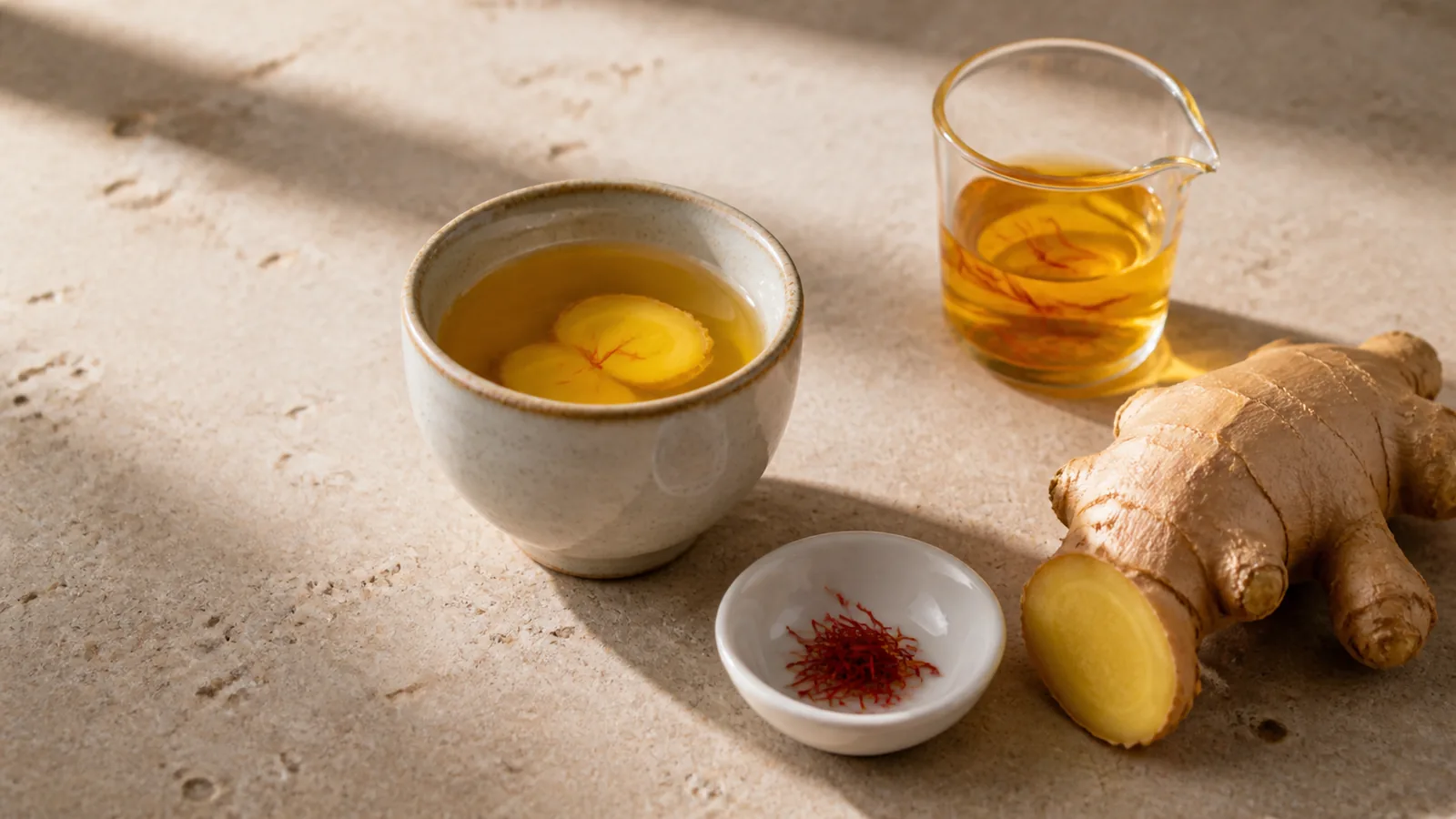
- Colour: saffron makes a luminous gold infusion, while turmeric gives food a denser yellow-orange tone.
- Cost: harvesting saffron by hand makes it far more expensive by weight, although a recipe uses very little.
Health Benefits of Saffron
Saffron contains crocin, crocetin, picrocrocin, and safranal. Clinical research has examined standardised saffron products most often for mood-related outcomes. A 2026 systematic review of clinical trials reported encouraging findings in some groups, while also showing differences in preparations, study quality, and participants. It does not establish saffron as a replacement for mental-health care.
Claims about weight loss, blood pressure, heart protection, memory, and inflammation require the same restraint. A trial using a measured extract for a set number of weeks cannot tell us that a pinch in rice will lower blood pressure or prevent fat storage. Food and clinical products may share a name without delivering an equivalent exposure.
As food, saffron’s dependable strengths are sensory. Its aroma and colour can make a simple meal more satisfying without requiring a heavy sauce. That matters in cooking, but it is not a medical claim. Anyone using a concentrated saffron supplement for a health goal should check the ingredient list, serving, medicines, pregnancy status, and relevant condition with a healthcare professional.
Health Benefits of Turmeric
Turmeric contains curcuminoids, including curcumin, and has a much larger research literature than many culinary spices. Yet the evidence is not a blank cheque. The US National Center for Complementary and Integrative Health says there is not enough evidence to reach definitive conclusions about the health benefits of turmeric or curcumin for most conditions. It also notes that different formulations can behave differently in the body.
Some research has explored turmeric or curcumin for osteoarthritis symptoms and other inflammatory conditions. That is more cautious than saying turmeric will treat arthritis, protect the brain, prevent Alzheimer’s disease, detoxify the liver, or improve digestion for everyone. “Detox” is especially unhelpful here: the liver already processes substances, and a spice should not be advertised as a cleansing treatment.
Turmeric used in ordinary cooking is distinct from a high-absorption curcumin supplement. Products may add piperine from black pepper or use other technologies to increase absorption. That can also change interaction and side-effect considerations. According to NCCIH’s turmeric guidance, conventional oral products may cause nausea, reflux, stomach upset, diarrhoea, or constipation, while some highly bioavailable formulations have been associated with liver injury.
Saffron vs Turmeric: Which Is Better for Health?
If the question is saffron or turmeric for health, begin by defining the goal. Articles about saffron vs turmeric benefits often flatten a complicated comparison into an “antioxidant power” ranking. Turmeric and saffron health benefits need to be judged against the exact preparation, dose, population, and outcome. For flavourful everyday cooking, both can belong in a varied diet; for a symptom or diagnosed condition, neither should be selected from a ranking alone.
Saffron has a focused body of human research around mood and certain other outcomes. Turmeric and curcumin have been studied across a broader range of inflammatory and pain-related questions, but broad study volume does not guarantee a clinically useful effect. One spice cannot be declared healthier simply because more papers mention it.
Saffron vs turmeric for skin follows the same rule. Both appear in cosmetic traditions and laboratory research, but applying a kitchen spice can stain or irritate skin. It is not a substitute for sunscreen, treatment of a rash, or assessment of a changing lesion. Use a properly formulated cosmetic as directed and patch-test it; do not improvise a concentrated paste because a spice has an antioxidant reputation.
There is also no need to make this an either-or contest. A recipe may use both for different reasons, provided the flavours fit. Their health value as foods comes within the wider pattern of the diet, not from one spice cancelling an otherwise poor routine.
Which Spice Should You Choose?
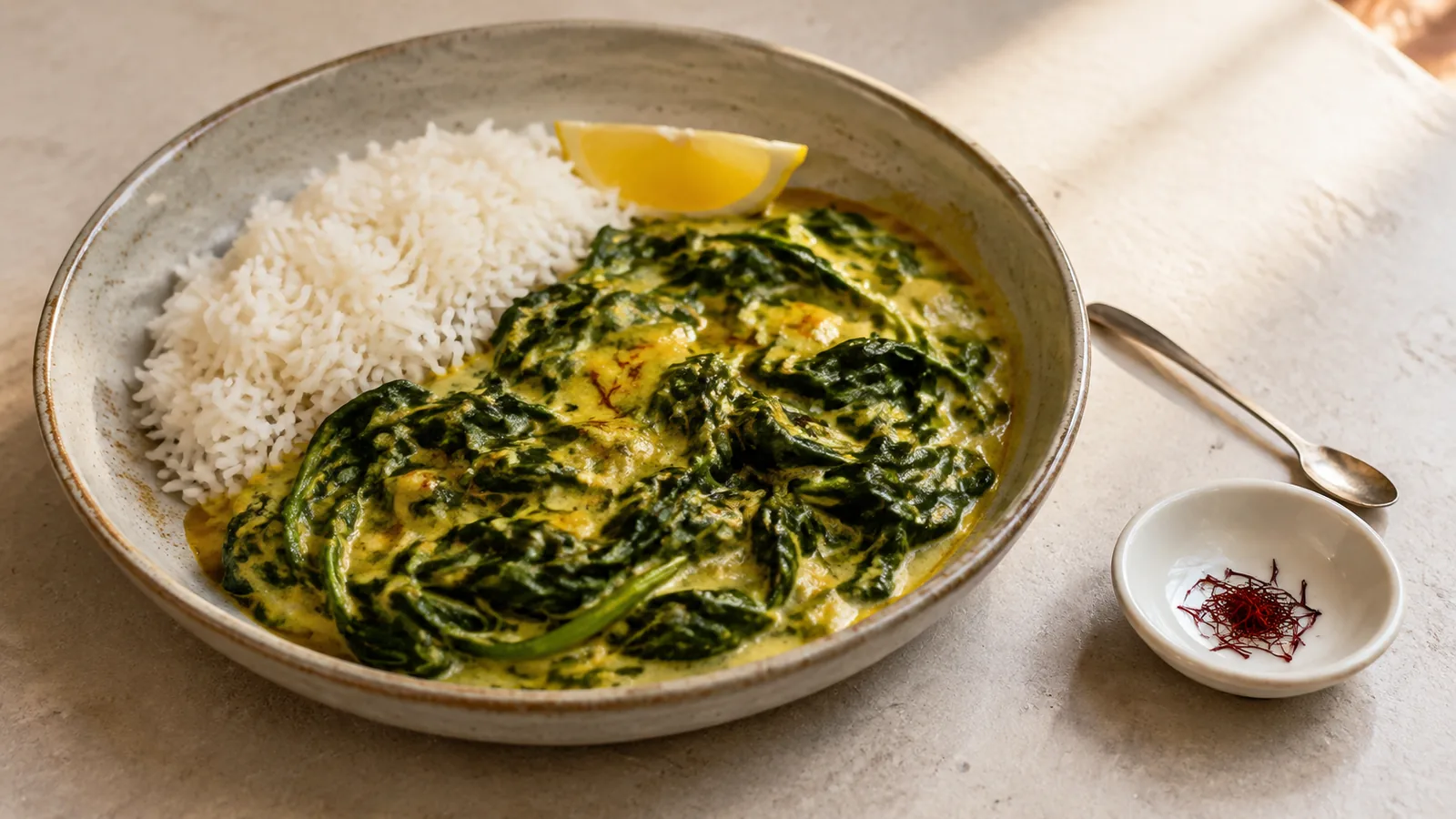
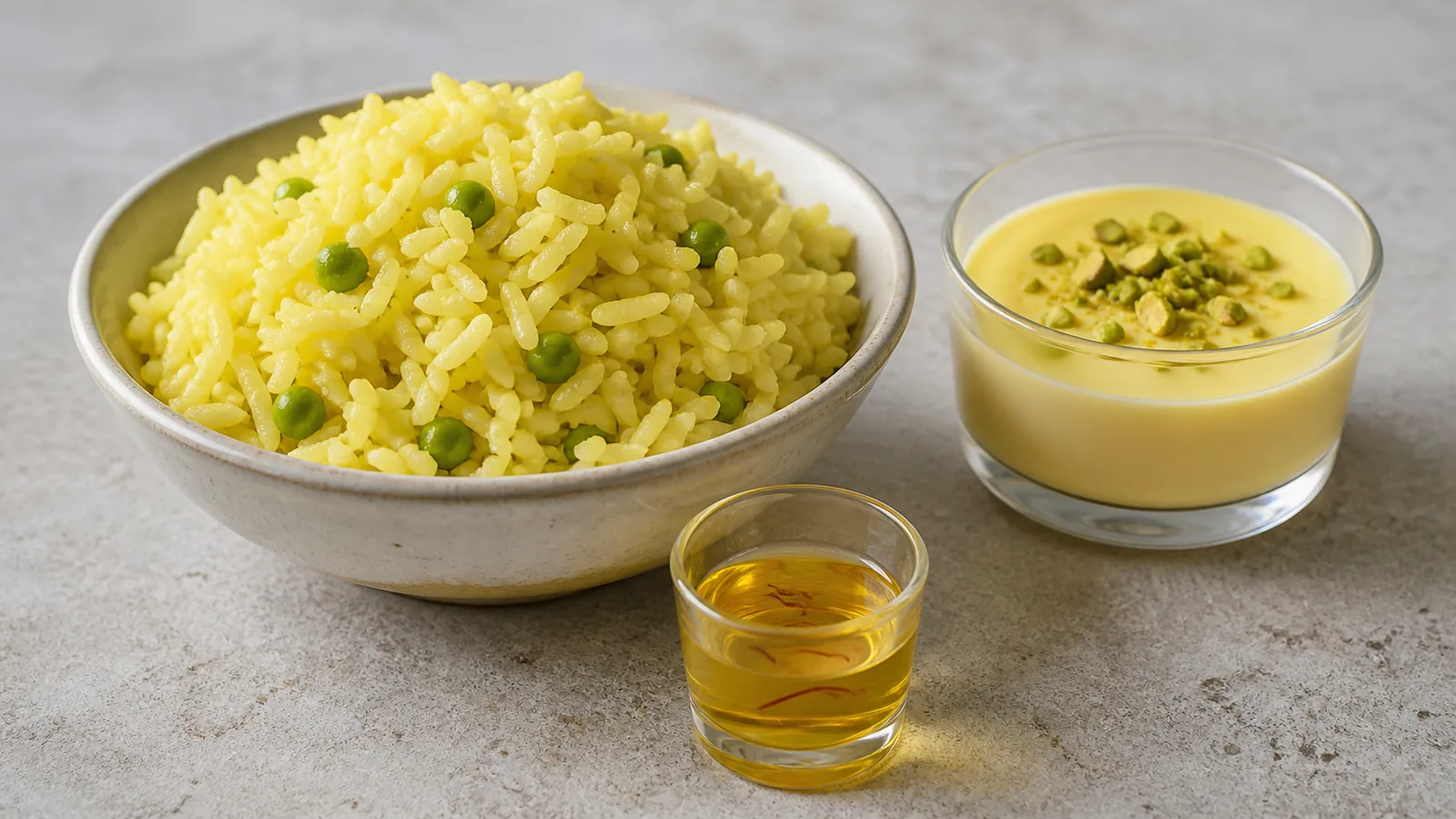
Choose saffron when its fragrance is central to the dish: risotto, paella, tahdig, milk desserts, delicate broths, or a lightly steeped drink. Choose turmeric when you want its earthy flavour in curry, lentils, roasted vegetables, soup, or a spice blend. Buy saffron as identifiable threads from a traceable seller; buy turmeric fresh or ground from a source with sensible storage and turnover.
Can turmeric substitute for saffron? It can provide yellow colour in some recipes, but it cannot reproduce saffron’s aroma. Start with a very small amount because turmeric can quickly dominate and turn bitter. There is no dependable “how much turmeric to substitute for saffron” health conversion: a culinary colour substitution says nothing about matching bioactive compounds or study doses.
For supplements, the decision deserves more care. Check whether the research applies to the product in your hand, look for transparent ingredient and testing information, and ask about interactions if you take medicine or have a health condition. Stop and seek advice if a product causes persistent digestive symptoms, rash, dizziness, or another unexpected reaction.
So, is saffron healthier than turmeric? Not in any universal sense. Saffron is the better ingredient when you want saffron’s particular aroma and colour; turmeric is the better ingredient when its flavour belongs in the meal. For a health objective, compare evidence for the exact product and outcome rather than awarding a prize to the spice jar. For culinary saffron, see our all-red saffron threads.