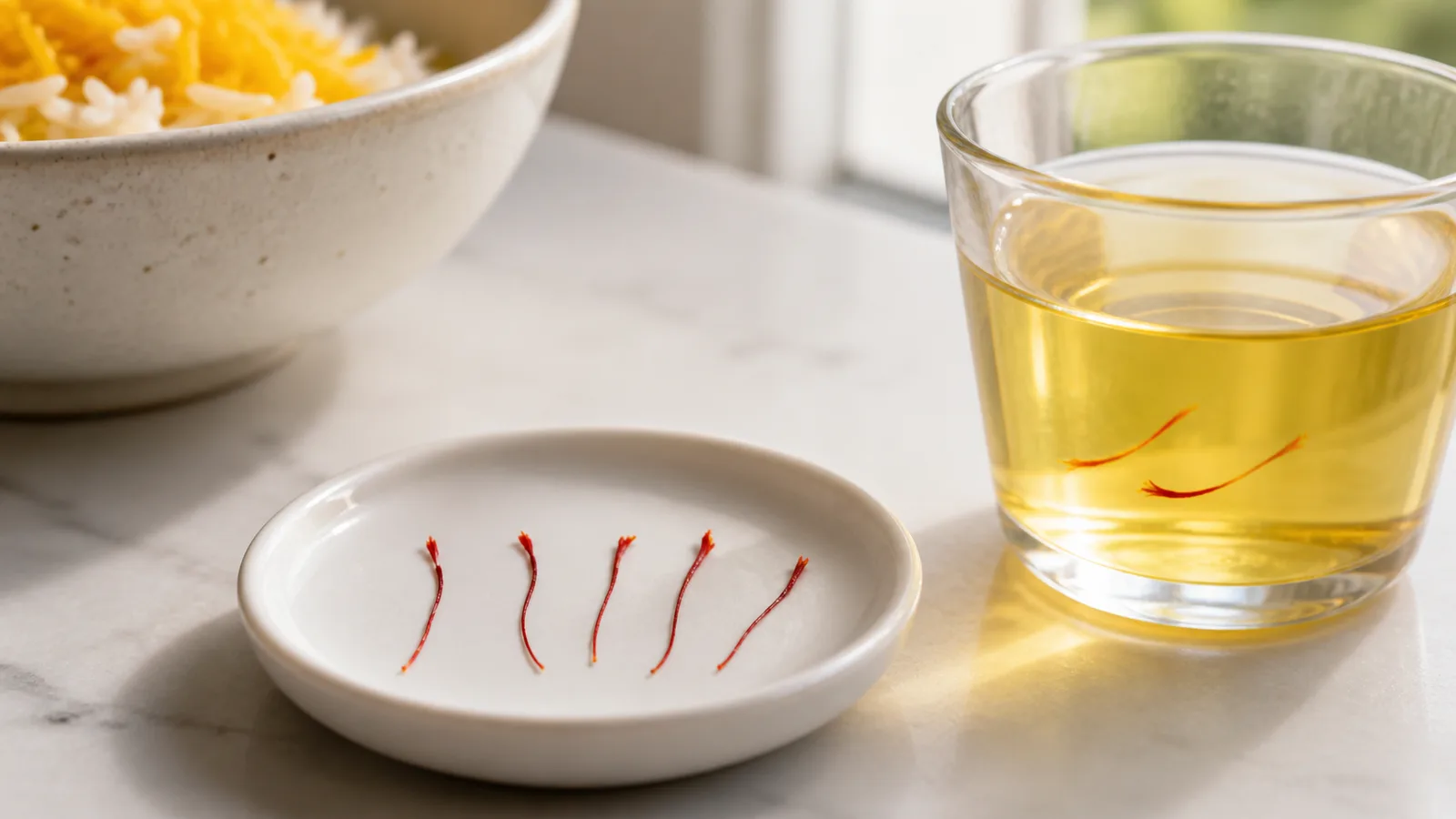
Grade 1 saffron can be very good, but “grade 1” is not enough information to judge a purchase. The name usually describes long, mostly or entirely red threads with little yellow style material. It does not by itself prove origin, freshness, colouring strength, aroma, purity or compliance with a particular standard.
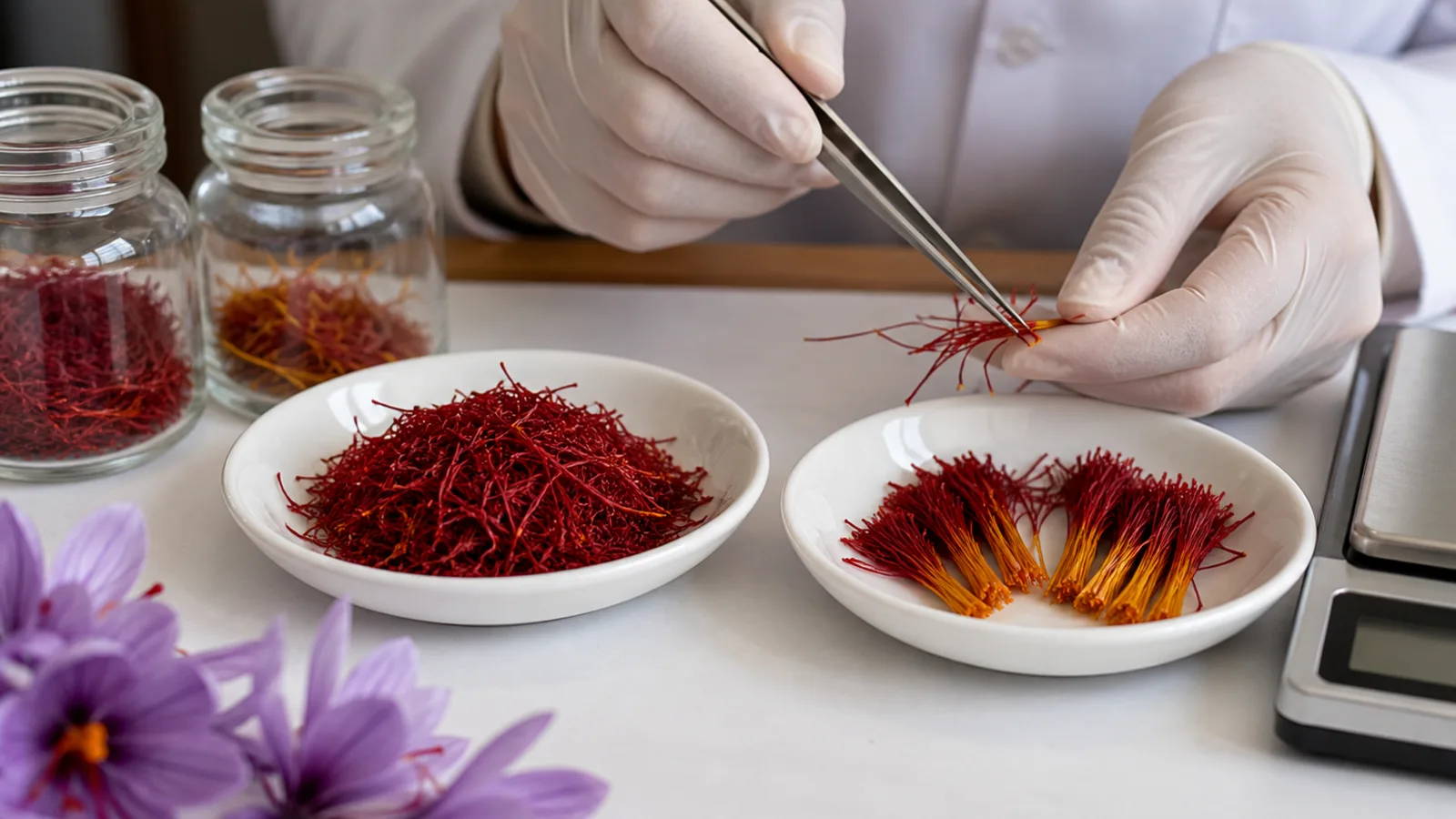
A buyer should compare the actual specification and lot evidence. Bundle saffron—known in Iranian trade as dasteh—keeps more of the red stigma attached to its orange or yellow style. It is a different cut with different economics, not automatically fake or poor-quality saffron.
What sellers usually mean by grade 1 saffron
In everyday trade, grade 1 saffron normally has a high proportion of red stigma, reasonably long and intact threads, few pale style pieces and little visible foreign material. It is often selected for strong colour, clean presentation and ease of dosing.
The problem is that “grade 1” can be a national category, a buyer’s contract term or simply a seller’s marketing label. Two suppliers may use the same words for different thread cuts and analytical limits. Names such as Negin, Sargol, Pushal and grade 1 also do not map perfectly across every market.
The old destination said top-grade saffron contains the “highest concentration” of crocin, safranal and picrocrocin. A redder-looking lot may deliver strong colour, but appearance cannot establish those values. They need a representative sample and the relevant laboratory methods.
What bundle or dasteh saffron is
Bundle saffron retains the flower’s thread in a more complete form. The upper stigma is red; the attached lower style becomes orange, yellow or pale towards its base. Traditionally, groups of these threads may be aligned and dried together, which explains the “bundle” or “bunch” name.
Because part of each gram is pale style rather than red stigma, bundle saffron may provide less colouring strength per gram than a carefully separated all-red cut. That does not make it worthless. The attached form can help a knowledgeable buyer see that the material follows the natural structure of the flower, and a well-dried bundle can have a characteristic aroma and useful culinary quality.
Bundle saffron is often positioned as an economical choice for tea, rice, desserts and everyday infusions. Its value still depends on cleanliness, moisture, storage, harvest age and the proportion of red to pale material.
Grade 1 versus bundle saffron
Choose an all-red grade when
- strong colour per measured gram is important;
- the customer expects a clean, uniform red-thread presentation;
- a recipe or manufacturing specification requires a defined potency;
- the extra sorting cost is justified by the application.
Choose bundle saffron when
- you want a traditional, more complete stigma-and-style form;
- the intended use is tea, a dessert or routine home cooking;
- you accept somewhat more pale material for a lower price;
- the specific lot still meets your purity, aroma and handling requirements.
Neither list replaces testing. A stale or damp all-red lot can be a worse purchase than a fresh, clean bundle lot. Conversely, a cheap bundle with too much style, foreign matter or moisture may offer poor value even if it is genuine.
Why all-red threads usually cost more
Every saffron flower produces only three stigmas. Separating the red part from the style requires additional handling, and removing pale material reduces the final weight available for sale. Longer, intact threads also need careful separation, drying, storage and transport.
The premium therefore reflects selection and yield as well as potential performance. It should not be treated as proof of medicinal strength or a guarantee that one named grade always outperforms another. A sensible comparison considers how much usable colour, aroma and flavour the lot provides for its actual price.
ISO 3632 is a specification, not a seller badge
The source advised buyers to look for “ISO-3632 certification.” That phrase is too loose. ISO 3632-1:2025 is the current international saffron specification, while ISO 3632-2:2010 provides current test methods. ISO does not certify every lot or endorse suppliers.
A meaningful claim identifies the saffron lot, the laboratory, report date, sample method, standard edition and results. Our guide to Iranian saffron standards and ISO 3632 quality control explains how sampling, composition tests, food safety and release fit together.
Do not assume that a “grade 1” label is an ISO result. Ask which requirement made it grade 1 and whether the report covers the product being offered.
What a serious quality check covers
For a commercial purchase, useful evidence can include:
- the lot’s origin, harvest or packing period and product form;
- red stigma and pale style proportions under the agreed specification;
- moisture and volatile matter, ash and foreign material results;
- spectrophotometric measures associated with colour, bitterness and aroma;
- screening for undeclared dyes or substitute plant material when risk warrants it;
- separate microbiological, residue or contaminant checks required by the market.
A certificate from another lot is not evidence for the current jar. Sampling also matters: a hand-picked red handful can make a mixed consignment look better than it is.
How to compare aroma, colour and flavour at home
At home, open the pack and check for a clean characteristic aroma rather than mustiness, smoke or an unrelated perfume. Threads should be dry and distinct, not wet or mouldy. Bundle saffron will naturally show pale style; that is not the same as random straw, fibres or dust.
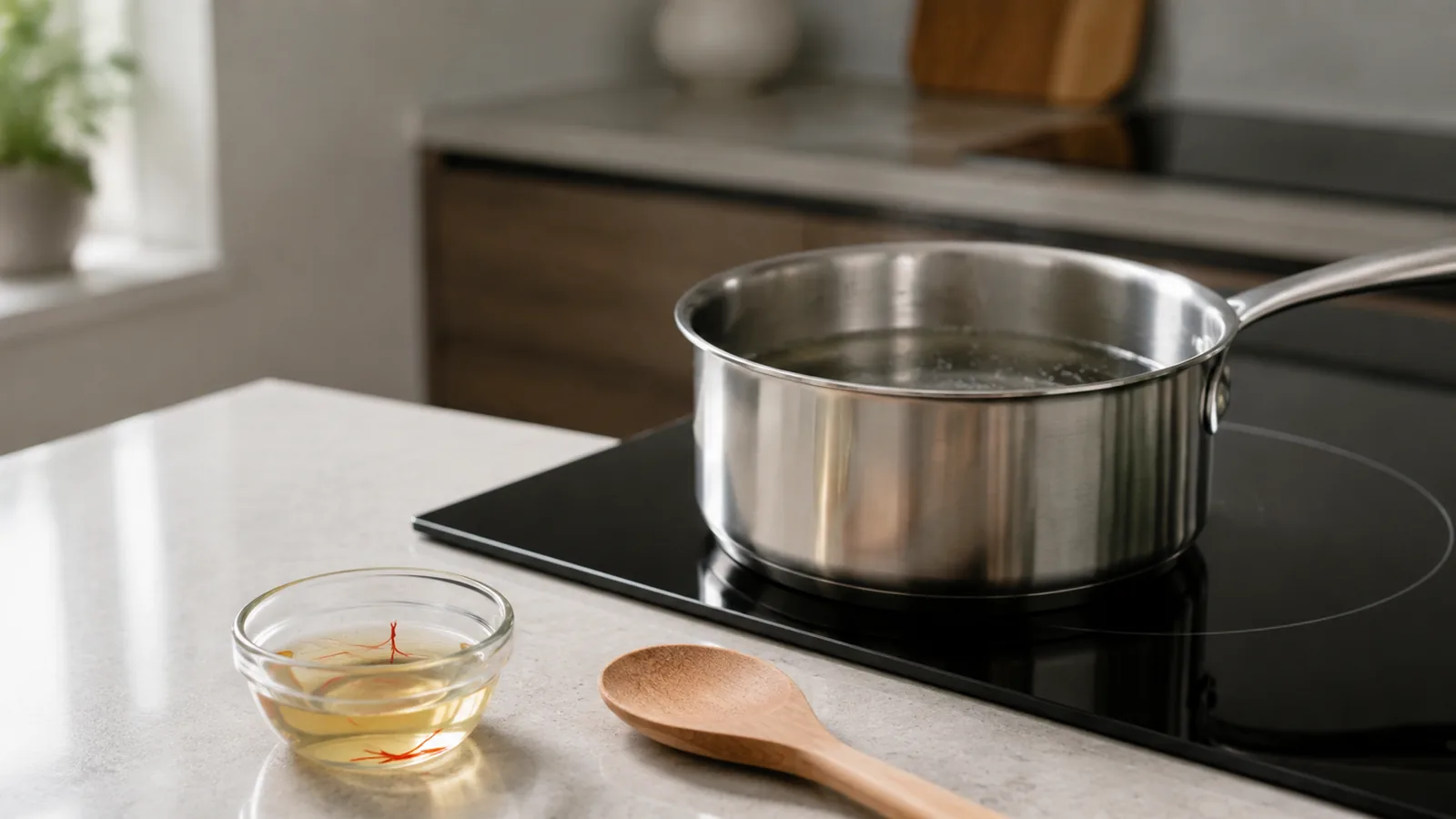
For cooking, crush a measured small amount and steep it in warm water before adding it to the dish. Compare lots using the same saffron mass, water volume, temperature and time. A fair side-by-side infusion can show practical differences, but it cannot prove chemical purity or replace a laboratory.
Be wary of dramatic home “authenticity tests.” Genuine saffron releases colour over time, but extraction changes with temperature, crushing and thread form. A dye can also behave in more than one way.
Best uses for grade 1 and bundle saffron
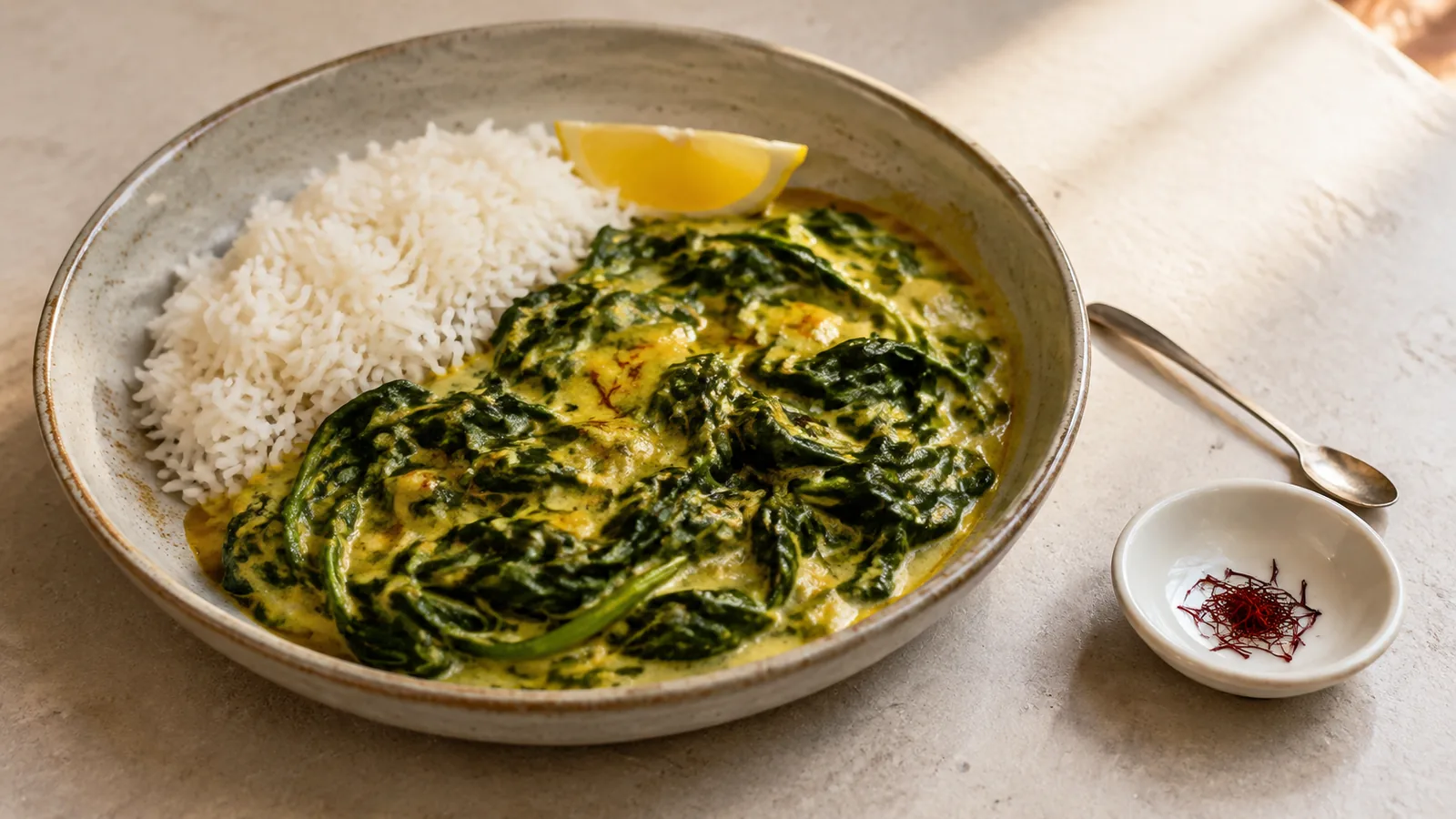
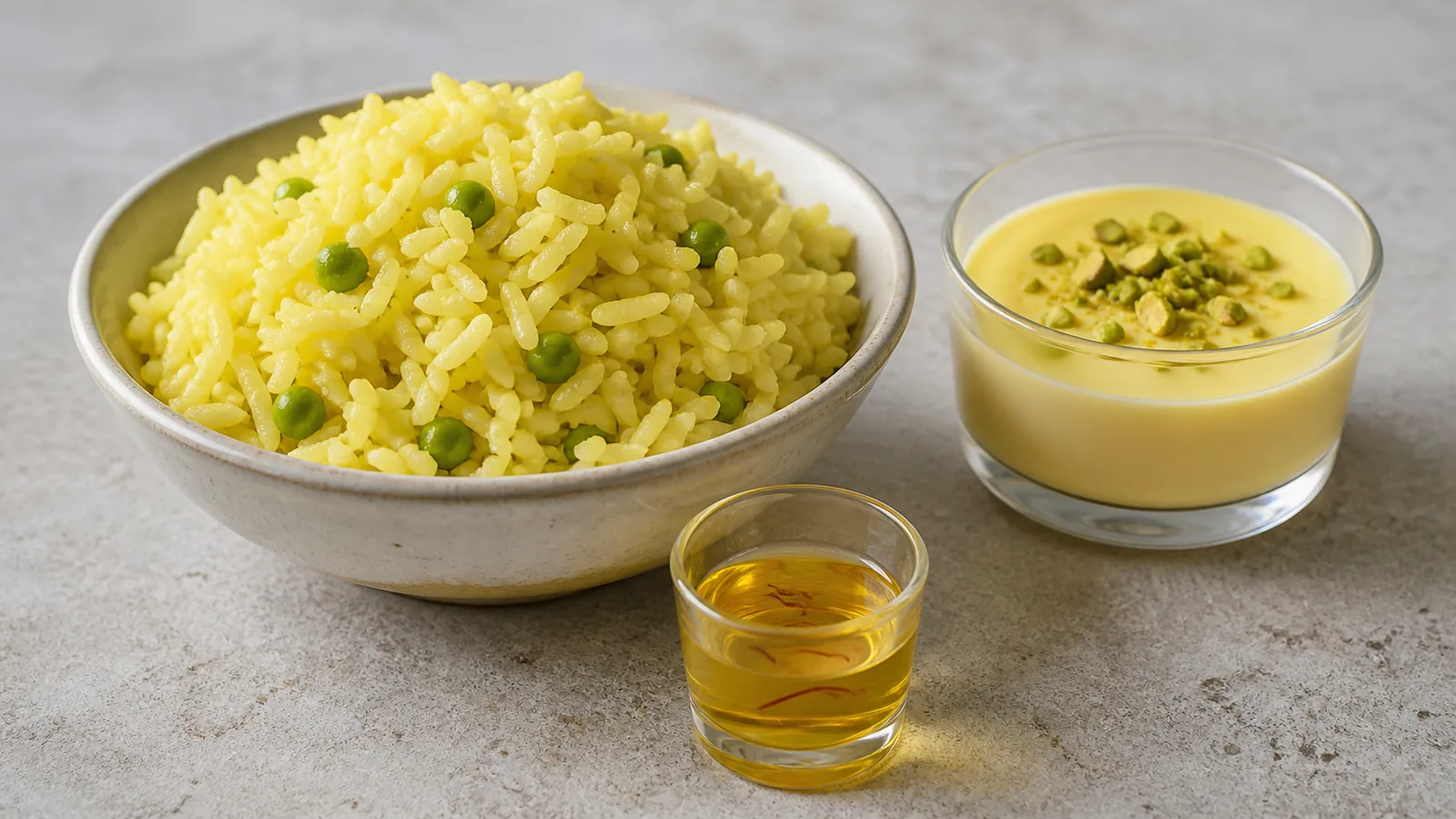
All-red grade 1 saffron is useful when colour efficiency and a polished thread appearance matter: fine rice dishes, pastry, confectionery, restaurant service and standardised production. Its higher price makes most sense when the extra performance can be measured or seen.
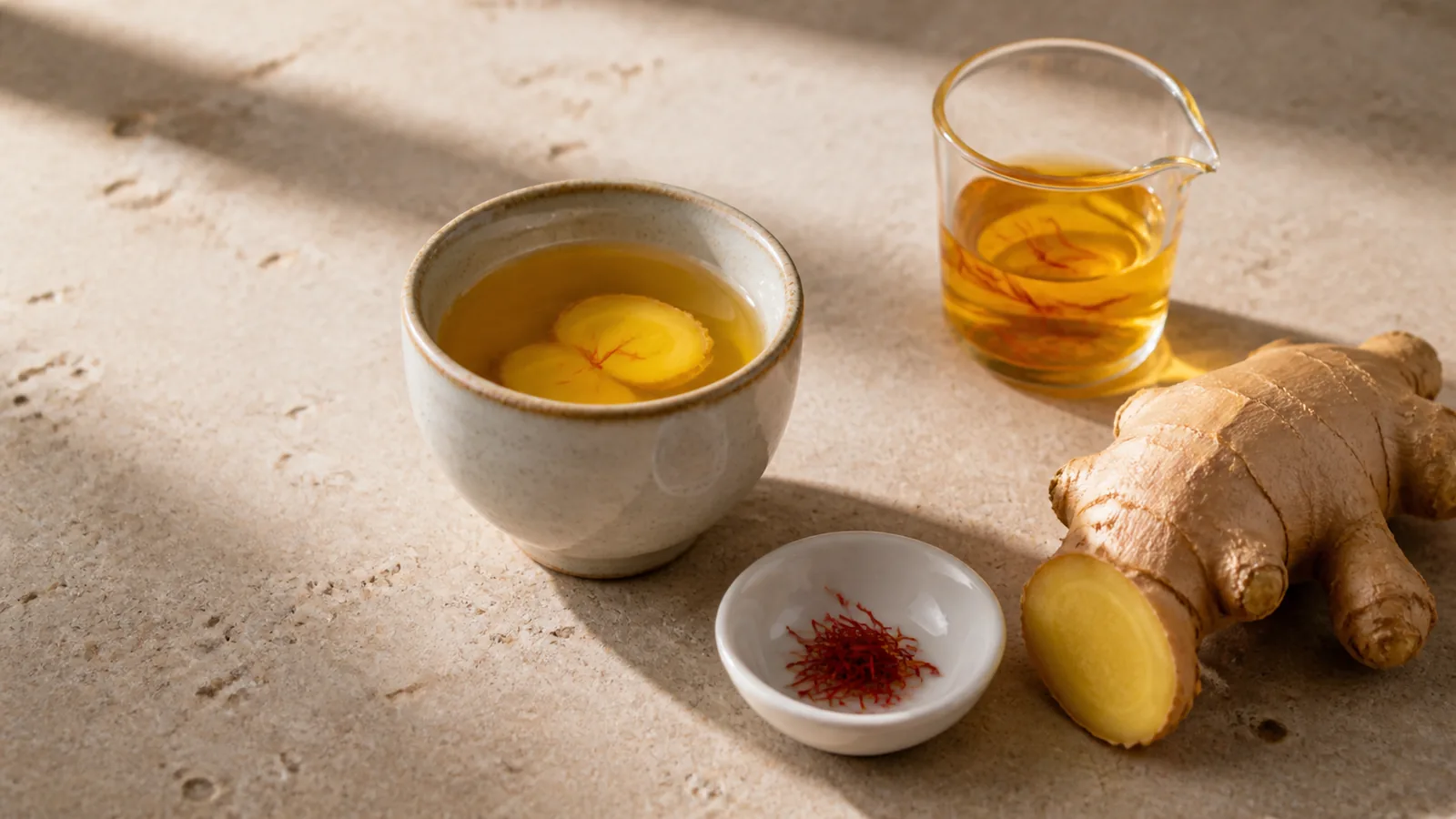
Bundle saffron works well in tea, syrups, desserts, broths and home dishes where the infusion is prepared deliberately and a little pale style is acceptable. It may be a better value for someone who wants genuine saffron character without paying for the most heavily selected appearance.
Whichever form is chosen, store it airtight, dry, cool and protected from light and strong odours. Buying more than can be used while it remains aromatic is not economical.
Grade does not determine health effects
The source claimed that bundle saffron improves focus and memory, raises serotonin to relieve depression, reduces inflammation and lowers cholesterol. Those conclusions are not established by the grade or thread form. Clinical studies use defined preparations and doses; their results cannot be transferred automatically to culinary bundle or grade 1 saffron.
Our evidence review of Iranian saffron health research separates human trials from laboratory and animal work. Food saffron should not be sold as a treatment, and anyone considering a concentrated product for a medical reason should discuss it with a clinician or pharmacist.
So, is grade 1 saffron good?
Yes—when “grade 1” is backed by a clear specification, representative lot evidence, fresh handling and a price that fits the use. It is usually a strong choice for buyers who want long all-red threads and high colour efficiency.
Bundle saffron can also be good. It keeps orange or yellow style material, generally costs less and suits many teas and dishes. The better purchase is not the label with the highest-sounding number; it is the traceable lot whose form, quality, test evidence and price match what you actually need.