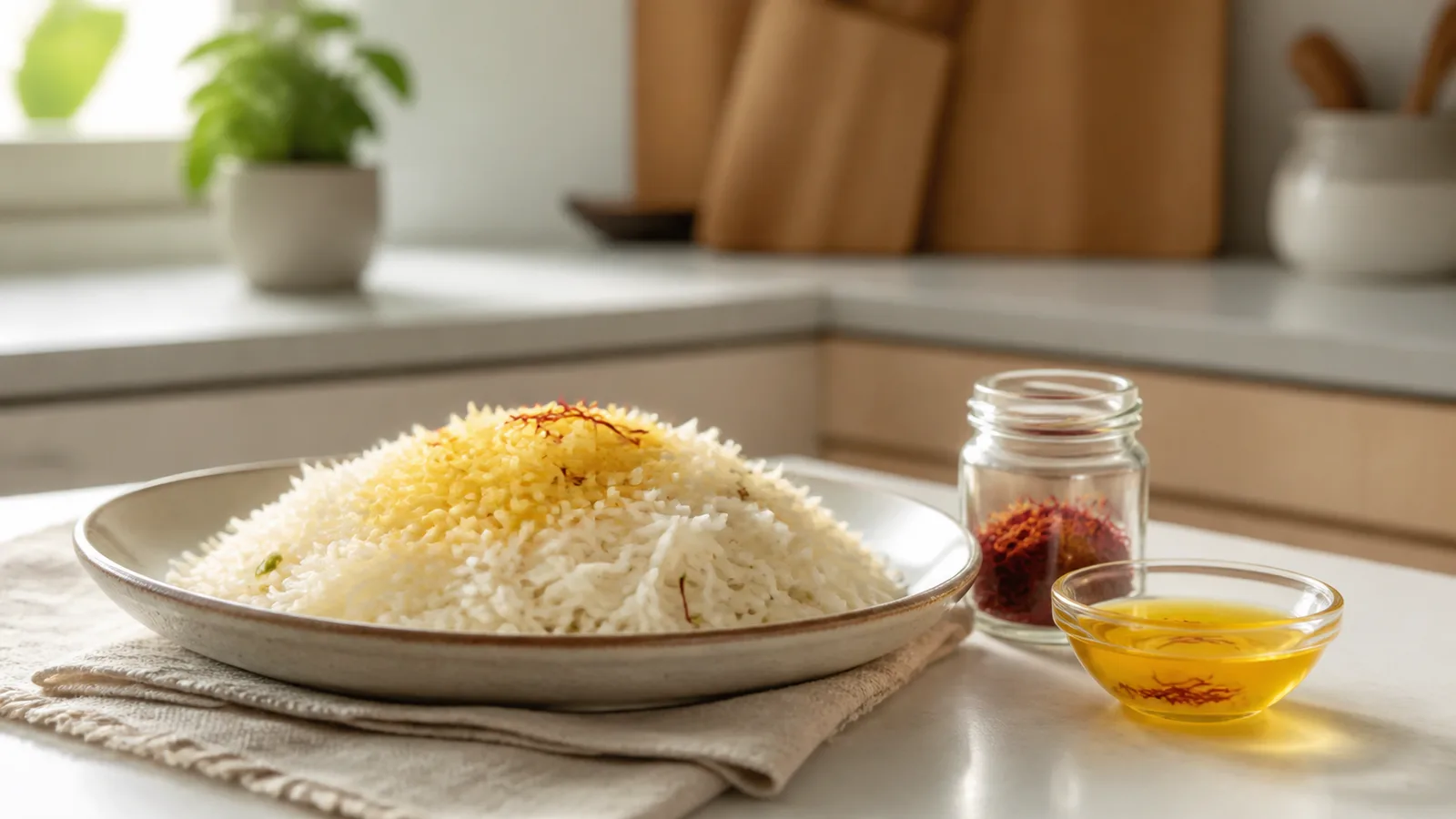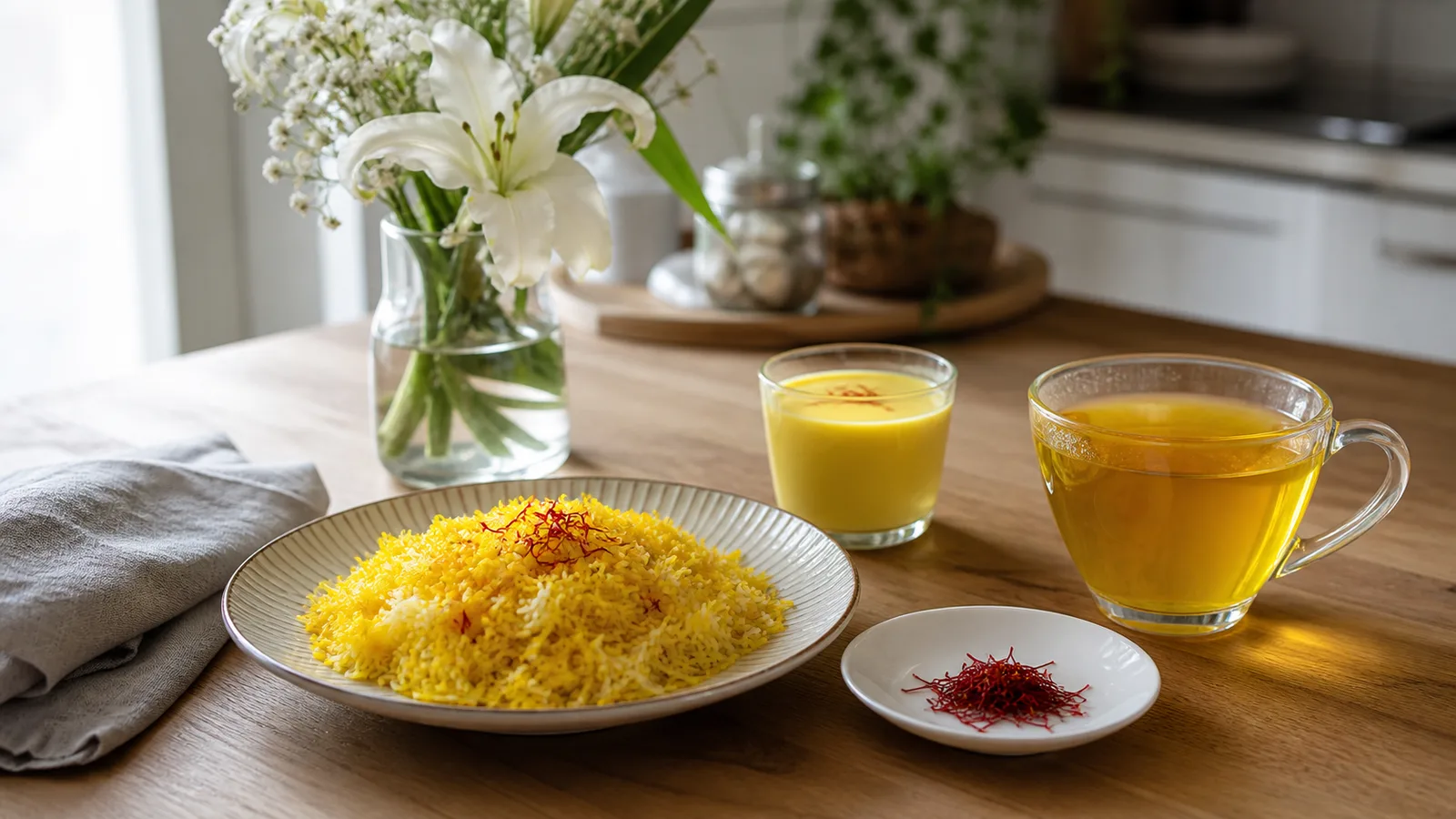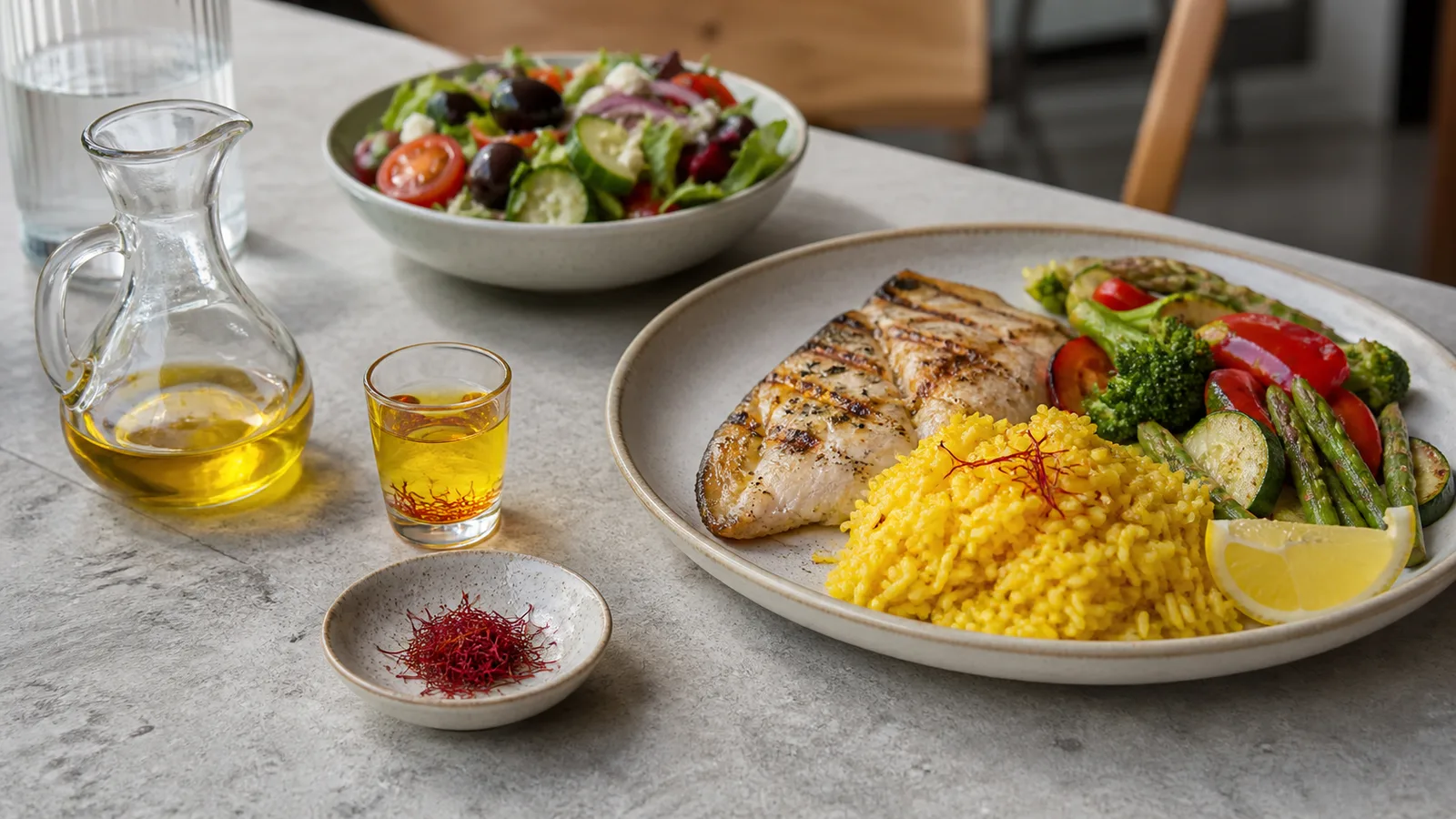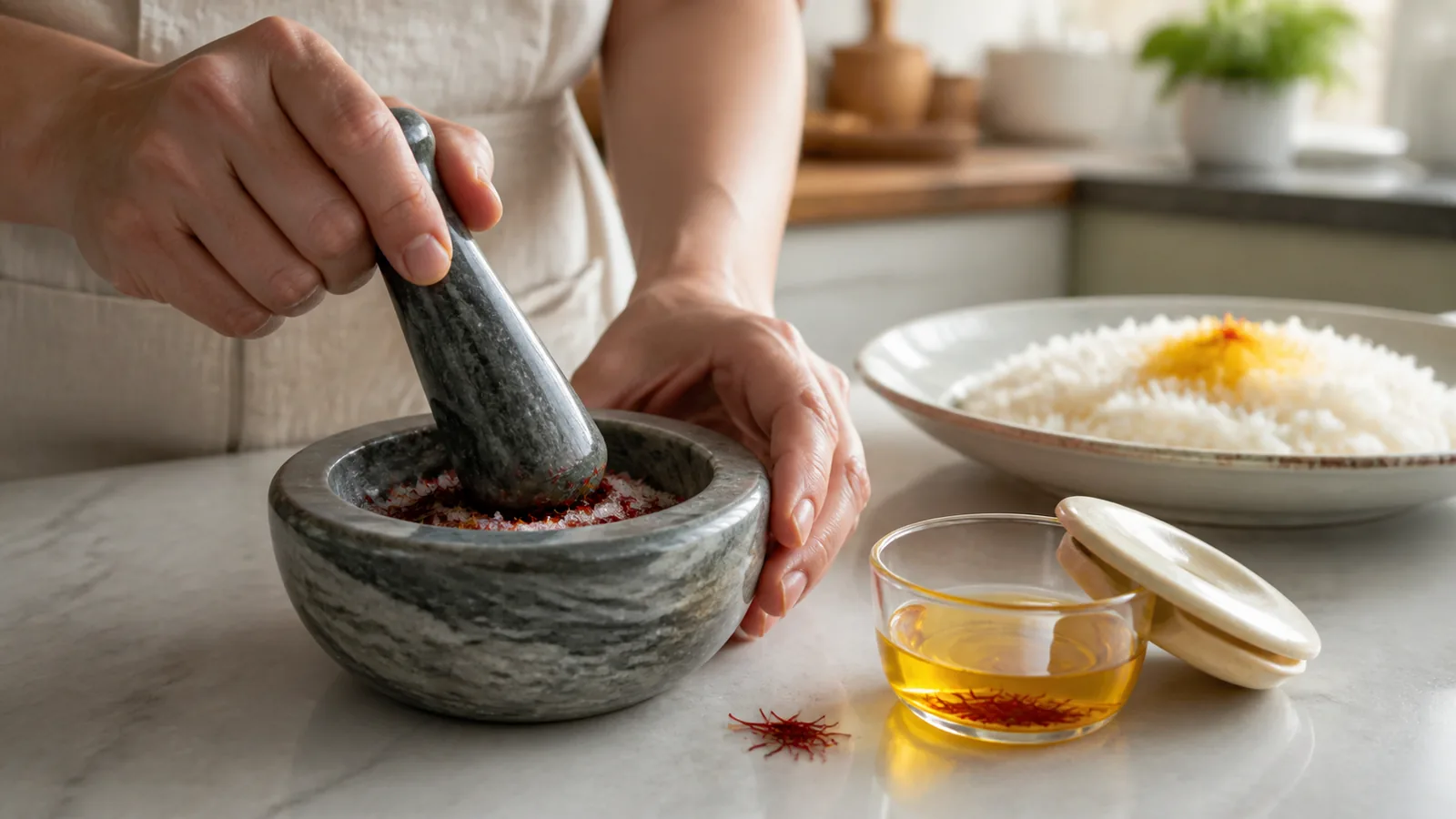
The best way to use pure saffron is to give the threads time to release their colour and flavour before they meet the main dish. Grind a measured amount, cover it with hot water, let it brew—more accurately, infuse—then add both liquid and softened threads to the food. This small step distributes an expensive spice evenly and gives the cook more control than dropping dry threads into one corner of a pot.
Hot water works quickly because saffron’s crocins disperse well in water. A culinary study found that a 90°C water infusion recovered far more crocetin esters in five minutes than cold water did over the same period, reaching complete recovery in that experiment at ten minutes. Aroma compounds behave differently, so prolonged hard boiling is not the goal.
Start with saffron you can identify
Pure saffron should be dried material from the pistils of Crocus sativus L., without undeclared plant matter, colourants or added weight. Whole threads give a buyer more visual information than powder, but appearance alone cannot prove purity. A vivid water test, a strong smell or a seller’s grade name is not a substitute for traceability and appropriate laboratory checks.
Look for a clean, dry product with a lot or packing reference and protected packaging. For a commercial purchase, ask what specification and test method apply. Our article on Iranian saffron standards explains how to read those documents, while the guide to saffron types separates physical forms from quality grades.
Store dry threads in an airtight food-grade container, away from light, heat, moisture and strong odours. Grind only what the recipe needs. Pre-ground saffron exposes more surface area to air and is harder to examine if the supply is uncertain.
A dependable hot-water infusion
This method suits rice, stews, soups, sauces, cakes, custards and drinks. The quantity should follow the dish and the strength of the lot; as a practical starting point for four to six servings, many cooks use roughly 0.1 to 0.2 g of threads and adjust in later batches.
- Measure first. Use a small scale when consistency matters. Counting threads is less reliable because length and thickness vary.
- Grind gently. Put the threads in a clean, small, dry mortar. A pinch of sugar or a small sugar cube can add friction and help break them into a fine, even powder. Salt can serve the same mechanical purpose in a savoury dish.
- Add hot water. Transfer the ground saffron to a heat-safe glass or glazed ceramic cup. Cover it with enough water to disperse the particles—about 60 to 120 ml is convenient for a family-sized dish.
- Cover and wait. Leave the infusion for about 10 minutes. A lid holds in volatile aroma and keeps the cup clean.
- Use everything. Stir the liquid and add the softened particles as well. They still carry flavour and colour.
The old page suggested one teaspoon of ground mixture in half a cup of boiling water. Half a cup is a workable infusion volume, but the teaspoon is ambiguous because it may include grinding sugar and because saffron density varies. Weight gives a repeatable result.
Should the water be boiling?
Near-boiling water extracts colour quickly, especially from finely ground threads. The finer the powder, the more surface area the water reaches. That supports the original observation that hotter water and softer powder produce a stronger-looking infusion. It does not follow that saffron should be boiled hard for a long time.
Use freshly heated water, cover the cup and allow a short steep. If the finished dish will simmer for a long period, reserve part of the infusion for the last few minutes. The early portion spreads colour through the food; the later portion refreshes the aroma.
For tea or another drink, place the threads in the water rather than on a dry hot pan. For a milk-based dessert, a small water infusion is still useful because crocins favour the water phase. Add it to the dairy mixture once it is evenly dispersed.
The traditional small-pot method for rice
The earlier translation called a “spiritual pot” the best vessel. It was describing a small covered metal pot or cup warmed by the steam and gentle heat of a rice pot, not a special piece of mystical equipment.
Grind the saffron, add hot water and cover the small vessel. Set it in a stable warm position above or beside the steaming rice, away from direct flame and where it cannot tip into the pot. The gentle heat keeps the infusion warm while the rice cooks. A heat-safe glass or glazed ceramic cup works well; do not use damaged, reactive or unlined metalware.
When the rice is ready, mix part of the infusion with a small portion of rice until the colour is even, then fold or spoon that rice through the serving dish. This prevents dark streaks and lets the cook control the final pattern.
What about the ice method?
Some cooks place ground saffron over ice and wait for it to melt. The method can produce an infusion, but cold extraction is slow. In the hot-versus-cold study noted above, cold water recovered much less colour compound during the first five minutes. Given enough time, temperature and motion are only part of the extraction story, yet the ice method is not automatically stronger or purer.
Use ice when a slow, cold preparation suits the recipe and the water is potable. Keep the covered cup refrigerated while it melts. If dinner is close, a ten-minute hot infusion is more predictable.
When to add saffron to different foods
Rice
Bloom the saffron separately. Add some to the cooking or steaming stage for broad colour, then keep a little for the top layer or serving rice. Pouring concentrated infusion into one spot at the end leaves uneven patches.
Stews, soups and sauces
Stir in the infusion after enough liquid is present to distribute it. If the dish cooks for hours, split the addition. Taste before adding more; excess saffron can make a dish aggressively bitter.
Dairy, custards and ice cream
Infuse first and strain only if the final texture must be completely smooth. Otherwise, keep the fine particles. Add saffron before chilling so the colour distributes, while avoiding unnecessary prolonged boiling of the dairy mixture.
Bread, cakes and biscuits
Count the infusion as part of the recipe’s liquid. Mix it into a wet ingredient before combining with flour. This prevents a few intensely coloured spots and helps the aroma spread through the dough or batter.
Tea and cold drinks
For tea, steep saffron with hot water and the other ingredients. For lemonade, syrup or another cold drink, make the hot infusion first, cool it, then mix. Throwing dry threads into an iced glass gives them little time to release colour.
Can saffron infusion be kept in the fridge?
The old article said a closed glass of dissolved saffron could stay refrigerated for a week and warned that it might become slimy after that. A week is longer than we recommend for a home-prepared infusion. Make only what you expect to use, cool it promptly, cover it and refrigerate it at 4°C or below.
As a cautious kitchen rule, use a plain water infusion within three to four days. That aligns with general USDA guidance for safely refrigerated prepared foods, although saffron water is not specifically listed. Discard it sooner if it becomes cloudy, stringy or slimy, develops gas, or smells wrong. Do not taste a suspicious infusion to decide.
Freeze small portions if you regularly need quick access. A clean ice-cube tray with a cover works, but label it so no one mistakes the concentrated saffron for fruit juice. Freezing is a convenience method; dry saffron keeps its versatility better, so grinding fresh remains preferable.
Common mistakes that waste saffron
- Using an unmeasured pinch every time: the dish changes with thread size and the person cooking.
- Grinding in a damp mortar: saffron sticks to the surface and is hard to transfer.
- Boiling the infusion uncovered: heat and escaping steam carry aroma away.
- Adding dry threads to cold fat: colour distribution is slow and uneven.
- Saving the infusion for a full week: convenience is not worth a spoiled cup.
- Judging purity by one home test: colour release and thread shape can raise questions, but neither confirms the complete composition of a lot.
Adjust by taste, then write the result down
Saffron lots differ. Begin with a modest weighed amount, note the food quantity, infusion volume and steeping time, then adjust the next batch. This is especially helpful in a bakery or restaurant, where a recipe has to work when another person prepares it.
The best way to use pure saffron is neither complicated nor theatrical. Protect the dry spice, grind a measured portion, infuse it in covered hot water, and add it at a point that suits the dish. Good technique makes the colour even, preserves the aroma and lets a small amount do its work.
Sources and review note
This article was reviewed on 28 August 2026 against a peer-reviewed study of saffron compounds across infusion temperatures, times and oil/water media, an open-access hot- and cold-water infusion study, the official FAO/WHO Codex saffron standard, and current USDA refrigeration guidance. Culinary quantities are practical starting points, not health doses.