Real saffron is best identified by a group of clues, not one dramatic kitchen trick. Look at the shape of the threads, smell them, watch how they release colour in warm water, and check what the seller can document. This authentic saffron guide will help you screen a purchase at home, but genuine saffron verification at laboratory level requires testing.
Authentic saffron usually has deep-red stigmas, a complex floral and hay-like aroma, a clear golden infusion and a clean bitter taste. One clue on its own is not proof. Old genuine saffron can smell weak, while a clever imitation can be coloured and scented.
How to identify original saffron by its threads
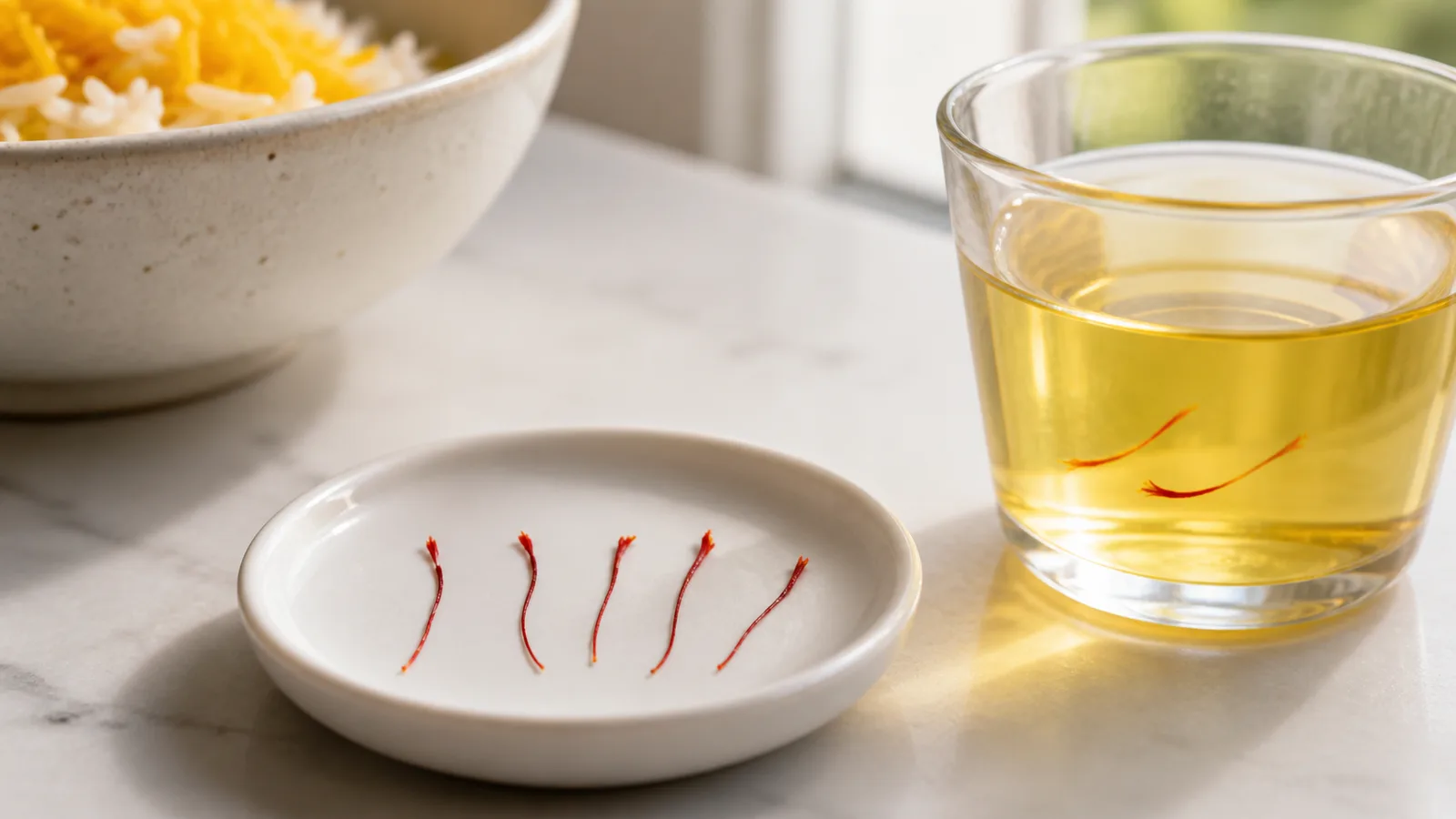
Examine several dry threads under bright light. A whole saffron stigma is narrow along most of its length and broadens toward one end, often into a small trumpet or funnel shape. Natural threads are not perfectly identical. They may be folded or broken during handling, so “long and unbroken” is a quality preference rather than an authenticity rule.
High-quality all-red saffron contains minimal yellow parts. A few yellow or orange sections do not make the spice fake, but they add weight with less colour and aroma. The strongest stigmas often look vivid red, though shade varies with lighting and drying. Be cautious if every piece is a uniform strip, if the red coating rubs off easily, or if the package contains unrelated petals and fibres.
Check the aroma without expecting sweetness
Genuine threads have a concentrated smell often described as floral, dry-hay-like, earthy and faintly honeyed. That is sometimes called a slightly sweet aroma, but saffron itself does not taste sugary. A candy-like perfume, no scent at all, or a damp and musty odour is a reason to investigate further.
Freshness affects this check. Poorly sealed saffron can lose fragrance even when it began as an authentic product. Storage away from light, heat, moisture and air therefore matters as much as the country of origin.
Use a warm-water colour test carefully
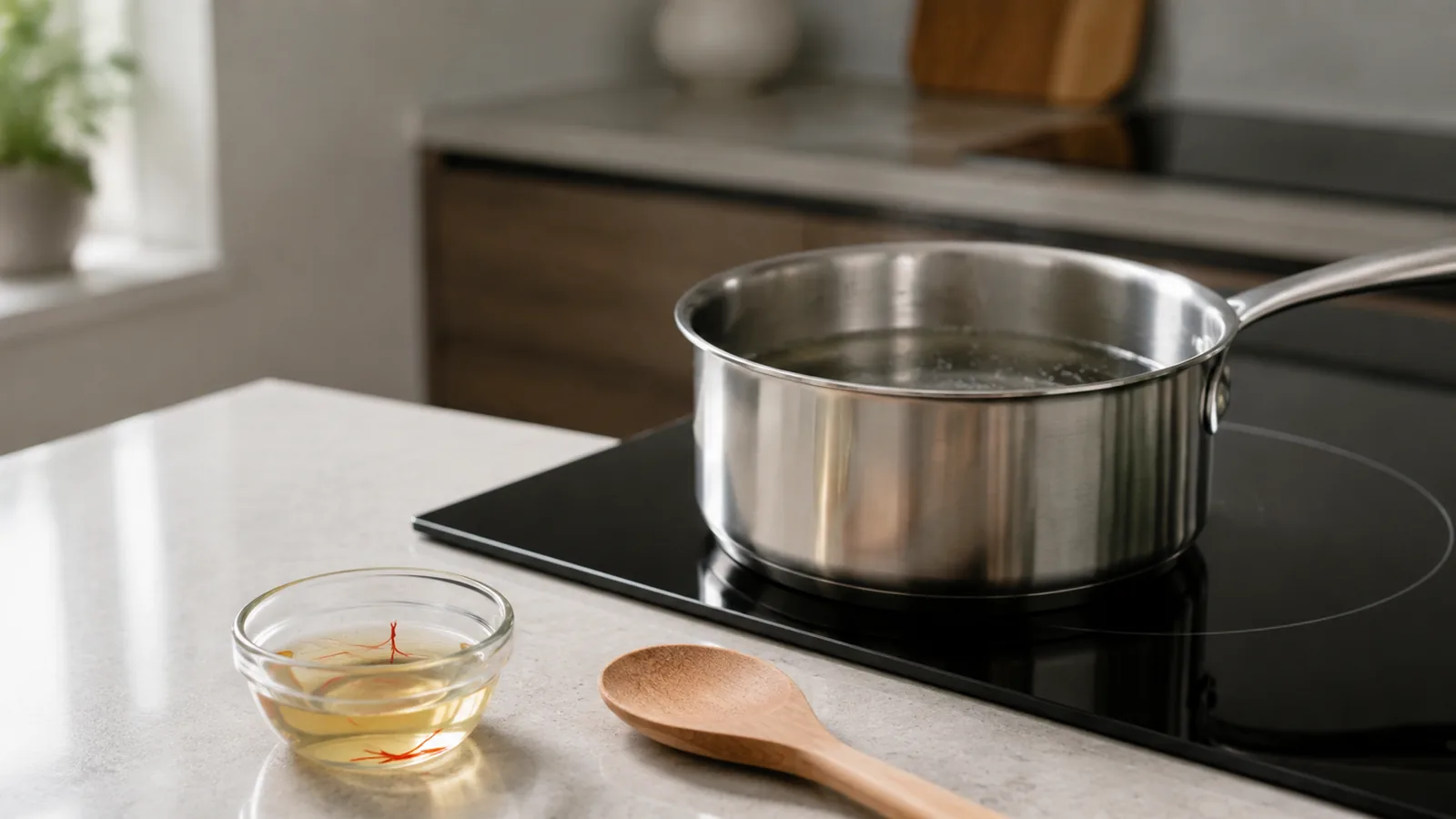
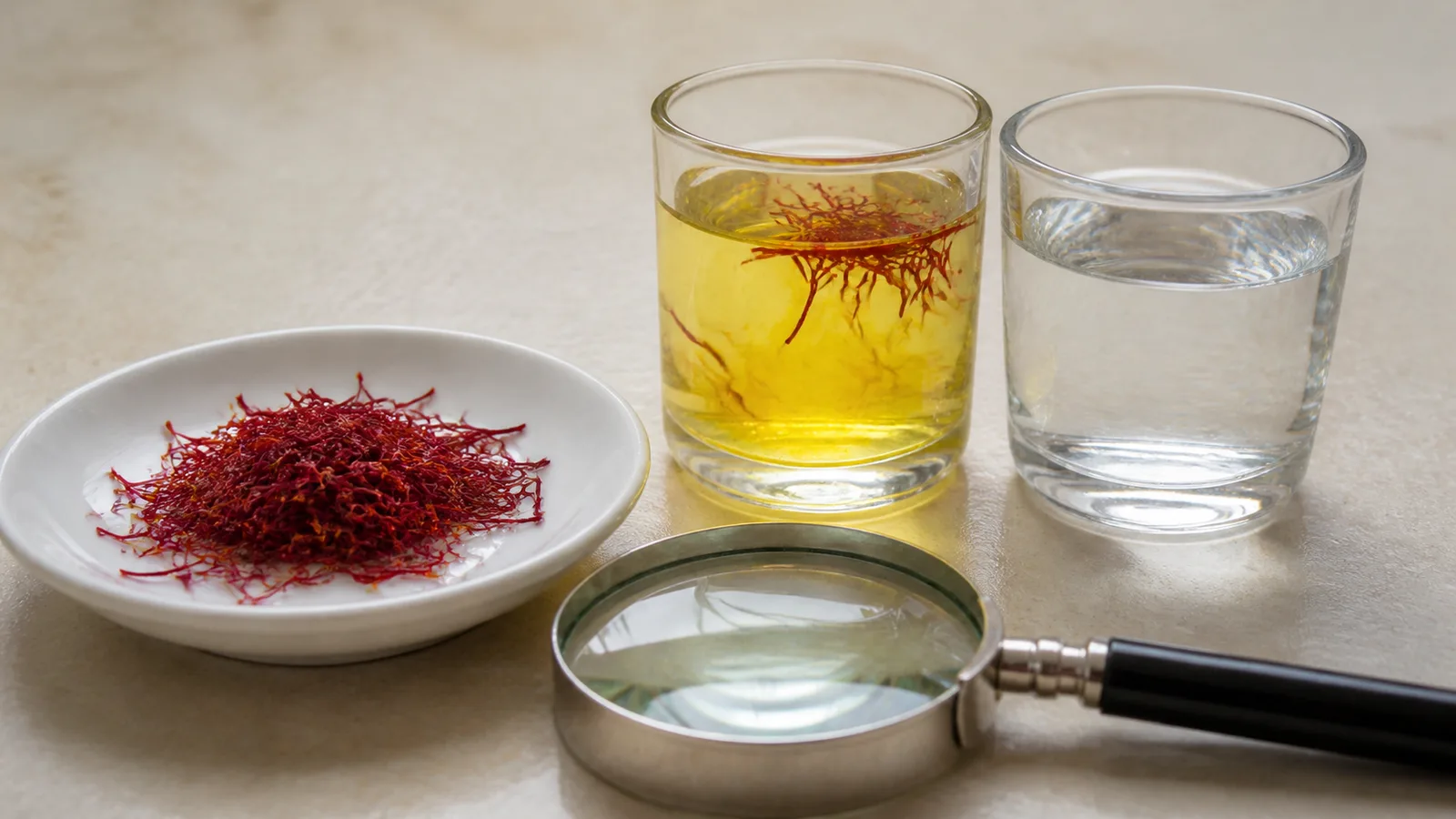
- Place a few threads in a clear glass.
- Add warm water or milk; it need not be boiling.
- Watch the liquid for 10 to 15 minutes without stirring aggressively.
- Smell the infusion and inspect the threads again.
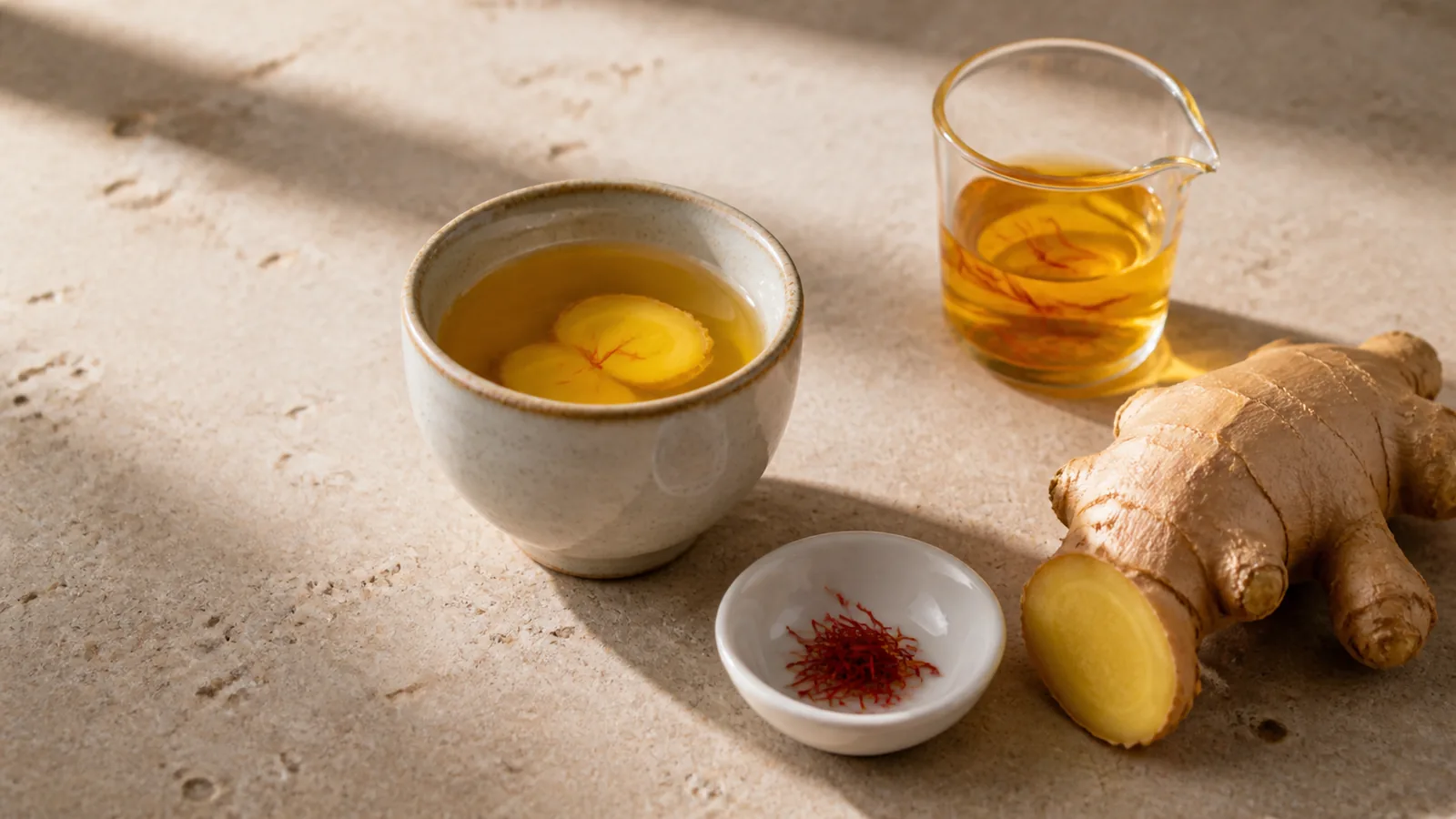
Genuine saffron gradually releases a transparent golden-yellow colour while retaining recognisable thread material. Fake saffron may instantly produce an opaque, harsh red cloud when dye has been added. That is a warning sign, not a complete verdict: particle size, temperature and how the saffron was processed all affect extraction speed.
The common claim that real threads must stay completely red is also too absolute. Saffron naturally gives up pigment and can lighten during a long soak. What matters is the combination of gradual golden colour, characteristic aroma and intact plant structure.
Taste is a supporting clue
A tiny amount of saffron infusion should have a slightly bitter taste and aromatic finish. It should not taste sweet merely because the dry aroma suggested honey. Never chew a large amount for a test, and do not treat intense bitterness as proof of quality. Added substances can imitate a single sensory trait.
Why home tests cannot guarantee authenticity
Counterfeit saffron may include dyed plant fibres, excessive style material, fillers or powder that hides its ingredients. A sample that loses colour instantly or has only a weak scent deserves scrutiny, but either behaviour can also reflect processing or age. Some imitations are easy to spot; others are not. The current ISO 3632-1:2025 specification sets requirements for dried saffron in filament, cut-filament and powder forms, while laboratory methods provide evidence that sight and smell cannot.
A water test, baking-soda test, paper test or phone photograph cannot guarantee purity or grade. Use home checks to notice obvious problems, then rely on traceability and credible batch documentation for a higher-confidence purchase.
What to ask before buying real saffron
- Is the country or growing region clearly identified?
- Are the harvest or packing date and lot information available?
- Does the seller explain thread form and storage conditions?
- Can it provide a meaningful certificate or test report for the batch?
- Is the price plausible for a crop harvested largely by hand?
Buy intact threads when possible, because powder is harder to inspect. A trusted supplier should describe limitations honestly rather than “guaranteeing” medicinal potency from colour and aroma alone. Authenticity matters for clean flavour and predictable culinary results; it does not make an ordinary spice a medicine or prove suitability for wellness applications.
Our all-red saffron page shows the thread form we supply for cooking and tea. Compare any product against its actual documentation, not only promotional adjectives.
A sensible final check
To tell if saffron is real, bring the evidence together: natural stigma shapes, mostly deep-red threads, a distinctive aroma, gradual golden-yellow colour in warm water, slight bitterness and a traceable seller. If several clues conflict, do not force a conclusion from one home test. That cautious approach is the most reliable way to distinguish a promising genuine batch from a fake or diluted product.