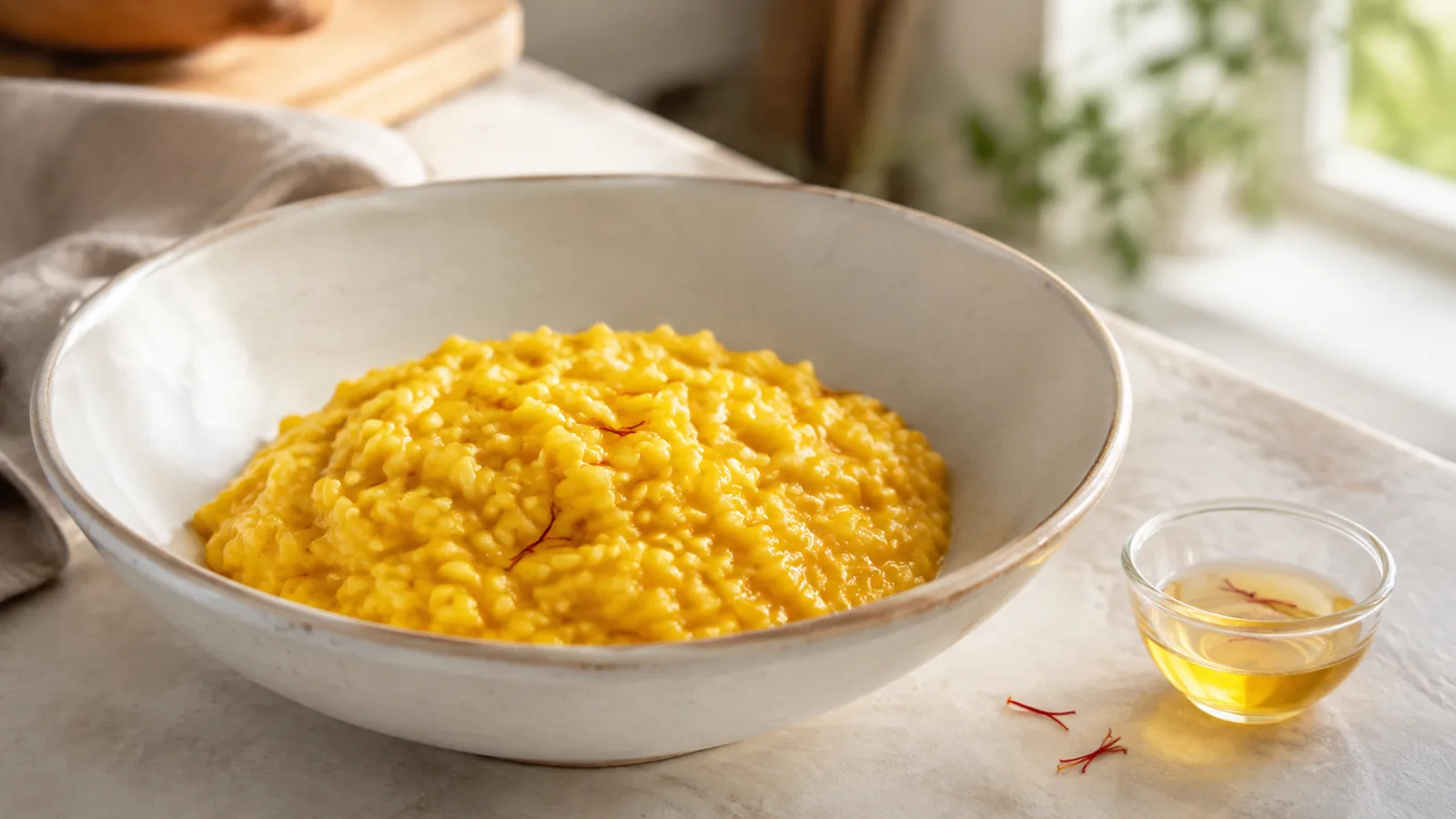
Saffron milk pudding is a smooth stovetop dessert made from milk, white wheat flour, sugar and a small saffron infusion. It is simple enough for breakfast or an afternoon sweet, yet rose water and a careful garnish make it feel at home on a dinner or Ramadan table.
What “white wheat flour” means in this recipe
Use ordinary white all-purpose flour, sometimes labelled plain flour. It thickens differently from rice flour or cornstarch: the pudding is creamy and substantial, with a mild cooked-milk flavour rather than the delicate, slightly translucent texture of a starch-only dessert.
Do not use self-raising flour, because its raising agents are unnecessary here. Whole-wheat flour will thicken the milk, but its bran changes both the smooth texture and the pale golden appearance this recipe is designed to produce.
Saffron milk pudding ingredients
This makes four modest bowls or dessert glasses.
- 1 1/2 cups (360 ml) cold milk
- 8 level tablespoons (about 60 g) all-purpose flour
- 5–7 tablespoons sugar, according to taste
- 2 tablespoons strongly brewed saffron, cooled
- 20 g unsalted butter
- 1 tablespoon food-grade rose water
- A small pinch of salt
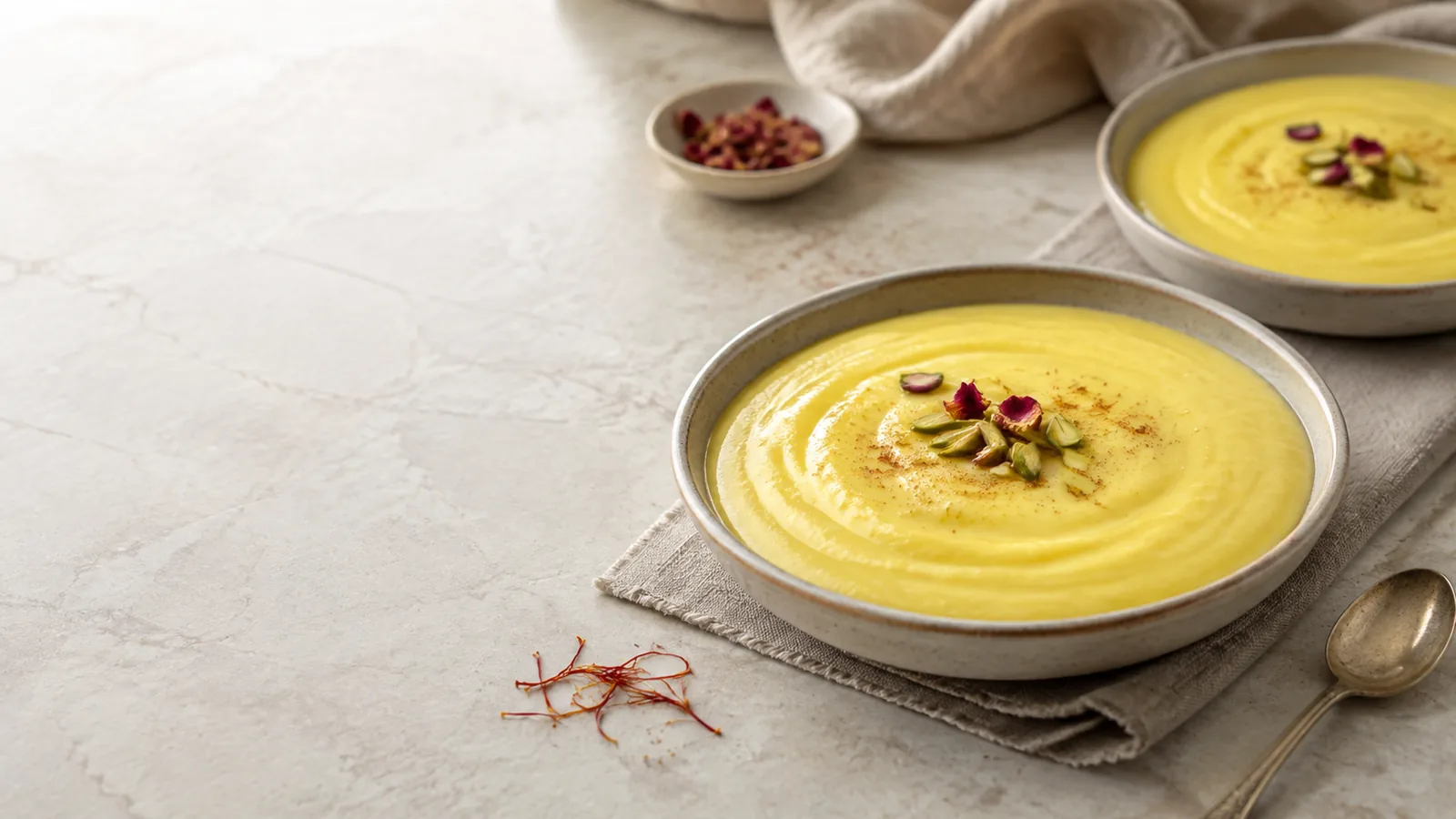
For the top, use one or two of the following: ground cinnamon, desiccated coconut, slivered pistachios, slivered almonds or a few edible dried rose petals. A light garnish is enough; a heavy layer hides the pudding’s saffron aroma.
How to dissolve saffron in milk
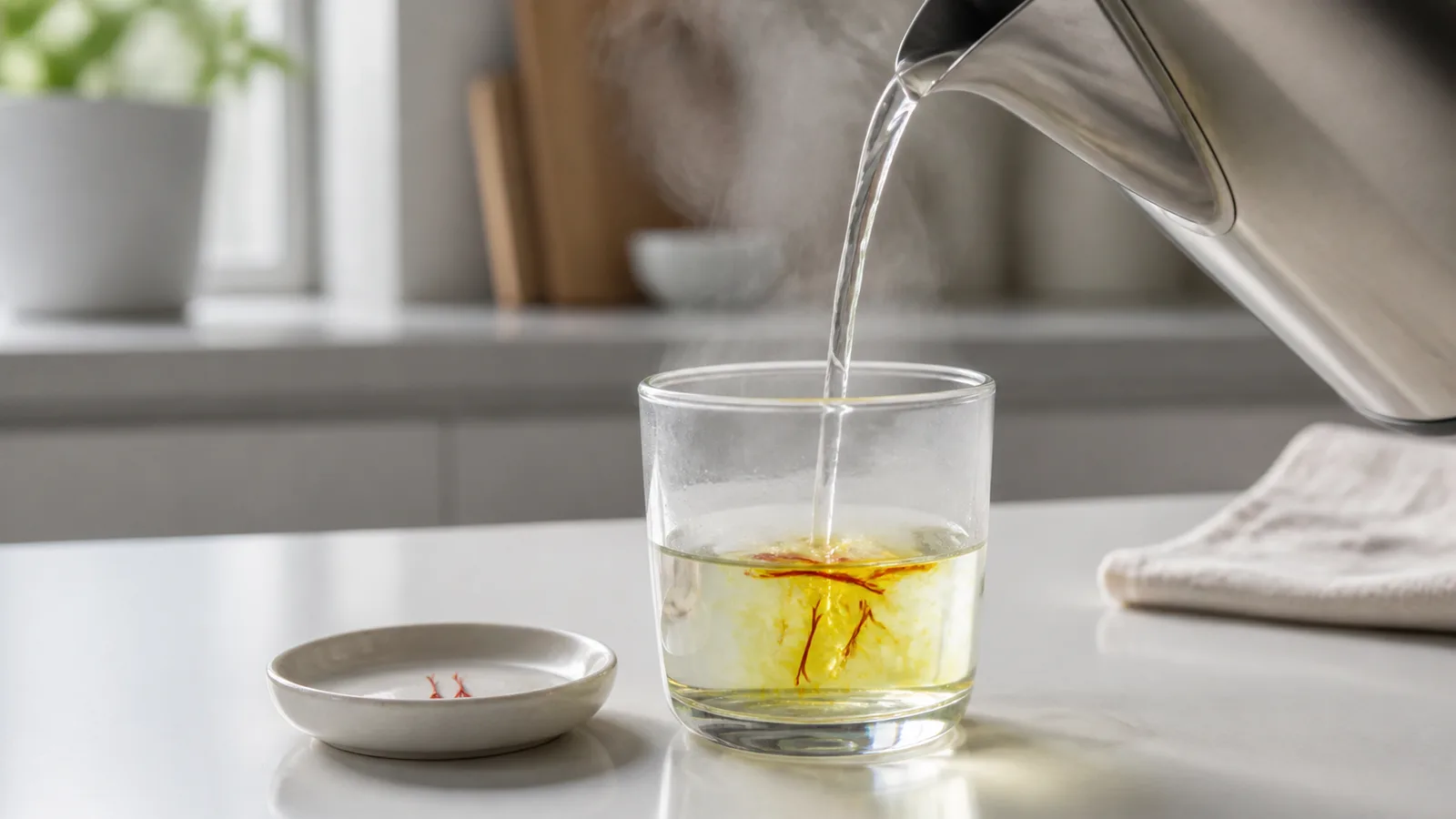
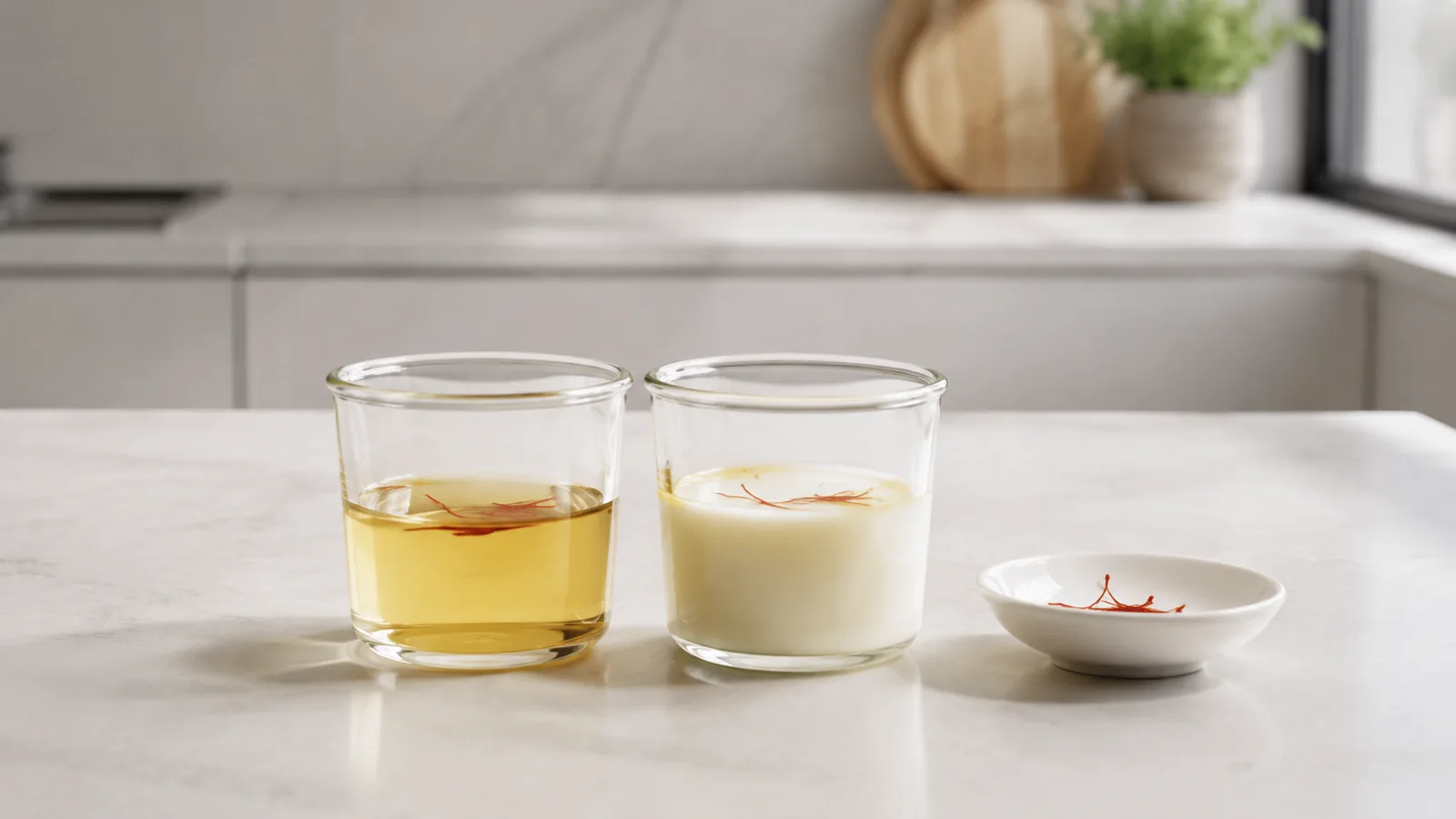
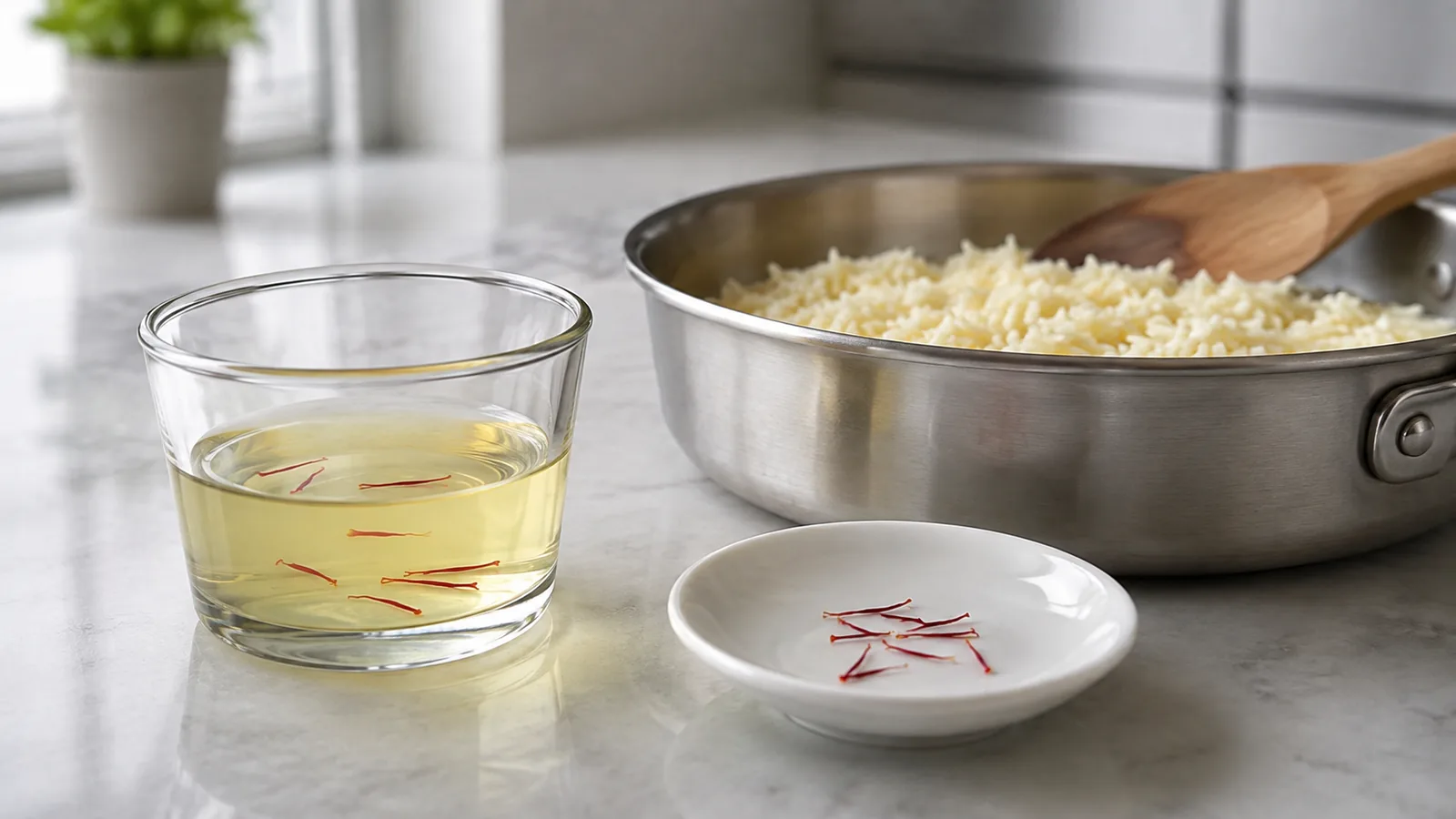
Finely grind the saffron threads. Warm 2 tablespoons of the measured milk until hot but not boiling, stir in the saffron and cover for 10 minutes. The saffron does not disappear like sugar; its colour and aromatic compounds infuse into the liquid while very fine particles may remain.
You can instead brew the saffron in 2 tablespoons of hot water, as in the original method. Either approach works. Milk gives a slightly rounder infusion, while water makes the colour easier to judge. Let it cool before it meets the main milk-and-flour mixture. If you need more detail, see the guide to brewing saffron without wasting it.
How to make saffron pudding
- Make a cold mixture. Put the flour, salt and about half of the cold milk in a heavy saucepan. Whisk until no dry pockets remain, then add the rest of the milk gradually. Starting cold prevents the flour from forming cooked lumps on contact.
- Strain if necessary. If the mixture still contains small flour lumps, pass it through a fine sieve into the clean pan. This takes less time than trying to whisk lumps out after heating.
- Cook the flour. Set the pan over medium-low heat and stir continuously with a whisk or flexible spatula, reaching across the base and into the corners. It will begin to thicken after several minutes.
- Add the sugar. When the mixture is warm and slightly thicker, stir in 5 tablespoons of sugar. Taste carefully once it has dissolved, then add up to 2 more tablespoons if you want a sweeter pudding.
- Let it bubble gently. Once the first slow bubbles appear, reduce the heat and cook for another 2–3 minutes while stirring. This removes the raw-flour taste. The mixture should fall from the spatula in a thick ribbon but remain pourable.
- Finish the flavour. Stir in the butter and cooled saffron infusion. Remove the pan from the heat, add the rose water and mix just until the colour is even.
- Portion promptly. Pour the pudding into four bowls or glasses before a skin begins to form. Serve warm, or cool briefly and refrigerate for a firmer texture.
How thick should the pudding be?
Hot saffron pudding should be thick enough to coat the spatula, but it should not sit in the saucepan like dough. It continues to firm as it cools. If you plan to serve it chilled in glasses, stop cooking while it is still easily pourable.
If it becomes too thick, whisk in cold milk one tablespoon at a time over low heat. If it stays thin after the flour has cooked, keep stirring for another minute or two before changing the formula. Heat and evaporation need time to do their work.
Three-colour pudding variation
For a layered dessert, make the plain base through the gentle-bubbling stage, then divide it equally among three small pans or heatproof bowls.
- Saffron layer: mix one portion with about one-third of the brewed saffron.
- Cocoa layer: blend 1 teaspoon unsweetened cocoa with 2 teaspoons warm water, then whisk it into the second portion.
- Plain or vanilla layer: leave the final portion pale, or add two drops of vanilla extract.
Return any layer that has loosened to low heat briefly. Spoon the first colour into the glasses, wait until its surface holds a gentle touch, then add the next over the back of a spoon. If one layer is hot and the other has set hard, they may separate when served.
Useful flavour variations
Rose water is optional. Leave it out for a cleaner milk-and-saffron flavour, or replace it with a small amount of vanilla. Do not add a full spoonful of vanilla extract; it will overpower the saffron and may leave an alcoholic edge in an uncooked finish.
For a nutty variation, toast a tablespoon of ground sesame or almond meal and sprinkle it over the bowls rather than mixing a large amount into the base. The site’s saffron sesame pudding uses sesame as a more prominent flavour.
Troubleshooting saffron milk pudding
Why is it lumpy?
The flour was probably added to warm milk or the corners of the pan were not stirred. For small lumps, use a whisk vigorously while the pudding is still loose. For larger ones, strain the mixture before it becomes fully thick.
Why does it taste like raw flour?
Thickening is not the end of cooking. Keep the pudding at a gentle bubble for 2–3 minutes, stirring constantly, so the flour has time to cook. Avoid high heat, which can scorch the milk before that flavour disappears.
Why is the saffron flavour weak?
A pale, weak infusion will disappear behind milk and rose water. Use finely ground threads, cover the infusion while it rests and keep the rose water measured. Adding more weak liquid can thin the pudding without producing a clearer aroma.
Why did a skin form?
Milk pudding develops a surface film as it cools. If you want a perfectly smooth top, press reusable food wrap or baking paper directly against the surface while it chills. If you plan to garnish the bowls, a fine skin is harmless and usually disappears under the topping.
Serving and storing the pudding
Serve it warm for a softer, comforting dessert or chill for at least two hours for a firmer spoonful. Add cinnamon, coconut or nuts just before serving so they retain their texture.
Because this is a milk-based pudding, refrigerate it promptly in covered containers and use it within three days. Do not leave it on a breakfast, snack or iftar table for more than two hours. If it separates slightly in the refrigerator, stir a serving gently rather than reheating the whole batch repeatedly.