


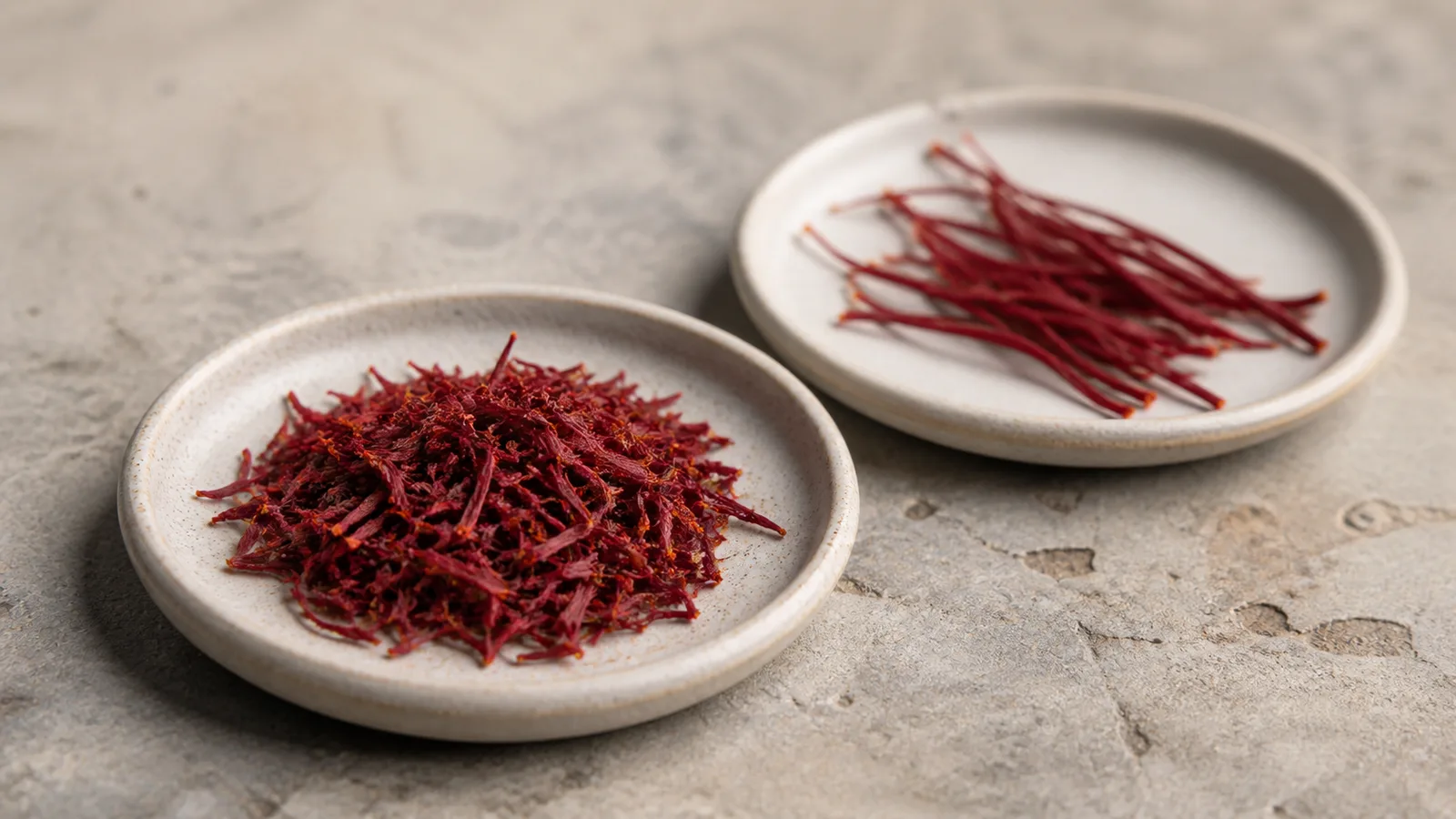
Sargol saffron is an Iranian commercial category made from the red part of the saffron stigma, with the pale style removed. Its pieces may be shorter or more broken than Negin, but a good Sargol batch can still provide excellent color, aroma, and flavor.
The word “premium” needs context. Premium Iranian saffron should describe the quality of a specific, genuine, well-processed batch—not simply its country of origin or the name printed on the package.
What is Sargol saffron?
Saffron comes from the dried stigmas of Crocus sativus. Each flower produces three stigmas joined to a lighter style. During processing, the different parts can be trimmed and sorted into commercial presentations.
Sargol, sometimes translated as “top of the flower,” consists of separated red stigma tips. Yellow and white style material is removed. Because the red sections can break during separation and handling, Sargol saffron strands are often shorter and less visually uniform than Negin.
Sargol is not a separate plant variety. It is also not an origin certification: saffron in Iran may be processed into Sargol, but the label alone does not establish the farm, harvest year, purity, or laboratory grade.
The main types of Iranian saffron
Sargol
Red-only stigma pieces with little or no pale style. The pieces may be shorter or broken, making Sargol less formal in appearance than Negin but practical for grinding and everyday cooking.
Negin and Super Negin
Negin emphasizes longer, thicker, separated red sections. Super Negin is a trade label usually reserved for especially long, straight, uniform threads with minimal breakage. The exact boundary between the two varies among suppliers.
Pushal
Pushal retains some pale style attached to the red stigma. The connected structure can help a buyer see more of the original flower part, although the package contains more non-red material by weight.
Dokhtar-pich or bunch saffron
Whole stigma and style sections are dried together in a tied or bundled form. It preserves the natural connection of the flower parts but contains a larger pale portion than red-only categories.
What makes Iranian saffron good?
The sensible answer to “is Iranian saffron good?” is that Iran produces outstanding saffron, but quality varies by batch. Climate, soil, harvest timing, flower handling, drying, moisture, storage, age, and purity all affect the final spice. National origin alone cannot make every package equal.
A premium saffron batch should have a clean characteristic aroma, sound dry threads, gradual golden color release, low foreign matter, appropriate moisture, and evidence behind any laboratory claim. ISO 3632 specifies requirements for dried saffron in filament, cut-filament, and powder forms. It gives buyers and laboratories a more meaningful reference than marketing adjectives such as “best,” “luxury,” or “unmatched.”
A good batch can indeed have a rich aroma, deep color, and potent flavor. Those qualities must be assessed rather than assumed. The volatile compounds behind saffron’s aroma are sometimes loosely called essential oils; careful drying and storage help preserve them, but no processing method guarantees identical strength in every strand.
Sargol saffron benefits
The clearest Sargol saffron benefits are culinary and practical:
- The red-only material is convenient for grinding and blooming.
- Shorter pieces can cost less than highly selected long Negin while still performing well in food.
- A good batch releases a strong golden color from a small culinary amount.
- The spice adds its characteristic floral aroma and gentle bitterness to both savory and sweet dishes.
- Whole or cut strands are easier to inspect than an anonymous powder.
Iranian saffron benefits versus health claims
Queries such as Iranian saffron benefits, Iran saffron benefits, and Persian saffron benefits often mix culinary value with medical promises. Saffron contains antioxidant compounds such as crocin, crocetin, and safranal, but normal use in food has not been shown to boost the immune system, improve mental clarity or energy, treat poor digestion or inflammation, relieve pain or stress, or cure anxiety or depression.
Research into standardized saffron extracts for mood or other particular conditions cannot be transferred automatically to a pinch of Sargol in rice. Sargol should not be sold for medicinal use or as a natural remedy simply because the source material is saffron.
How to use Sargol saffron in cooking
- Measure a modest amount—about 12 to 20 strands is a useful starting point for a family-size dish.
- Crush the saffron gently in a small mortar.
- Add 2 to 4 tablespoons of warm-to-hot water, cover, and leave for 15 to 20 minutes.
- Add the infusion and softened saffron to the recipe, reserving a little for the final stage if aroma matters.
Sargol works well in rice, soups, sauces, stews, chicken, fish, desserts, breads, and drinks. A small amount should remain noticeable without making the dish bitter. See our saffron cooking guide for timing and preparation details.
How to identify premium Iranian saffron
- Look closely: genuine saffron has irregular plant structures and flared stigma ends, not identical smooth fibers.
- Smell it: expect a complex floral, hay-like aroma. Mustiness or no scent can indicate age or poor storage.
- Infuse a few threads: color should spread gradually into the water. An immediate bright red cloud can suggest added dye.
- Check the package: sealed, light-protective packaging with a batch code, weight, origin statement, and date is more useful than decorative claims.
- Request evidence: a current test report should correspond to the actual batch whenever a seller quotes ISO category or analytical strength.
If a package says “saffron premium” or “certified,” look for the named standard, certifying body, scope, and batch evidence. Powder is harder to assess visually and easier to dilute with foreign material. It is not automatically fake, but buyers should require stronger traceability.
Why premium saffron can cost more
Saffron harvesting and stigma separation are labor-intensive, and drying must be carefully controlled. Sorting out pale parts, selecting uniform threads, reducing breakage, testing the batch, and using protective packaging add cost. A higher price may reflect that work, but it can also reflect branding. Compare evidence, net weight, and freshness instead of assuming the most expensive jar is superior.
How to store Sargol saffron
Keep the saffron in an airtight container away from heat, light, moisture, and strong odors. A cool, dark cupboard is better than an open display dish or a position beside the stove. Grind only what you need and close the container promptly.
Proper storage slows the loss of aroma and color, but it cannot improve a weak or adulterated product. Buy an amount you can use while it is still fragrant.
Where to buy premium Iranian saffron
Choose a supplier that identifies the product form, net weight, country of origin, batch, and packaging date and can explain any quality standard it cites. Customer support is useful, but authenticity requires traceability and evidence rather than a guarantee written only in advertising copy.
Sargol is a valuable, practical form of Iranian saffron. Its red-only pieces may not have Negin’s long presentation, yet a fresh and properly tested batch can be every bit as useful in the kitchen. Judge what is in the package, not just the category name.

![Exporting Saffron to Turkey + Price Guide [Complete 0 to 100]](https://img.rowhanisaffron.com/20260827003933/saffron-export-turkey-quality-inspection.webp)



