


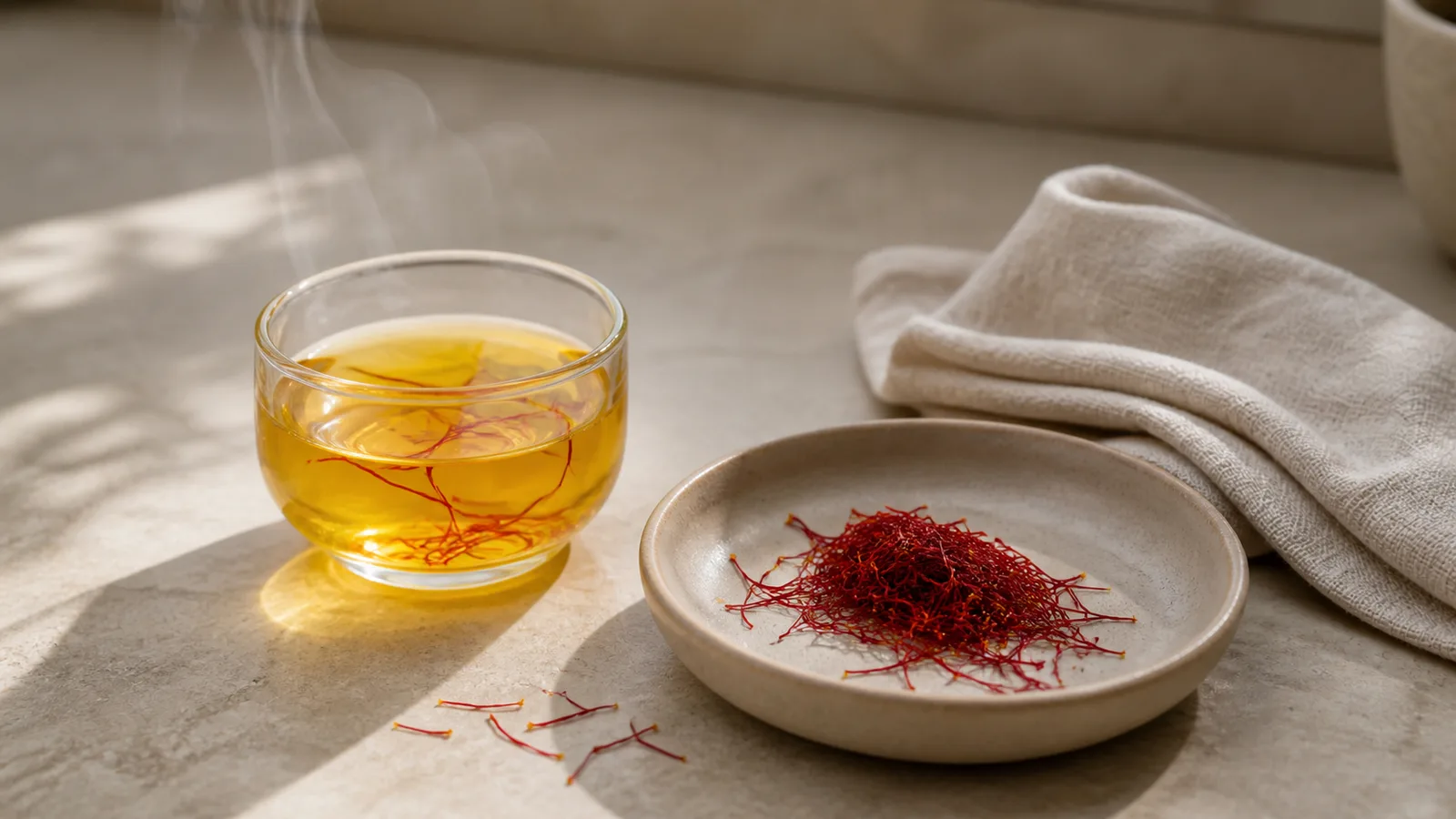
Saffron aroma is distinctive, but it is not supposed to fill a room like perfume. Dry saffron threads usually smell warm, floral, hay-like, and slightly earthy, with notes that some people compare to honey, leather, or tobacco. The scent can seem quiet in the jar and become much clearer when the spice is crushed or steeped in warm water.
If your saffron has little smell, that does not automatically mean it is fake. Temperature, drying, age, storage, and the amount you are smelling all matter. A completely odorless sample, a musty smell, or an artificial sweet fragrance deserves a closer look.
What does saffron smell like?
There is no single familiar object that captures the smell of saffron. Its aroma combines several impressions:
- a dry, hay-like or grassy note;
- a warm floral character;
- a faint honeyed sweetness;
- earthy, leathery, or tobacco-like undertones; and
- a slightly sharp edge that keeps it from smelling like a sweet perfume.
People perceive aromas differently, so “does saffron smell good?” is partly personal. What matters for quality is that the scent is characteristic, clean, and free from dampness, mold, smoke, or added fragrance.
The smell may feel pleasant or relaxing, but smelling culinary saffron has not been established as a treatment for stress or anxiety. Aromatherapy claims should not be used as evidence that a batch is pure or high quality.
Why does fresh saffron lack the characteristic aroma of dried saffron?
The purple Crocus sativus flower does not smell like a jar of finished saffron. The culinary spice is made from the flower’s three red stigmas—not its roots or stems—and much of its recognizable character develops after those stigmas are harvested and dried.
Picrocrocin is associated with saffron’s bitter taste. During drying and subsequent handling, it can break down and contribute to the formation of safranal, a major volatile associated with saffron’s aroma. This is why freshly separated, moist stigmas can smell much less like finished saffron than properly dried threads.
Drying is not simply a choice between “handmade” and “mechanical.” Time, temperature, airflow, and final moisture all affect the result. Research comparing dehydration methods shows that processing conditions change the balance of picrocrocin, safranal, and color compounds. Careful controlled drying can produce good saffron; poor traditional or mechanical drying can damage it.
Why might saffron not have a strong aroma?
You are smelling a very small, cool sample
A few cold, intact threads release fewer volatile molecules than a warm infusion. Put several threads in a clean dry dish, warm the dish briefly in your hands, and smell again. Do not heat the saffron directly or burn it.
The jar has just been opened
A tightly sealed container may need a moment for the aroma to reach your nose. Gently move the threads with a clean spoon and smell from a short distance. Avoid touching the whole supply with damp fingers.
Storage has weakened it
Heat, light, oxygen, and moisture change saffron over time. Long storage does not reliably make the aroma stronger, and saffron should not be treated like wine that improves indefinitely. An old jar may retain color while losing much of its scent.
Keep the threads in an airtight, food-safe container in a cool, dark, dry cupboard. Do not store them beside the stove or in direct sunlight. Our guide to storing saffron explains the practical options in more detail.
The saffron was poorly dried or handled
Drying that is too slow can leave excess moisture, while excessive heat can alter volatile compounds. Exposure to strong odors during processing, transport, or storage can also affect the spice because dry saffron is easily contaminated by its surroundings.
The product contains too much style or foreign material
Different commercial cuts contain different proportions of red stigma and pale style. That alone does not prove fraud, but a low proportion of genuine stigma can make the aroma, color, and flavor seem weak for the weight. Ground saffron is harder to inspect and easier to dilute than intact threads.
Your sense of smell is temporarily reduced
A cold, allergy symptoms, recent exposure to another strong aroma, or normal differences in smell perception can make the same sample seem weaker. If possible, ask another person to smell it before deciding the spice is defective.
How strong is saffron supposed to be?
Saffron is powerful in food even though the dry threads are not perfume-like. A small culinary amount can give a dish a noticeable aroma, golden color, and gentle bitterness. Adding too much does not create a sweeter or more luxurious result; it can make the food medicinal or harsh.
Aroma strength also varies from batch to batch. Cultivar material, growing conditions, harvest timing, stigma handling, drying, moisture, storage, and age can all contribute. Place names such as Gonabad or broader claims about Iranian origin may provide useful provenance, but they do not prove the quality of an individual package. The FAO’s recognition of Gonabad’s qanat-based agricultural system is a cultural and agricultural designation, not an aroma certificate for every product from the region.
How to check saffron aroma at home
- Inspect the threads. Genuine strands have natural variation and flared stigma ends. Appearance alone cannot confirm purity, but identical smooth fibers are suspicious.
- Smell the dry spice. Use a clean container and allow the saffron to warm slightly to room temperature.
- Crush a few threads. Breaking a small sample exposes more surface area. Do not grind the entire jar merely to test it.
- Make a small infusion. Add the crushed sample to warm water, cover it, and wait 10 to 15 minutes. The aroma should become easier to detect as golden color develops.
- Taste cautiously. Saffron should be gently bitter and aromatic, not sugary. Sweetness can indicate that another substance has been added.
No home test can establish grade, origin, or purity with certainty. ISO 3632 provides laboratory methods and specifications for dried saffron, including characteristics related to color, bitterness, and aroma. When a seller claims an ISO category, ask for a current report tied to the batch rather than relying on the phrase alone.
Saffron aroma, flavor, and taste are different
Smell and taste work together, but they are not interchangeable. Safranal contributes strongly to aroma, picrocrocin is associated with bitterness, and crocin-family pigments create the familiar golden-yellow color. A sample may therefore color water well yet have a weak aroma, or smell appealing but release less color than expected.
This distinction answers a common question: saffron does have a flavor, but it is not simply the smell translated onto the tongue. In cooking, the spice brings a floral aroma, an earthy depth, and restrained bitterness. It should support the dish rather than taste aggressively “strong.”
What does saffron smell like in perfume?
Saffron in perfume often means an interpretation of the spice’s warm, dry, leathery character. A fragrance may amplify that note or combine it with amber, woods, rose, or vanilla. It may use a reconstructed aroma rather than saffron threads themselves, so it should not be used as a reference for judging the smell of culinary saffron.
When weak aroma is a quality warning
Be cautious when saffron remains almost odorless after gentle crushing and warm infusion, especially if it also releases little color or lacks a mild bitter taste. Other warning signs include a damp or musty odor, visible mold, oily residue, unnaturally uniform fibers, immediate red dye in cold water, or a strong added perfume.
One weak sign is not proof of adulteration. For an expensive purchase, retain the packaging and batch details and contact the supplier. Laboratory testing is the reliable way to resolve a disputed quality claim.
Saffron’s scent is subtle in the jar because its character depends on volatile compounds, processing, and how the spice is prepared. Properly dried and stored threads should reveal a clean, complex aroma when warmed or infused. Expect nuance rather than the projection of a bottled perfume.

![Exporting Saffron to Turkey + Price Guide [Complete 0 to 100]](https://img.rowhanisaffron.com/20260827003933/saffron-export-turkey-quality-inspection.webp)



