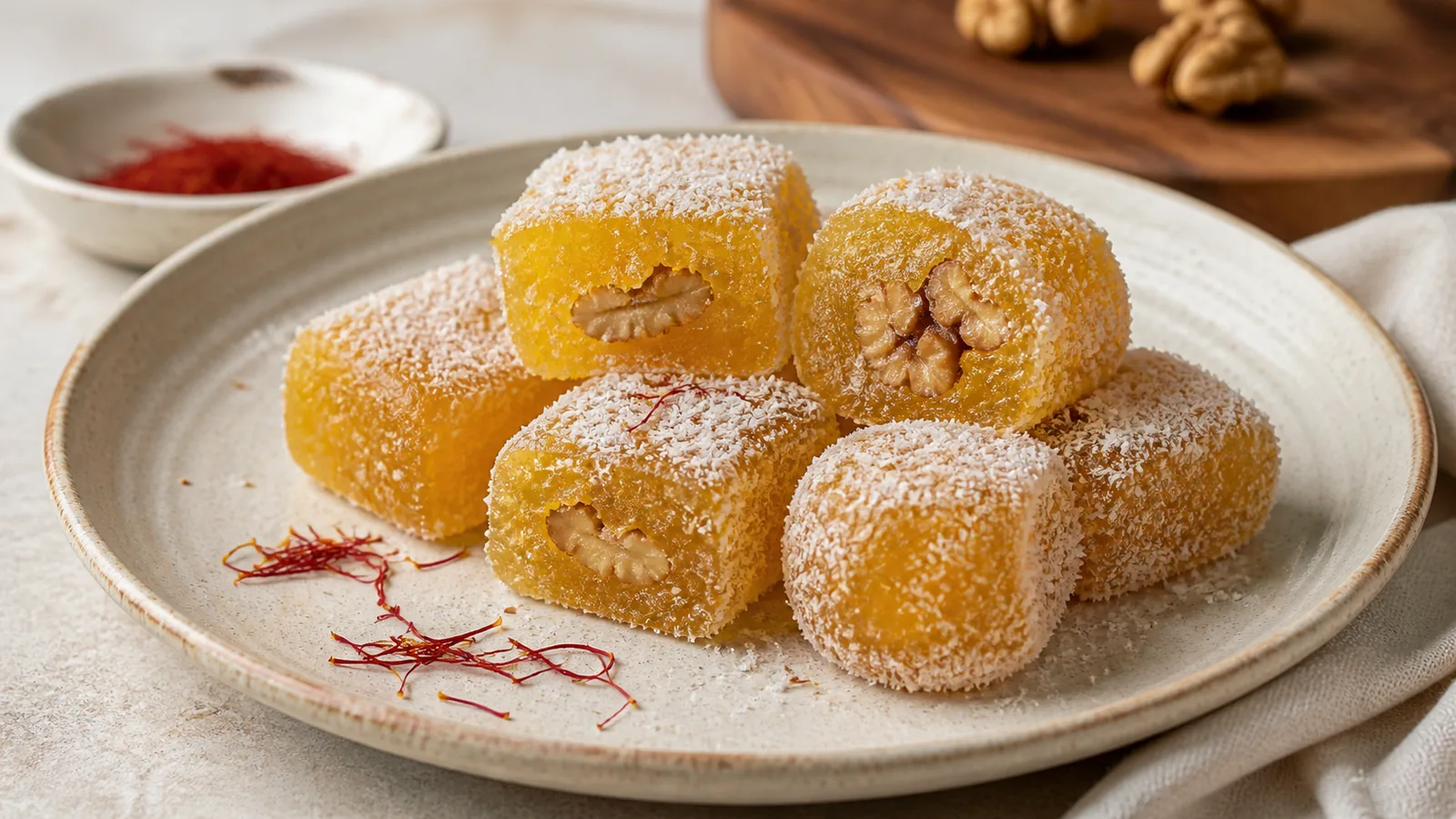
Persian rahat ol holghoom is a soft, starch-set confection scented with rosewater and saffron, often filled with walnuts and rolled in coconut. It belongs to the broad family of lokum or Turkish delight, but this homemade Iranian version has its own familiar aroma and a pleasantly tender, slightly chewy texture.
The name is also written as rahatol, rahat-ol-holqum and rahat al-halkum. If you are looking for the rahatol meaning, the phrase is commonly understood as “comfort of the throat.” In Iran, rahatol describes the sweet itself rather than a separate ingredient.
Ingredients
- 250g sugar, about 1 1/4 cups
- 750ml water, divided into three 250ml cups
- 100g wheat starch
- 1–2 teaspoons rosewater
- Concentrated brewed saffron, to taste
- 1/4 teaspoon vanilla
- Walnut halves or large pieces, as needed
- Desiccated coconut, for coating
- Plain flour or additional starch, for dusting the mould
- 1 tablespoon butter, optional
- A small pinch of ground cardamom or mastic, optional
Wheat starch gives this Persian sweet its characteristic translucent body. Cornstarch can thicken a mixture, but it does not always cook or set in exactly the same way, so begin with wheat starch when possible.
Prepare the mould and walnuts
Lightly grease a shallow tray or individual moulds at least a few centimetres deep. Dust the base and sides with a very thin, even layer of flour or starch, then shake out the excess. This prevents the finished confection from sticking or tearing when it is lifted out.
Arrange the walnuts in the mould if you want each cut piece to contain one. You can also stir chopped walnuts through the mixture later, but placing them first produces tidier portions.
Dissolve the sugar
Combine the sugar with 500ml of the water in a heavy saucepan. Warm over medium heat, stirring until the sugar has dissolved. A gentle simmer is enough; there is no need to colour the syrup.
Meanwhile, whisk the remaining 250ml cold water with the wheat starch in a separate bowl. The water must be cold so the starch disperses smoothly instead of forming hard lumps.
Cook the starch mixture slowly
Whisk the starch slurry once more, then pour it gradually into the warm sugar syrup while stirring. Lower the heat and continue stirring, reaching across the base and into the corners of the pan. At first it will look cloudy and loose. As the starch cooks, it becomes glossy, thicker and more translucent.
This stage cannot be hurried. Depending on the pan and heat, it may take 45–60 minutes for the excess water to evaporate. Keep the heat low enough that the base does not scorch. The mixture is ready when it gathers together, leaves the sides of the pan and a cooled drop holds a soft, chewy shape rather than dissolving in water.
Add rosewater and saffron
Stir in the rosewater and a small amount of concentrated brewed saffron during the latter part of cooking. Add them gradually; too much liquid late in the process lengthens the cooking time. The finished rahat ol holghoom should smell fragrant, not perfumed.
Add the vanilla only when the mixture is nearly ready. If using butter, stir it in now for a smoother finish. A pinch of cardamom or food-grade mastic may be added for a more traditional aroma, but it is optional. The old translation called mastic “chewing gum”; ordinary chewing gum is not an ingredient.
Set and cut Persian rahat ol holghoom
Spoon the hot mixture into the prepared mould and smooth the surface with a lightly greased spoon. If the walnuts were not placed first, press them in now. Sprinkle a fine layer of coconut over the top.
Let the tray lose its surface heat, then chill for 30–60 minutes. It should release cleanly and hold its shape. If it remains loose, the starch mixture was probably removed from the heat before enough water evaporated; chilling alone cannot fully correct an undercooked batch.
Turn the slab onto a dusted board and cut it with a lightly oiled knife. Coat every exposed side with desiccated coconut, or use a blend of starch and icing sugar for a plainer finish. Individual moulded pieces can simply be lifted out and rolled.
Texture and flavour adjustments
For a softer sweet, stop cooking as soon as a cooled sample is tender but stable. For a firmer chew, continue for a few minutes, stirring constantly. Do not add extra dry starch to a hot, lumpy pan; it is more likely to form chalky pockets than repair the texture.
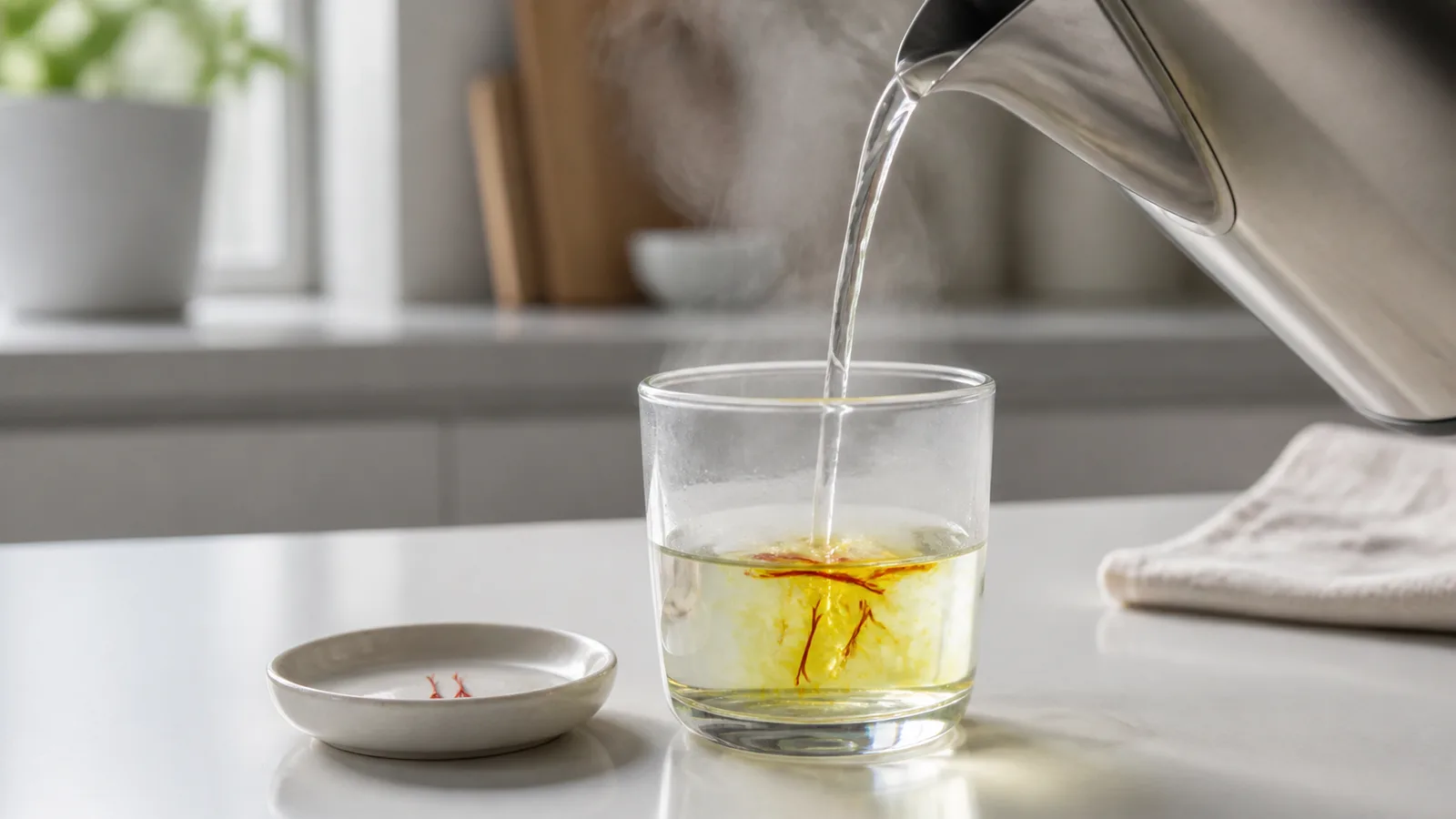
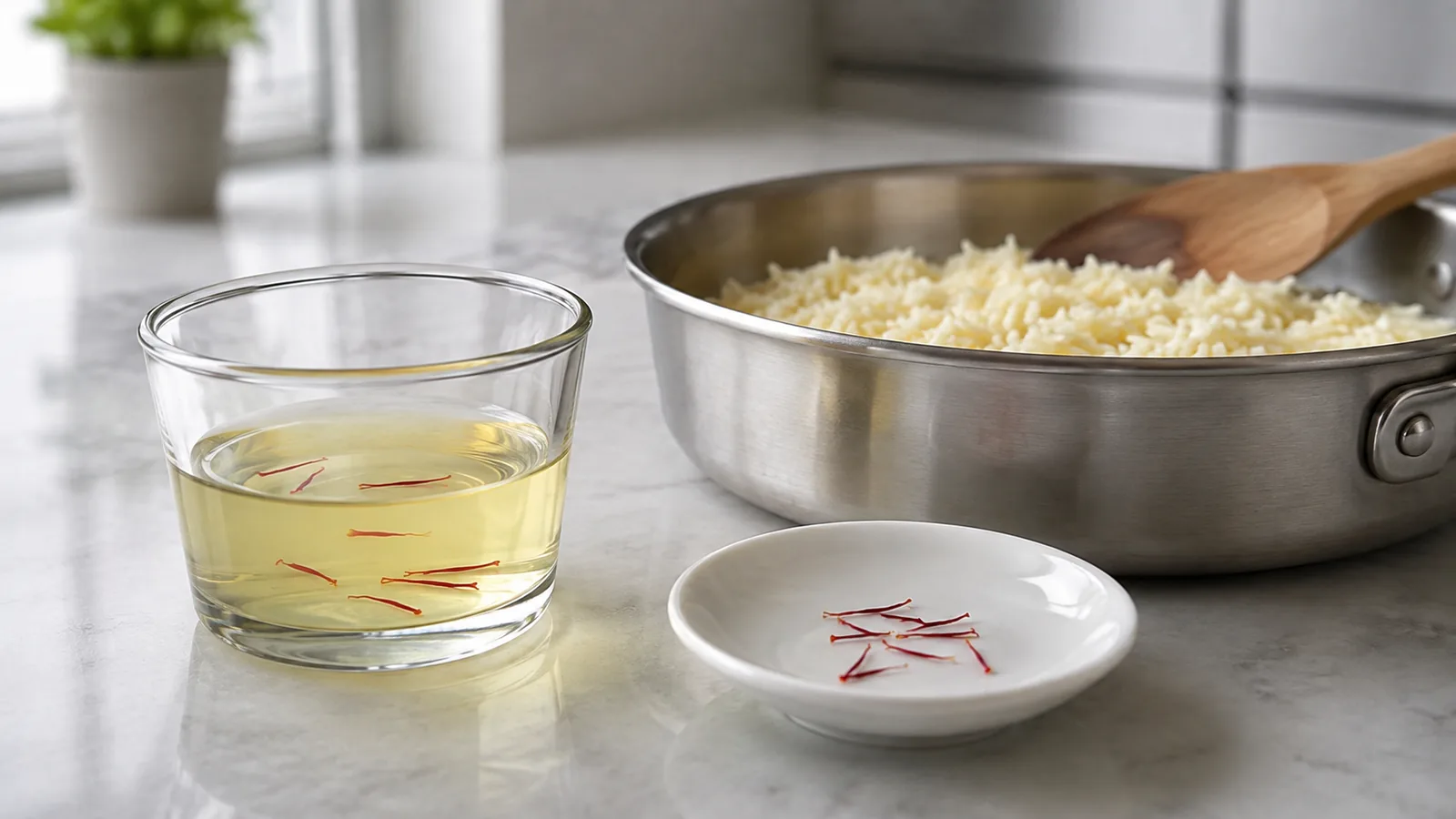
Saffron brings colour as well as aroma, so use a concentrated infusion rather than a large quantity of water. If you need a dependable method, see our guide to brewing saffron. Let the infusion cool before measuring it into the confection.
Serving and storage
Serve rahatol in small pieces with tea or coffee. Keep the pieces in a single layer or separate layers with parchment so their coconut coating stays neat.
Store in an airtight container in the refrigerator for up to one week. Bring the amount you plan to serve to cool room temperature for 10–15 minutes; the texture becomes more tender and the saffron and rosewater aromas are easier to notice.