


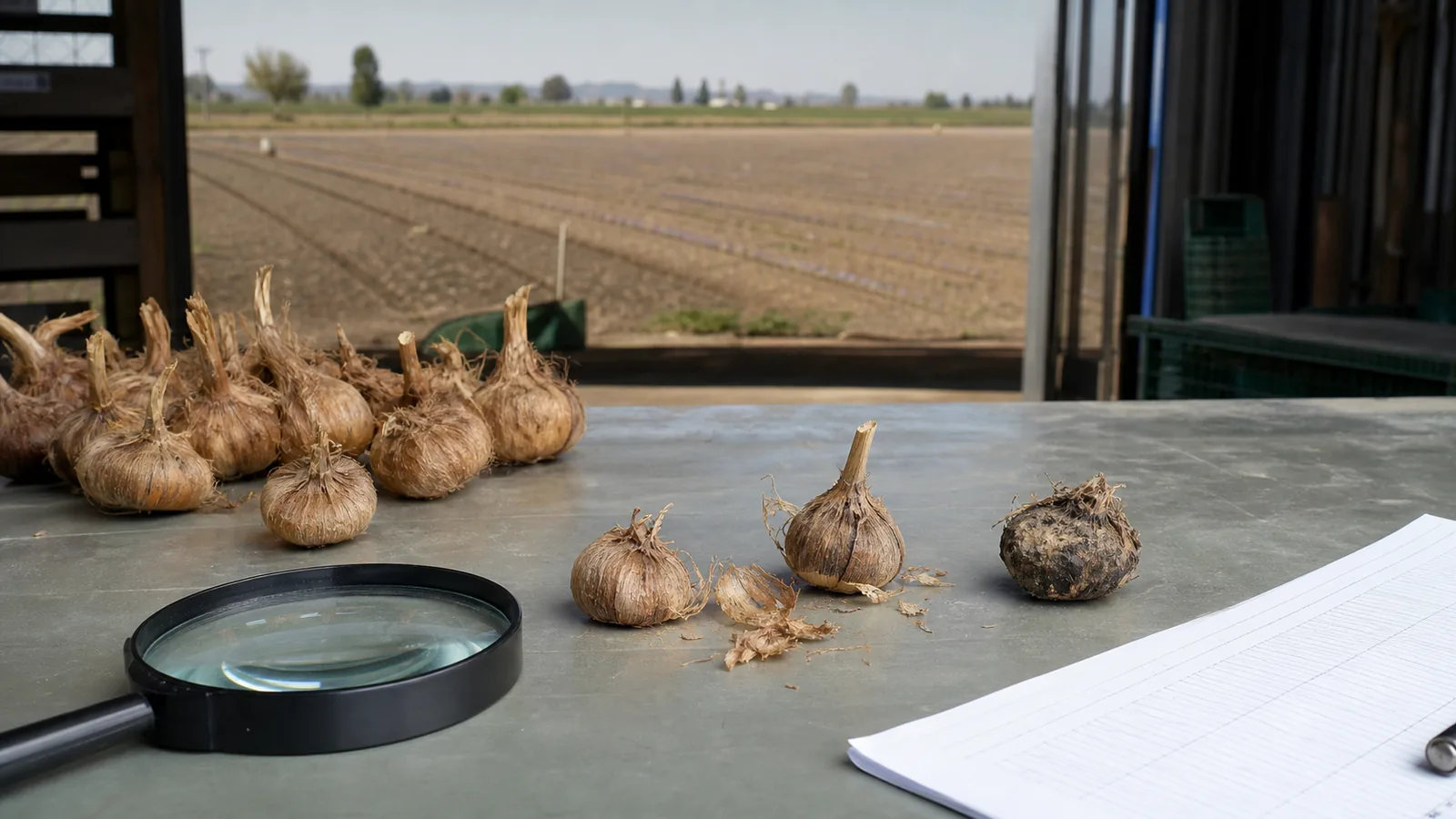
Fraud in the sale of saffron bulbs can begin with something deceptively simple: a buyer receives the wrong corm, diseased planting stock or material unsuited to the local soil and climate. Because saffron takes time to establish, the loss may not become obvious until a grower has already spent a season preparing and planting the field.
This article preserves a warning reported in Zanjan in 2017 and adds a practical way to assess planting material today. The historical prices and cultivation figures below describe that report; they are not current market quotations.
What the 2017 warning said
Mohsen Nourmohammadi, identified in the original report as an official supplier of saffron and medicinal plants in Zanjan Province, told the Iranian Students News Agency that new growers were sometimes relying on seasonal brokers despite advice to use qualified suppliers.
He said buyers could receive poor-quality saffron corms or stock that was not well adapted to their location. More seriously, he reported cases in which gladiolus corms were sold alongside or instead of saffron corms because the two can look superficially similar to an inexperienced buyer.
The report quoted a saffron-corm price of 4,000–6,000 tomans, depending on quality. That figure belongs to the 2017 news item and should not be used to value bulbs now.
Why the source of saffron bulbs matters
Saffron grows from a corm, often called a saffron bulb or saffron onion in translated agricultural material. A genuine corm is only the starting point. Its health, size, storage conditions and disease status influence emergence and future flowering.
Nourmohammadi warned that unverified stock could carry disease into a clean field. A questionable batch might appear acceptable in the first year yet create problems later, just as the farm is expected to become productive. That delayed risk is why price alone is a poor basis for choosing planting material.
How to inspect a saffron corm before buying
- Ask for the botanical identity: cultivated saffron is Crocus sativus.
- Request the supplier’s name, business address, lot origin and harvest or lifting date in writing.
- Look for firm, dry corms with an intact brown tunic and no soft, wet or mouldy areas.
- Reject batches with a sour smell, obvious rot, extensive wounds or mixed corm types.
- Ask how the stock was inspected for pests and disease and how it was stored.
- Keep the invoice, product photographs and a sample of the packaging until emergence is confirmed.
Visual inspection reduces risk but cannot prove that a corm is disease-free or correctly adapted to a site. For a commercial planting, ask a local agricultural extension service or crop specialist to review the source and the field conditions before purchase.
Saffron and gladiolus are not interchangeable
Both plants grow from underground storage organs, but gladiolus is not saffron. A seller who substitutes one for the other is not providing an equivalent crop. The flower, growth cycle and commercial purpose are different, and gladiolus will not produce saffron spice.
Do not rely on a single online photograph to make the distinction. Corm shape changes with size and handling, and soil may hide identifying details. Traceable sourcing and expert examination are stronger safeguards than appearance alone.
The Zanjan cultivation context
The interview said that Zanjan had previously held only about 6–7 hectares of small, scattered saffron farms and had reached roughly 70 hectares by the time of the report. The original English translation described the supplier’s work as beginning in “1992,” but the surrounding Iranian context may refer to calendar year 1392, equivalent to 2013/14. Without the original-language record, the date should be treated cautiously.
Nourmohammadi argued that saffron and medicinal plants could support employment, but growers needed affordable finance, dependable inputs, processing capacity and a credible route to market. He proposed supplying approved planting material rather than handing applicants unrestricted cash and said purchase guarantees could give farmers more confidence.
What buyers should confirm now
Before ordering saffron bulbs, compare the crop’s temperature, drainage and soil requirements with the intended field. Confirm when the corms will be lifted and delivered, where they were grown, and whether local rules restrict the movement of planting material.
A seller should not promise guaranteed yield merely from corm size. Weather, field preparation, planting density, disease pressure, irrigation and management all affect the result. Be wary of urgency, unusually low prices, cash-only requests and claims that documentation is unnecessary.
If you suspect fraud
Stop planting the disputed batch and isolate it from other corms. Photograph the material, labels and packaging; preserve written messages and proof of payment. Ask an agricultural specialist to identify the stock and document any visible disease.
Report the matter through the relevant consumer-protection, agricultural or law-enforcement channel in your jurisdiction. Remedies and evidence requirements differ by country, so a historical Zanjan case cannot determine the legal position of a present-day purchase.

![Exporting Saffron to Turkey + Price Guide [Complete 0 to 100]](https://img.rowhanisaffron.com/20260827003933/saffron-export-turkey-quality-inspection.webp)



