


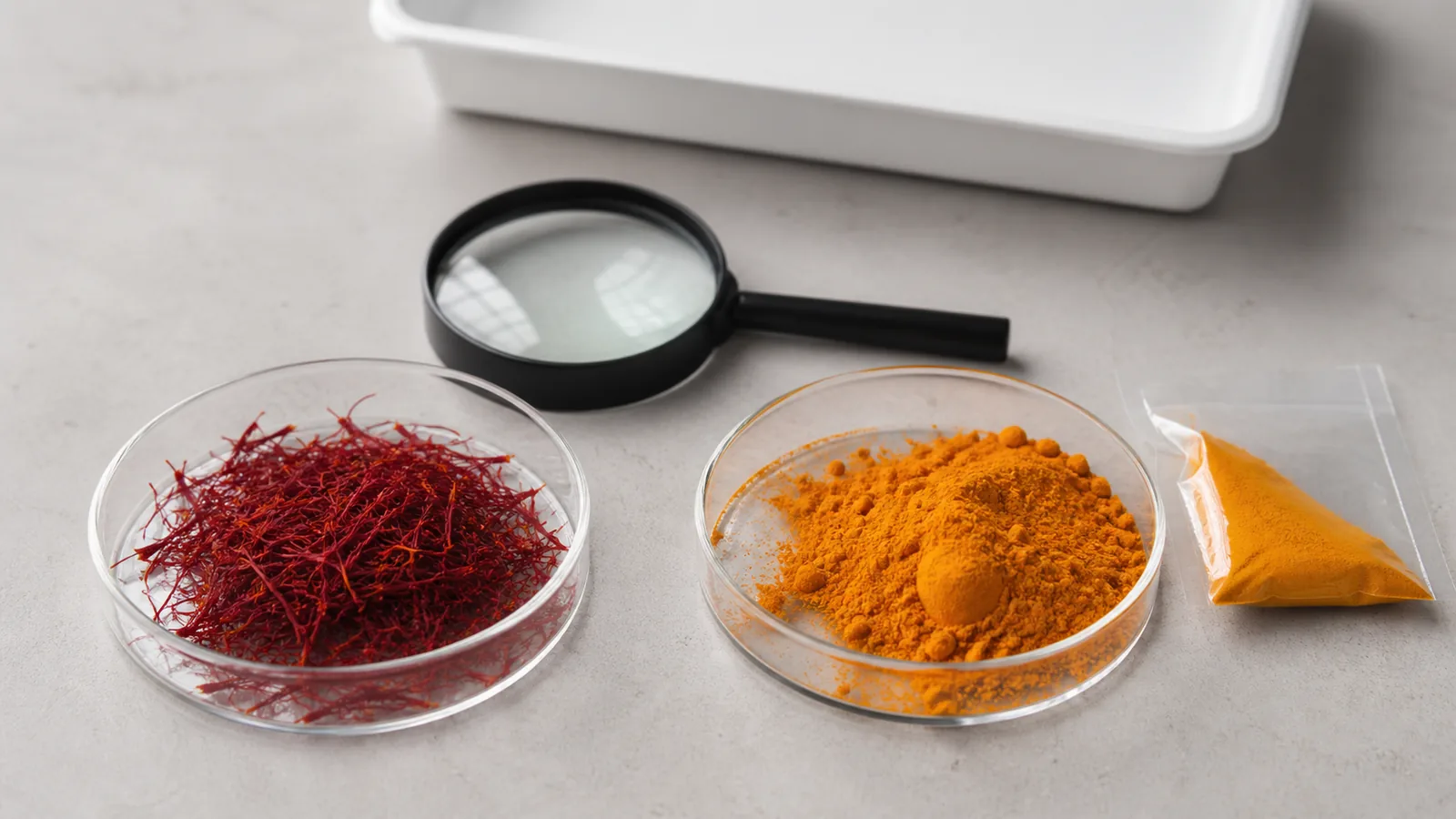
The phrase “Saudi saffron color” in this 2017 report referred to inexpensive colouring products brought back from Saudi Arabia and sold or used as though they were saffron—not to genuine saffron grown in, sold in or connected with Saudi Arabia. Misrepresenting a dye as saffron is food fraud. However, the inherited headline’s blanket claim that tartrazine is carcinogenic is not supported by current official food-safety guidance.
This distinction matters. A loose, unlabelled powder of unknown composition should not be eaten. That does not mean every regulated food product containing certified tartrazine has been shown to cause cancer.
What the original warning reported
The article attributed its warning to Hossein Rastegar, then described as a director of Iran’s Food and Drug Administration laboratories. It said travellers were bringing home low-cost colouring products described as “saffron colour” or “saffron extract” and that some buyers might use them in food or treat them as souvenirs.
Rastegar identified the colour as tartrazine and urged people not to use the unknown material. He also warned about cheap saffron powder sold by informal vendors, alleging that plant material such as corn silk could be dyed, ground and scented before being offered as saffron.
Those were statements reported in 2017. The page does not contain laboratory results for a named product or batch, so it cannot establish what any present-day packet contains.
Tartrazine is not saffron
Tartrazine is a synthetic yellow food colour also known as E102 in the European Union and, in its certified US form, FD&C Yellow No. 5. It can imitate part of saffron’s yellow colour, but it cannot supply the spice’s threads, botanical identity, aroma or flavour.
The US Food and Drug Administration explains that colour additives must be approved for their intended use and that batches of certifiable colours are analysed before certification. Its current consumer guidance says the agency does not approve a colour additive found to cause cancer in people or animals. It also notes that Yellow No. 5 can rarely cause itching or hives in sensitive people. See the FDA’s colour-additive safety guidance.
The European Food Safety Authority lists tartrazine as E102 and records that its re-evaluation was completed in 2009. EFSA retained the established acceptable daily intake while noting that a small fraction of people may experience intolerance reactions. Its current overview is available on the EFSA food-colours page.
These assessments do not make an unidentified, unlabelled powder safe. They show why composition, purity, permitted use, dose and regulatory status matter—and why “tartrazine is completely carcinogenic” is too broad to repeat as fact.
Why selling colour as saffron is still fraud
Genuine saffron is the dried stigma of Crocus sativus. The FDA lists saffron itself as a colour and flavour ingredient for foods generally. Replacing it with cheaper dyed plant matter or a synthetic colour while charging for saffron removes the ingredient the customer intended to buy.
The FDA describes economically motivated adulteration as intentionally substituting or bulking out a valuable food for financial gain and specifically gives saffron mixed with other plant material as an example. See its explanation of economically motivated adulteration.
The harm may be economic, allergenic or toxicological depending on what was added. With an unknown powder, consumers cannot verify the identity, concentration, contaminants or whether a colour was suitable for food at all.
How to assess a saffron product
- Prefer intact threads when you want to examine shape, colour variation and aroma.
- Buy sealed packaging that identifies the producer, net weight, lot or batch, origin and relevant local food licence.
- Reject loose powder sold only on the promise that it is “saffron colour” or concentrated saffron.
- Be cautious when the price is far below comparable saffron; low price is a warning, not proof by itself.
- Keep the receipt and packaging so a complaint can be traced to a product and batch.
A home water test cannot certify purity. Genuine saffron releases colour gradually, but sophisticated adulterants can be designed to behave similarly. Laboratory analysis is the reliable way to identify dyes and measure saffron’s characteristic compounds.
What saffron powder should contain
Saffron powder should be made only from ground saffron stigma unless the label clearly declares another ingredient. Powder is convenient for cooking, but grinding removes many of the visual cues that help a buyer inspect threads. That makes traceable packaging and a reputable supplier especially important.
An added aroma is not evidence of authenticity. The original report warned that fragrance could be applied to coloured material and that some essences might not be food-grade. Do not taste an unidentified product to test it.
What to do with a suspicious product
Stop using it and keep the remaining product sealed away from food preparation. Photograph the package, record where and when it was purchased, and retain proof of payment. Contact the food-safety or consumer-protection authority where the product was sold; regulations and reporting routes vary by country.
If someone develops breathing difficulty, facial swelling or another severe reaction after eating any product, seek urgent medical help. For non-urgent symptoms, contact a qualified clinician and provide the packaging or ingredient list if available.

![Exporting Saffron to Turkey + Price Guide [Complete 0 to 100]](https://img.rowhanisaffron.com/20260827003933/saffron-export-turkey-quality-inspection.webp)



