


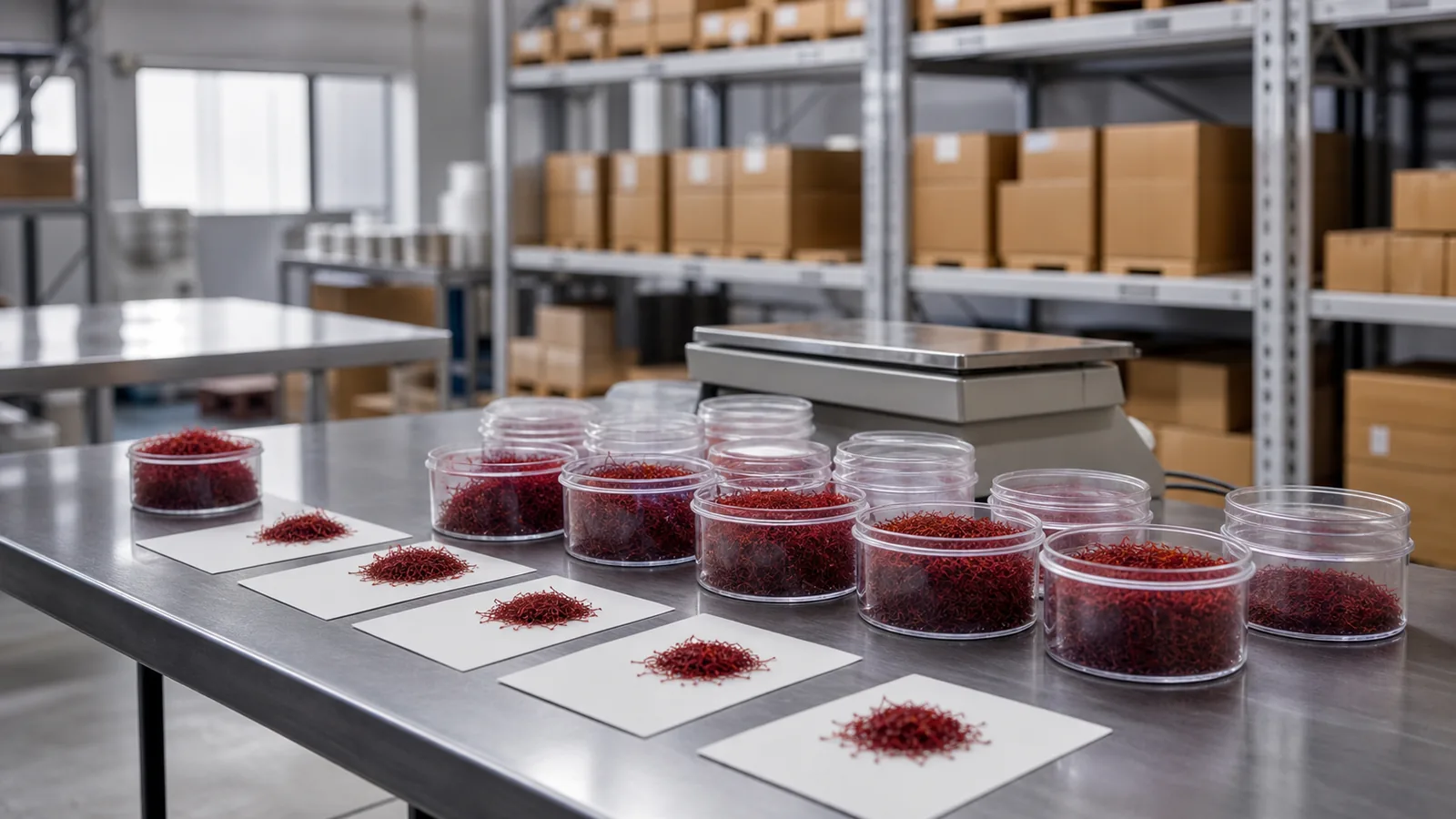
Saffron entered Iran’s organised commodity market through approved warehouses and exchange-traded documents representing graded physical product. That is what this 2017 report meant by saying saffron had entered the stock market. It did not mean that ordinary saffron threads had become shares in a listed company.
The distinction is useful for anyone searching for saffron stock or the saffron derivative market. A warehouse receipt, a company share and a derivative contract are different financial instruments, even when each is connected with the same crop.
The 2017 Torbat Heydarieh report
The report said a Zarrin Saffron warehouse was ready to accept selected grades from farmers and other holders in Torbat Heydarieh. Traders and saffron-market participants could then apply to buy or sell through the warehouse’s symbol on the Iran Mercantile Exchange.
The inherited translation describes the eligible material as “first class saffron” and a second cut or filament grade. Its English grade names are too corrupted to map safely to a modern commercial specification. The important point is that admission depended on a defined grade, not merely on a seller calling the product saffron.
These details describe the market announcement as published in September 2017. They do not confirm which warehouses, symbols, grades or contracts are active today.
How a saffron warehouse receipt works
A grower or owner delivers physical saffron to an approved warehouse. The warehouse examines the consignment against the applicable specification, records its weight and condition, and stores it under controlled arrangements. If accepted, the deposited product can support an electronic warehouse receipt.
That receipt represents a claim on the stored commodity. It can make trading easier because a buyer does not need to inspect and transport the same package every time ownership changes. The market still depends on accurate grading, secure storage, documentation and a clear process for taking delivery.
What “saffron stock” can mean
- Physical stock: saffron held by a farmer, merchant, processor or warehouse.
- Warehouse receipt: a tradable document linked to an accepted quantity and grade in storage.
- Company stock: equity ownership in a business; this is not ownership of a particular saffron lot.
- Saffron derivative: a contract whose value is linked to saffron and whose terms may concern future delivery or settlement.
The original article mainly concerns warehouse-backed commodity trading. Its headline uses “stock market” broadly, which can otherwise give the wrong impression.
The ownership figures in the report
Gholamreza Karimi, identified as managing director of Zarrin Saffron Shargh, described the company as having capital of 60 billion rials divided into 60,000 shares. The translated account assigned 30,000 shares to producers and 15,000 to saffron businesses such as processors, merchants and exporters.
It then said another 35% belonged to founding local farmers. Those numbers do not reconcile: 30,000 plus 15,000 shares already equal 75% of a 60,000-share total, and a further 35% would exceed 100%. Without the original corporate filing, the ownership split should be treated as a reporting or translation error rather than repeated as verified arithmetic.
Why supporters wanted exchange trading
Karimi argued that an organised exchange could support more transparent price discovery, a steadier trading process and buyer confidence in product identity. Standard entry requirements could also push suppliers toward consistent grading and documented quality.
The commercial logic is straightforward. When buyers understand the lot specification and know where the product is stored, they can compare offers on a more consistent basis. Growers may gain a clearer market reference, while processors and exporters can source defined material.
An exchange cannot guarantee a stable or rising saffron price. Supply, demand, harvest conditions, currency, storage charges, contract terms and market liquidity still matter. The 2017 interview expressed an expectation of stability, not a promise to investors.
How the saffron derivative market differs
A derivative is based on a contract rather than immediate ownership of loose saffron. The contract specifies matters such as grade, quantity, delivery period, settlement and trading obligations. These products can help eligible participants manage price exposure, but leverage, margin calls and price volatility can also create losses.
Anyone considering a current saffron contract should use the exchange’s latest rulebook, warehouse list, symbol notice and risk disclosure. A 2017 news report cannot provide current financial terms and should not be treated as investment advice.
What the announcement changed
The announcement marked a move from purely bilateral buying toward a documented chain connecting physical saffron, quality control, storage and organised trading. That was the central meaning behind “saffron entered the stock market.”
For customers buying saffron as a spice, the lesson is simpler: grade names and traceability are most useful when they correspond to a real specification. For market participants, every current decision still begins with the live exchange documents—not with the historical figures on this page.

![Exporting Saffron to Turkey + Price Guide [Complete 0 to 100]](https://img.rowhanisaffron.com/20260827003933/saffron-export-turkey-quality-inspection.webp)



