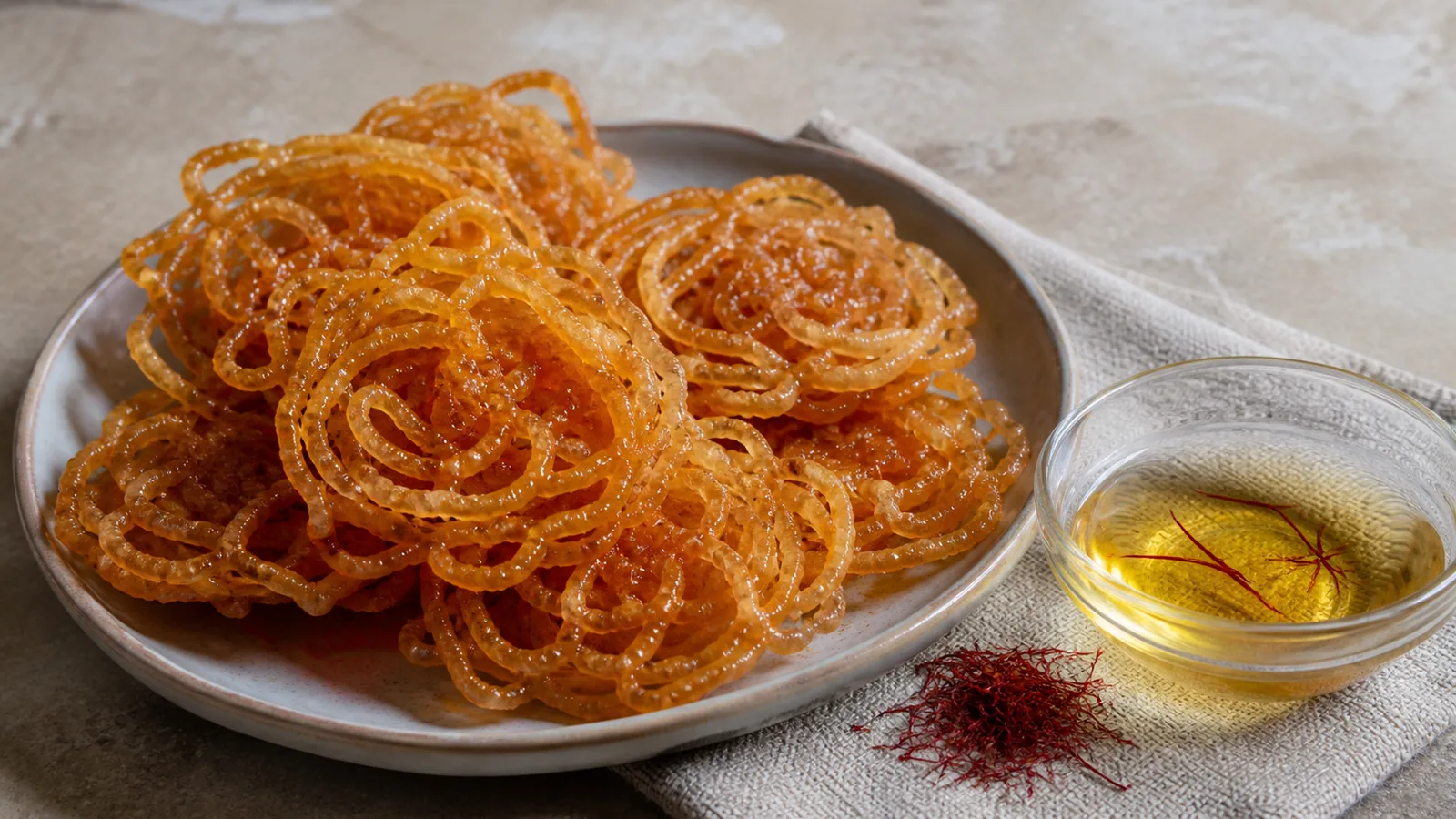
Persian zoolbiya is a crisp, lacy sweet made by piping a fermented starch-and-yogurt batter into hot oil, then dipping the coils in saffron and rosewater syrup. The contrast matters: a delicate shell should take up enough syrup to shine without becoming heavy or soft.
This zoolbia recipe follows the traditional circular shape and keeps the original starch, yogurt, saffron and rosewater proportions. Make the syrup first so it has time to cool while the batter rests.
Ingredients for the zoolbiya batter
- 200g wheat starch
- 180g plain full-fat yogurt
- 20g plain flour
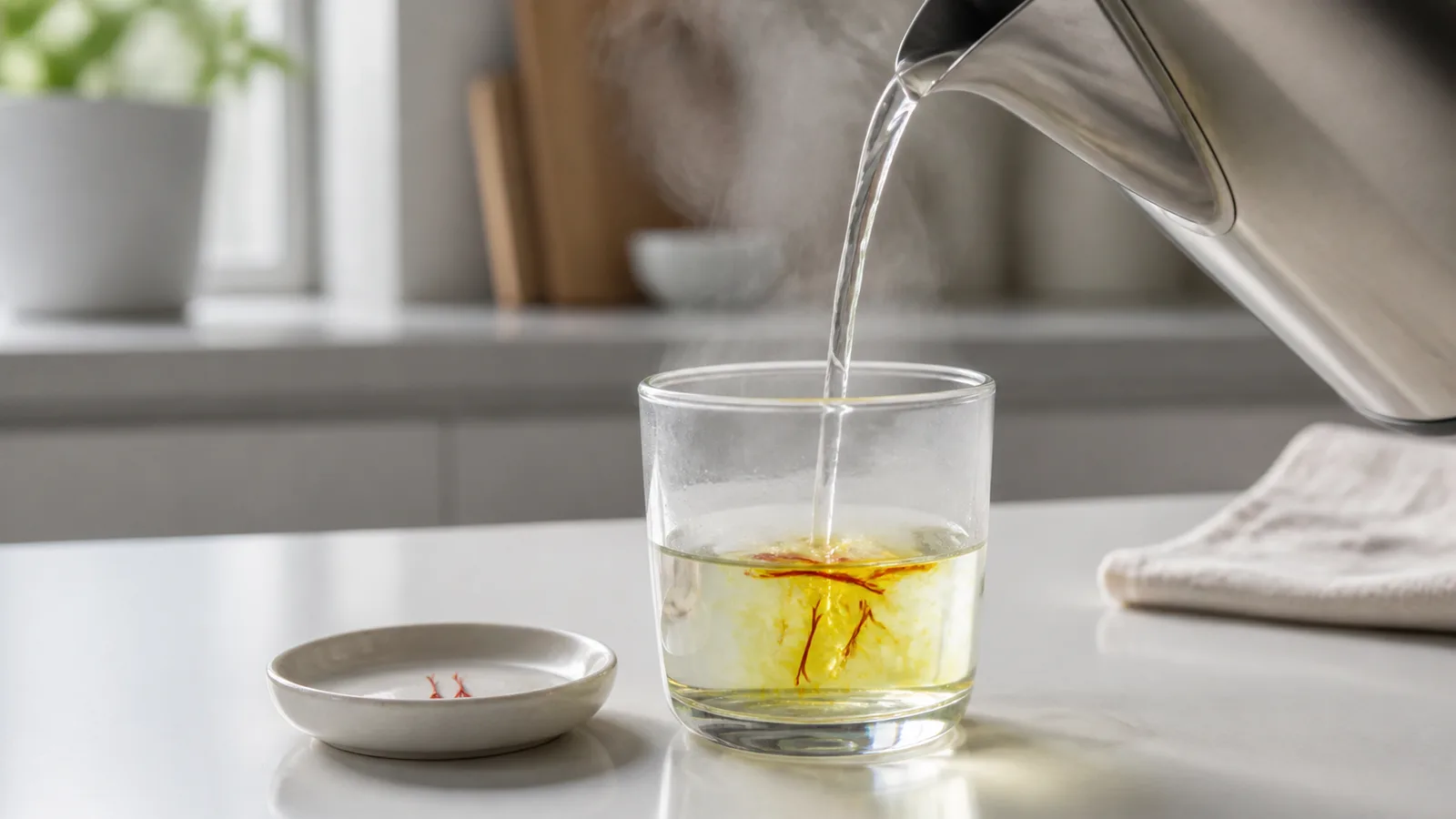
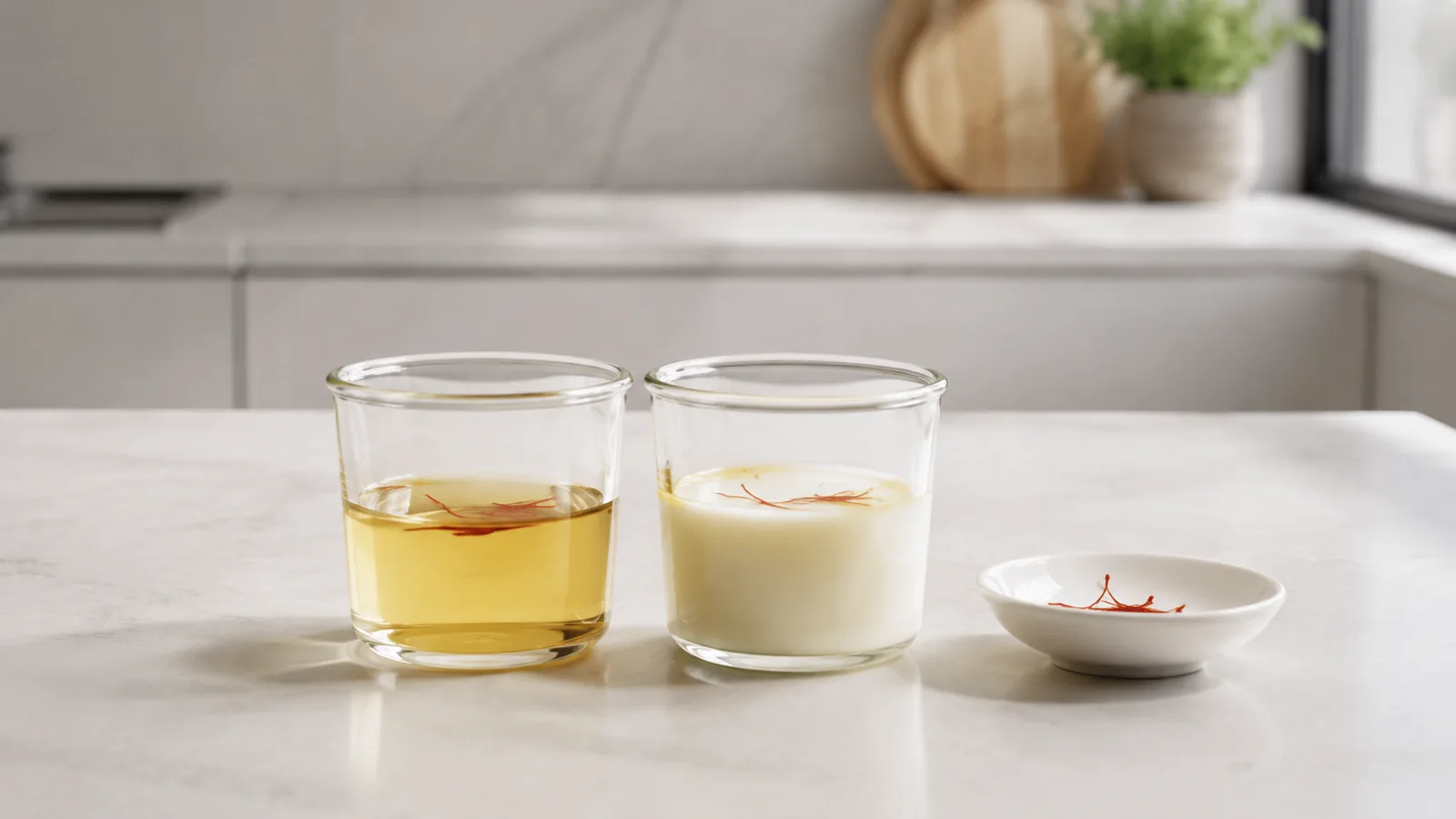
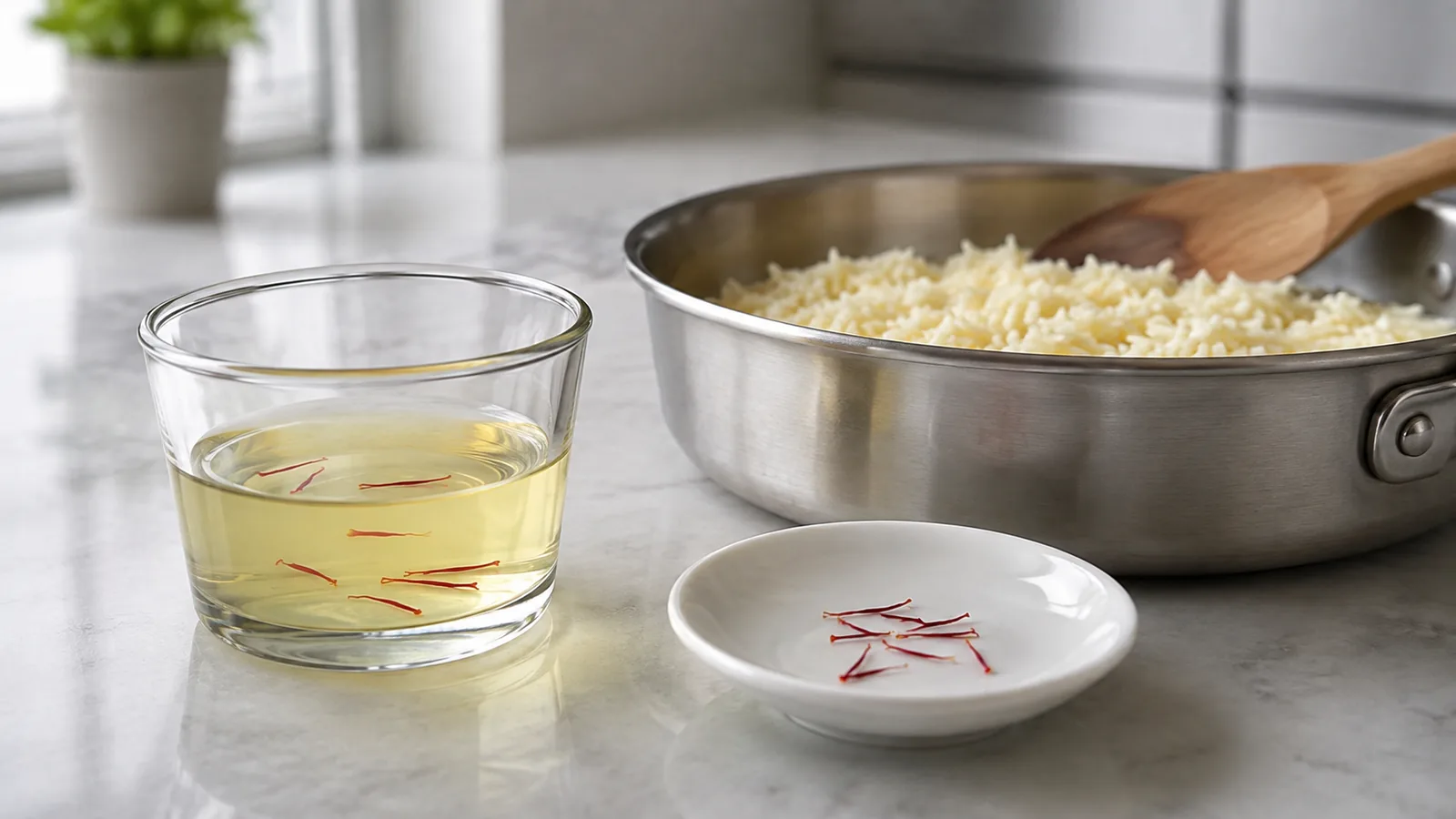
- 1 teaspoon concentrated brewed saffron
- 1 teaspoon neutral oil or melted solid cooking fat
- 1/2 teaspoon baking soda
- 1 teaspoon water or rosewater, plus a little more if needed
- Neutral liquid oil for deep-frying
Ingredients for the saffron syrup
- 2 cups sugar, about 400g
- 1 cup water, 240ml
- 2 tablespoons rosewater
- 1 teaspoon concentrated brewed saffron
- 1 teaspoon fresh lemon juice
Make the syrup first
Put the sugar and water in a saucepan over medium-low heat. Stir only until the sugar dissolves, then let the syrup come to a gentle boil. Add the rosewater and saffron and simmer for 4–5 minutes. Stir in the lemon juice and remove the pan from the heat.
The syrup should remain pourable, not reach the thickness of candy. It becomes more viscous as it cools. Set it aside in a wide bowl; lukewarm or room-temperature syrup gives the freshly fried zoolbiya a better chance of staying crisp.
Mix and rest the batter
Combine the starch and yogurt in a bowl. Leave them for 10 minutes so the starch can hydrate, then whisk until smooth. Add the flour, saffron and teaspoon of oil. Mix again until no dry pockets remain.
Cover and rest the batter in a warm room for 45–60 minutes. It should relax into a thick but pipeable consistency. Add the teaspoon of water or rosewater, then only enough extra liquid to let the batter fall in a steady ribbon. A mixture that is too thin will spread into shapeless fragments; one that is too stiff will be difficult to pipe.
Stir in the baking soda immediately before frying. Transfer the batter to a squeeze bottle with a narrow opening, a piping bag with a small round tip, or a funnel whose flow you can control.
Shape and fry Persian zoolbiya
Pour neutral oil into a deep, heavy pan to a depth of about 4cm. Heat it to roughly 175°C. If you do not have a thermometer, a small drop of batter should rise promptly with active bubbles but should not darken at once.
Working close to the oil surface, pipe loose overlapping circles about 8–10cm wide. Cross the lines several times so the ring holds together, but leave visible gaps. Fry only one or two at a time. Once the underside is golden and firm, turn carefully and cook the second side. Each batch usually takes about 2 minutes.
Use a slotted spoon and keep your hands clear of the hot oil. Water, wet utensils and loose batter dropped from a height can make oil spit.
Dip the hot coils in saffron syrup
Lift each zoolbiya from the oil, let it drain for a few seconds, then put it into the cooled syrup. Turn once so both faces are coated. A brief dip of about 10–15 seconds is normally enough, followed by a rest on a rack or sieve to shed the excess.
The inherited English recipe says to leave zoolbiya in syrup for “15 to 10 minutes.” That would make these thin coils very soft and is likely a seconds-versus-minutes translation error. If you prefer a deeply soaked sweet, extend the dip gradually rather than starting with ten minutes.
How to keep zoolbiya crisp
Use liquid oil for frying. Solid fat in the pan can leave the sweet firm and waxy after it cools, even though a teaspoon in the batter is harmless. Keep the oil temperature steady: cool oil makes greasy zoolbiya, while very hot oil colours the outside before the centre becomes crisp.
If the pattern breaks apart, thicken the batter with a teaspoon of starch and try a smaller coil. If the lines stay dense and doughy, loosen it with a few drops of water. Test one piece before adjusting the whole bowl.
Serving and storage
Let the finished sweets cool in a single layer. Serve Persian zoolbiya with unsweetened black tea, especially during Ramadan, or alongside bamieh. A scattering of pistachio is optional; the saffron and rosewater should remain easy to notice.
Zoolbiya is best on the day it is fried. Store leftovers in a covered container at cool room temperature for a day, placing parchment between layers. Refrigeration is safe but softens the delicate surface, so make a smaller batch when possible.