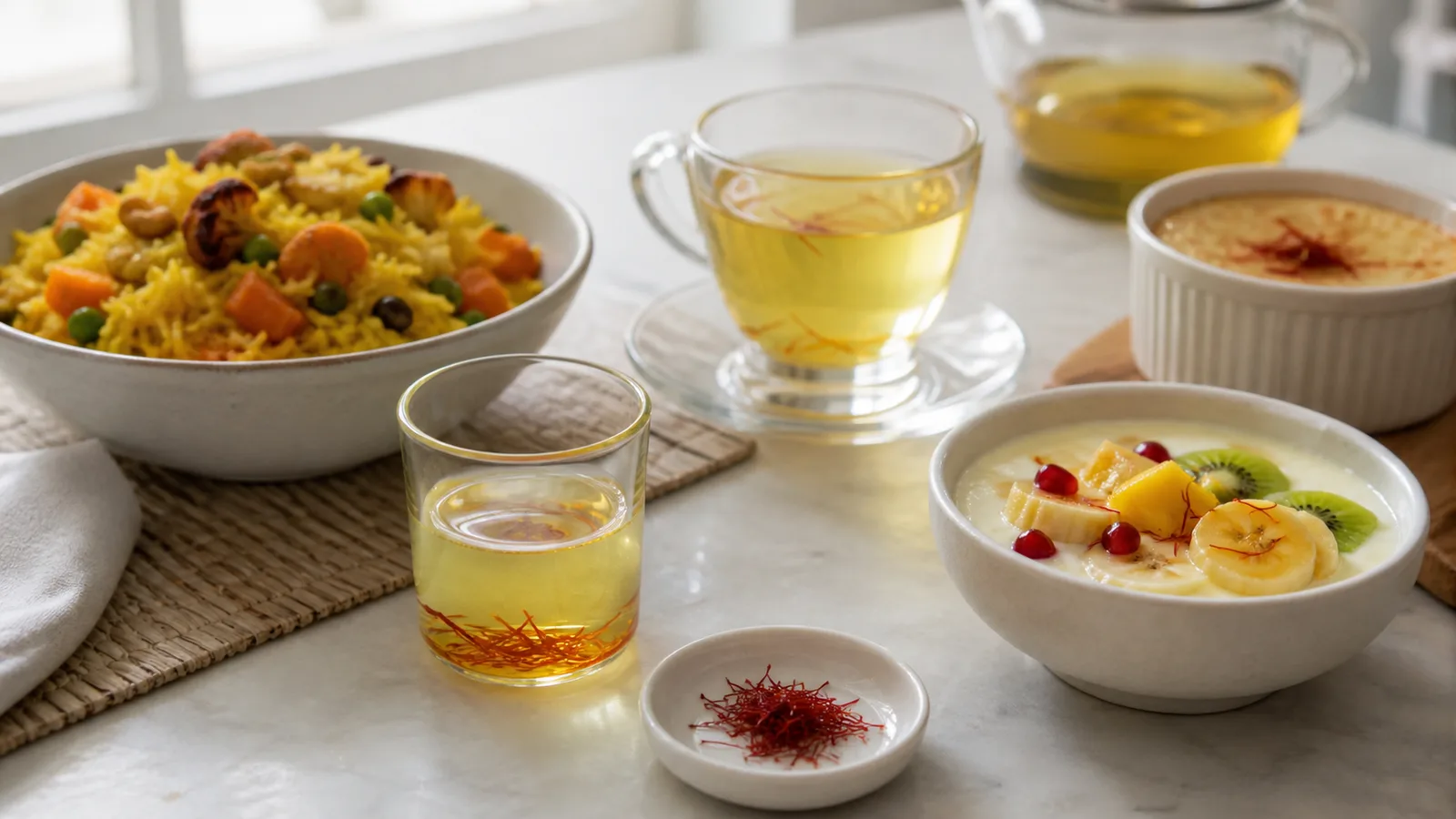
Adding saffron to diet does not require a special recipe or a large quantity of spice. A few genuine threads can bring a warm aroma, golden colour and gently floral flavour to drinks, rice, soups and desserts. The useful habit is to introduce saffron where its flavour has room to spread, rather than scattering dry threads into a finished dish and hoping for an even result.
If you are wondering how to add saffron to diet without changing the way you normally eat, begin with one familiar food. Bloom a small pinch, add the liquid to tea or rice, and notice the flavour before using more. Saffron is powerful, so restraint usually produces a cleaner result.
Start by blooming the threads
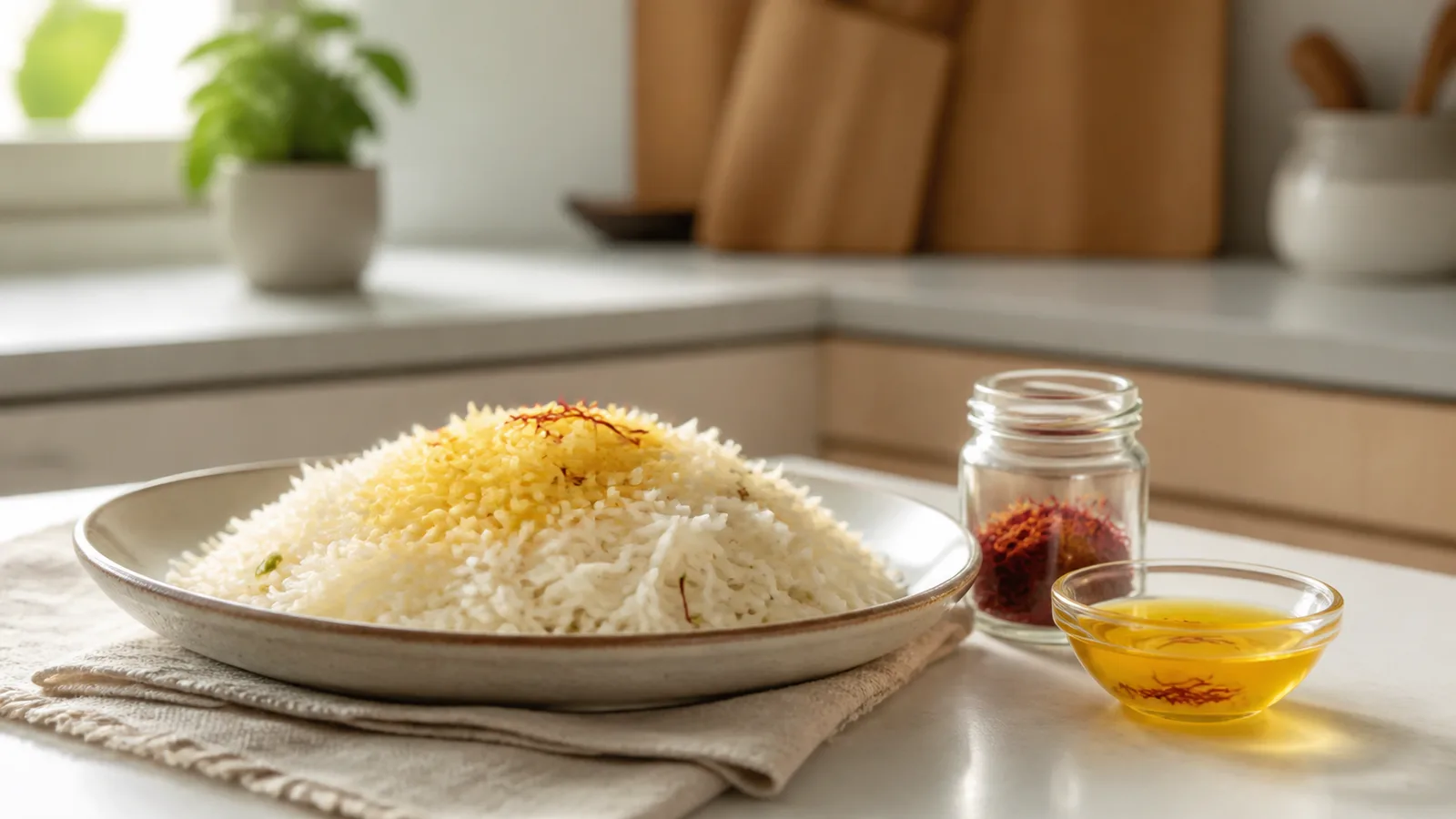
Blooming helps saffron release its colour and aroma throughout a dish. Gently crush the threads between clean fingers or with a mortar and pestle, then cover them with a small amount of warm water or milk. Leave the mixture for about 10 to 15 minutes. Add both the liquid and the softened threads to your food.
The water should be hot enough to encourage extraction but does not need to be boiling. In tea, the threads can go into hot water or the freshly brewed drink; for cooking, a separate warm infusion gives more control. For a more detailed method, see our guide to brewing saffron. Bloom only what you plan to use, because the aroma is most appealing when the infusion is fresh.
Easy ways of adding saffron to diet
Saffron in beverages: tea and warm milk
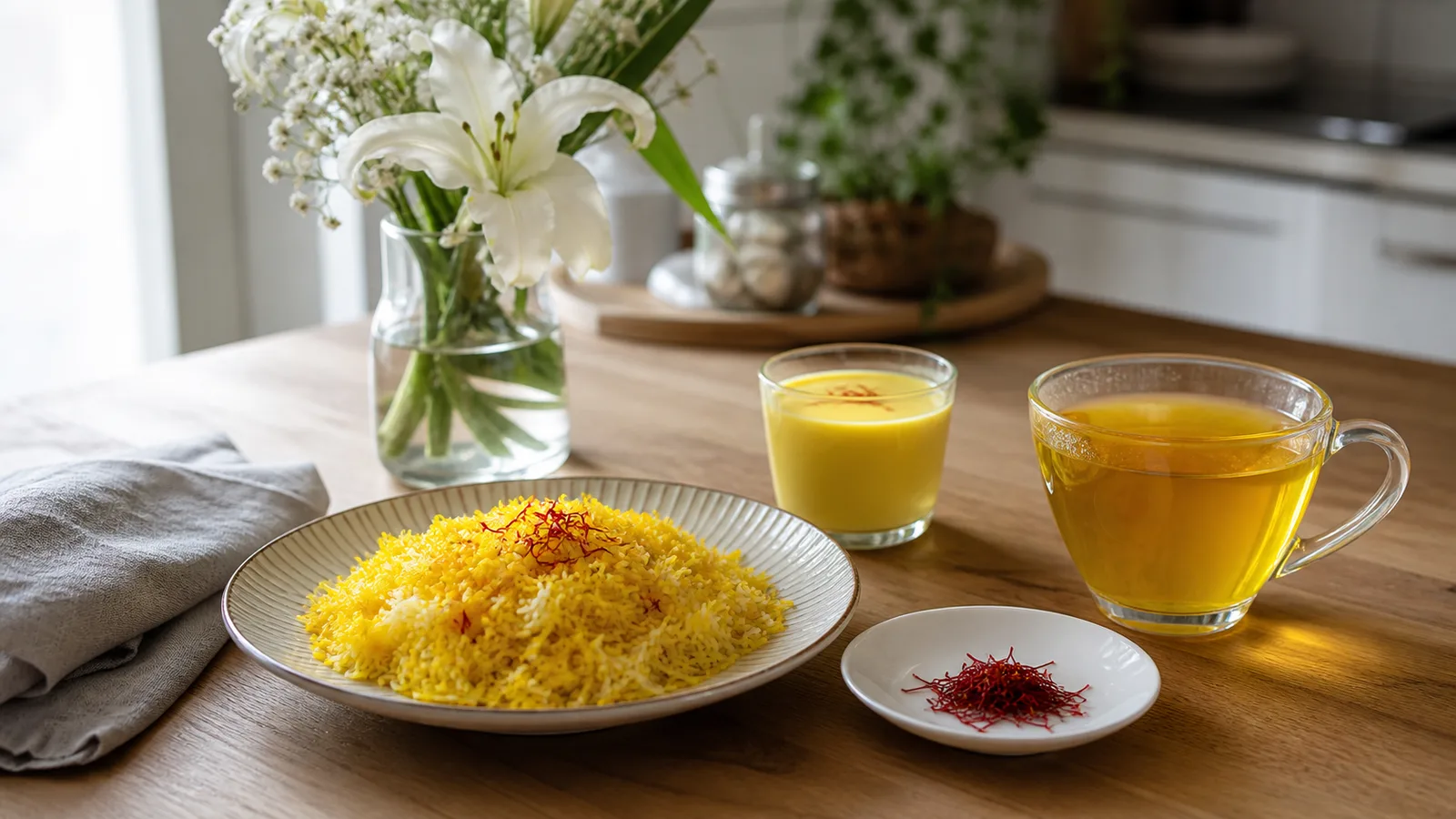
For one cup, place two or three threads in warm water and allow the colour to develop before adding tea. Saffron works with black, green and herbal infusions, although a delicate tea lets its aroma come through most clearly. Honey, lemon or cardamom can complement it; add one accent at a time so the cup does not become muddled.
Warm milk is another simple option. Bloom the threads separately or steep them directly in the milk over gentle heat. Avoid a long, vigorous boil. A small amount of saffron should scent the drink without making it bitter.
Saffron in main dishes: rice, grains and stews
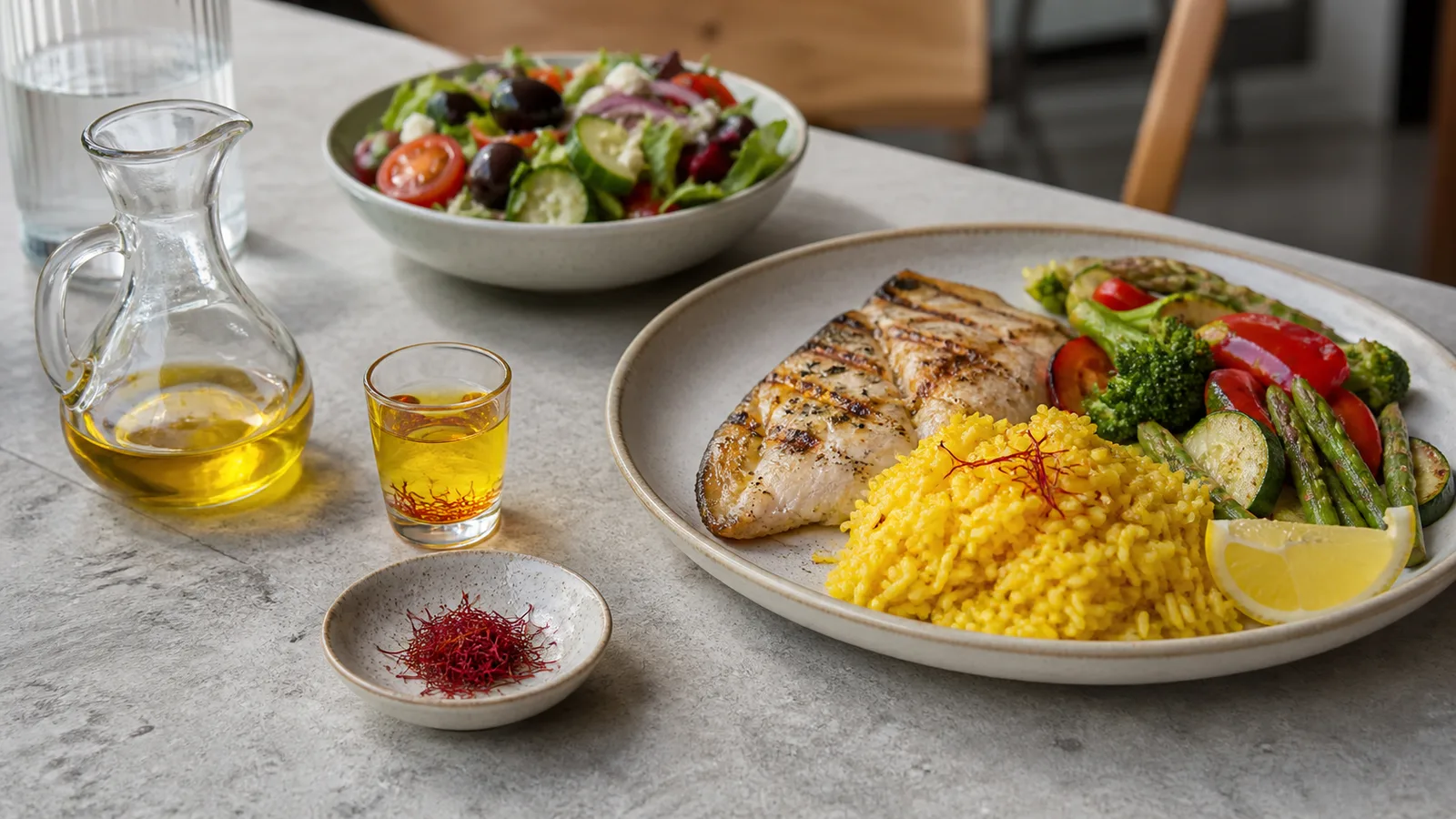
Rice is the familiar starting point, but saffron also suits couscous, bulgur and other mild grains. Stir the bloomed saffron into the cooking liquid, or mix it through part of the cooked grain to create golden and white sections. The same infusion can be added near the end of cooking to soups and stews.
Chicken, fish, chickpeas and vegetables all give saffron a useful backdrop. Tomatoes and aggressive spice blends can overwhelm its fragrance, so taste the dish before adding strong seasoning. If saffron is meant to be the leading aroma, keep the rest of the seasoning measured.
Breakfasts and simple snacks
A spoonful of cooled saffron infusion can be stirred into plain yogurt, overnight oats or porridge. Pair it with fruit, nuts or a little honey rather than using it as a supplement. This keeps saffron in the context of ordinary food and makes the amount easy to control.
Saffron in sweets and desserts
Saffron pairs naturally with milk-based desserts, custards, puddings and lightly flavoured cakes. Bloom it in a portion of the recipe’s liquid before mixing it into the batter or custard. Cardamom and vanilla work well alongside it, but neither should hide the spice. In pale desserts, even a modest infusion gives a visible golden tone.
How much should you use?
There is no single thread count for every recipe because thread size, saffron quality and serving volume vary. For a drink, two or three threads are a practical place to begin. For a family-size rice dish or stew, start with a small pinch, bloom it, and adjust the next time you make the recipe. More saffron does not automatically mean better flavour; too much can taste medicinal or bitter.
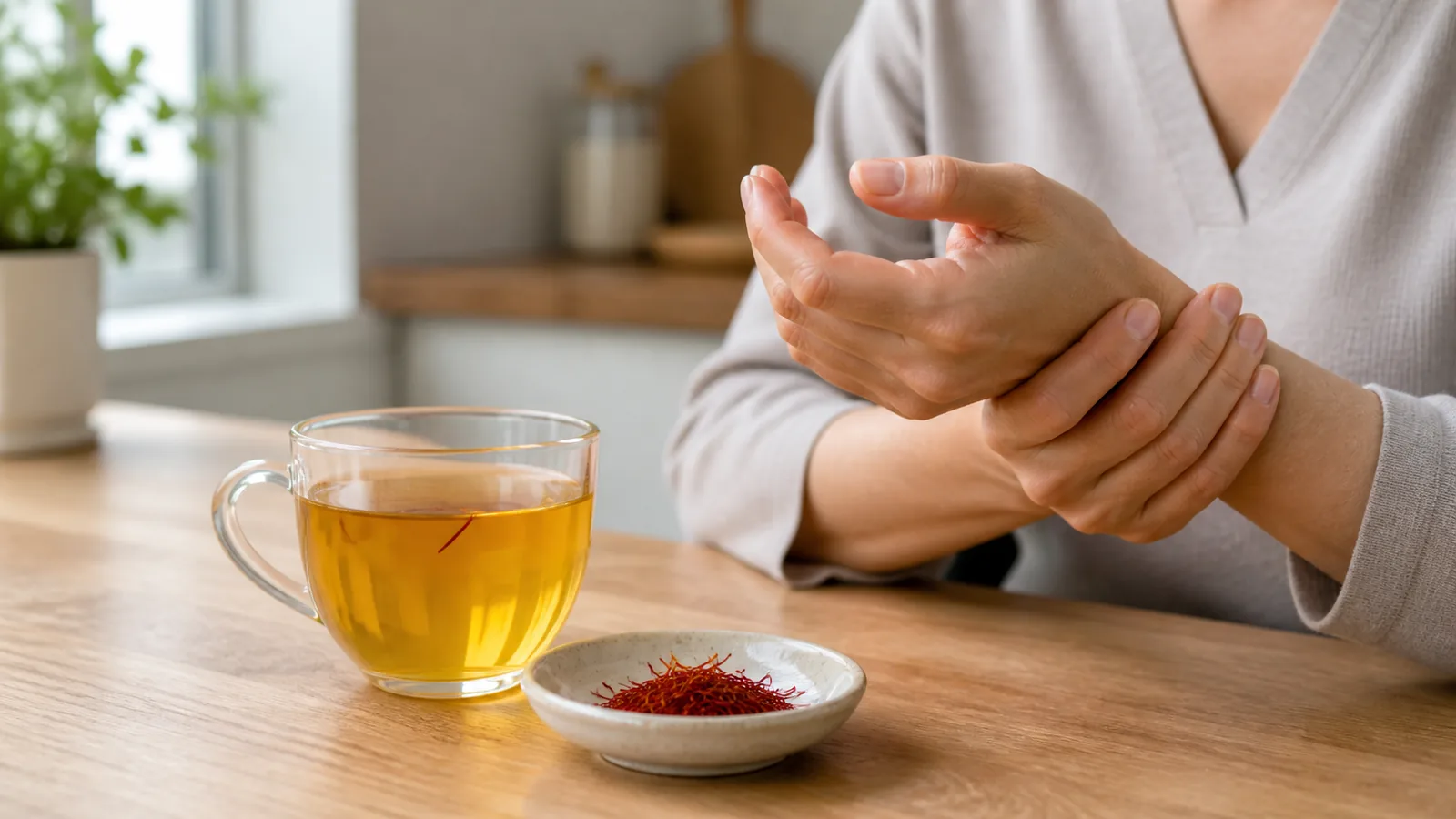
Use saffron as a culinary spice, not as a concentrated daily dose. Pregnancy, medicines and health conditions can change what is appropriate, so anyone considering supplements or unusually large amounts should ask a qualified health professional. Its possible health benefits are not a reason to rely on claims that it will treat stress, improve mood or prevent disease; food-sized quantities are the more sensible way to explore it.
Choose threads that will perform well
Quality matters because weak, old or adulterated saffron may give little aroma and unpredictable colour. Look for dry, deep-red threads with a fresh hay-like and floral scent. Genuine saffron is sold as individual stigmas rather than bright powder mixed with unknown colouring. Keep it in an airtight container away from light, moisture and heat.
If you need threads for everyday cooking, our all-red saffron is intended for drinks, rice and desserts. Whatever source you choose, begin with a small amount and let the food show you whether it needs more.
A practical weekly approach
You do not need saffron in every meal. Try it first in one cup of tea, then use a fresh infusion in a rice dish later in the week. Once you recognise its aroma, it becomes easier to judge where it belongs: a mild soup may need only a hint, while a pot of rice can carry a little more. This gradual approach makes adding saffron to diet simple and economical within a balanced and enjoyable lifestyle, without turning an expressive spice into a routine obligation.