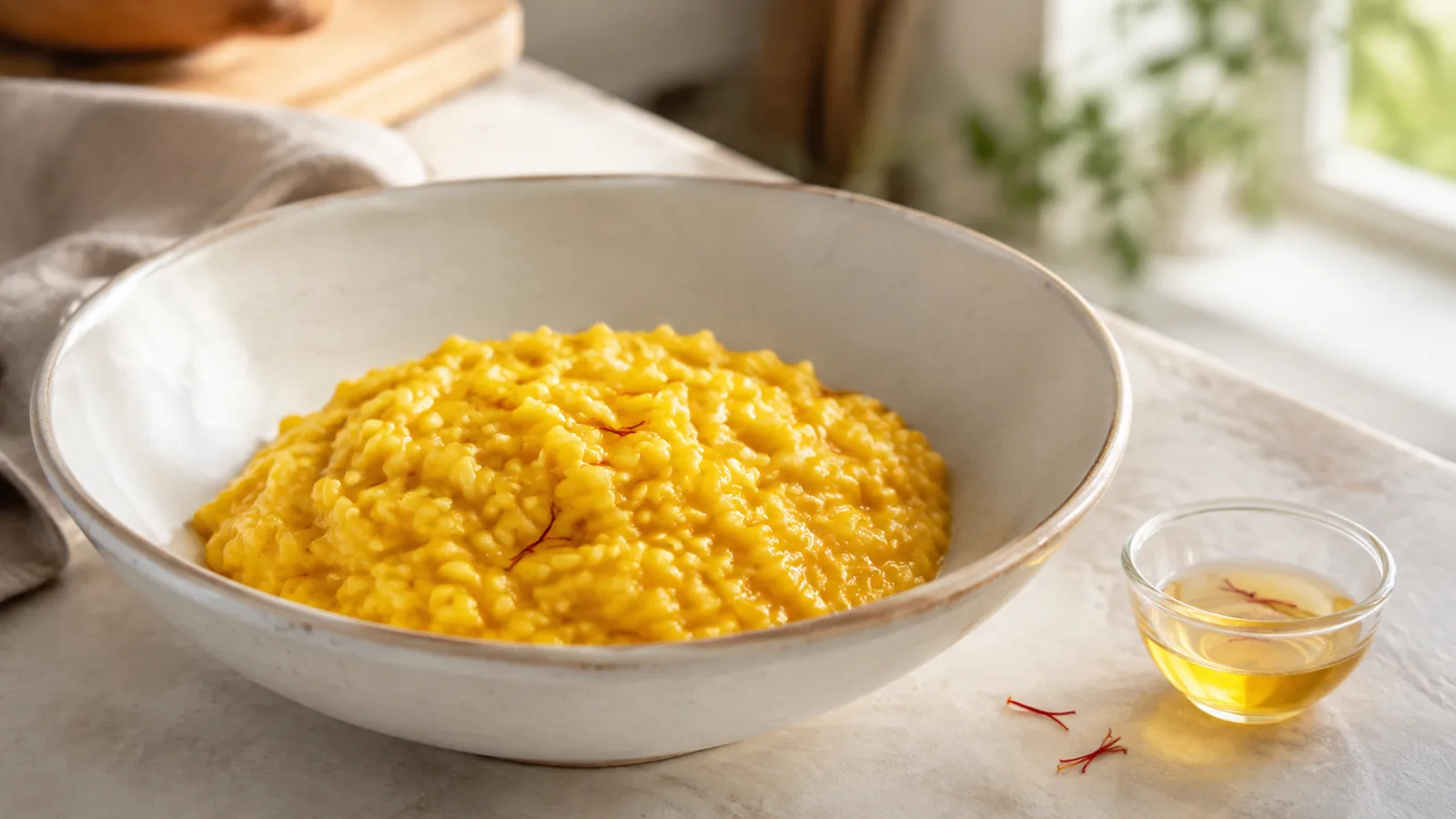
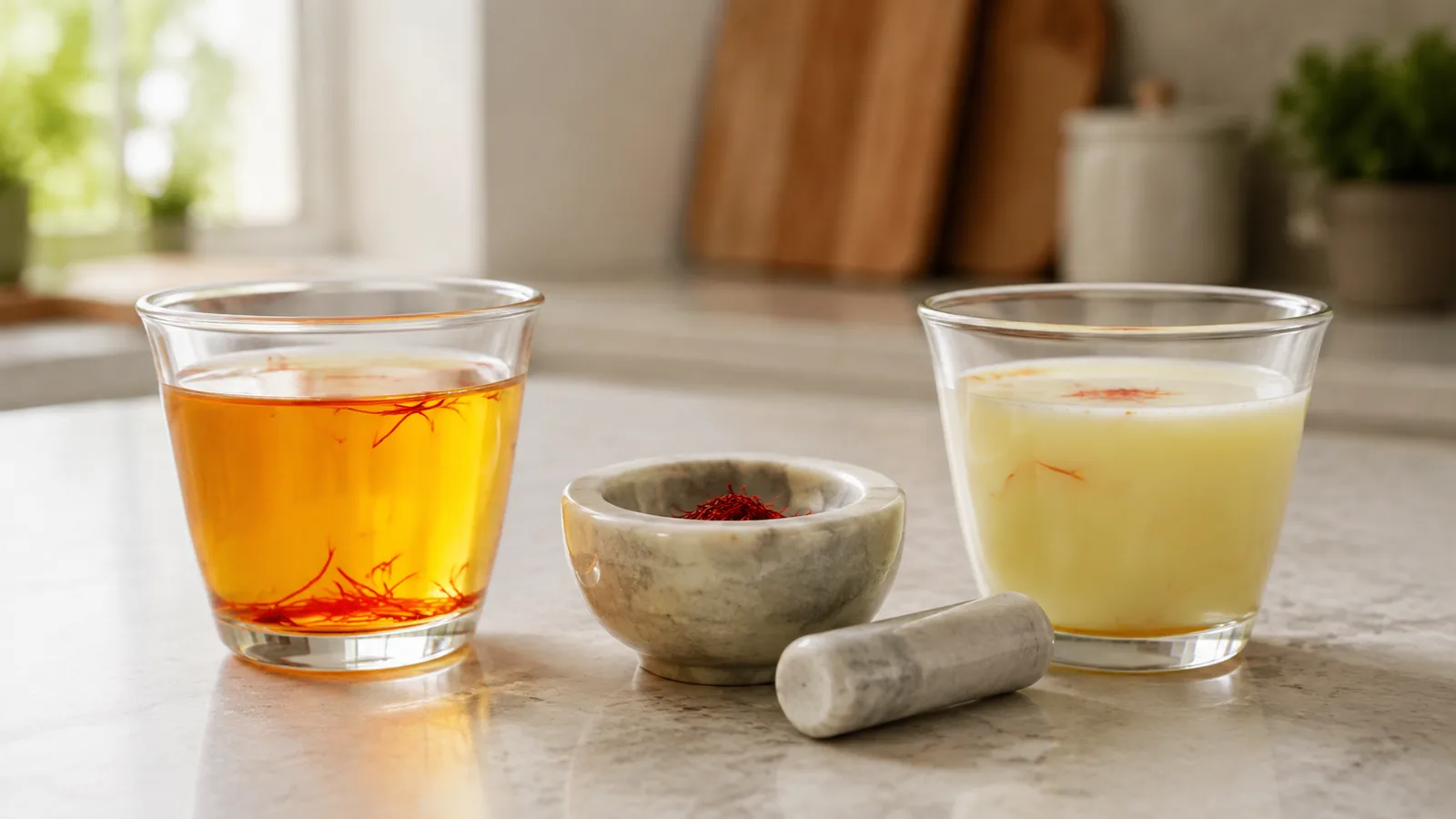
To activate saffron for cooking, lightly crush the threads, cover them with 2–3 tablespoons of warm water, milk or stock, and steep for at least 15 minutes. Add the coloured liquid and softened threads to the dish. This simple infusion is often called blooming saffron.
What does “activate saffron” mean?
Activation is a kitchen term, not a chemical switch. It means giving the threads time and liquid so their colour, bitterness and aroma can spread through the recipe. Dry saffron can still flavour food, but a concentrated infusion is easier to distribute evenly.
Saffron contains crocin, associated with its colour; picrocrocin, associated with bitterness; and volatile compounds including safranal, associated with aroma. A trained-panel sensory study illustrates why colour, aroma, flavour, bitterness and pungency are separate parts of the experience. A yellow dish is not automatically a flavourful one.
How to activate saffron step by step
- Measure the small amount required by the recipe.
- Lightly crush the threads with the back of a clean spoon or in a dry mortar.
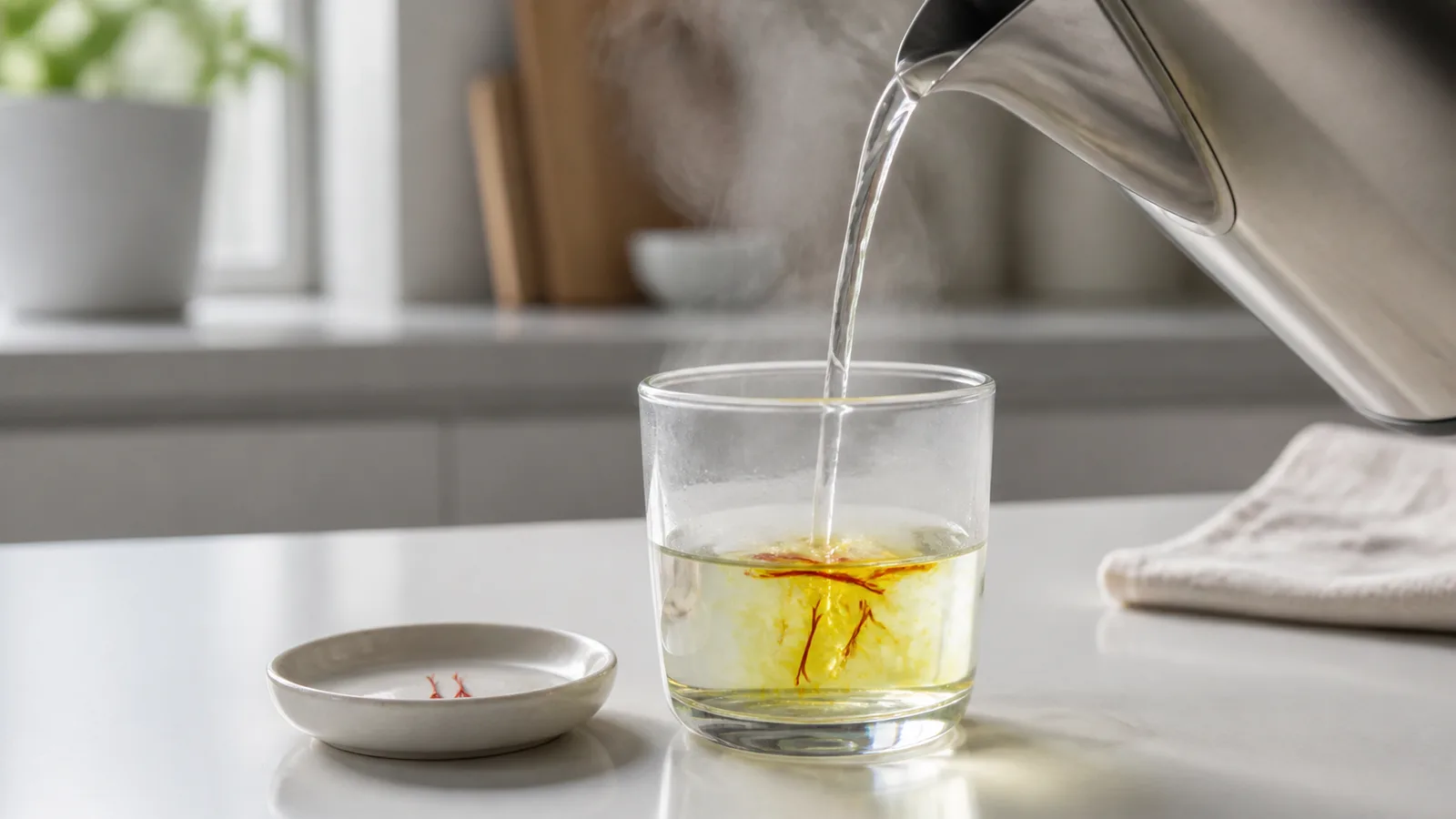
- Place them in a small heatproof cup and add 2–3 tablespoons of warm liquid.
- Cover the cup and steep for 15 minutes. If the rest of the recipe takes longer, the infusion can wait for up to an hour.
- Stir the entire infusion, including the softened threads, into the dish at the appropriate stage.
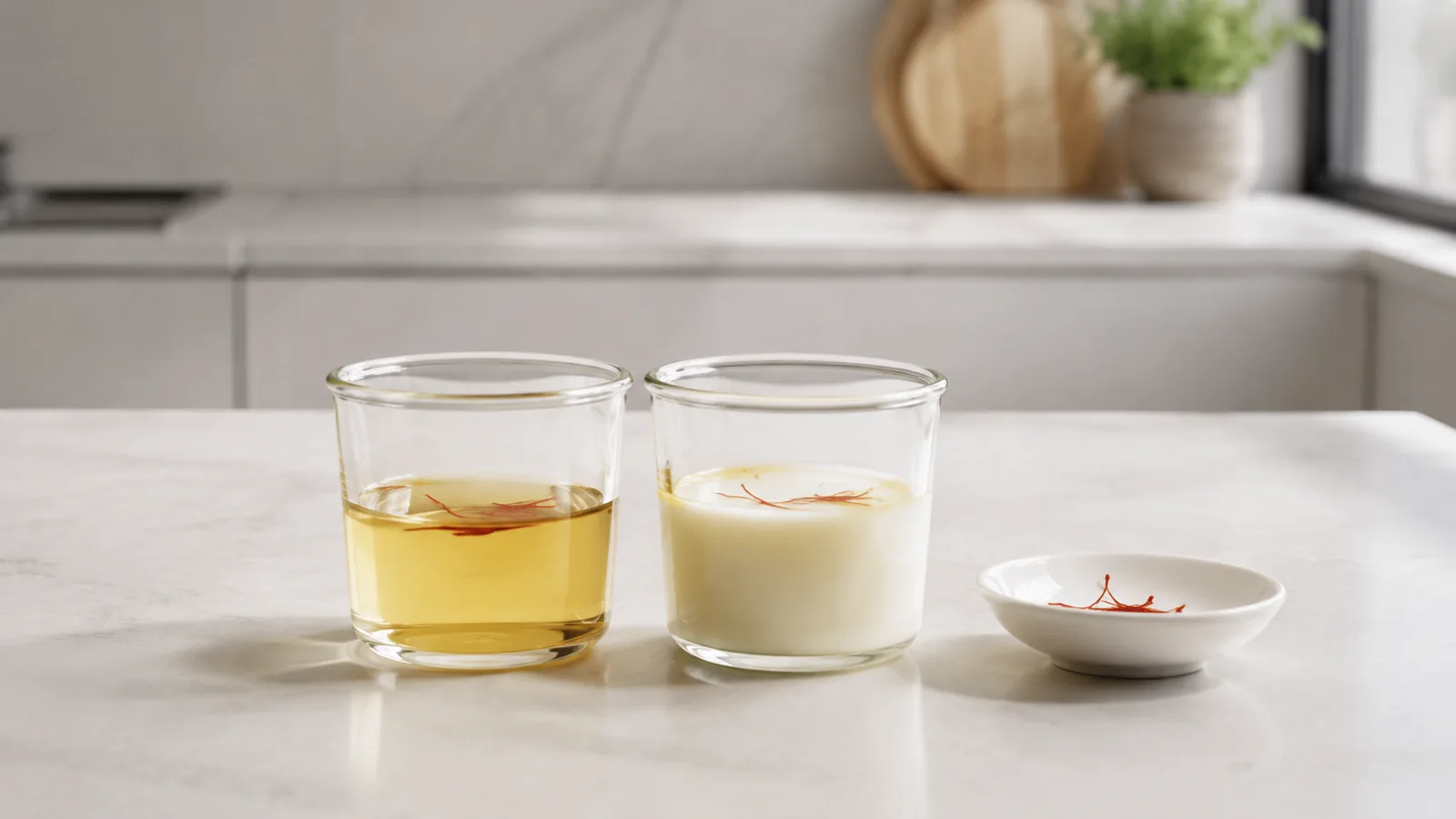
The liquid should suit the food. Water is the most neutral choice; stock belongs naturally in savoury cooking; milk works well in creamy sauces and desserts.
Using warm water
Warm water is the most flexible method because it does not add fat, dairy or seasoning. Place the crushed threads in a small bowl, cover them completely and leave them undisturbed. The water should develop a golden-yellow colour rather than an instant red plume.
“Warm, not boiling” is a useful way to keep the method gentle, but a brief contact with very hot water does not instantly ruin saffron. The larger concern is prolonged boiling, which can flatten delicate aroma. The guide to hot water and saffron explains the distinction.
Using warm milk
Milk is useful when the final dish is already creamy. Warm a small portion, remove it from direct heat, add the crushed saffron and steep for 15 minutes. Stir it into custard, rice pudding, kheer, ice cream base, saffron milk or a creamy sauce.
Water and milk do not produce identical results, and neither is universally better. Choose according to the recipe and dietary needs. For a direct comparison, read whether to soak saffron in milk or water.
Using stock for savoury dishes
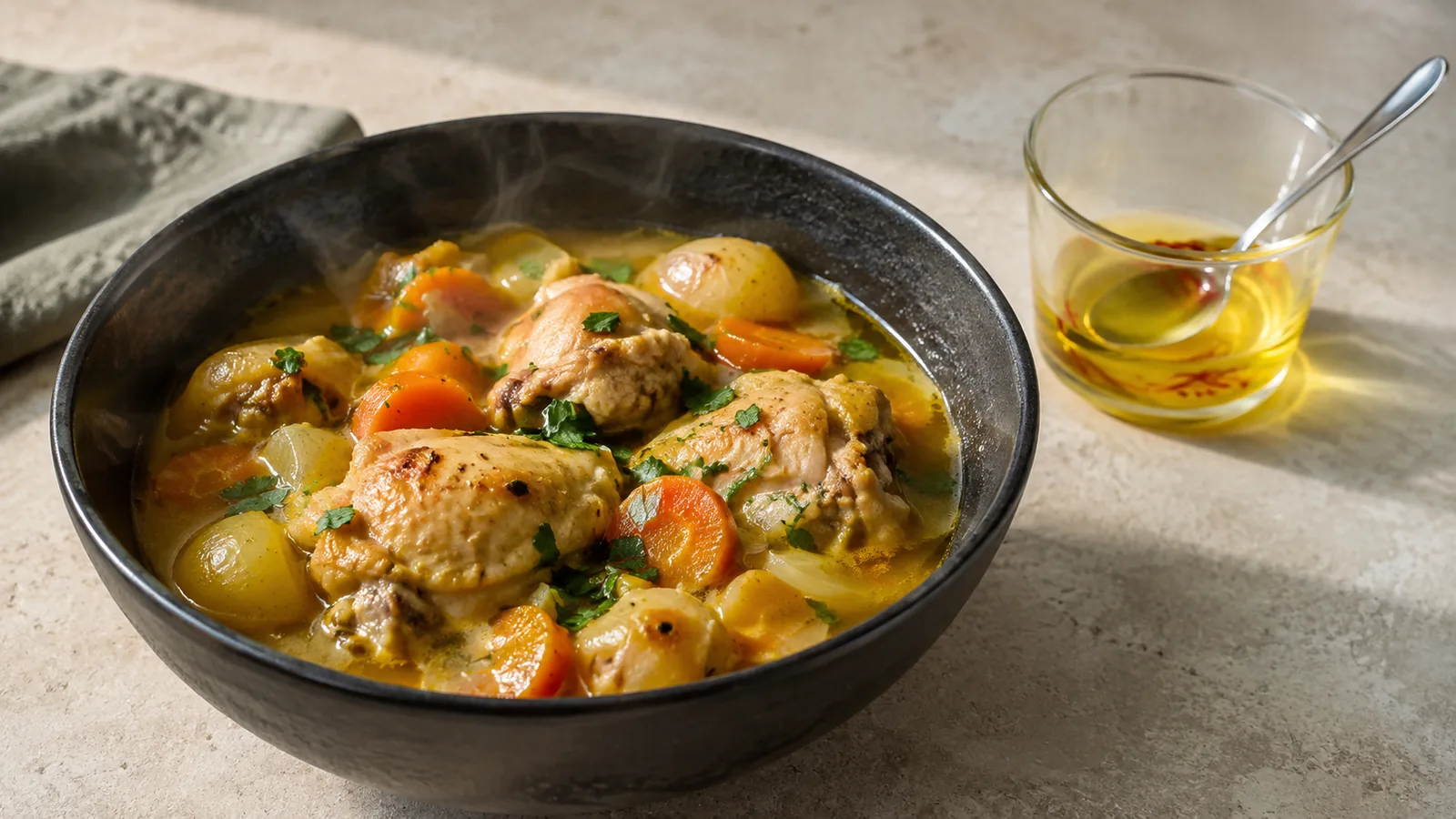
A few tablespoons of warm chicken, seafood or vegetable stock can activate saffron without diluting a soup, stew or sauce. Use stock from the recipe itself and keep its salt level in mind. Very salty or strongly roasted stock may make the saffron harder to perceive.
How finely should you crush the threads?
Break them enough to expose more surface, but there is no need to make a perfectly fine powder. For a tiny pinch, a few grains of the recipe’s sugar or salt can help the mortar grip. Do not grind the whole container in advance; intact threads are easier to inspect and store.
How much liquid and how much saffron?
The 2–3 tablespoons refer to the blooming liquid, not the size of the final dish. It should cover the threads without producing so much liquid that it changes the recipe. If the food is very dry, use a quantity it can absorb.
The saffron amount depends on serving size and purpose. Start with the recipe’s measure or a small pinch, then adjust on a later attempt. Counting threads is approximate because they vary in length and thickness. For rice, use the more specific guide to saffron quantity for rice.
When to add the infusion
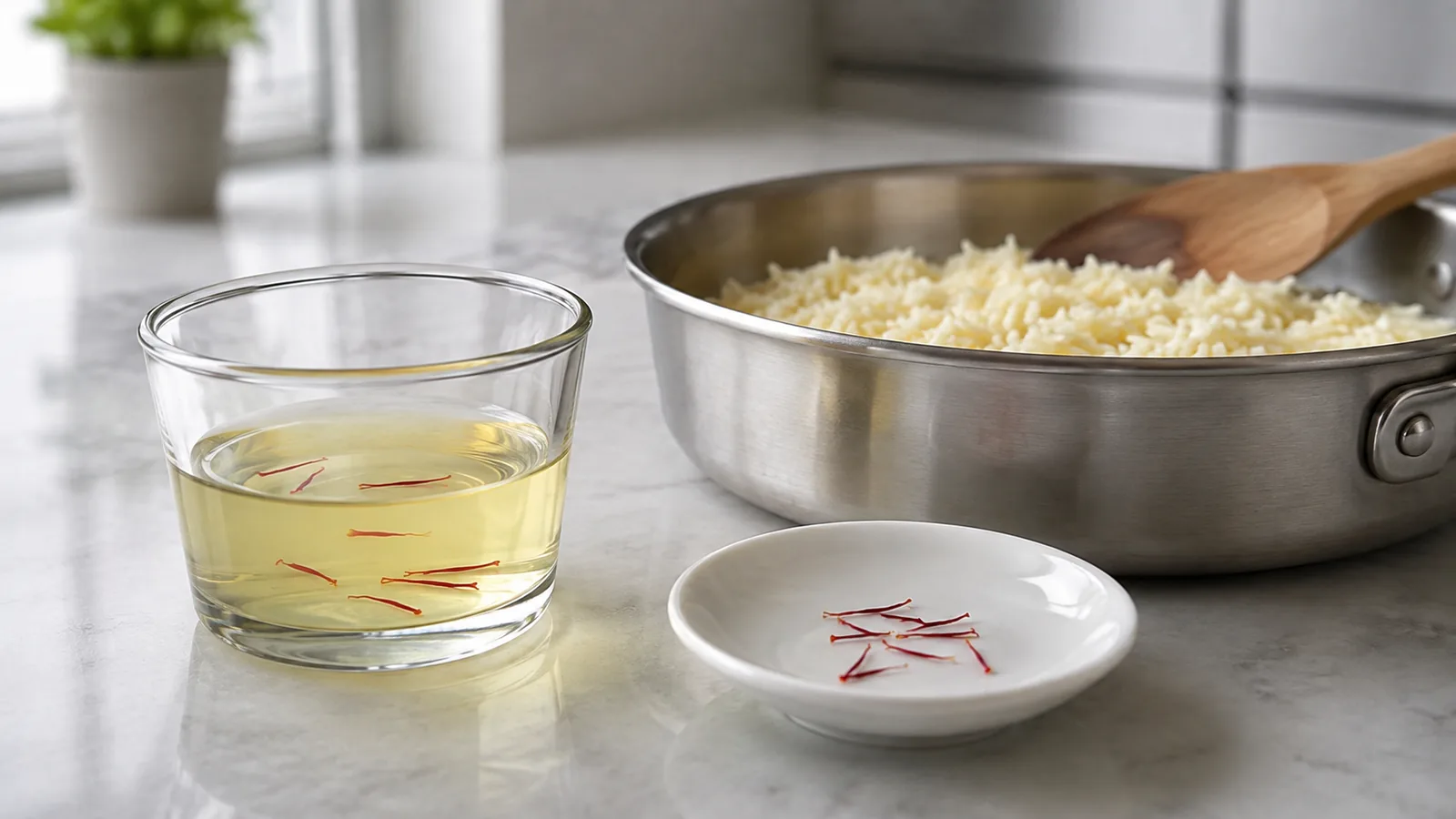
For rice, add it at the stage specified by the method: into the cooking liquid, into a reserved portion of cooked rice, or near the final steaming stage. For soups and stews, add it late enough to retain aroma but early enough to spread through the pot. In a dessert, mix it into the liquid base before that base sets or freezes.
Do not discard the threads after steeping. They are edible and still carry flavour. Scrape the cup so the whole measured amount reaches the dish.
Signs that the infusion is ready
The liquid should have a yellow-to-golden hue and a recognizable saffron aroma. The exact shade depends on the amount, liquid and batch. Colour alone is not an authenticity or strength test.
If little happens after 15 minutes, check the water temperature, crush the threads a little more, and allow extra time. If the finished dish remains faint, increase the saffron slightly next time rather than adding a large unmeasured amount midway through cooking.
Common activation mistakes
- Leaving whole dry threads on top of food and expecting even flavour.
- Using so much blooming liquid that the recipe’s texture changes.
- Boiling the infusion for a long time.
- Discarding the softened threads after steeping.
- Judging success only by how yellow the food becomes.
- Adding more saffron before giving the first infusion enough time.
Use the method where it helps
Activating saffron for cooking is most useful when even distribution matters: rice, soups, stews, sauces, custards, milk drinks and frozen desserts. The broader guide to using saffron in food covers those applications without repeating the blooming process.
Measure, crush, steep and add the entire infusion. That is the method; there is no need for a special activator or elaborate equipment. If you need intact threads for a recipe, review the current Sargol saffron pack details.