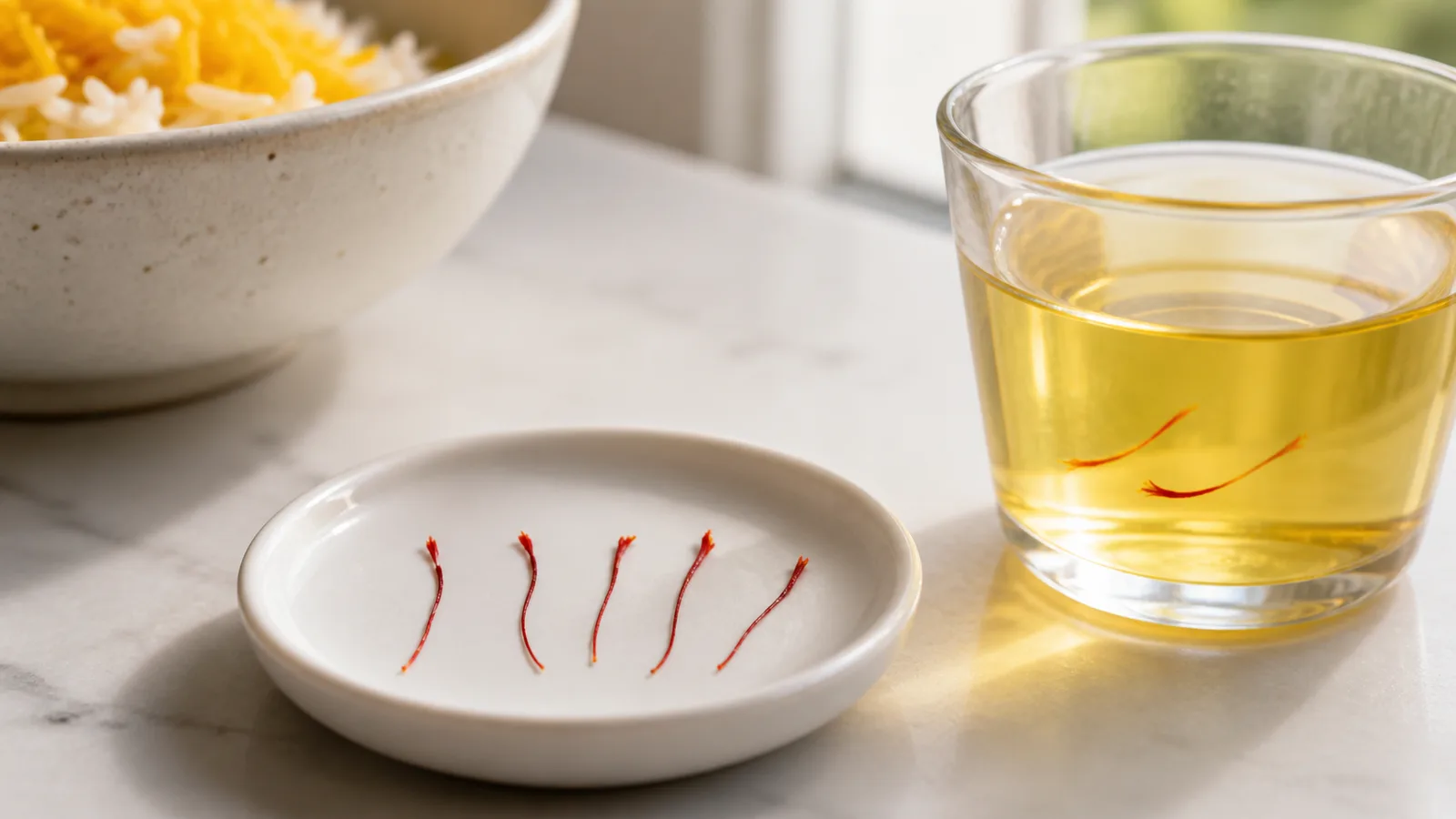
Saffron is rare in the practical sense that a large number of short-lived flowers yield a very small weight of spice, and much of the work still has to be done at the right moment by hand. It is not an endangered spice or impossible to buy. Genuine saffron is traded worldwide; what is scarce is a fresh, carefully processed quantity of red stigmas relative to the labour and land needed to produce it.
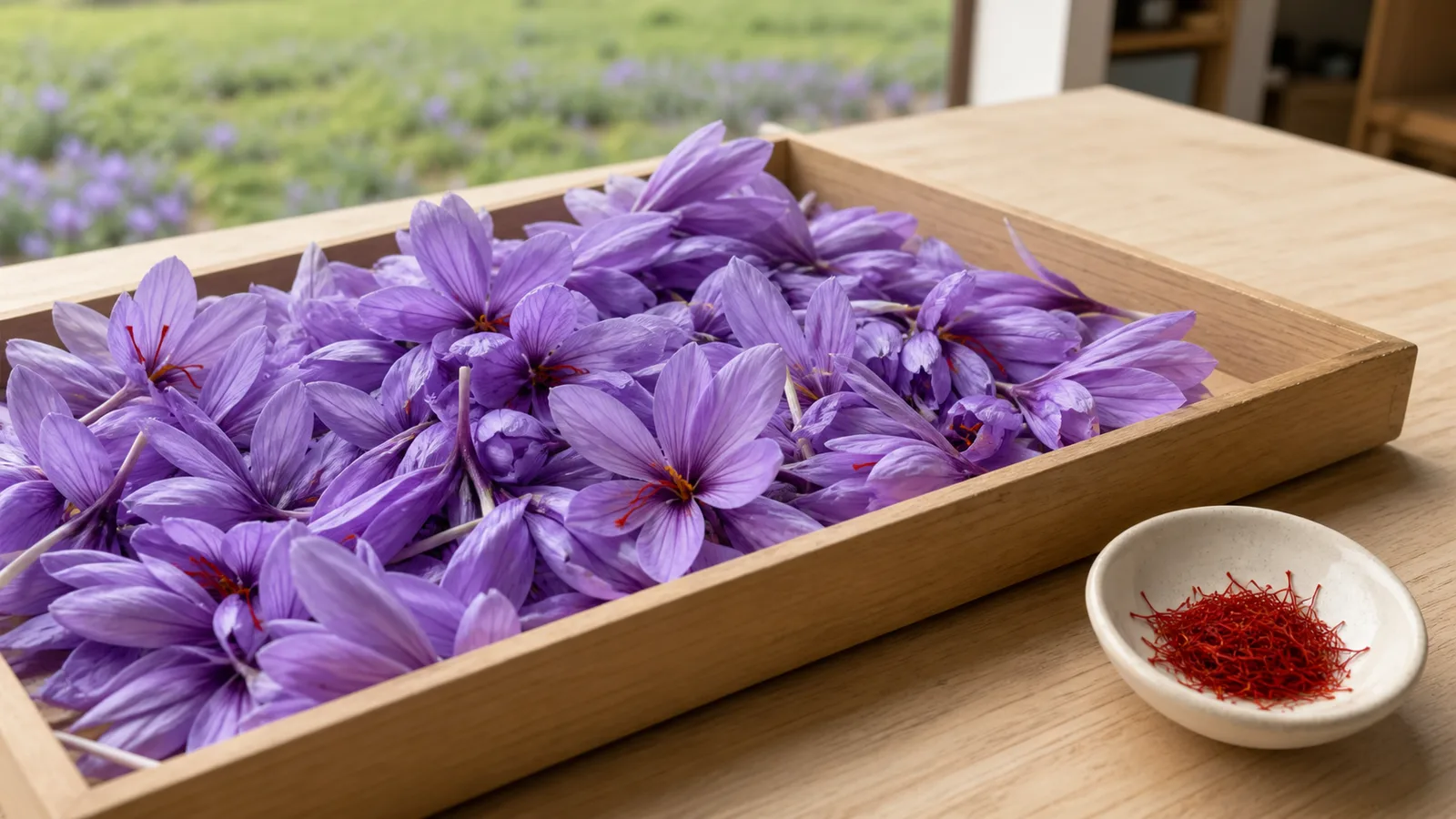
That distinction explains both saffron rarity and its price. A field can look full of purple flowers during harvest, yet each Crocus sativus flower carries only three stigmas. Once separated and dried, those delicate red parts weigh very little.
Saffron Rarity: Why is Saffron So Rare and Expensive?
Why is saffron rare? Four bottlenecks happen together: limited useful material per flower, a concentrated flowering period, careful picking and separation, and substantial weight loss during drying. This is also why saffron is so rare by dry weight. Saffron needs skilled post-harvest handling, and poor timing or drying can reduce the aroma and colour that make a crop commercially valuable.
“Rare” should not be confused with “grown in only three countries.” Iran is the dominant producer, and India and Spain have famous traditions, but saffron is also cultivated in Afghanistan, Greece, Morocco, Italy, parts of the United States, and other suitable locations. Kew’s Plants of the World Online record for Crocus sativus describes it as a tuberous geophyte with a broad introduced range.
The Labor-Intensive Cultivation Process
Saffron comes from the stigma, not the whole flower. Workers pick blooms, separate the three stigmas, and dry them promptly. The flowers do not wait for a convenient production schedule: a grower must mobilise labour when the crop opens, often across a brief autumn harvest.
The US Department of Agriculture describes commercial saffron as extremely labour-intensive, requiring stigmas from tens or hundreds of thousands of plants, with reported yields around 1.5–3.0 kg per hectare depending on region, harvest season, and climate. The precise number of flowers per kilogram varies with flower size, stigma size, moisture, trimming, and drying, so a single dramatic number should not be treated as universal.
Mechanisation is difficult because flowers and stigmas are delicate and do not all open at once. Research has explored automated cutting and other production methods, but careful manual work remains common. Labour is needed not only for picking but also for separating, drying, sorting, testing, and packing.
Crocus sativus is propagated through corms rather than an ordinary annual seed crop. Growers must maintain planting material, manage soil and disease, and wait through the plant’s cycle. A high retail price does not mean every field is automatically profitable; yield, labour, losses, quality, and route to market determine the result.
Limited Growing Regions Contribute to Saffron’s Rarity
Saffron needs a site where corms can complete their seasonal cycle without prolonged waterlogging or destructive extremes. Local soil drainage, winter conditions, summer dormancy, planting depth, disease pressure, and harvest weather all matter. A broad statement such as “cold winter and hot summer” is a starting point, not a farm plan.
Production is geographically concentrated because suitable climate must coincide with knowledge, labour, planting stock, drying practice, and a market. A place may be able to grow saffron biologically without being able to produce it competitively at scale.
This concentration can make supply sensitive to a poor harvest, labour disruption, transport problems, trade restrictions, or changing stocks. A saffron shortage in one market may reflect logistics or a particular origin rather than a worldwide absence of the spice. Buyers should date shortage claims and identify the grade and market involved.
Small-scale cultivation outside traditional regions is possible, but novelty does not guarantee quality. Finished threads still need correct identification, careful drying, protection from moisture and light, and appropriate food-safety controls.
Saffron’s Value and Economic Impact
Saffron is expensive by weight because the saleable part is tiny and the production chain is labour-heavy. Yet recipes use it in small amounts. The cost per shared dish can therefore be far less startling than a price per pound or kilogram.
Rarity alone does not establish value. Stale, badly dried, adulterated, or poorly stored threads are not worth a premium merely because the package says saffron. Buyers should judge identifiable thread structure, aroma, origin and seller traceability, net weight, storage, and credible testing information.
The high value creates opportunities for farming communities, specialised processors, laboratories, exporters, and retailers. It also creates incentives for substitution and adulteration. Powder is harder for a shopper to inspect than whole threads, while elaborate packaging can add cost without improving the spice.
Is saffron rare enough to run out? Temporary shortages and price changes can happen, but saffron is an established cultivated crop with multiple producing regions and international trade. The better description is low-yield and labour-intensive, not unavailable.
Where to Buy Genuine Saffron
Choose a seller that identifies the product clearly and provides a traceable business, sensible packaging, net weight, origin information, and a realistic return or support route. Whole threads let you inspect the product, although visual appearance alone cannot prove purity or grade.
Be cautious with a price dramatically below comparable offers, anonymous marketplace listings, strong medical promises, and powder with no meaningful traceability. Store the purchase tightly closed in a cool, dry, dark place so the aroma that justified the price is not lost.
Our saffron collection shows the current forms and pack sizes available. For questions about a product or order, contact us.
So, how rare is saffron? It is widely cultivated and sold, but exceptionally concentrated: three stigmas per flower, a narrow harvest, low dry yield, and skilled handling produce a small amount of usable spice. That production reality—not a myth that the plant grows nowhere else—is what makes saffron scarce and valuable.