How quickly does saffron work? Its colour, aroma, and flavour appear as soon as the threads bloom in warm liquid. A health effect is different. Human trials of saffron extracts usually assess mood, anxiety, sleep, or cognition after several weeks, not after a single serving. There is no reliable evidence that culinary saffron or a supplement produces a general mental or physical benefit within hours.
The timeline depends on what “work” means, which preparation is used, and who is taking it. Mood trials commonly run for 4 to 12 weeks. Sleep studies also tend to measure change over weeks. Cognitive studies have involved specific patient groups and much longer periods. Claims that everyone should feel a result in three to five days are more precise than the evidence allows.
How long does it take for saffron to work?
For the health outcomes studied most often, the honest answer is weeks rather than minutes or days. A 2026 meta-analysis of saffron for depression and anxiety included randomized trials lasting at least four weeks. Individual trials have tested standardized extracts for four, six, eight, or twelve weeks. Those study lengths tell us when researchers assessed the outcome; they do not prove that every participant began to feel a benefit on the same day.
There is also no single saffron effectiveness timeline. A person eating saffron rice is not receiving the same exposure as a trial participant taking a chemically defined capsule each day. Even two supplements can differ in the amount of saffron, extract method, crocin and safranal content, added ingredients, and quality control.
Does saffron work immediately?
No immediate health effect has been established. Saffron does not behave like caffeine, a fast-acting pain medicine, or a prescribed rescue treatment for anxiety. A person may enjoy the ritual, scent, warmth, or taste of a saffron drink straight away, but that experience is not proof that a clinical effect has begun.
One small study examined an acute response to a laboratory stressor as part of an eight-week trial. A specialized experimental measure cannot support the broad promise that saffron works right away in daily life. If a product advertises instant relief from panic, depression, pain, insomnia, or brain fog, the claim is not supported by the clinical evidence.
How long does it take for saffron to work for anxiety or mood?
Most mood and anxiety research measures regular use over at least four weeks. A four-week trial in adults with self-reported low mood tested defined extracts at 22 or 28 milligrams per day. Other randomized studies lasted eight or twelve weeks. A newer twelve-week trial in 202 adults found a modest improvement on one depression measure but not clear differences on its other secondary outcomes.
The wider evidence is mixed in a meaningful way. In the 2026 meta-analysis, some self-reported depression and anxiety scales improved, while clinician-rated measures did not show the same clear effect. Results also varied considerably among trials. Saffron may be a complementary option for some adults after a professional review; it is not an immediate treatment and should not replace therapy or prescribed medicine.
So when does saffron start working for mood? A study can support assessment after several weeks, not a guaranteed onset day. Symptoms that are severe, worsening, or disrupting ordinary life need care now rather than a month-long supplement test.
How long to feel the effects of saffron on sleep?
Sleep trials have generally tested a standardized extract regularly and evaluated change over a few weeks. A systematic review found five randomized trials with 379 participants. A separate meta-analysis reported improvements on sleep-quality scales, but the populations, preparations, and doses differed. More recent studies still call for longer trials and a clearer picture of who benefits.
The old promise of better sleep within four or five days is not a dependable rule. Some people may notice a subjective change sooner, some later, and some not at all. Ongoing insomnia, loud snoring with breathing pauses, restless legs, or severe daytime sleepiness warrants evaluation because a supplement may leave the actual cause untouched.
Focus, memory, and mental clarity take a different evidence path
Saffron is not proven to produce a concentration boost within one or two weeks. Clinical cognition research has mostly involved mild cognitive impairment or Alzheimer’s disease, not healthy people looking for sharper focus. Reviews describe promising findings but also small samples, limited high-quality evidence, and possible bias. That work cannot establish an onset time for everyday brain fog.
Stress, low mood, and poor sleep can make thinking feel harder. If one of those problems improves, concentration may feel easier as an indirect result. That is different from showing that saffron increases brain blood flow, protects neurons, or works as a nootropic. Our review of what saffron does to the mind separates the evidence for mood, sleep, cognition, neurotransmitters, and neuroprotection.
Pain and inflammation do not have a proven saffron countdown
Laboratory studies of crocin, crocetin, and safranal often discuss antioxidant or anti-inflammatory pathways. Human biomarkers are less consistent. A meta-analysis of eight randomized trials found no significant overall change in C-reactive protein, TNF-alpha, or interleukin-6, though some subgroup findings were reported.
A biomarker is not the same as pain relief. Existing evidence does not support telling a person that discomfort or inflammation should improve in five to seven days. New, severe, or persistent pain deserves assessment, and saffron should not delay an established treatment.
Skin, digestion, immunity, and “general health”
There is no meaningful two-to-three-week timeline for a bundle called general health. Skin appearance, digestive symptoms, immune function, and oxidative-stress markers are separate outcomes that require different studies. The fact that saffron contains antioxidant compounds does not establish when a person will see or feel a benefit in any of them.
Digestive upset can actually be an unwanted effect of concentrated saffron. A new skin change, continuing abdominal symptoms, fever, or repeated infections should be evaluated on its own terms rather than used as a test of whether a supplement is “working.”
How long for a saffron supplement to work?
First check whether the product resembles anything used in the research. Many mood and sleep trials use a standardized extract around 28–30 milligrams daily. That is a description of certain study protocols, not a universal dose. Some trials use other amounts, and the result from one branded extract cannot be transferred automatically to another capsule, gummy, powder, tea, or proprietary blend.
If a clinician agrees that a trial is reasonable, decide in advance:
- the single outcome you are trying to observe;
- the exact product, amount, and start date;
- the research period relevant to that outcome;
- what side effects mean you should stop and seek advice; and
- when you will conclude that it has not helped.
Changing several supplements, medicines, sleep habits, and diet at once makes the result impossible to interpret. Do not stop a prescribed medicine to create a cleaner experiment.
Tea, food, and extract are not interchangeable
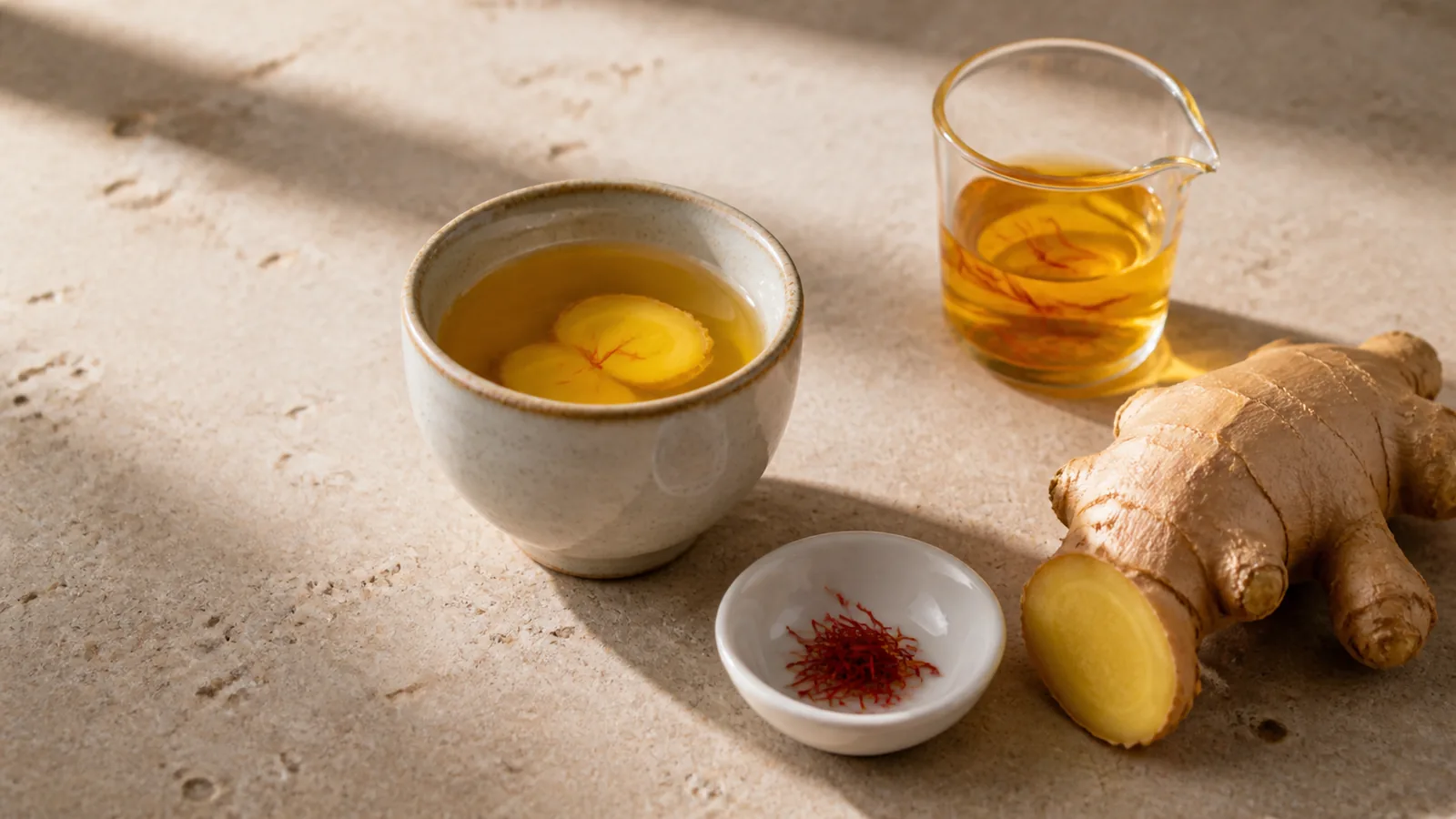
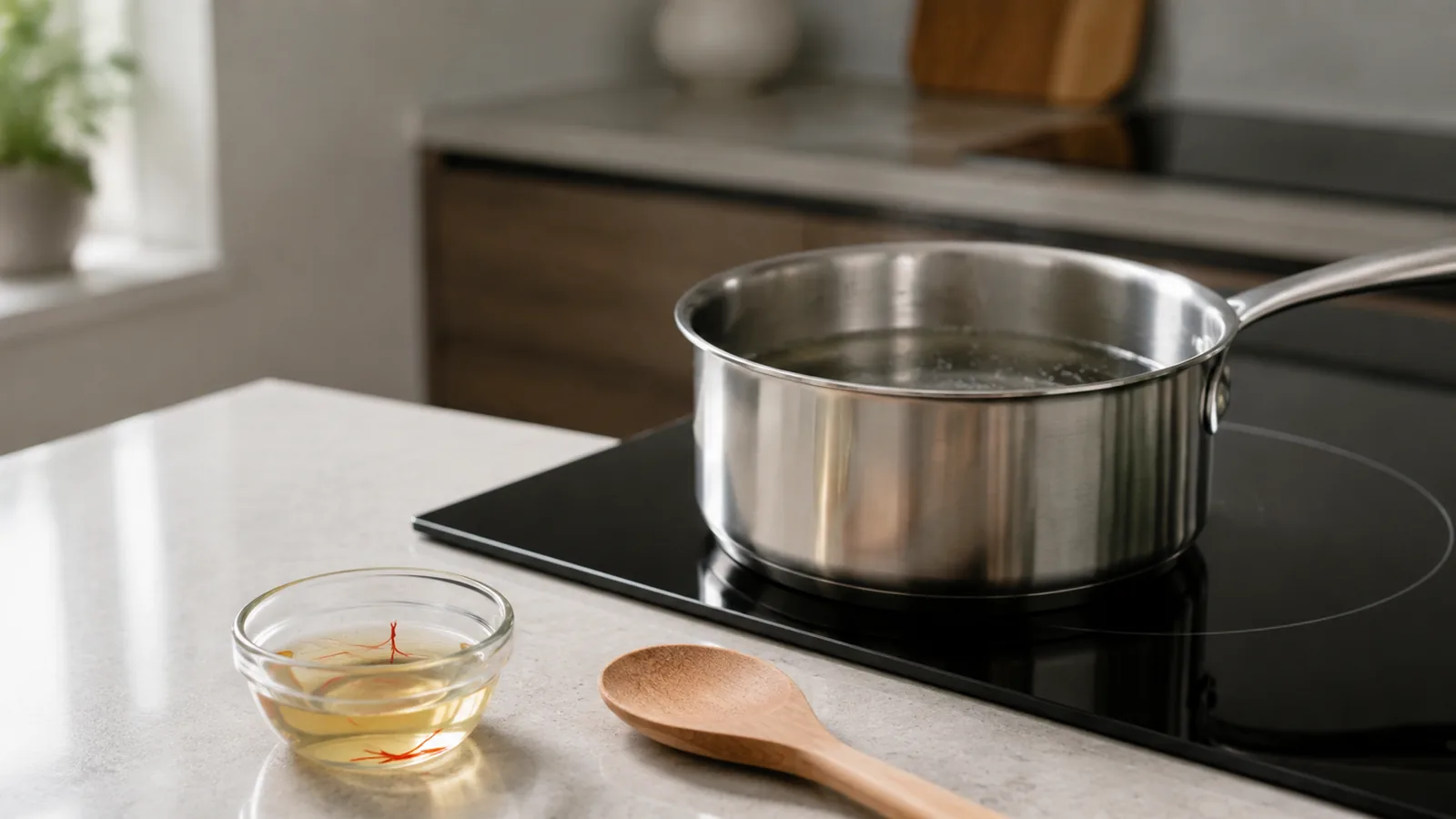
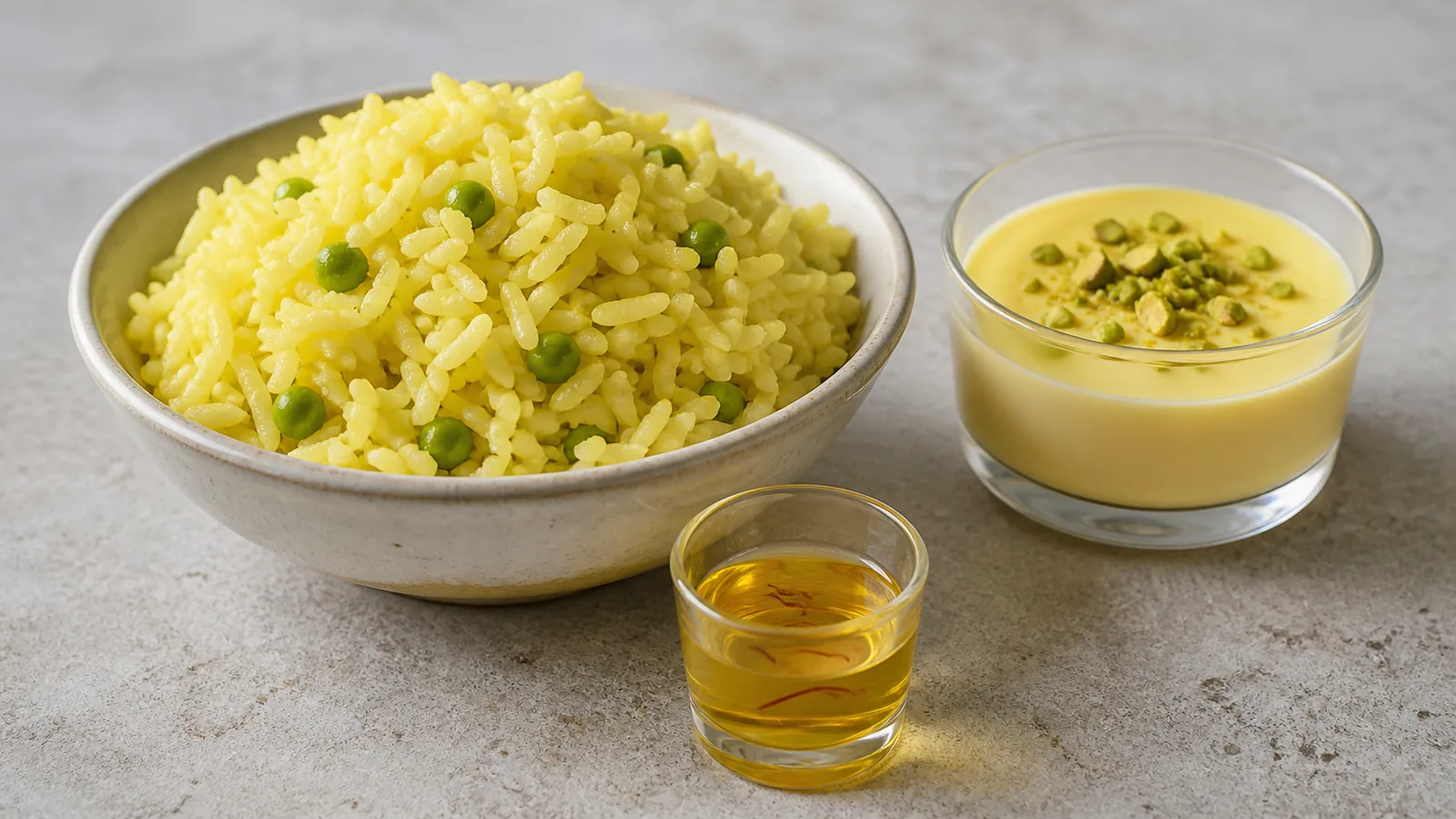
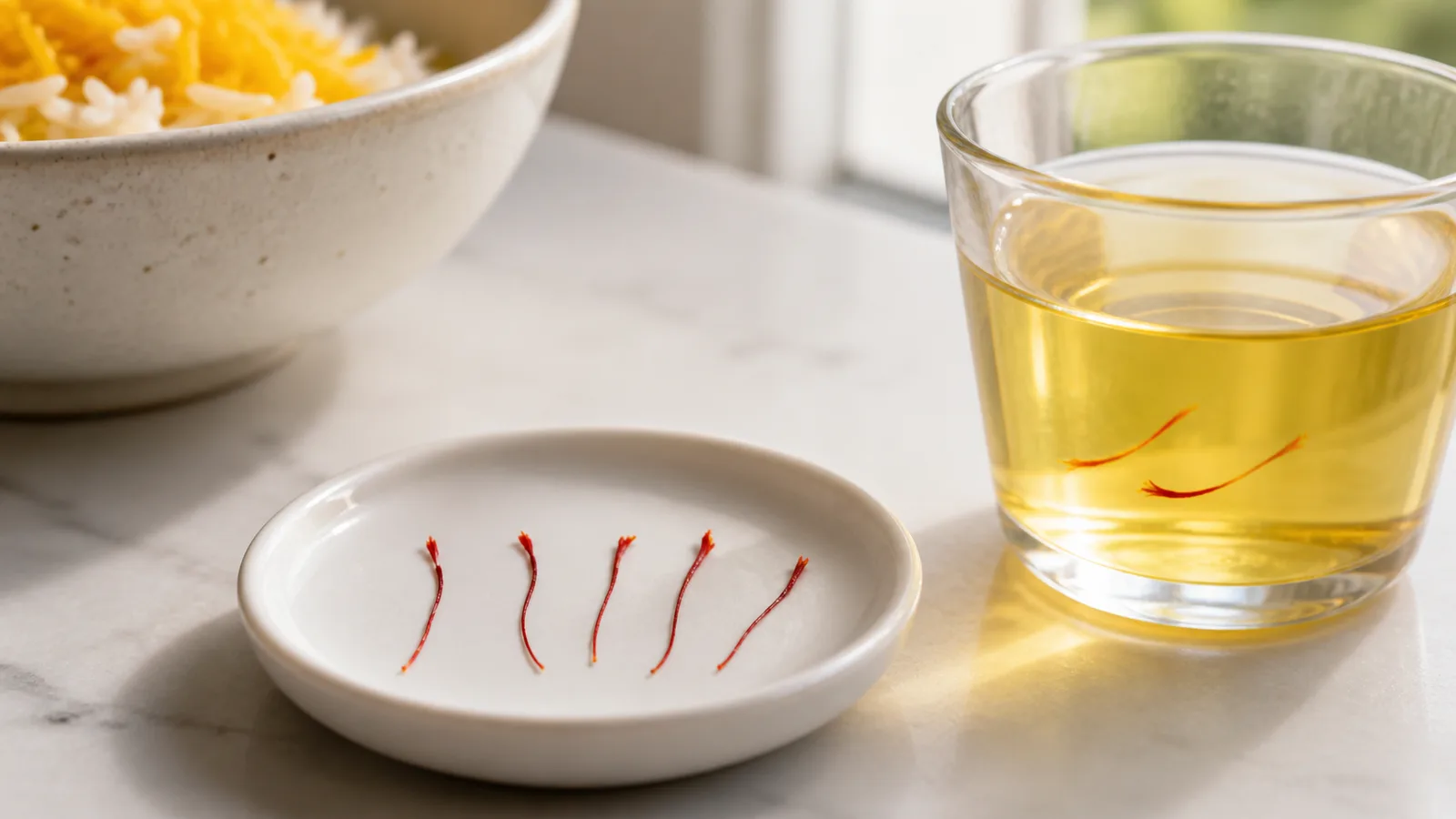
Blooming a few threads in warm water before adding them to rice, milk, or tea releases colour and aroma quickly. That is a culinary technique, not a way to reproduce a clinical extract. A homemade drink does not have a verified crocin or safranal concentration, and stronger colour does not prove a stronger health effect.
The old range of 30–200 milligrams should not be treated as a routine daily recommendation. Product standardization and the studied condition matter as much as the number. Multi-gram use is far beyond ordinary culinary exposure and most clinical research.
Safety can change the right timeline
Short clinical trials often report good tolerability, but nausea, digestive upset, dry mouth, reduced appetite, headache, dizziness, and allergic reactions have been reported. Pregnancy, breastfeeding, an upcoming procedure, a previous spice allergy, or regular medication use calls for product-specific advice before a concentrated supplement.
A pharmacist can check potential interactions with psychiatric, neurological, blood-pressure, blood-sugar, blood-thinning, and other medicines. Our detailed guide to saffron side effects explains warning signs and why tea, gummies, extracts, food, and topical products should not be treated as equivalent.
In short, how quickly does saffron work? Culinary effects are immediate; studied health outcomes, when they occur, are usually assessed after weeks of consistent use of a defined product. There is no guaranteed first day, and several popular timelines have never been tested properly. Match the expectation to the evidence and the symptom to the care it needs.
Evidence reviewed
- 2026 meta-analysis of randomized saffron trials for mood, depression, and anxiety
- Twelve-week randomized saffron-extract trial in adults with low mood
- Eight-week randomized saffron-extract trial with acute and longer-term measures
- Four-week randomized saffron-extract mood trial
- Systematic review of randomized saffron trials and sleep quality
- Systematic review of randomized saffron trials and cognitive function
- Meta-analysis of saffron supplementation and inflammatory biomarkers
- Review of saffron safety and toxicology evidence