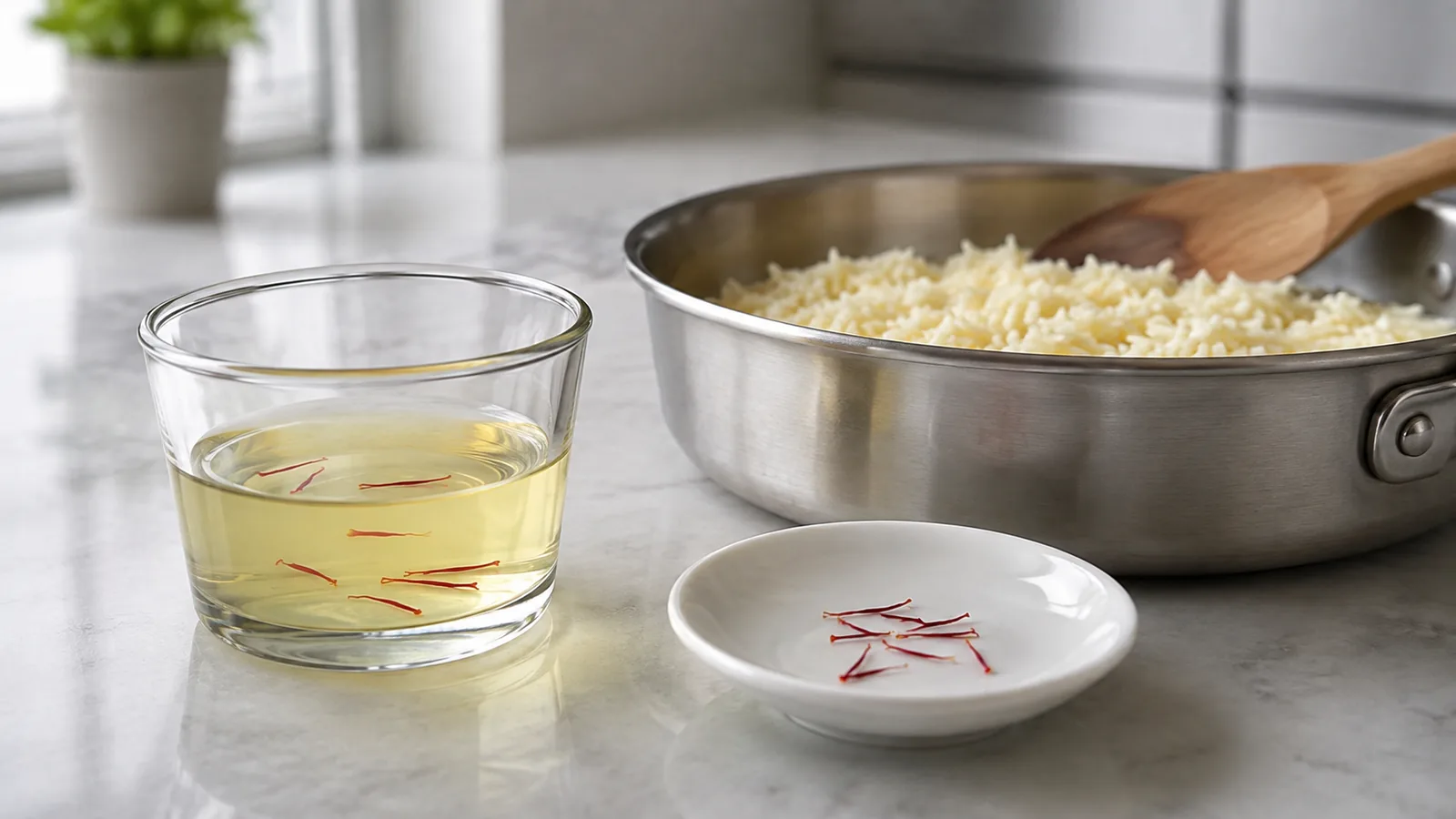
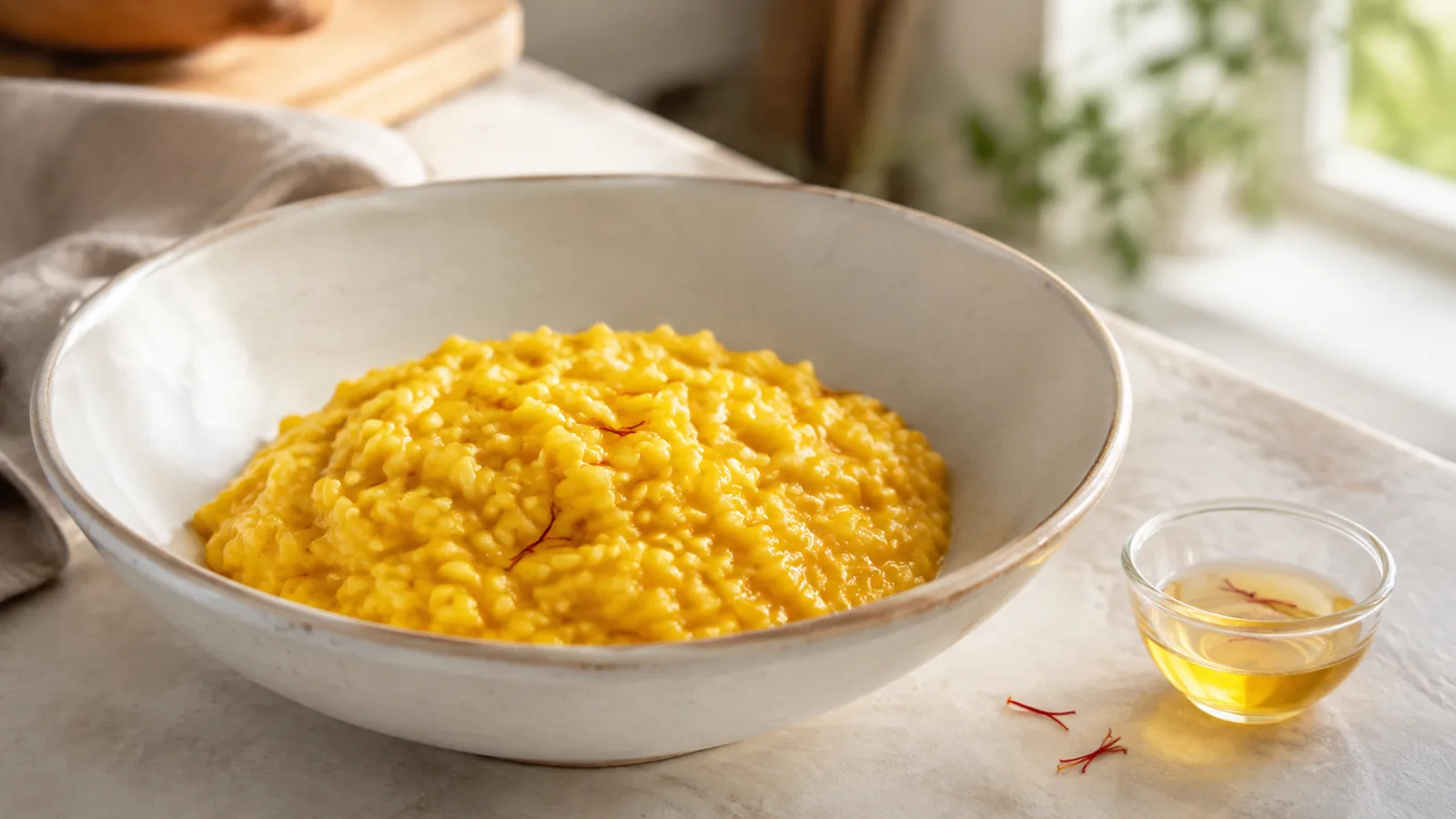
For one cup of uncooked rice, start with 10 to 15 saffron threads, or roughly 0.03 to 0.05 g if you have a scale that can measure such a small amount. Bloom the saffron in one to two tablespoons of warm liquid for 10 to 15 minutes, then add the infusion to the rice. This is enough for a noticeable golden color and aroma without making the dish bitter.
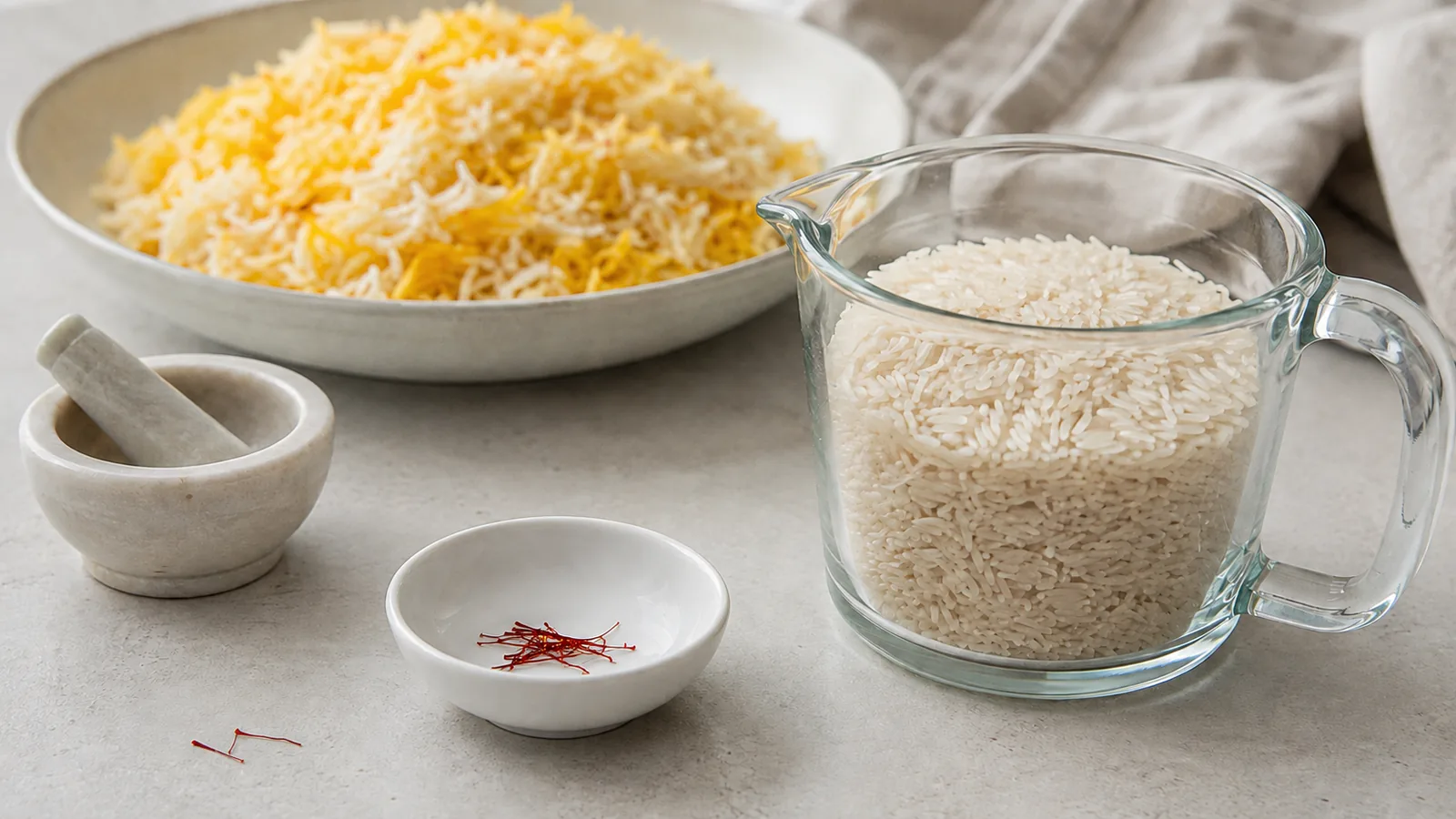
Recommended Quantity: How Much Saffron Should You Use in Rice?
A useful starting range is 10 to 15 threads per cup of uncooked rice. Thread size and saffron strength vary, so this is guidance rather than a rigid rule. Thin threads from one batch may weigh far less than thick threads from another.
- 1 cup uncooked rice: begin with 10 to 15 threads.
- 2 cups uncooked rice: use about 20 to 30 threads.
- 3 to 4 cups uncooked rice: begin with 30 to 50 threads, then adjust for the recipe and the saffron.
These amounts suit everyday pilaf, plain saffron rice and many biryani recipes. A large celebration dish with strongly seasoned meat may need a little more, while a delicate side dish may need less. More saffron is not automatically better: an excessive dose can taste medicinal or bitter and can obscure the rice itself.
Why Thread Counts Are Only a Starting Point
Counting threads is convenient, but it is not exact. One long stigma may be several times the size of a broken fragment. Age, storage and grade also affect aroma and color. If you cook the same dish regularly, weighing the saffron and noting the result gives more repeatable portions.
For a first attempt, stay at the lower end of the range. You can strengthen the next batch after tasting it, but you cannot remove saffron once it is in the pot.
How to Infuse Saffron
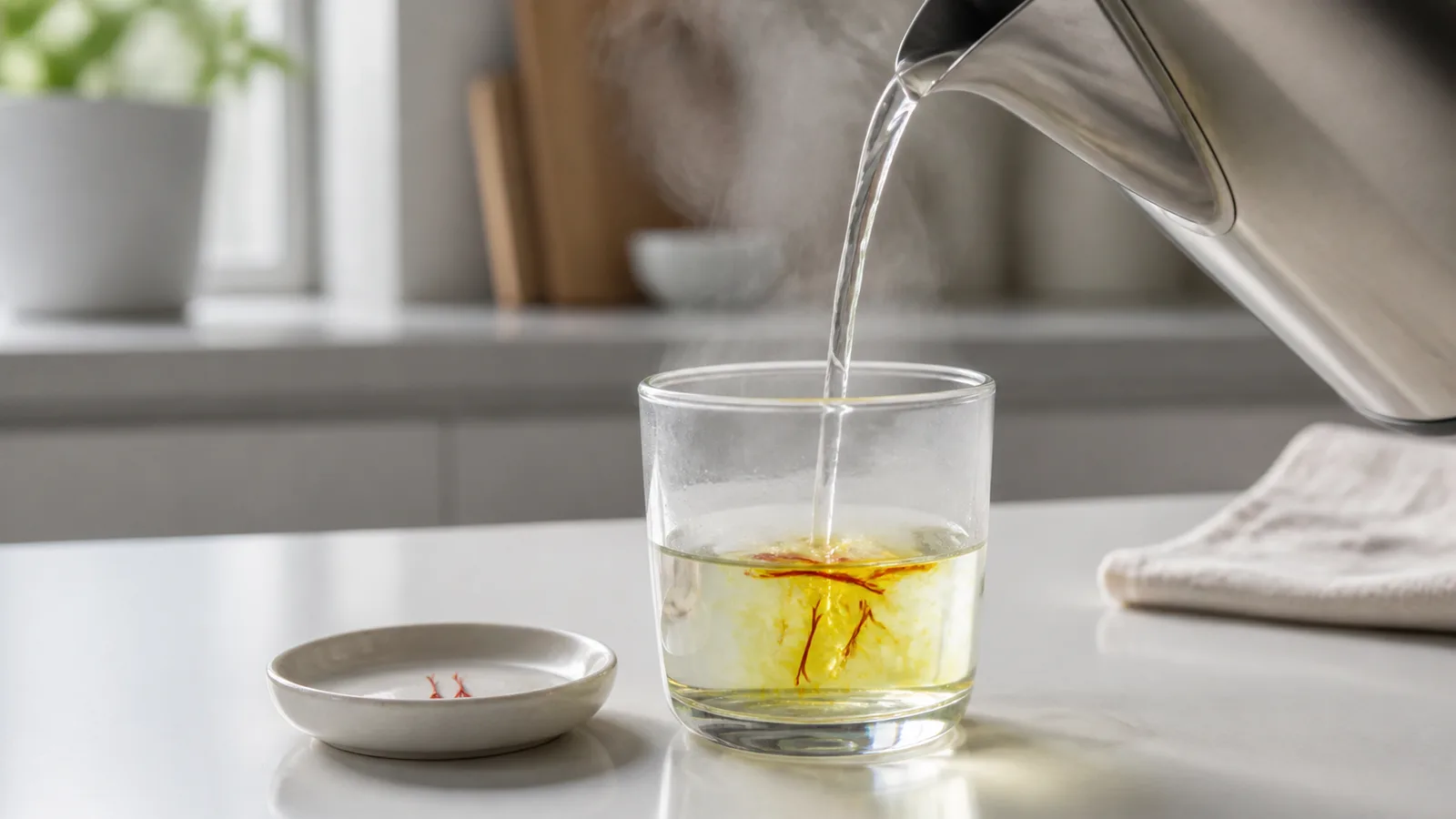
Blooming helps a small quantity spread through a much larger volume of rice. Gently crush the measured threads between clean fingers or with a small mortar. Add one to two tablespoons of warm water, milk or unsalted broth, cover the cup and leave it for 10 to 15 minutes.
The liquid should be warm rather than boiling. Use the infusion and the softened threads; there is no need to strain them out. A concentrated bloom is preferable to a full cup of liquid, which can alter the rice-to-water balance and soften cooked grains.
Water, Milk or Broth?
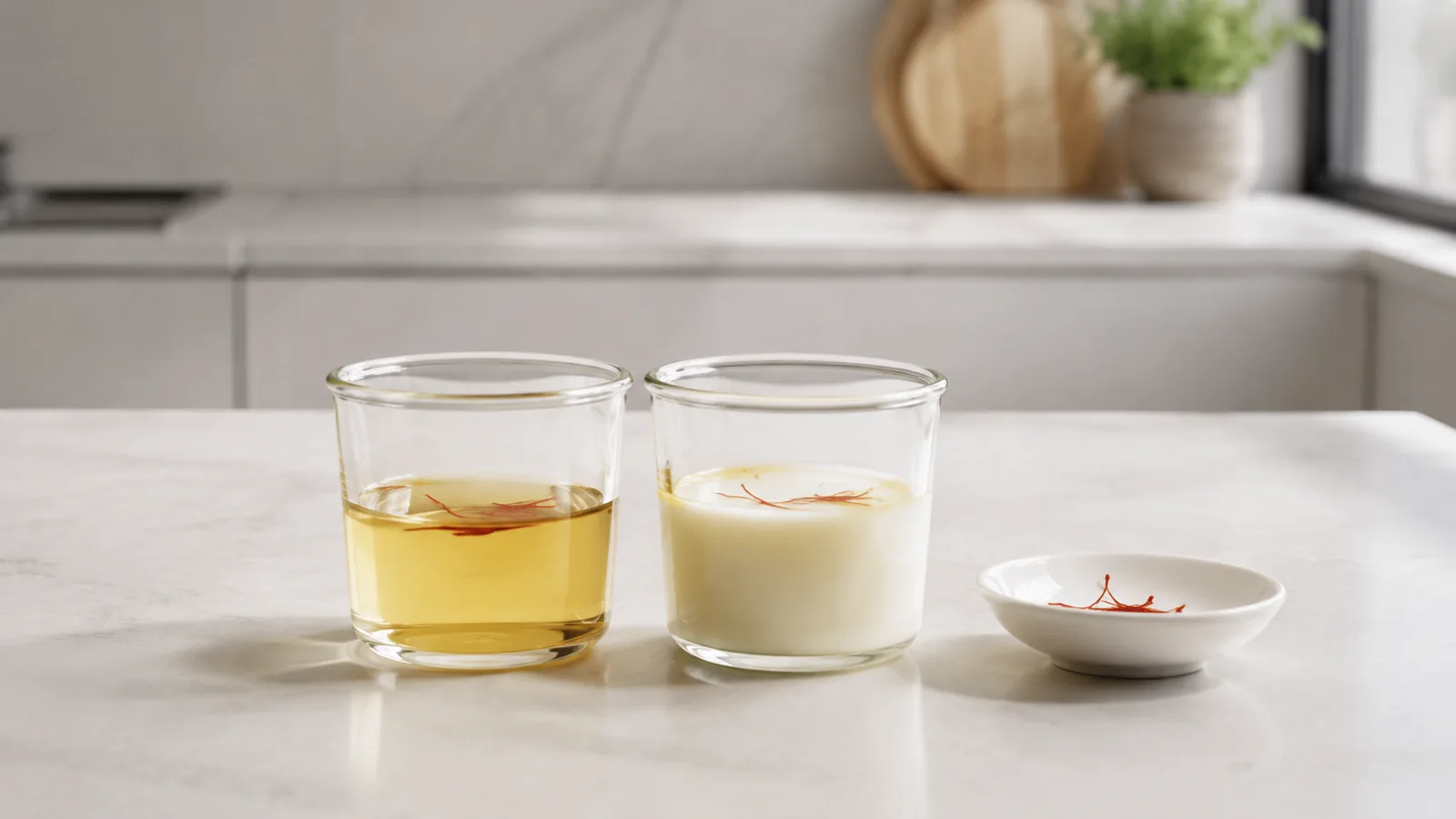
Warm water is the most neutral choice and makes it easy to judge saffron’s own aroma. Milk adds a slightly richer finish, while unsalted broth can work in a savory pilaf when its flavor already belongs in the recipe. For biryani, the separate guide to choosing saffron milk or water explains how the liquid affects the finished pot.
When to Add Saffron to Rice
The best moment depends on the style of rice. For a simple absorption-method rice, add the bloom with part of the measured cooking liquid. For steamed Persian rice, mix a small portion of the cooked rice with the infusion and spoon that golden rice over the white grains. In layered biryani, drizzle the bloom in narrow streaks before the final covered steam.
Avoid pouring the entire infusion into one spot. Several small additions give a more even aroma while preserving attractive white-and-gold variation. Gentle folding is enough where mixing is required; vigorous stirring can break long grains.
Adjust the Amount to the Dish
Plain Saffron Rice
Use the lower or middle part of the range when saffron is the main seasoning. The cleaner background makes its floral, honeyed and lightly bitter character easy to notice. Butter, ghee or olive oil can round out the aroma, but only a modest amount is needed.
Pilaf and Mediterranean Rice
Stock, onions, herbs, nuts and dried fruit all compete for attention. Begin with the standard amount, taste the finished dish and make a note for next time. Do not keep adding dry threads late in cooking; they will not have enough moisture or time to release evenly.
Biryani
Biryani often contains assertive spices, browned onions, meat or vegetables. A pot made with two to three cups of uncooked rice may therefore use 25 to 40 threads, depending on the strength of the saffron and how prominent you want it to be. Distribution through the layers matters as much as the total dose.
Tips for Perfect Saffron Rice
Good saffron in rice recipes comes from careful extraction, not from scattering extra threads for appearance. Measure before crushing, bloom in a small covered cup and rinse that cup with a spoonful of the recipe’s cooking liquid so none of the infusion is left behind.
If you want a clear starting recipe rather than a ratio, follow this saffron rice recipe for four people. Keep notes on the rice quantity, saffron amount and brand or batch. That small habit is more useful than trying to remember whether a previous pinch was large or small.
How to Tell Whether You Used Enough
Judge the cooked rice by aroma and taste before judging it by color. The fragrance should be clear when the lid is lifted, and the flavor should remain delicate rather than harsh. A very bright yellow dish is not proof that it contains more or better saffron; some recipes also contain turmeric or food coloring.
If the aroma is faint, first check the blooming method and storage. Saffron kept open beside heat or sunlight can lose strength. Adding more of a tired batch may contribute color without the fragrance you expected.
Common Measuring Mistakes
- Using a heaped pinch without counting or weighing: the amount can change dramatically from one cook to the next.
- Adding too much at once: strong bitterness is difficult to correct.
- Skipping the bloom: dry threads can leave concentrated spots and weak overall distribution.
- Using too much blooming liquid: extra moisture can disturb the rice texture.
- Chasing a uniform yellow color: saffron rice can be aromatic and appealing with natural white-and-gold variation.
A Reliable Starting Formula
Begin with 10 to 15 threads for each cup of uncooked rice. Bloom them in one to two tablespoons of warm liquid for 10 to 15 minutes, then distribute the infusion according to the cooking method. After serving, note whether you would prefer a slightly stronger or lighter result next time.
Because the spice varies from batch to batch, that measured adjustment is better than treating any thread count as universal. If you need whole threads for your next dish, compare the available options in the saffron shop.