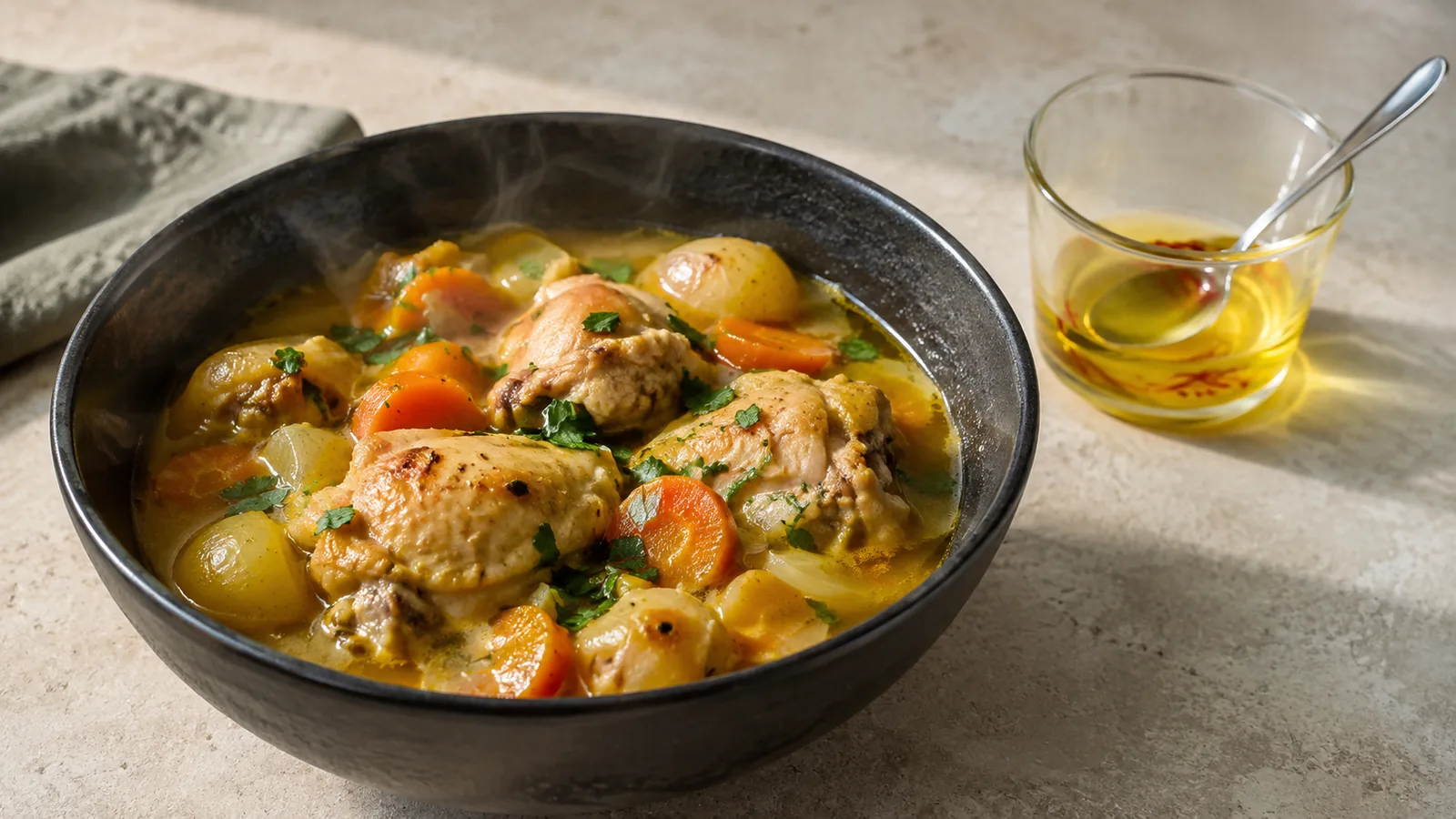
Use warm milk for a richer biryani and warm water for a lighter or dairy-free one. Both extract saffron well. For most pots, bloom a small pinch in two to four tablespoons of liquid for 10 to 15 minutes, then drizzle it over the rice during layering before the final covered steam.
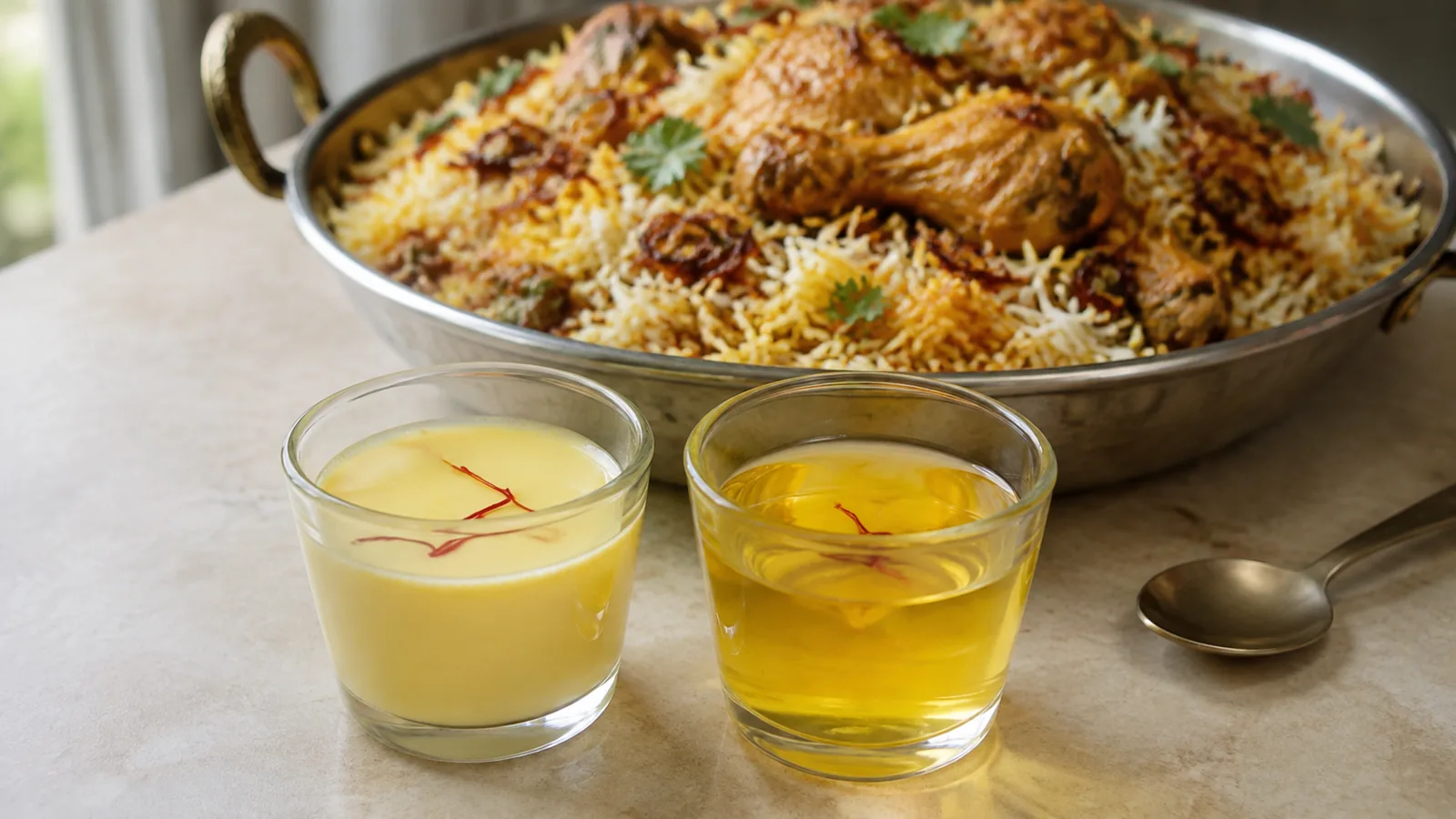
Should You Use Milk or Water for Saffron in Biryani?
There is no single correct liquid for every biryani. Saffron milk for biryani adds a little dairy richness and suits recipes already built around yoghurt, ghee or cream. Saffron water for biryani gives a clean infusion, adds no dairy and is less likely to make a carefully measured rice dish heavy.
The amount of liquid is more important than choosing a winner. A concentrated saffron liquid for biryani spreads aroma and colour without making the rice wet. A full cup of milk or water would change the cooking balance; a few spoonfuls will not.
Saffron Milk for Biryani
Warm whole milk is a popular choice because its fat softens saffron’s bitter edge and makes the floral aroma feel rounder. The quantity is small, so it should not turn the rice creamy. Saffron soaked in milk simply carries the spice over the upper and middle layers.
How to Make Saffron Milk for Biryani
- Lightly crush 20 to 30 saffron threads.
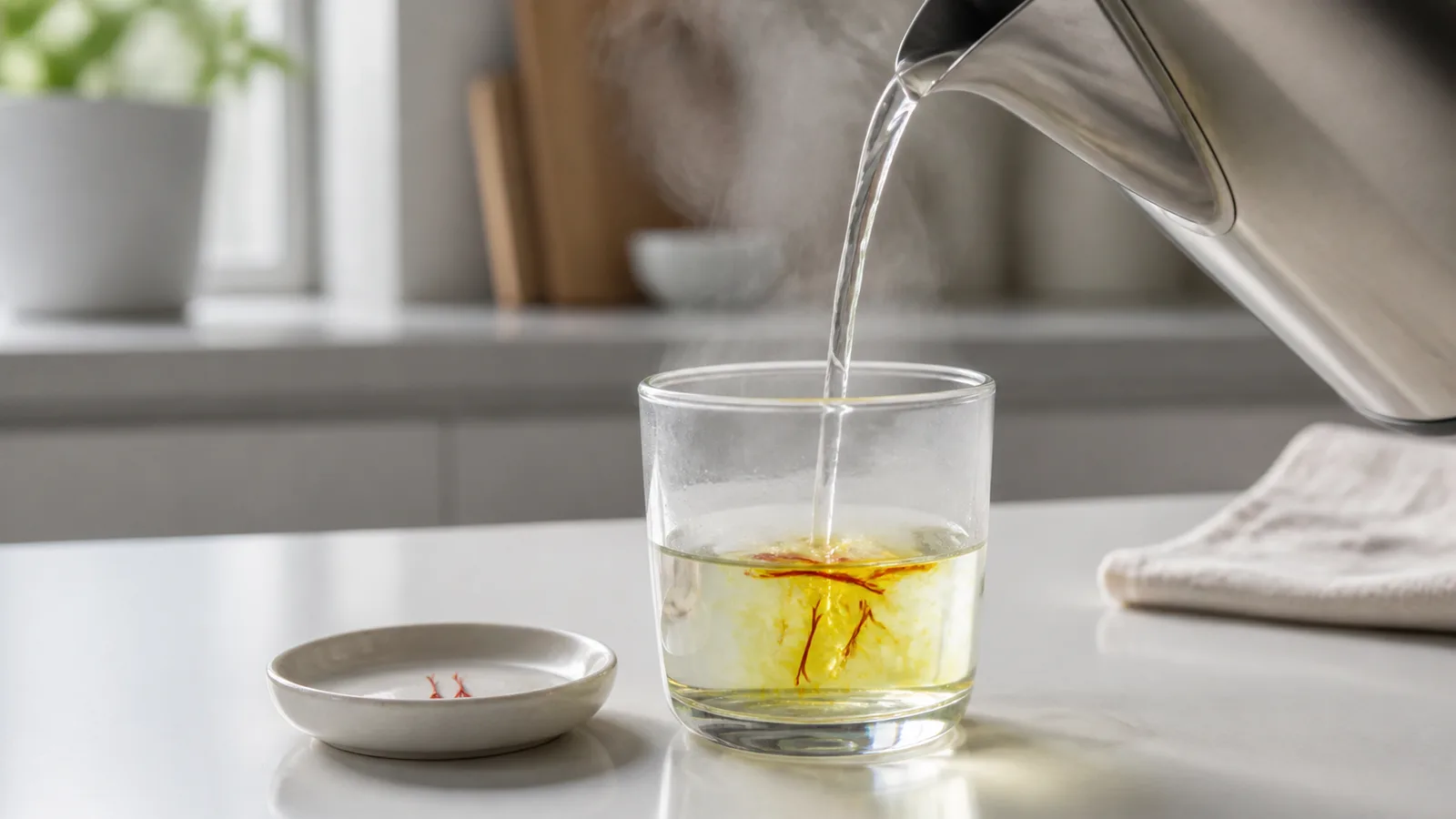
- Warm two to four tablespoons of milk until hot to the touch but not boiling.
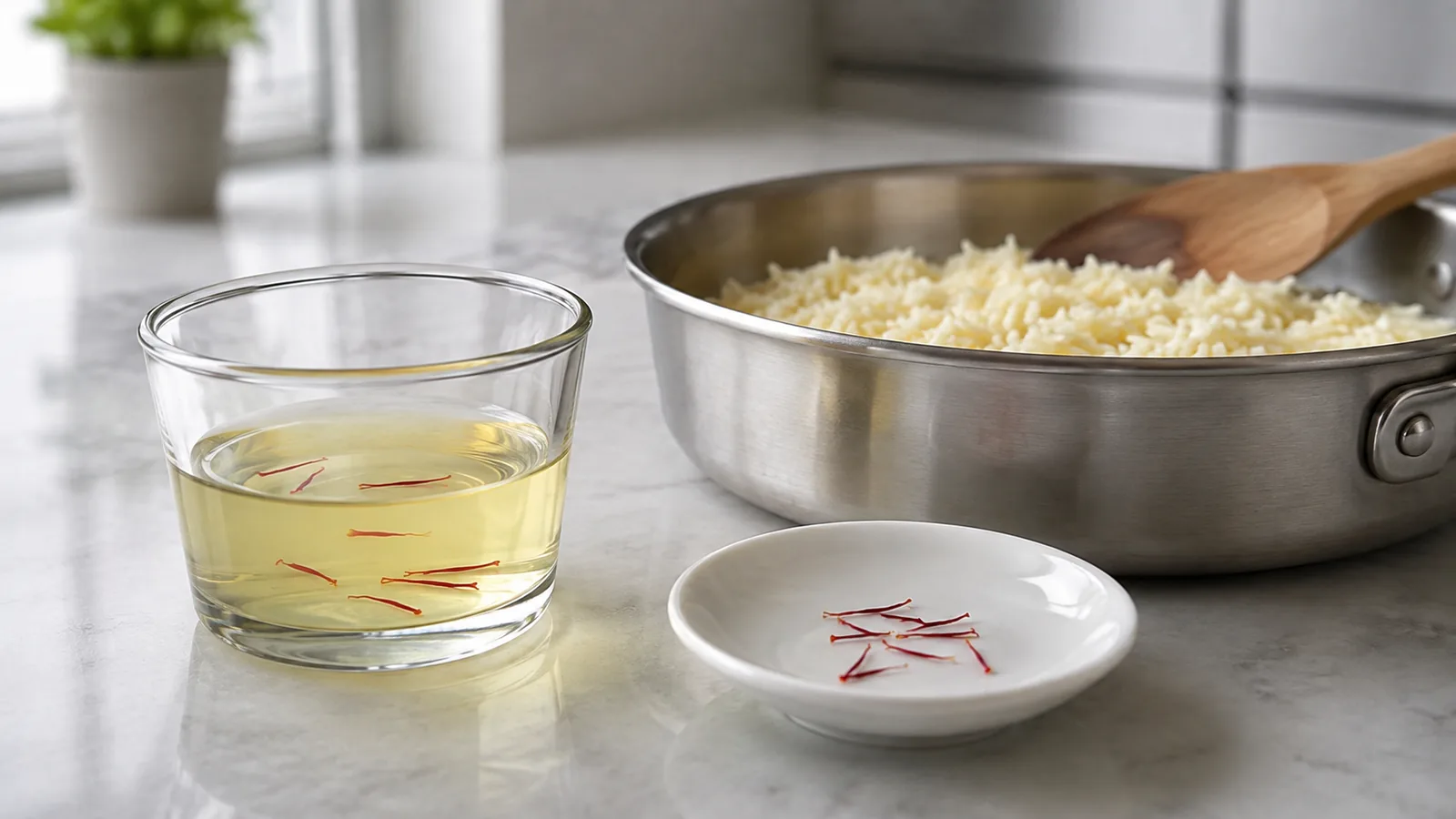
- Add the threads, cover and leave for 10 to 15 minutes.
- Drizzle the biryani saffron milk in narrow streaks over the rice during layering.
For a small pot, 1–2 tablespoons can be enough. The infusion should be concentrated and fragrant, not a large volume poured into one place.
Kesar Milk for Biryani
Kesar is another name for saffron, so kesar milk for biryani is the same basic infusion. The label does not call for a different method: use genuine threads, warm milk and time for blooming.
Saffron Water for Biryani
Water is the straightforward choice for a dairy-free biryani or a recipe that already contains plenty of ghee, yoghurt or richness from meat. It shows saffron’s natural aroma clearly and gives precise control over added moisture.
How to Make Saffron Water for Biryani
- Crush a small measured pinch of saffron.
- Add two to four tablespoons of warm water.
- Cover for 10 to 15 minutes, until the water is golden and aromatic.
- Use the liquid and the softened threads during layering.
Very hot tap water is unnecessary, and a rolling boil is not helpful. Warm water extracts the spice while making the infusion easy to handle.
How to Soak Saffron for Biryani
The method is the same whichever liquid you choose: measure, crush gently, add warm liquid, cover and wait. Covering keeps the aroma close to the infusion. Use both the liquid and threads rather than straining away part of the spice.
The water or milk should turn yellow to deep gold gradually. Colour alone does not prove strength or authenticity, so smell the bloom as well. It should have a distinct floral, hay-like aroma and a mild bitter edge.
Can You Boil Saffron in Milk?
You can warm milk before adding saffron, but do not hard-boil the threads for several minutes. Prolonged high heat can flatten the fragrance and may form a skin on the small quantity of milk. Warm it gently, remove it from the heat, add saffron and let it stand covered.
If the milk accidentally reaches a brief boil, the batch is not automatically ruined. Let it cool slightly before adding the threads, then judge the finished infusion by aroma rather than discarding it on principle.
When to Put Saffron in Biryani
The best time is during layering, just before the final low, covered steam or dum. Drizzle the infusion over selected parts of the top rice layer and, for a deep pot, between one middle layer. Do not stir the entire pot after layering.
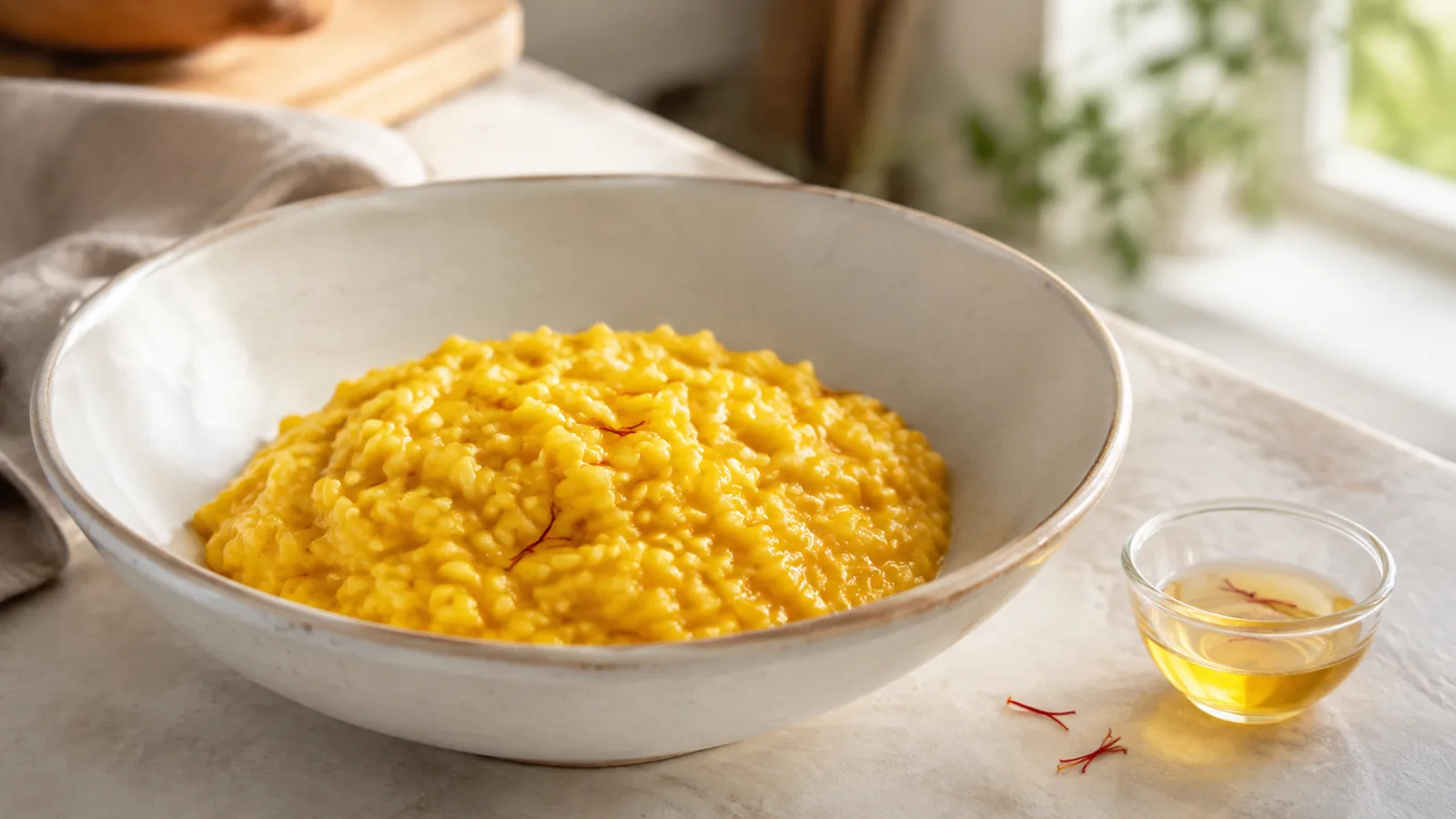
This method preserves the white-and-gold contrast that makes saffron biryani attractive. It also prevents one central puddle from making a small patch wet while leaving the rest unscented.
The separate guide to when to add saffron to biryani covers pakki, kacchi and one-pot timing in more detail.
How to Use Saffron in Biryani
- Prepare the biryani’s meat or vegetables and par-cook or cook the rice as the chosen recipe requires.
- Build the lower rice and filling layers without pressing them down.
- Drizzle saffron milk or water in several thin streaks across the upper rice.
- Add restrained amounts of the recipe’s browned onions, herbs, ghee or other finishing elements.
- Cover tightly and finish with gentle heat.
- Rest the biryani briefly, then lift portions carefully so white and golden rice remain visible.
How to add saffron to biryani is therefore mainly a question of distribution. Several small streaks work better than flooding the whole surface or stirring the bloom through every grain.
How Much Saffron for Biryani?
For a family pot using about 500 g uncooked rice, begin with 20 to 30 threads. Thread size and strength vary, so treat this as a starting point. A heavily seasoned meat biryani may need a little more than a mild vegetable version, but increasing saffron cannot repair poor blooming or uneven placement.
For more dose detail across different rice quantities, see how much saffron to put in rice.
Does Biryani Have Saffron?
Some biryanis use saffron and some do not. Regional traditions, household recipes, availability and cost all matter. Saffron can provide aroma and golden highlights, but it is not the sole test of whether a rice dish is a genuine biryani.
When a recipe does use saffron, it should complement the rice, browned onions, herbs, spices and filling. It does not need to dominate the whole pot.
Saffron Milk Substitute for Biryani
If the issue is dairy, warm water is the best substitute for saffron milk. Unsweetened plant milk can work, but coconut or strongly flavoured alternatives will change the dish. Water keeps the result neutral.
If the issue is missing saffron, no spice reproduces its aroma. Turmeric can add yellow colour, but it has a different flavour; use it only when the recipe can support turmeric, not as a claim that it is saffron. A small amount of safflower may also add colour without supplying saffron’s characteristic fragrance.
Common Mistakes
- Using too much liquid: excess milk or water can soften carefully cooked rice.
- Boiling the threads hard: high heat is unnecessary for a small infusion.
- Adding dry saffron at serving time: it has little chance to spread.
- Pouring in one spot: this creates uneven colour, aroma and moisture.
- Stirring after layering: grains can break and the white-and-gold pattern disappears.
- Judging only by colour: a vivid yellow can come from turmeric or colouring.
Choosing Saffron for Biryani
Whole red threads are easier to inspect, measure and bloom than an unidentified powder. Keep them sealed, dry and away from heat and light. If you need a fresh batch, compare thread-form options in the saffron shop.
The Simple Choice
Choose milk when you want a slightly richer saffron note and the recipe welcomes dairy. Choose water for a lighter, dairy-free or already-rich biryani. In either case, bloom a small pinch for 10 to 15 minutes, drizzle it during layering and finish with gentle covered heat. Using saffron in biryani successfully depends more on concentration, timing and distribution than on declaring milk or water universally best.