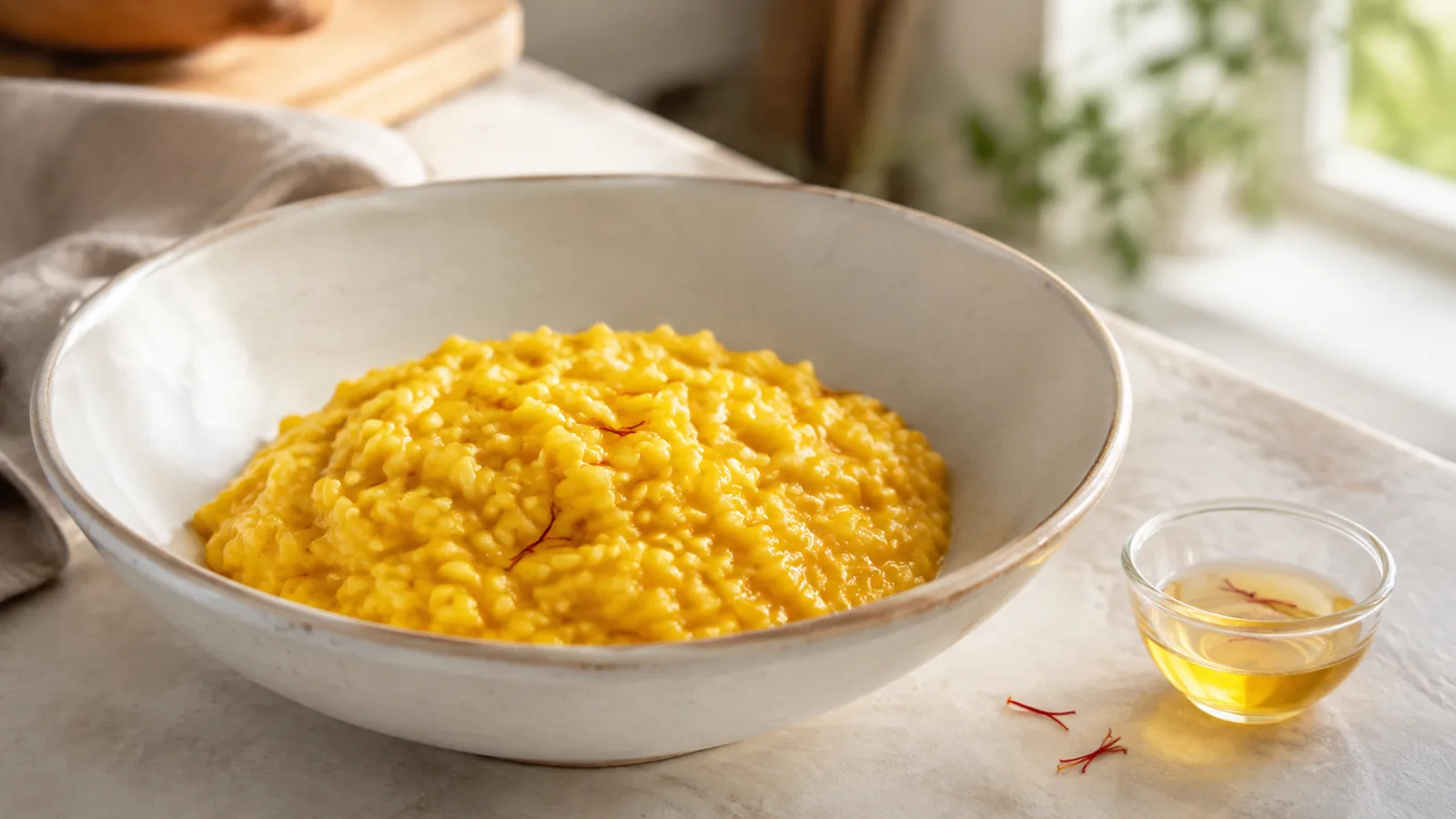
The most reliable way to put saffron in food is to measure a small portion, crush the threads lightly, and bloom them in a few spoonfuls of warm water, milk or broth for 10 to 15 minutes. Add both the golden liquid and the softened threads at a point when they can spread through the dish without being boiled hard for a long time.
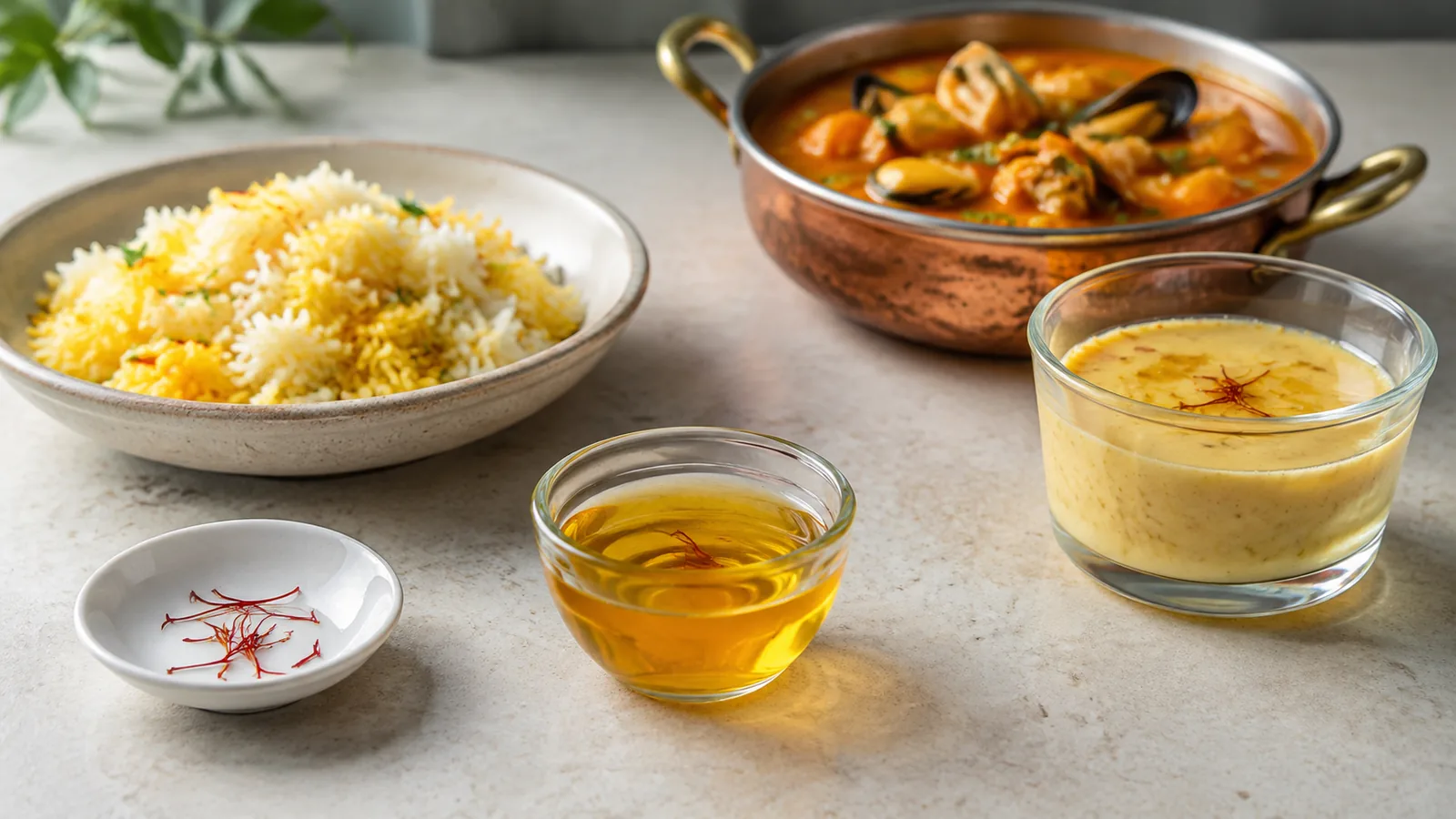
How to Use Saffron in Cooking
Using saffron in cooking is less complicated than its reputation suggests. The spice needs moisture, a little time and thoughtful placement. A concentrated infusion distributes more evenly than dry threads scattered over a large pot.
- Measure the saffron before you begin cooking.
- Gently crush the threads between clean fingers or with a small mortar.
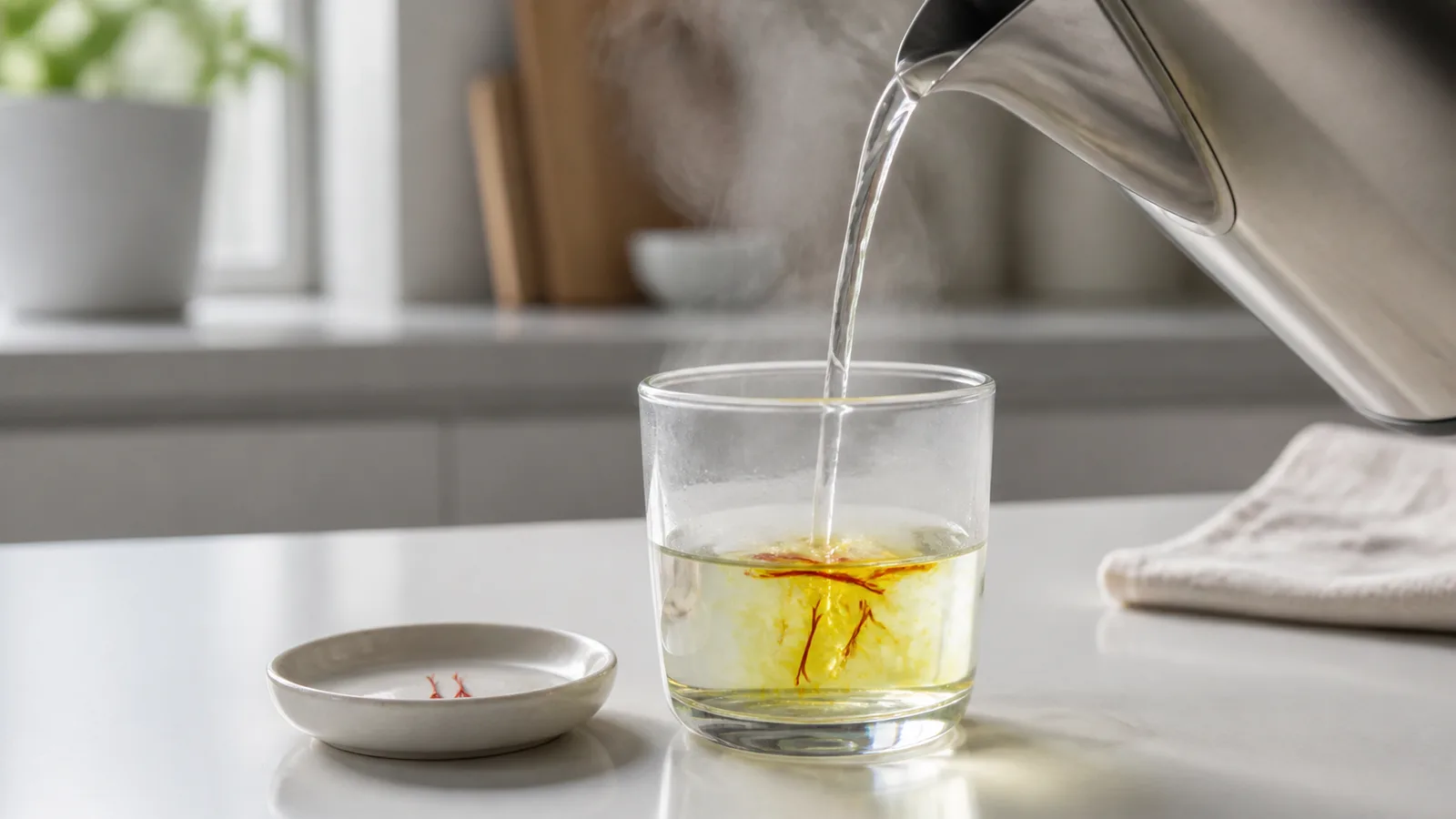
- Add a few spoonfuls of warm liquid that suits the recipe.
- Cover and leave the infusion for 10 to 15 minutes.
- Add the liquid and threads to the food, distributing them rather than pouring everything into one spot.
This basic method works for rice, stews, sauces, soups, desserts and drinks. What changes from dish to dish is the blooming liquid and the moment when you add it.
Preparing Saffron for Cooking
If you are wondering how to prepare saffron for cooking, begin with whole threads: they are easiest to inspect and measure. Crush them only enough to expose more surface area; turning them into dust is unnecessary. Use warm liquid, not a rolling boil. Covering the cup helps keep the aroma close to the infusion while it develops.
Choose the Blooming Liquid
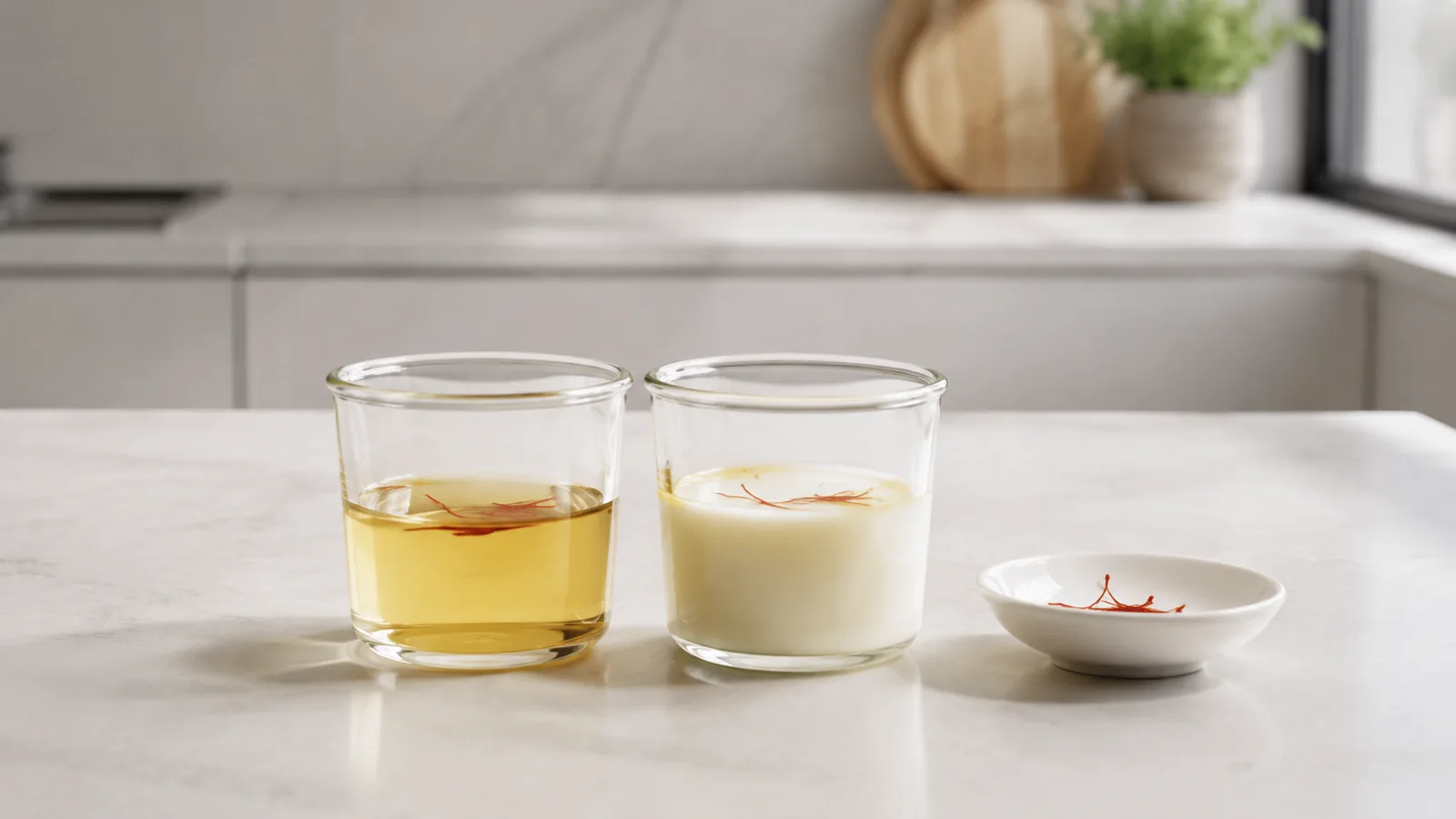
- Warm water: neutral and suitable for rice, vegetables, soups and dairy-free dishes.
- Warm milk or cream: useful for custards, ice cream, rice pudding and other dairy-based recipes.
- Unsalted broth: appropriate for a savory pilaf, sauce or stew when broth already belongs in the dish.
Keep the quantity small so it does not upset the recipe’s liquid balance. One to three tablespoons is enough for many home-cooking portions. For a closer comparison of blooming methods, see the best way to brew saffron.
How Much Saffron to Add
There is no single dose for every food. Thread size, saffron strength, serving count and the other seasonings all matter. For a family-sized dish, begin with a small pinch of roughly 15 to 25 threads. Strongly seasoned food may need more; a delicate custard or light broth may need less.
Start modestly and record the amount if you plan to repeat the recipe. Too much can introduce a medicinal bitterness, while too little may disappear behind garlic, chile or a dense spice mixture. Rice cooks can use the more specific guide to measuring saffron for rice.
When to Add Saffron to Food
Add the infusion early enough to spread, but avoid prolonged aggressive boiling. In a quick sauce or soup, stir it in during the final third of cooking. In a long stew, adding it closer to the end preserves more of the aroma while still giving the liquid time to mingle.
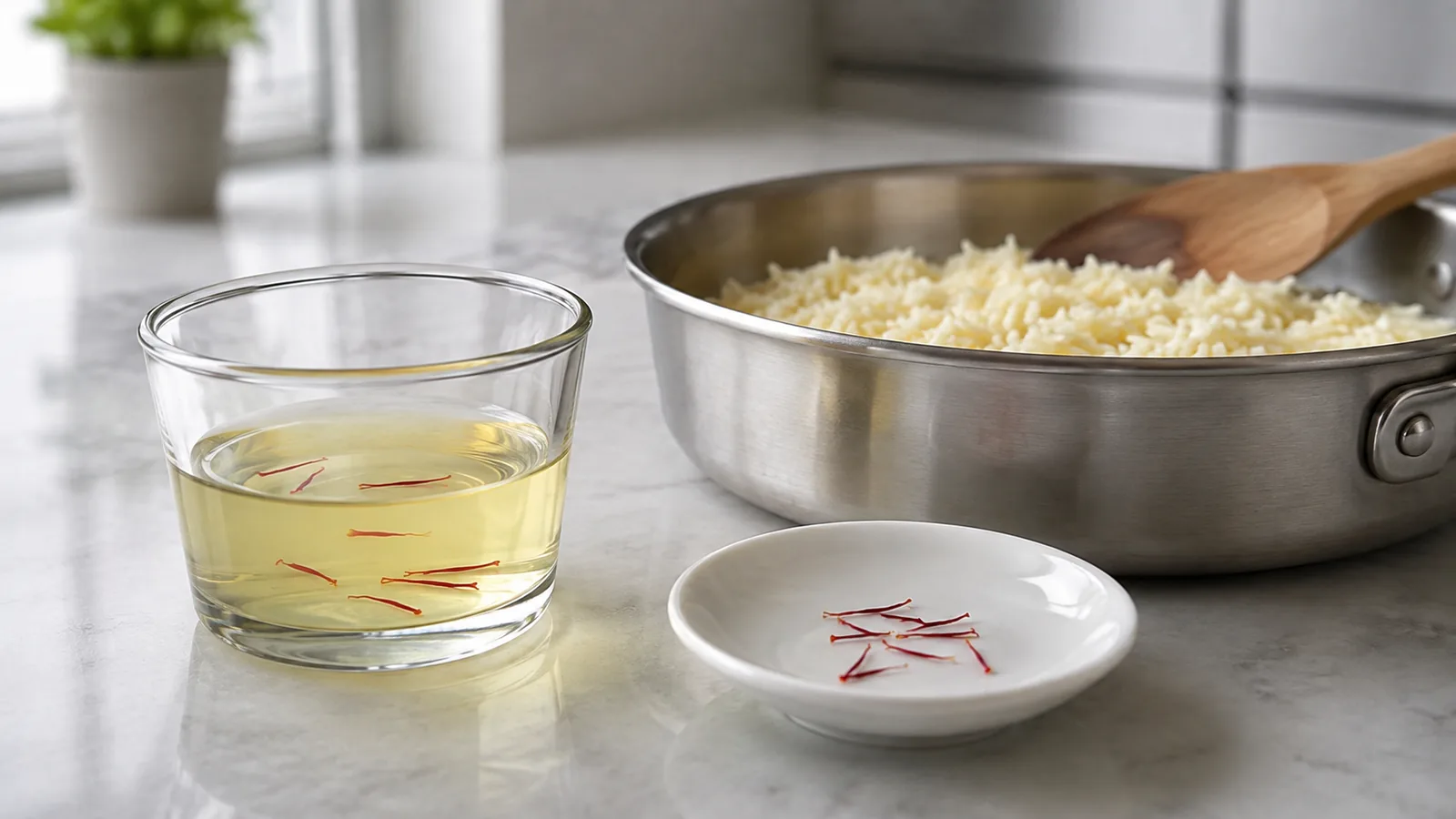
For rice, timing depends on the method. The bloom may go into the measured cooking liquid, be drizzled through biryani layers before the final steam, or be mixed with a small portion of cooked rice for a Persian-style golden topping.
In chilled desserts and drinks, bloom the saffron in a warm component first. Cold milk or cream extracts slowly, and dry threads added at serving time will not distribute well.
Adding Saffron to Dishes
Rice and Pilaf
Use a water or broth infusion and distribute it according to the cooking method. For a white-and-gold appearance, tint only part of the rice rather than stirring until every grain is yellow. Butter or ghee can round out the aroma, but neither replaces proper blooming.
Soups, Stews and Sauces
Choose a spoonful of the recipe’s broth as the blooming liquid, then return it to the pot. Saffron works most clearly when the other seasonings leave it some room; a very hot, smoky or heavily spiced sauce can overwhelm a small dose.
Seafood and Chicken
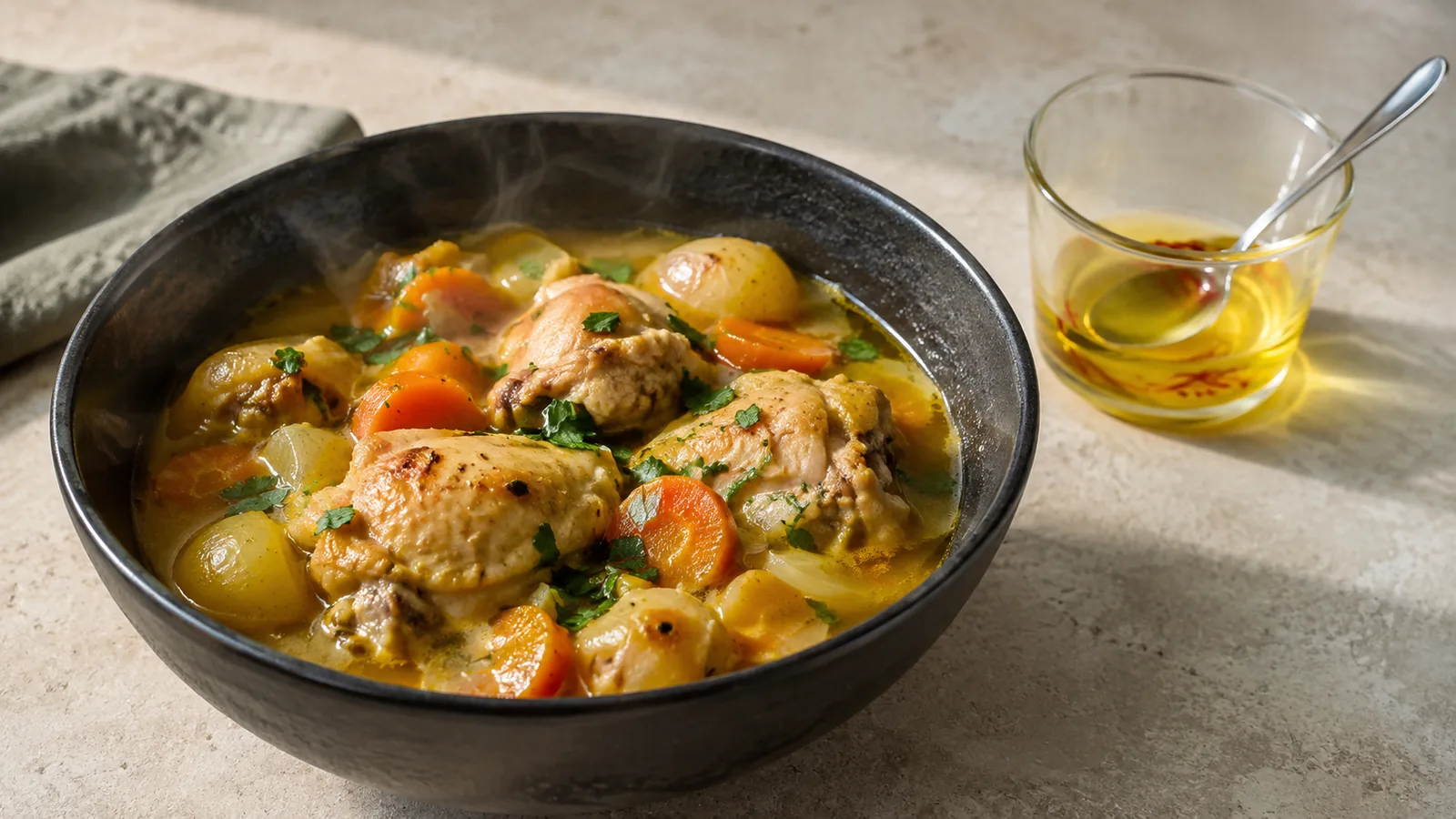
Add the infusion to a sauce, stock or cooking liquid rather than rubbing dry threads over the surface. Saffron pairs naturally with onions, garlic, tomato, citrus, fennel and mild broths, but the supporting flavors should not all be used at once.
Desserts
Bloom saffron in warm milk or cream before it joins a custard, pudding, cake batter or ice-cream base. Saffron is often used in sweet food, but the spice itself is floral, honeyed and gently bitter rather than sugary. The recipe still needs its normal sweetener.
Tea and Other Drinks
A few threads can steep directly in hot water, tea or warm milk. Give them several minutes before judging the result. For a cold drink, prepare a concentrated warm infusion first and let it cool.
Can You Add Saffron Directly?
You can add threads directly to a moist dish, and some traditional recipes do. Blooming is simply more predictable when the quantity is small or the food will not simmer for long. It lets you see and smell the extraction before the saffron is diluted through the recipe.
If you add it dry, crush it gently and place it where there is enough liquid and cooking time for the color and aroma to spread. Avoid sprinkling dry saffron over finished food solely as decoration; intact threads can taste sharply bitter when bitten.
How to Use Kesar in Food
Kesar is another name for saffron, so there is no separate technique. Use genuine red threads, measure them sparingly, bloom them in a suitable warm liquid and add the complete infusion. Products sold as a colored powder may contain other ingredients, so check the label rather than assuming every product called kesar is pure saffron.
Tips for Best Results
- Store saffron sealed, dry and away from heat and light.
- Measure before crushing so the portion does not become guesswork.
- Use the smallest useful volume of blooming liquid.
- Do not hard-boil the threads for several minutes.
- Taste the finished dish before deciding the next batch needs more.
- Judge saffron by aroma and flavor as well as color.
A Simple Rule to Remember
Prepare saffron for food by gently crushing it, blooming it for 10 to 15 minutes and adding the full infusion where it can spread. Match the liquid and timing to the recipe, and begin with less rather than more. That method gives saffron for cooking a fair chance to contribute its aroma, golden color and distinctive flavor without dominating the meal.
If you need whole threads for a recipe, compare the available formats in the saffron shop.