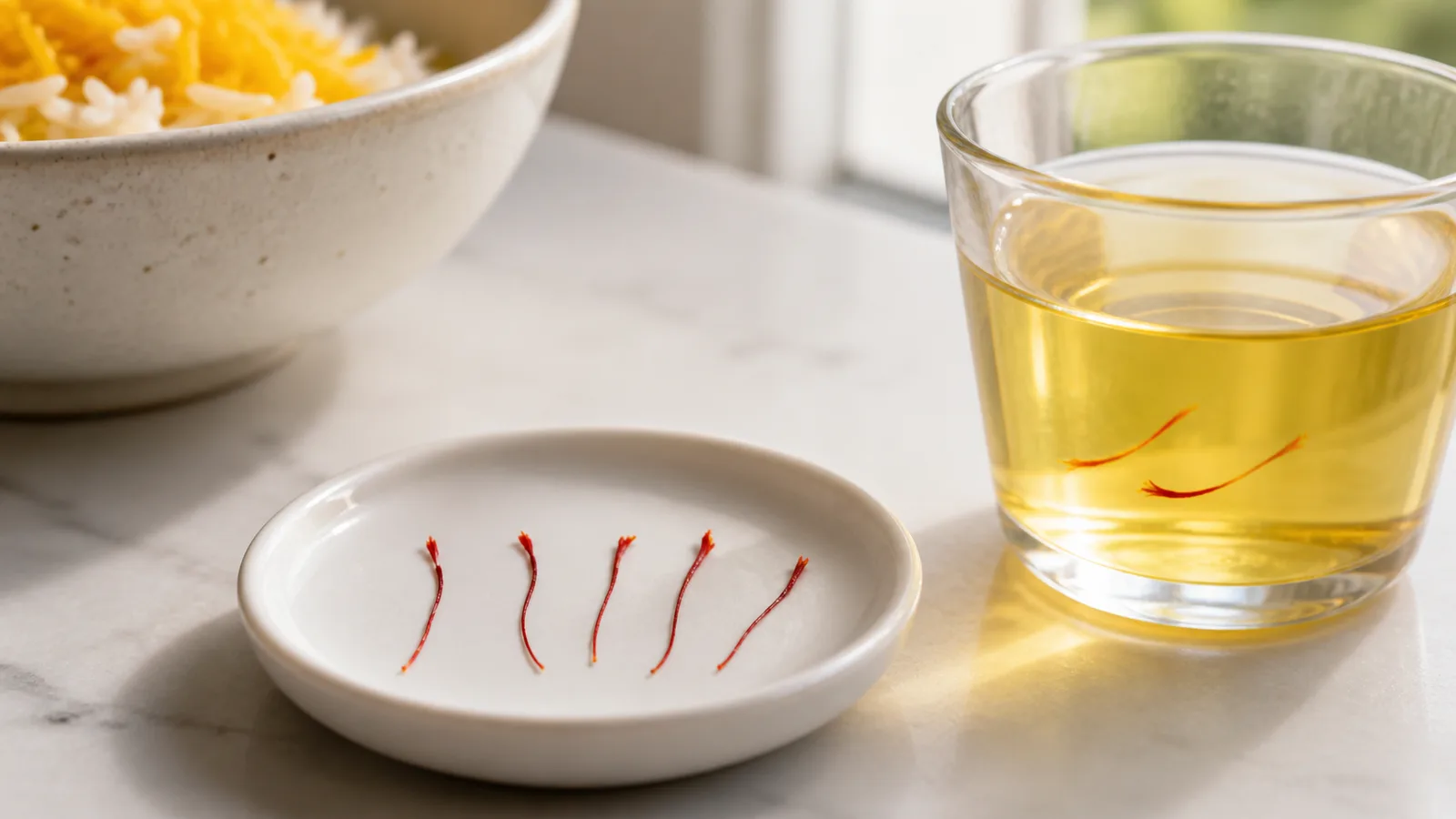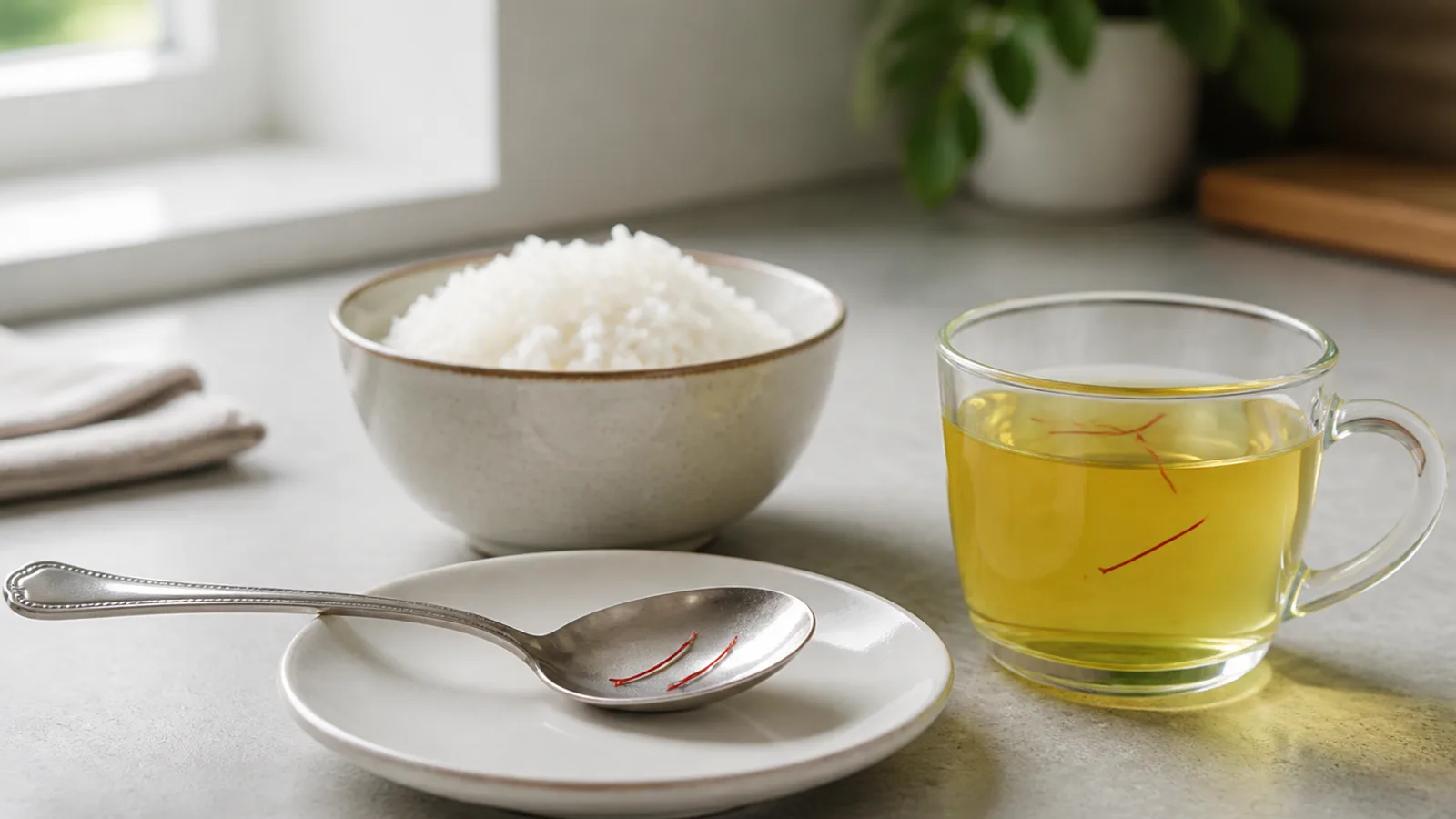
There is no established nutritional requirement for a person to consume a particular amount of saffron every day. For cooking, “enough” means the small amount needed to season the food: usually a few threads for one serving or a small pinch spread through a family dish. A supplement is different. Its form and concentration matter, and its labelled dose should not be converted into a guessed number of threads.
This distinction is important because advice about daily saffron intake often mixes recipe quantities with amounts studied in tablets, powders or extracts. They are not interchangeable.
How much saffron is enough per day?
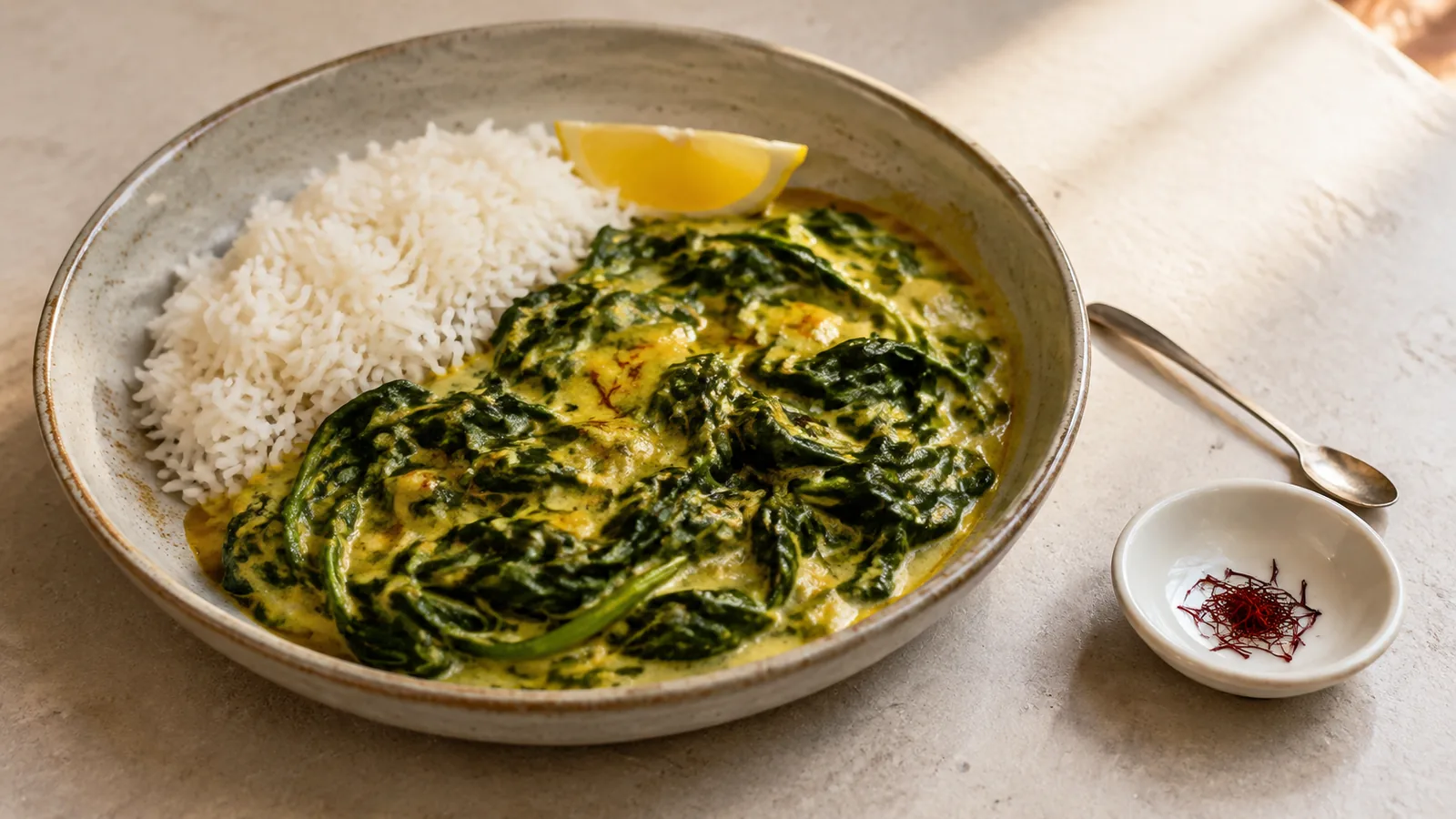
If you use saffron as a spice, you do not need to weigh a daily allowance. Add a modest culinary amount to rice, soup, milk, tea or dessert and let the dish determine the quantity. You may use saffron some days and none on others; it is not an essential nutrient with a daily target.
If you are asking how much saffron per day for a health reason, there is no single answer that is appropriate for every product or person. Clinical studies use defined preparations under a protocol. A whole-thread pinch from a kitchen jar cannot be assumed to match a capsule labelled with a standardised extract.
What does “20 to 30 milligrams” mean?
The old version of this article called 20 to 30 milligrams a recommended daily amount. That wording was too broad. Amounts around this range appear in some clinical research and commercial supplements, but a research dose is not a nutritional recommendation and does not establish that everyone should take it each day.
The question “how many mg of saffron per day?” also cannot be answered by saying “a few strands.” Threads differ in length, thickness and moisture. Powder may contain a different proportion of flower material, while extracts may be concentrated or standardised to particular compounds. Use the product’s own unit and directions rather than converting by eye.
Culinary saffron and supplements are different
Whole threads in food
Culinary use normally distributes a small pinch through several portions. For familiar uses such as rice, soups, teas or milk, the practical aim is flavour, aroma and colour. If a dish tastes bitter or medicinal, the amount may be too high or the spice may have been overheated.
Ground saffron
Powder disperses quickly but is harder to judge visually and easier to overuse. Follow a trusted recipe or the producer’s cooking directions, and buy from a source that identifies the contents clearly.
Capsules and extracts
These can deliver a defined or concentrated amount. Follow the label and discuss regular medicinal use with a clinician or pharmacist, especially if you take medicines or have a diagnosed condition. Do not open a capsule and treat it as a recipe seasoning unless the product specifically says it is suitable for food.
What current safety research can and cannot tell us
A 2026 systematic review of saffron adverse events examined 102 clinical trials and one case report. About 78% of the trials assessed safety, and the authors estimated that roughly 17.5% of participants experienced an event related to saffron. Gastrointestinal effects were the most frequently reported and were usually minor and self-limiting. The authors nevertheless advised monitoring for higher-dose or prolonged medicinal use.
This review does not identify a universal number of kitchen threads that is “enough,” nor does it prove that daily culinary saffron will improve mood, heart health, digestion or antioxidant status. Potential health benefits studied with defined preparations cannot simply be assigned to a cup of tea or a serving of rice. The main lesson for everyday readers is to distinguish ordinary seasoning from repeated medicinal exposure.
The frequently repeated claim that more than 1.5 grams per day is the point at which saffron becomes unsafe is not a useful self-dosing rule. A gram amount is far beyond a normal recipe pinch, while individual products and circumstances differ. It should not be used as permission to take any smaller amount without considering form, duration and personal risk.
A simple way to use saffron in food
- Take the modest amount your recipe needs rather than measuring a personal daily quota.
- Lightly crush the threads into short pieces.
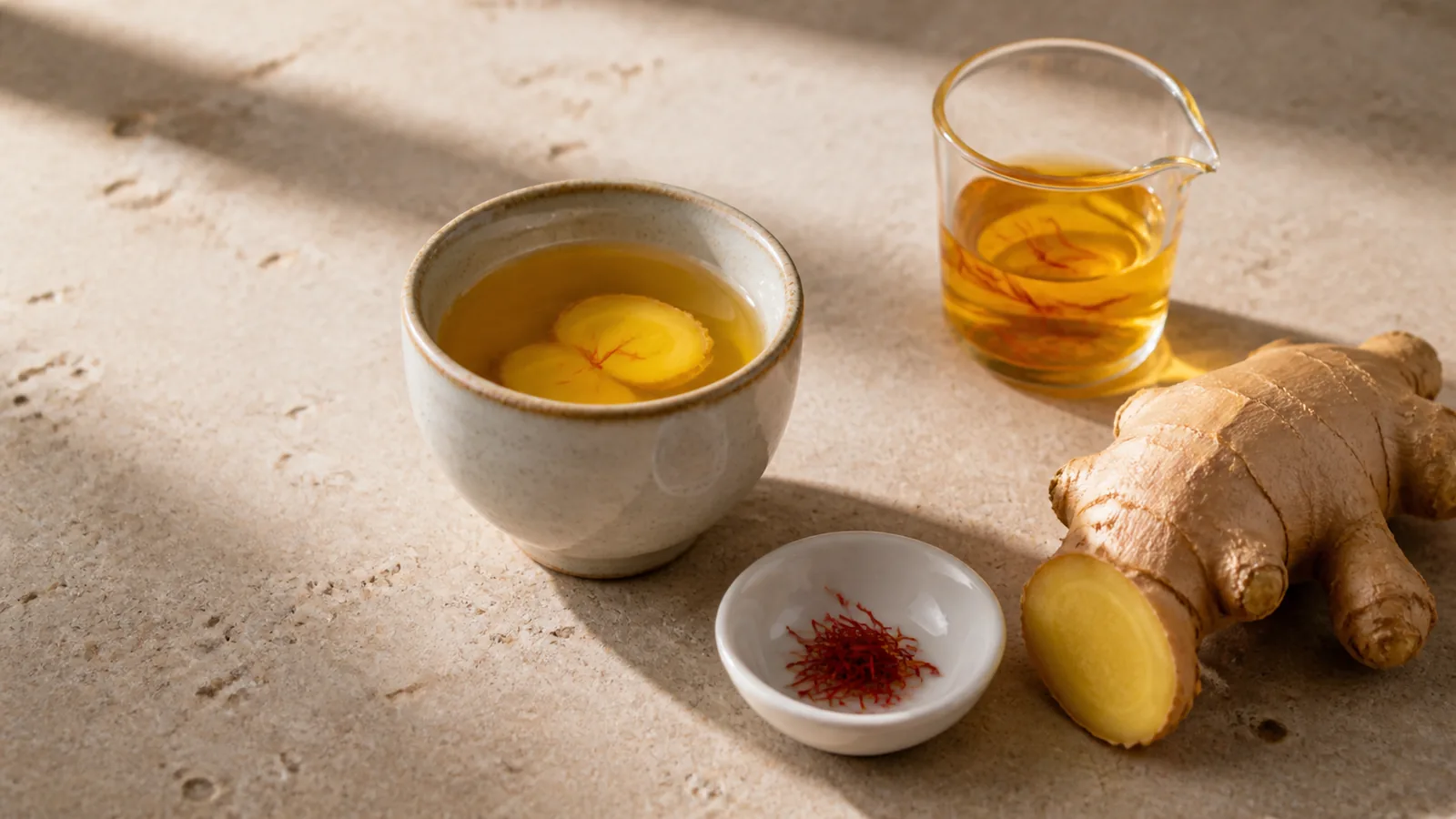
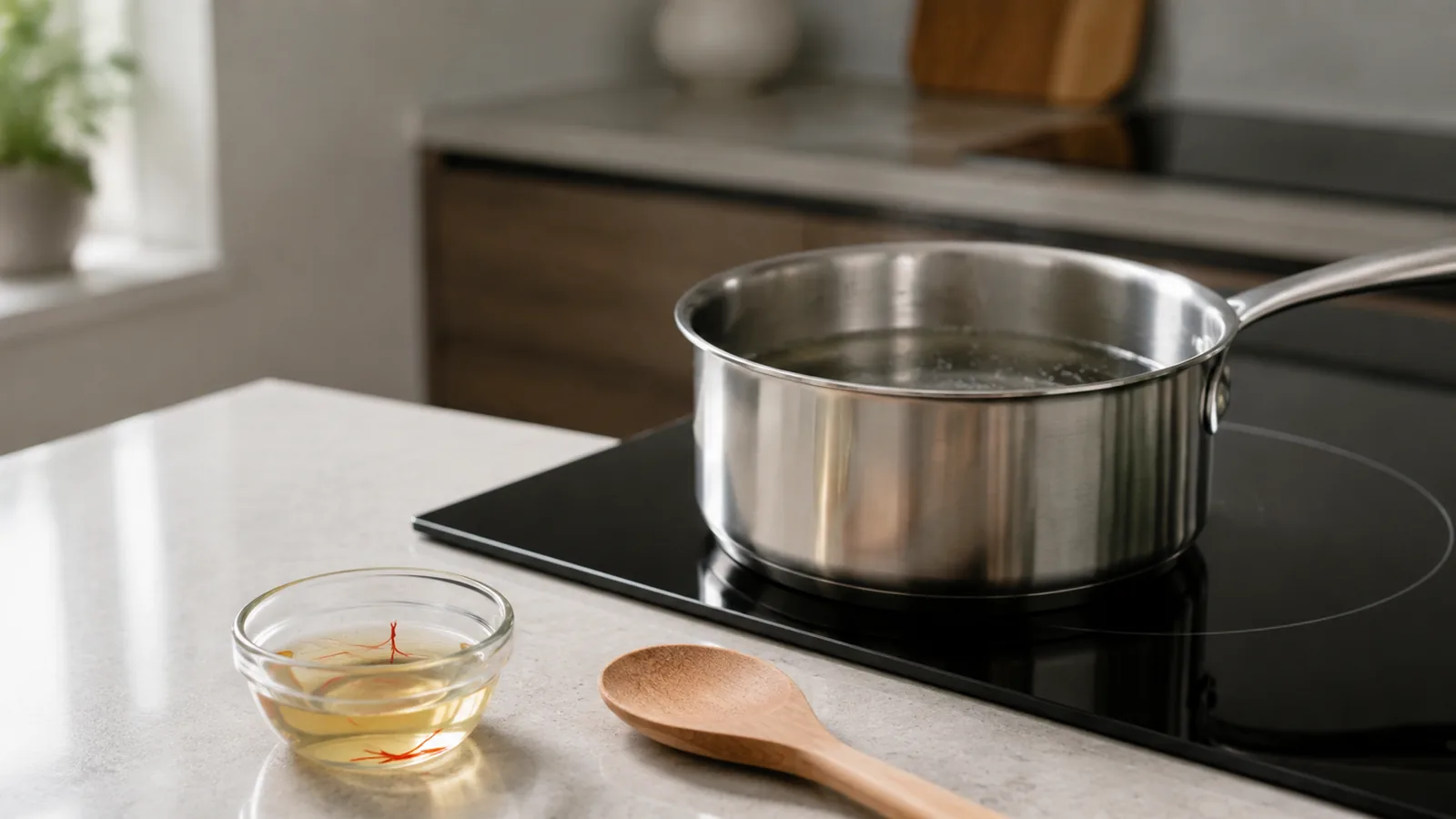
- Bloom them in a few tablespoons of warm water, milk or unsalted broth for 10 to 15 minutes.
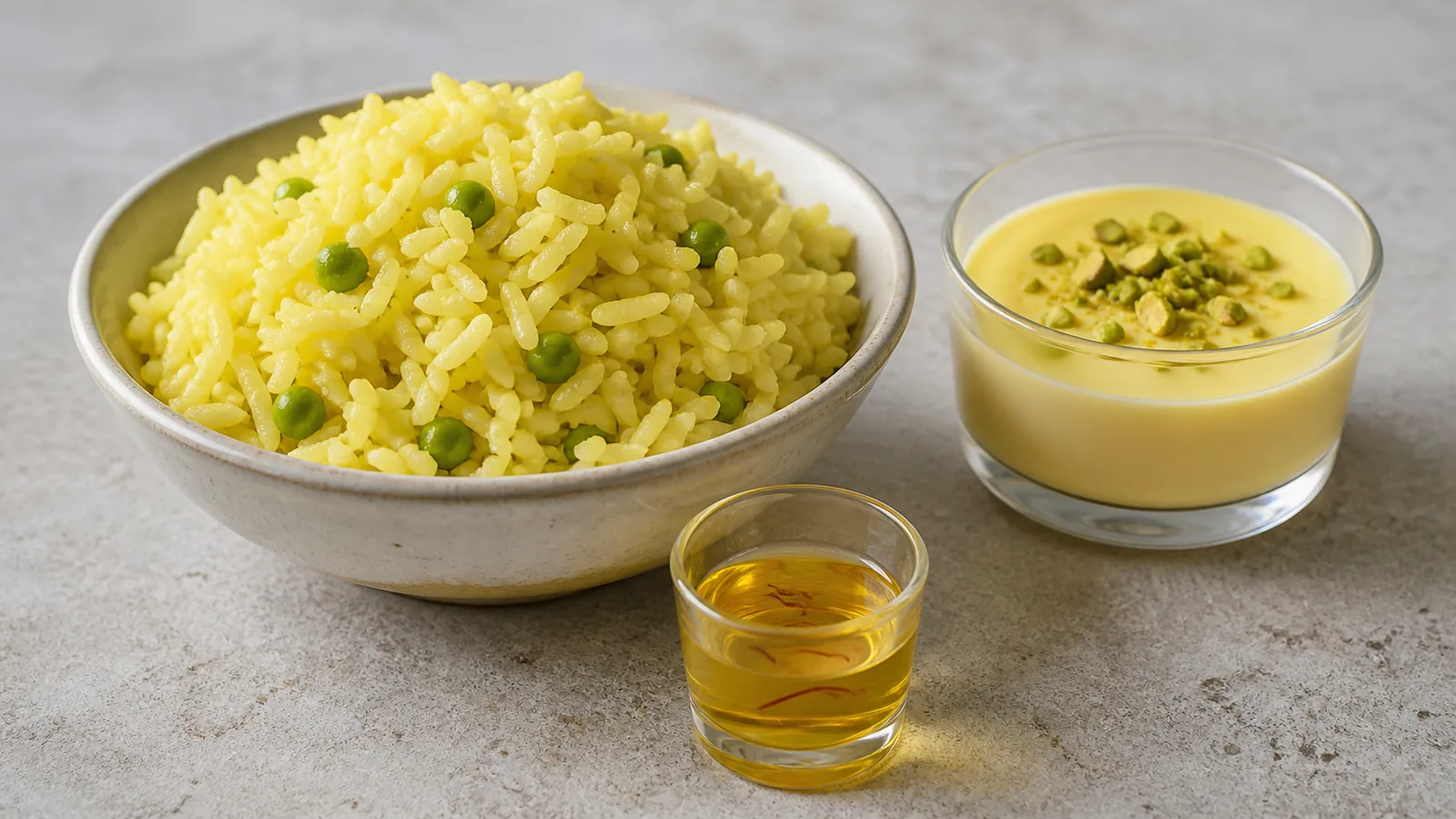
- Add the entire infusion to rice, soup, stew, tea or dessert so it spreads evenly.
- Taste the finished dish before increasing the amount next time.
Our guide to how much saffron to add to food gives practical starting points for different recipe sizes.
When to get individual advice
Ask a clinician or pharmacist before using saffron regularly as a supplement if you are pregnant or breastfeeding, preparing for surgery, buying it for a child, taking prescription medicines, or managing a significant medical condition. This is particularly relevant if you take blood-pressure medicine, already have low blood pressure or experience unexplained faintness. Product form matters, so bring the actual label or ingredient list.
Stop taking a supplement and seek advice if you develop persistent nausea, vomiting, diarrhoea, dizziness, faintness, rash or another concerning symptom. A large or unknown exposure, severe symptoms, breathing difficulty or fainting requires prompt local medical or poison-service guidance.
How to make daily use more consistent
Keep whole threads sealed, dry and away from heat and light. Note how much you used in a recipe and how many people it served. This gives you a repeatable culinary reference without turning a variable pinch into medical-dose advice.
So, how much saffron is enough per day? For food, use the small amount that gives the dish a balanced aroma and colour; there is no requirement to consume it every day. For a supplement, follow its directions and obtain personal advice when your health, medicines or intended duration make that appropriate. You can browse our saffron products when choosing threads for cooking.