How do you know if saffron is bad? Check for moisture, mould, insects and an unpleasant musty or chemical smell. Those are reasons to discard it. Can saffron go bad? Yes, especially after moisture or contamination, although saffron that is simply old is more likely to be faded and weak than dangerously “spoiled.” Once storage conditions are uncertain, appearance and aroma matter more than a guess.
Dry threads age gradually. Light, air, heat and humidity strip away their colour and aroma, while water creates the conditions for clumping and microbial growth. A best-before date helps you judge expected quality; it cannot tell you what happened after the package was opened.
How to Tell If Saffron is Bad and How to Ensure Its Freshness
Work through the signs below before using an older jar. Do not taste saffron that looks mouldy, feels damp, contains pests or smells contaminated. If it passes the dry inspection, bloom a few threads in warm water and judge the aroma and colour release.
Look for Changes in Color
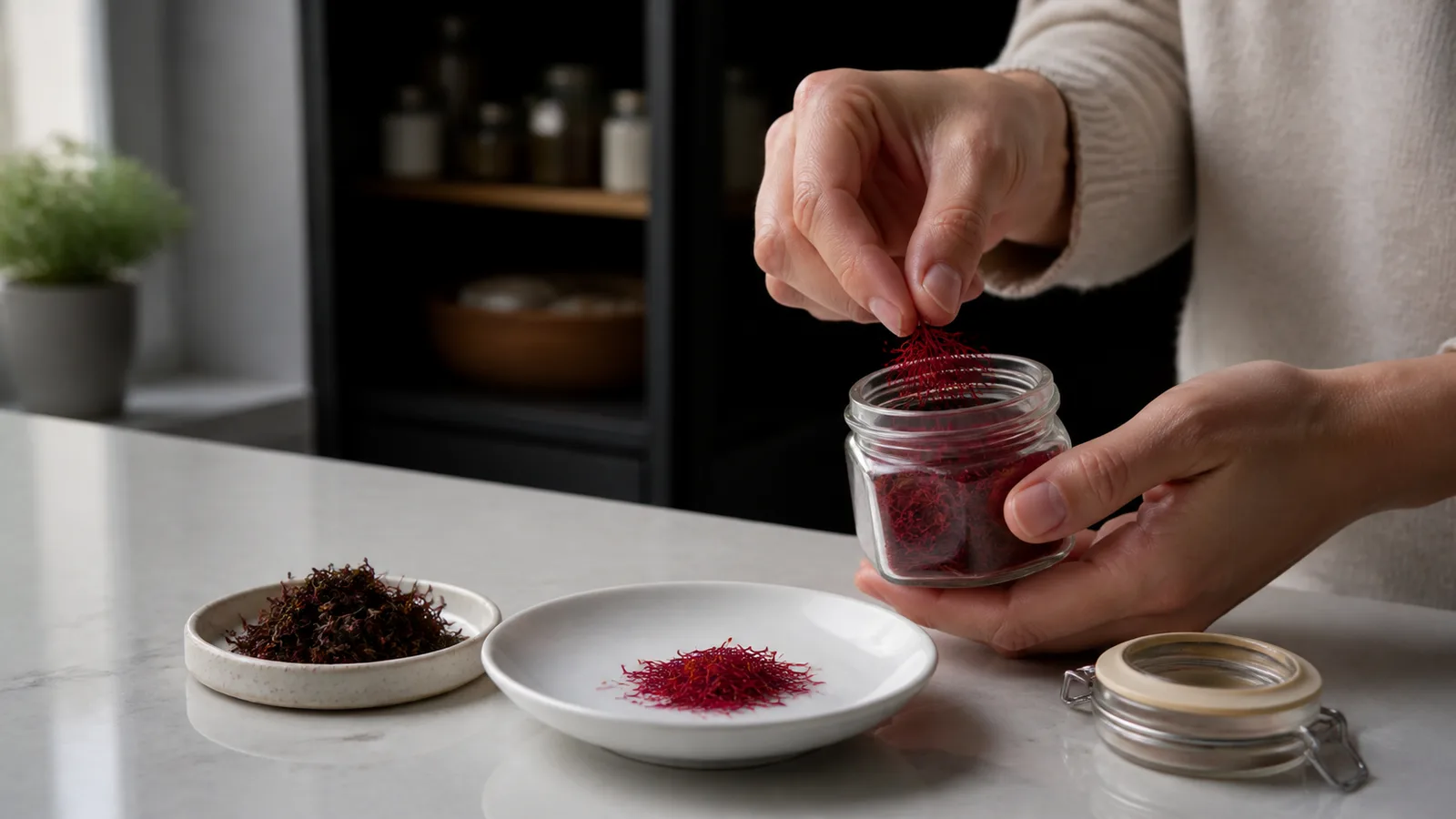
Good whole saffron is predominantly deep red, often with some orange-red variation toward the base of a thread. Age and exposure to light can make it duller. A little fading means reduced quality, not automatic danger.
Widespread brown, grey or black patches need more attention, especially with dampness or a fuzzy surface. Visible mould is a discard sign. A large amount of yellow plant material can indicate a lower grade or adulteration, but it does not prove that the spice spoiled in your cupboard.
Check for a Musty or Off Smell
What does saffron smell like? Genuine fresh threads have a strong, distinctive aroma often described as hay-like, honeyed, leathery or faintly metallic. It is complex and may seem medicinal to someone smelling it for the first time; it should not smell mouldy, rotten or like household chemicals.
A damp-basement or mildew smell points to moisture exposure. A pronounced plastic, chlorine, perfume or solvent odour can suggest contamination, unsuitable packaging or an inauthentic product. Do not try to rescue questionable saffron by washing or cooking it.
Texture and Fragility
Dry saffron threads are light and somewhat brittle, although they need not crumble to dust. They should separate readily. Soft, sticky or wet clumps are a warning that moisture entered the container.
Inspect the lid and corners for condensation, webbing, larvae or small insects. Dispose of affected spice and check nearby dry foods. Do not rely on whether threads float or sink: water behaviour can vary and is discussed as an authenticity clue, not a dependable test of freshness or safety.
Loss of Flavor and Potency
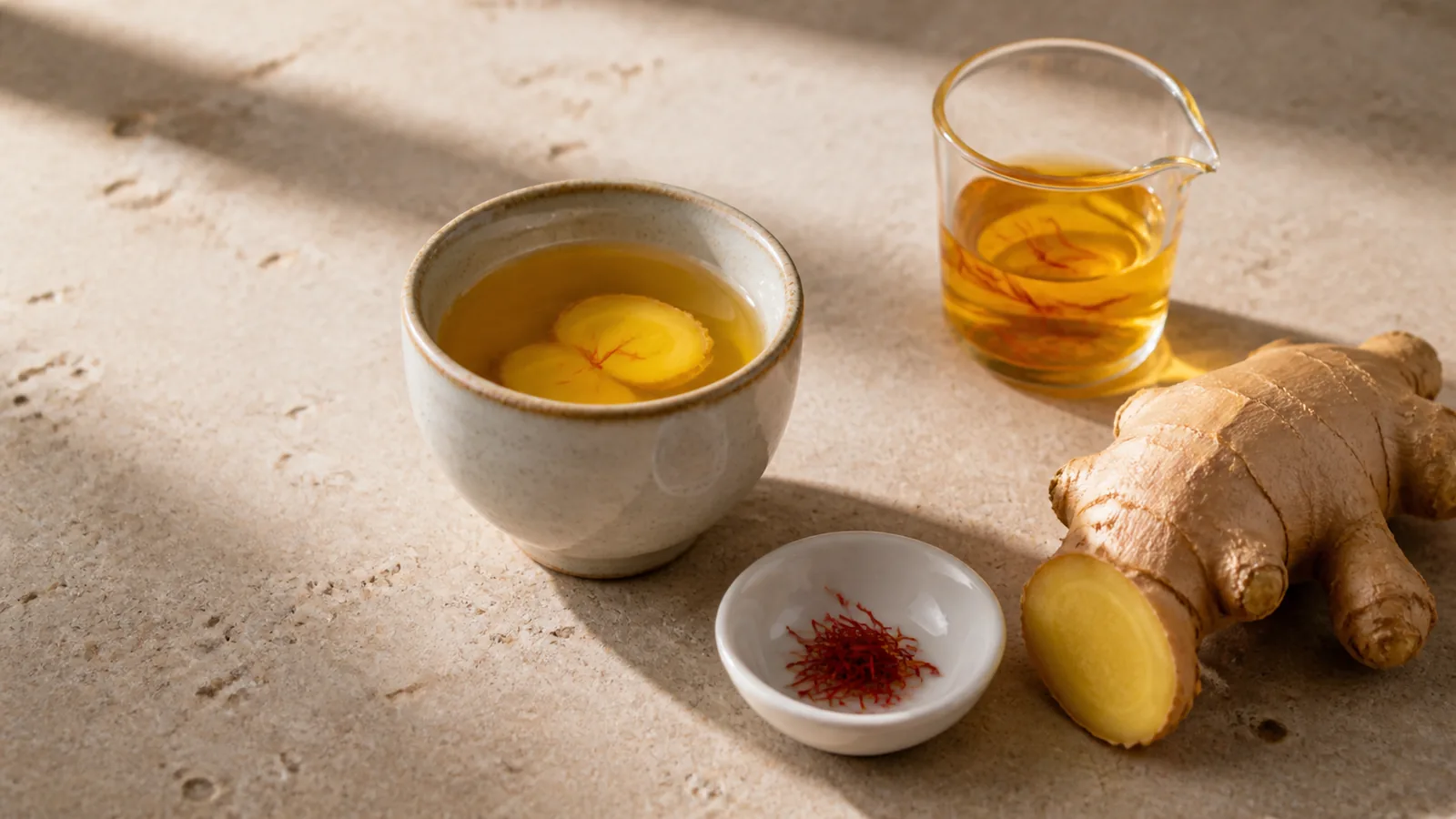
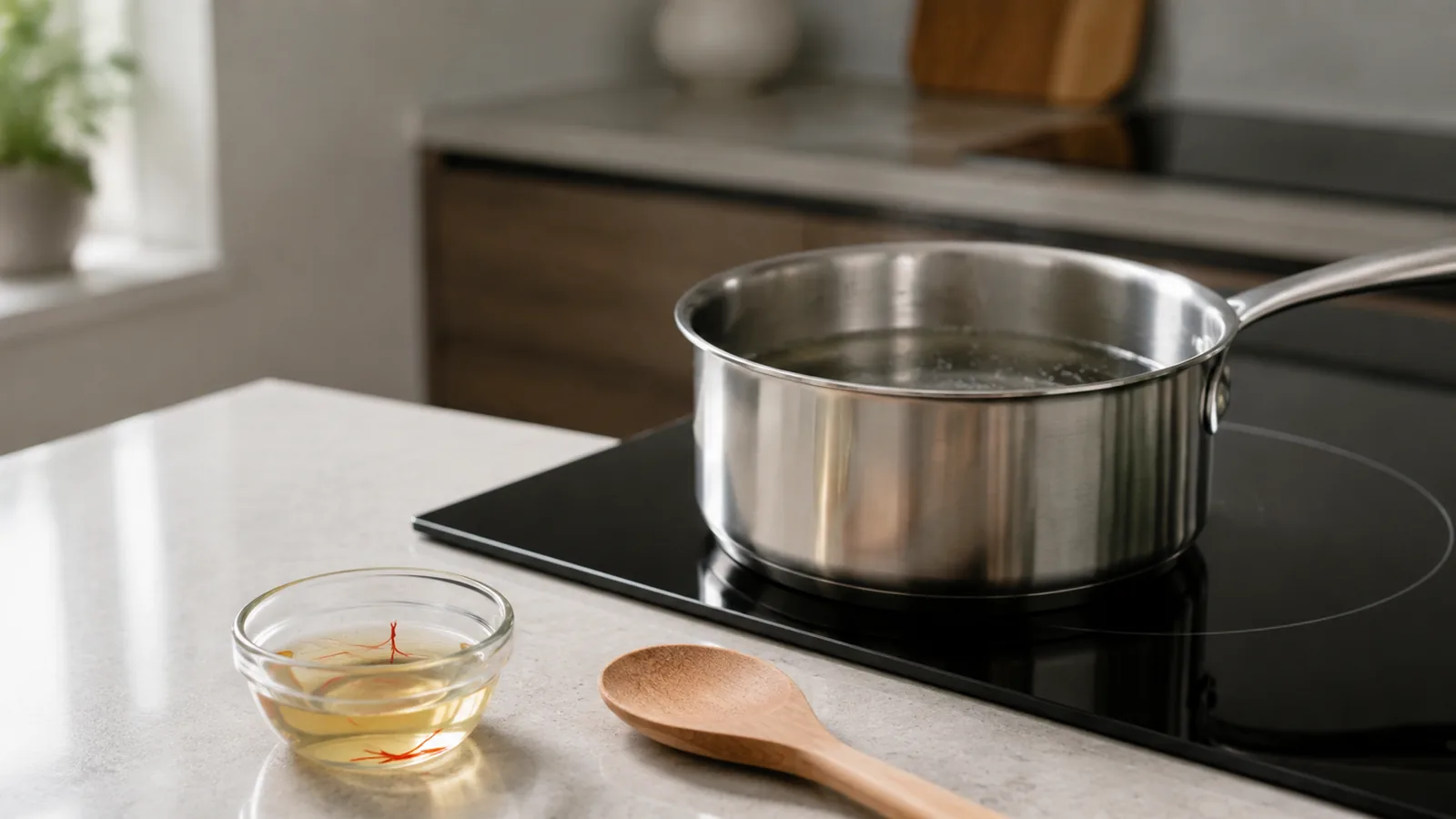
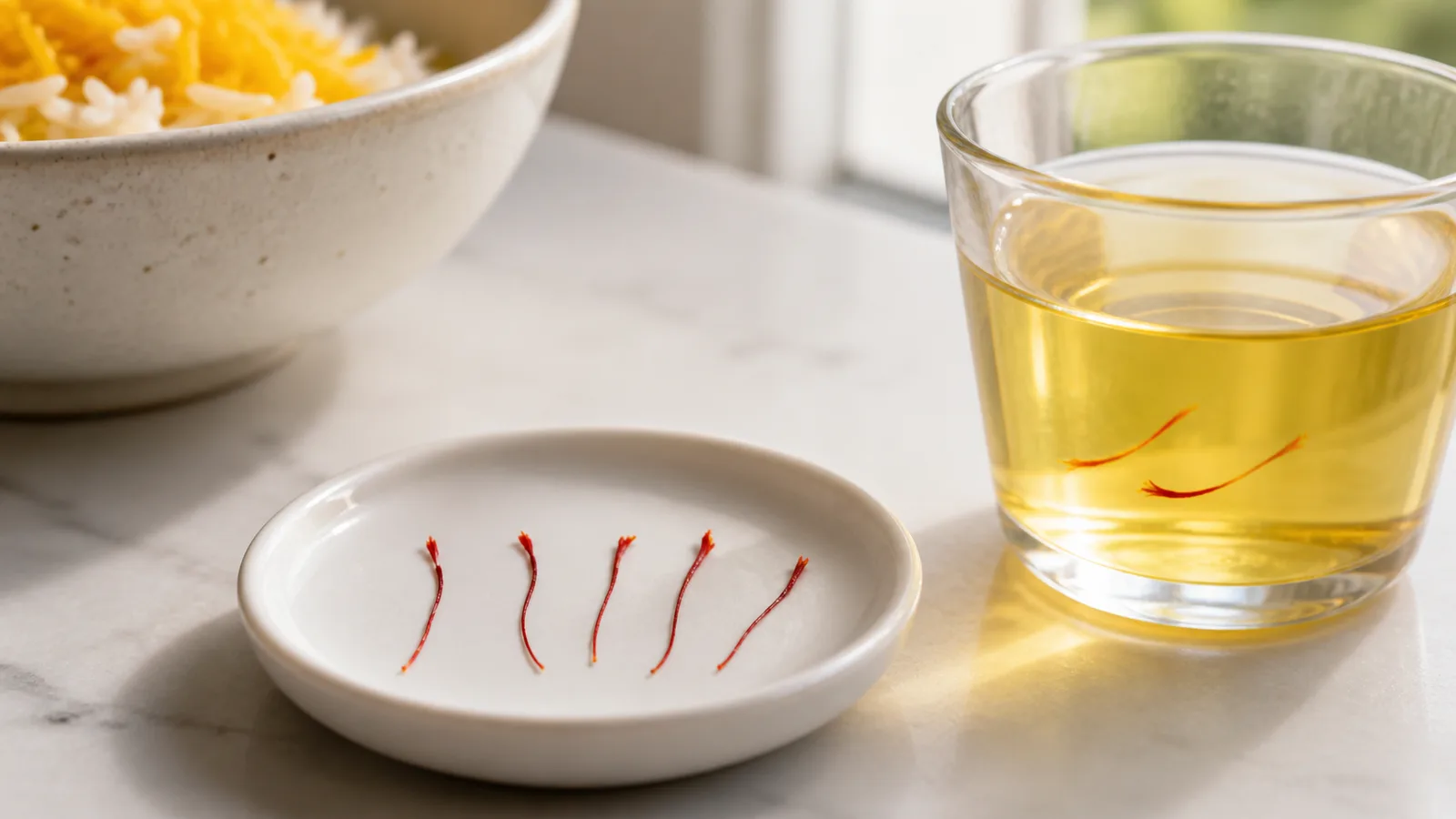
Old saffron often has little aroma in the jar and produces a flat infusion. Place a few threads in warm water for 10 to 15 minutes. Genuine usable saffron should release colour gradually while the threads remain visibly red; the liquid should smell aromatic and taste gently bitter rather than sweet.
Weak colour alone does not prove spoilage, and instant colour is not proof of freshness. The result depends on thread quality, quantity, water temperature and time. If the spice is clean and dry but simply faint, it may still be usable in a larger culinary amount, though the finished dish will be less expressive.
Expiration Date
Does saffron expire? Packaged saffron normally carries a best-before or equivalent date. If you want to know how to know saffron is expired, read that date together with the package condition, storage history and sensory checks above. The UK Food Standards Agency explains that a best-before date concerns quality rather than safety, while storage instructions still matter. Follow the label used in your country and any instructions from the producer.
So, can you use expired saffron, and is expired saffron harmful? A passed best-before date does not by itself make dry saffron unsafe, but do not use it when the package is damaged, the storage history is unknown, or any moisture, mould, insects or off odour is present. A use-by date, if one is specifically printed, should be followed as a safety limit.
Saffron Shelf Life Depends on Storage
How long does saffron last after opening? There is no single interval that fits every jar. Whole threads usually hold their character better than powder, but the package, climate and frequency of opening make a large difference. Date the jar when you open it and compare its aroma over time.
Keep saffron in a clean airtight container, inside a dark cupboard away from the cooker, sink and dishwasher. Take out threads with a dry utensil and close the jar promptly. Refrigeration is usually unnecessary and can introduce condensation when a cold container is opened.
Can you store saffron in the freezer? It is possible in a truly moisture-proof package, but repeated thawing and opening creates avoidable condensation risk. For ordinary household quantities, a cool, dark cupboard is simpler. If a sealed bulk pack is frozen, divide it first and let one portion reach room temperature before opening.
When the evidence is mixed, replacement is cheaper than gambling with a valuable dish. Browse our saffron products, or read our separate guide to recognising real saffron when the concern is authenticity rather than age.