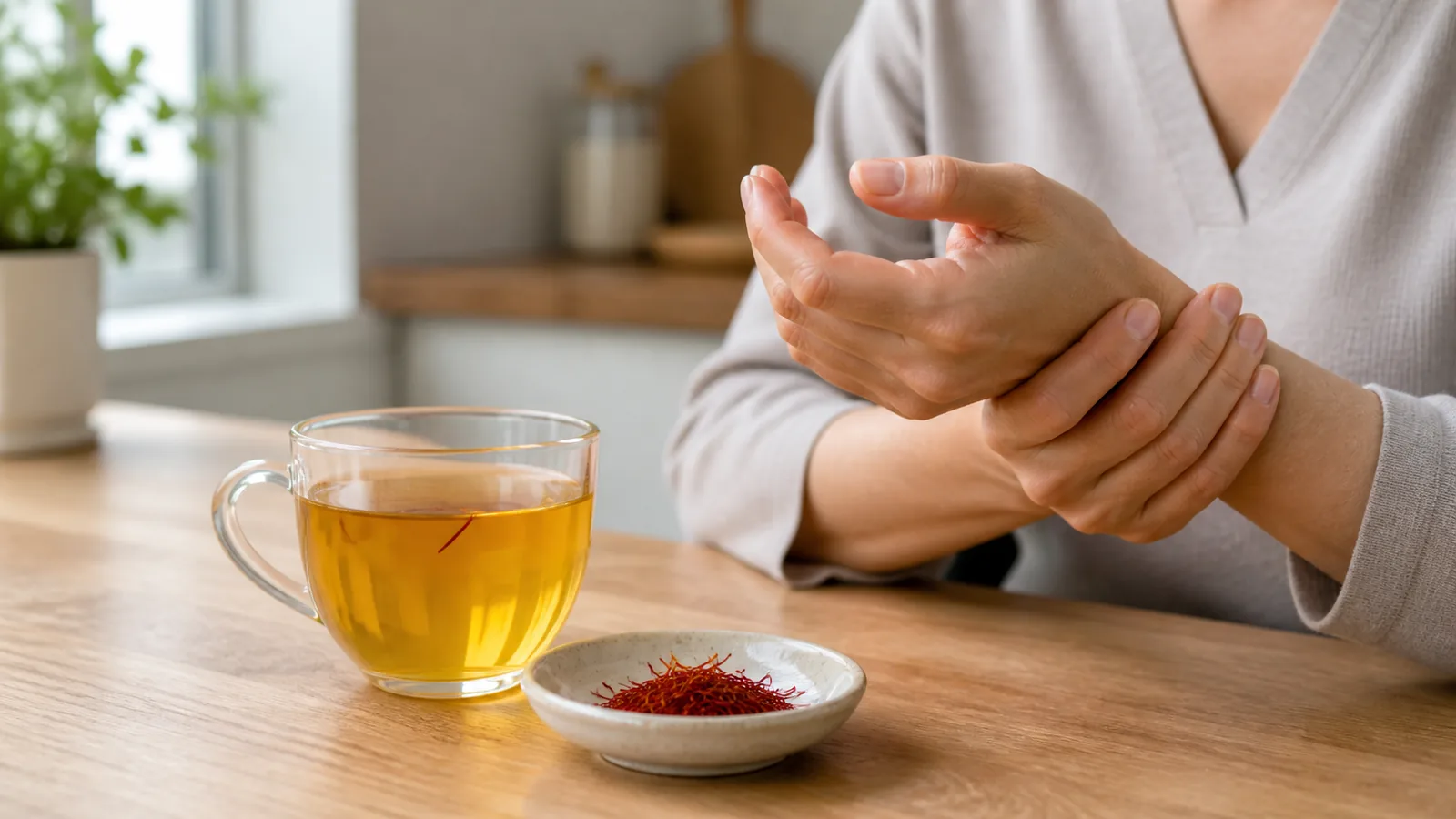
The harmful indiscriminate use of saffron means treating a concentrated spice or extract as though any amount must be safe because it is natural. Normal culinary seasoning and medicinal-scale exposure are not the same. Most human studies report good tolerability under controlled conditions, but higher or prolonged use can cause adverse effects and needs more caution.
This page focuses on overuse, warning signs and what to do after a possible excess. For the wider set of practical drawbacks, quality concerns and interactions, see our guide to the disadvantages of saffron.
What counts as saffron overuse?
There is no single monthly or per-meal number that can be declared safe for every person and every product. Whole threads, ground saffron, tea, tablets and standardized extracts can differ greatly in concentration. Body size, age, pregnancy, medical conditions and medicines can also change the risk.
Overuse is more likely when someone:
- takes substantially more than the product label or clinician recommended;
- uses several saffron-containing supplements at the same time;
- swallows a concentrated extract as though it were a food seasoning;
- uses the product for longer than it was studied;
- combines it with medicines or supplements without checking interactions; or
- uses an unidentified wild plant believed to be culinary saffron.
The original article stated fixed monthly limits and said a particular amount in one meal could be fatal. We have not found reliable human evidence supporting those exact thresholds, so they should not be used as a dosing rule.
What adverse effects have human studies reported?
A 2026 systematic review of saffron adverse events included 102 clinical trials and one case report. Across the reviewed studies, saffron was generally well tolerated. Gastrointestinal problems were the most frequently reported adverse effects and were usually minor and self-limiting. The authors still advised clinical monitoring for medicinal use at higher amounts or over longer periods because potentially significant events have occurred.
A small one-week trial in healthy volunteers found no gross clinical changes, but the higher tested tablet amount lowered standing systolic and mean arterial pressure and produced small changes in some blood and laboratory measurements. Values remained within normal ranges in that short study. This does not establish safety for long-term use, illness, pregnancy or a different extract.
Possible reactions depend on the preparation and person. Nausea, stomach upset, reduced appetite, dry mouth, headache, dizziness or an allergic reaction deserve attention. Symptoms such as fainting, breathing difficulty, repeated vomiting, unusual bleeding, marked confusion or severe weakness should not be managed by reading a blog alone.
Pregnancy needs separate caution
Claims that saffron should be taken to soften the cervix, increase uterine contractions or make labor easier are not safe instructions for home use. Research near term does not establish safety earlier in pregnancy, and evidence about miscarriage risk and uterine activity remains limited.
Do not use saffron supplements, strong infusions or medicinal quantities during pregnancy without the advice of the professional managing the pregnancy. Our dedicated guide to saffron during pregnancy explains the difference between ordinary food use and concentrated exposure.
Culinary saffron and an extract are different products
A few threads dispersed through several servings of rice are not equivalent to a capsule or extract. Clinical trials use identified preparations, measured amounts and monitoring. Their results cannot be converted automatically into a safe quantity of an unknown product.
Read the full ingredient list. Multi-ingredient supplements may contain compounds responsible for an effect even when saffron is prominent on the front label. Powder is also harder to identify than whole stigmas, and adulteration can introduce substances not considered in saffron safety studies.
Do not confuse true saffron with meadow saffron
Culinary saffron comes from Crocus sativus. So-called meadow saffron or autumn crocus is Colchicum autumnale, a different and poisonous plant that contains colchicine. Published case reports describe fatal poisonings after people collected it and mistook it for an edible plant. Never prepare a tea or meal from a wild plant based only on a common name or a visual guess.
If the identity is uncertain, retain the plant or packaging for identification and contact a poison service immediately. Do not wait for symptoms.
What to do after possible saffron overuse
- Stop taking the product. Do not take another dose to test whether the reaction repeats.
- Keep the package. Note the product name, ingredient list, approximate amount and time of exposure.
- Contact a poison service or clinician. In the United States, Poison Control provides free, confidential guidance at 1-800-222-1222 or through its online tool. Elsewhere, contact the local poison center or emergency service.
- Call emergency services immediately if the person collapses, has a seizure, has trouble breathing or cannot be awakened.
Do not induce vomiting unless a poison specialist specifically tells you to do so. Online dose tables cannot account for the actual product, person or symptoms.
Safer everyday handling
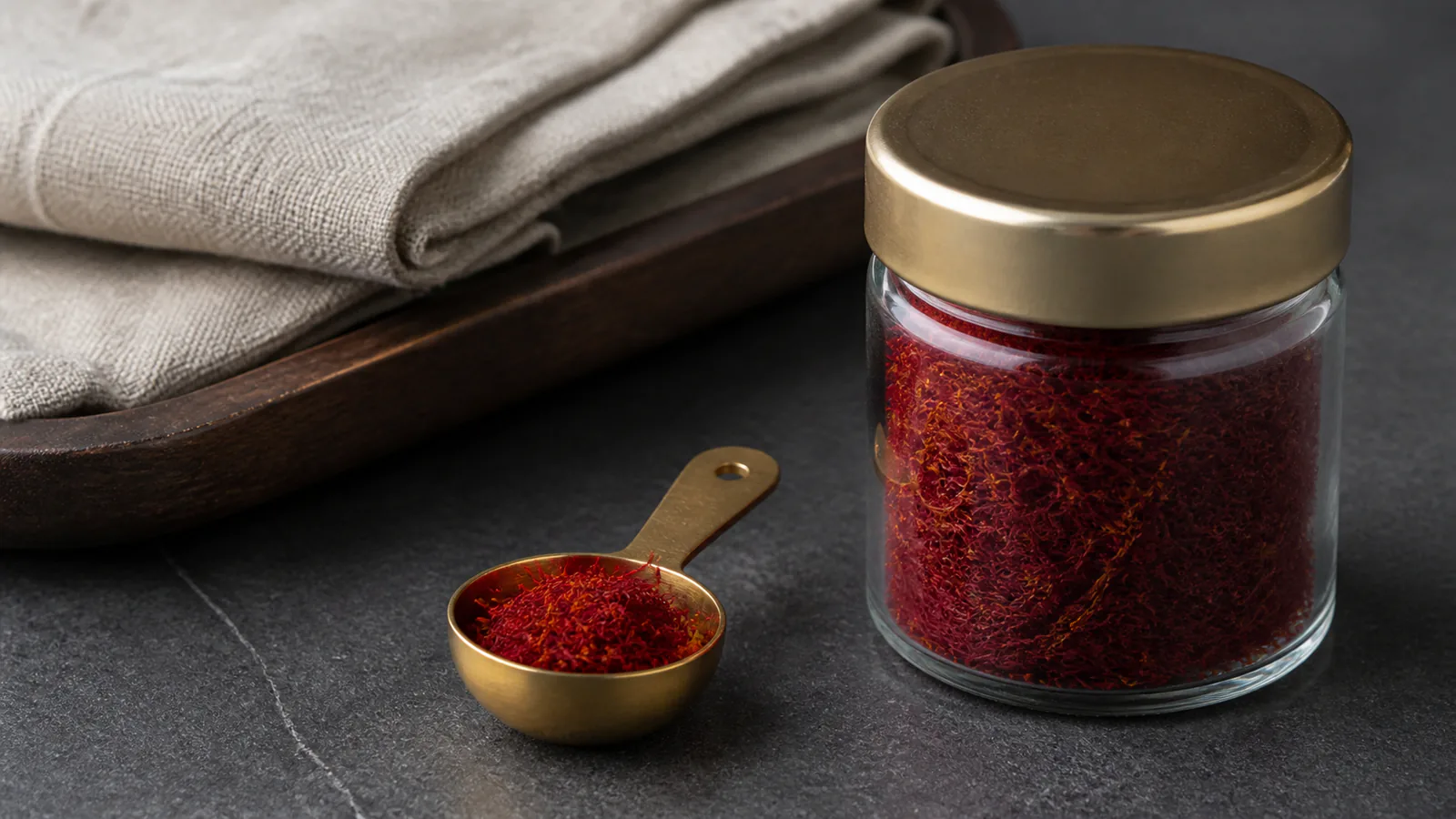
Use saffron primarily as a seasoning unless a qualified professional has advised a specific medicinal product. Keep supplements and extracts away from children. Store threads in a tightly closed container away from heat, moisture and strong light; good storage protects quality, though it does not make excessive use safer.
Saffron overuse should be handled with proportion, not alarm. Controlled human studies usually report tolerability, but concentrated, prolonged, accidental or medically complicated exposure is different from flavoring food. When a possible poisoning has occurred, get case-specific advice rather than relying on an unverified “safe” amount.