


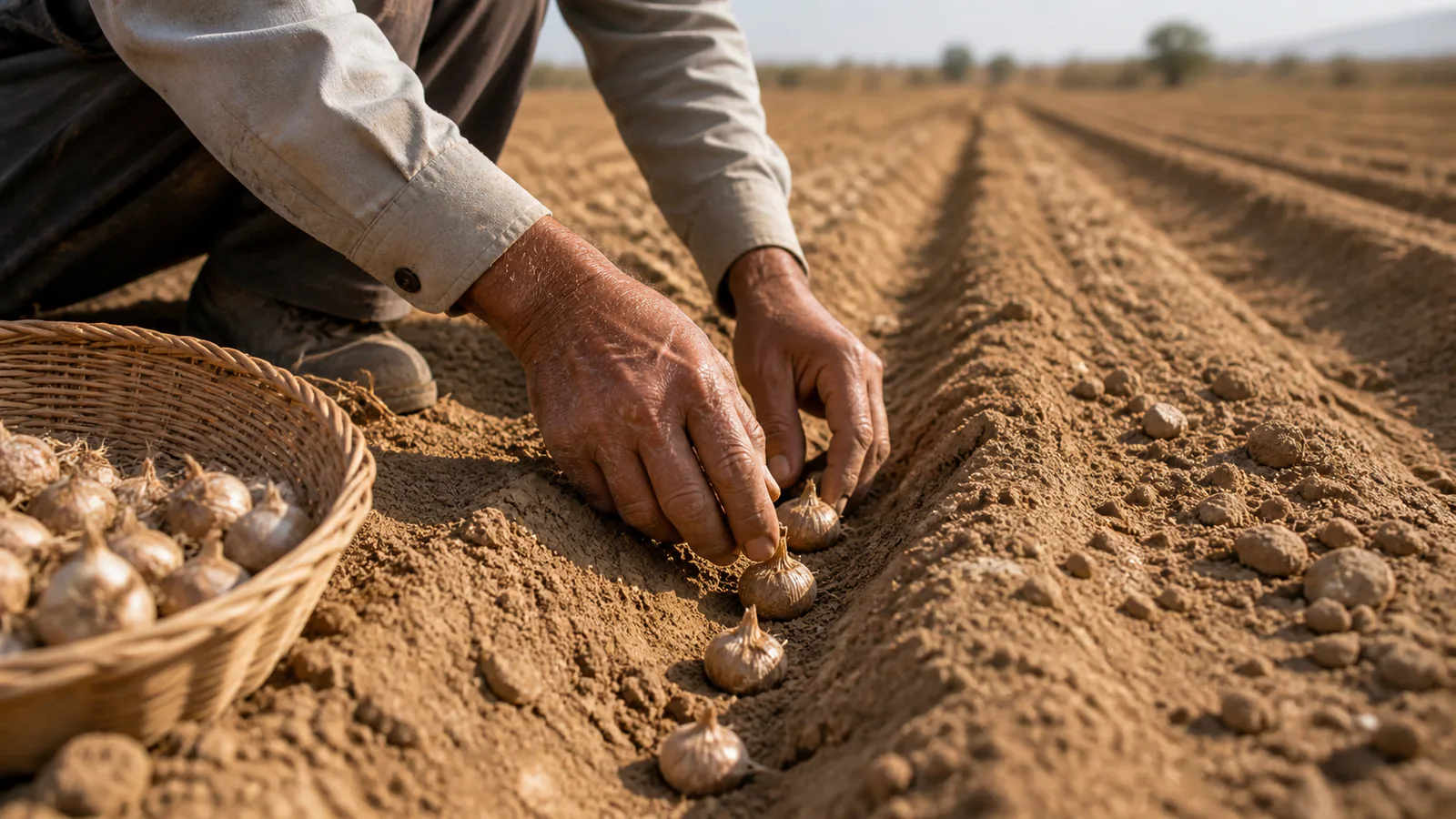
Planting saffron in Iran begins with healthy corms, a well-drained field and a plan for harvesting and drying before the first flower opens. Saffron can remain in the same ground for several years, so decisions made at establishment affect more than one crop.
The plant is Crocus sativus. It does not produce viable seed and is propagated by corms, the solid underground stems that are often called saffron bulbs. Each mother corm can form daughter corms, gradually increasing the planting stock but also creating competition if a bed becomes overcrowded.
This guide explains the sequence and the reasons behind it. Exact dates, planting density, irrigation and nutrition must be adjusted to the local soil, climate, corm size and production system. A soil test and advice from the relevant provincial agriculture service are safer than copying one national recipe.
1. Choose a site that drains reliably
Saffron needs a location where water will not remain around the corms. A light to moderate, well-drained soil is generally easier to manage than compacted ground. Raised beds or shaped rows may help on heavier land, but drainage has to work below the surface as well as on top.
University of Vermont saffron guidance notes that standing water can rot corms and that planting depth varies widely with geography and climate. That is an important caution for Iran: a depth used in a cold, wet trial should not be copied into a different soil without local testing.
UVM’s saffron planting factsheet explains how drainage, depth, density and the length of the cropping cycle interact.
2. Test and prepare the soil before planting
Clear perennial weeds and prepare a firm, workable bed. Test the soil before adding fertiliser or amendments. Organic matter can improve structure, but fresh or excessive manure should not be placed directly against corms. The original version of this article gave a blanket per-hectare urea or manure rate without a soil analysis; that is not safe enough to repeat as universal advice.
Nutrition should reflect the test result, expected yield and local recommendations. Too little can limit growth, while unnecessary nitrogen or poorly timed irrigation can waste money and create weak growth or disease pressure.
3. Buy healthy saffron corms, not seed
Choose firm corms from a reputable source. Reject material that is soft, mouldy, badly damaged or of uncertain identity. Keep lots separate and record the supplier, arrival date, corm size and field where each lot is planted.
Corm size matters because a larger, mature corm is generally more likely to flower than a small daughter corm. The number of kilograms required per hectare therefore cannot be judged without knowing individual corm size, spacing and whether growers plant single corms in rows or several together.
4. Set density and depth for the production system
Long-lived Iranian fields and beds replanted every year do not use the same density. Closer spacing can produce more flowers in a small area at first but increases the initial corm cost and can make overcrowding arrive sooner. Wider spacing reduces the first-year plant population but leaves more room for daughter corms.
Similarly, planting too shallow may expose corms to temperature and physical damage, while planting too deep can delay emergence or affect daughter-corm production. Use regional trials and a small on-farm test before committing a large field.
Place corms upright where their growing point is visible, maintain even depth and close the furrow without crushing or leaving large air pockets. Map each bed and record the date, density and corm lot.
5. Time irrigation to growth, not a slogan
Saffron is valued in dry regions because its active growth occurs in the cooler part of the year and it can use less water than many alternatives. “Low water requirement” does not mean “no water requirement.” Establishment, local rainfall, soil water-holding capacity and the timing of growth all matter.
Avoid prolonged saturation. In protected cultivation, UVM advises keeping soil moist but not oversaturated; field systems need an irrigation schedule appropriate to local rainfall and soil. Keep drainage channels clear and investigate uneven emergence rather than adding water automatically.
6. Follow the saffron growth cycle
After summer dormancy, corm growth resumes as temperatures change. Flowers appear in autumn, while the narrow green leaves continue photosynthesis after flowering and support the next generation of corms. Do not cut healthy foliage while it is still green.
A planting may stay in place for several seasons, but its productivity will change as daughter corms multiply. Monitor flower count, corm health, weeds and gaps each year. Lift and divide when the chosen system or declining performance indicates that the bed has become crowded.
7. Harvest clean flowers at the right stage
Harvest timing varies by location and season. In South Khorasan, flowers often appear from late October into early December, but a calendar date is less reliable than the field itself. Pick clean flowers as they begin to open and avoid harvesting while they are wet if possible.
Use clean, wide containers and keep the layer shallow. Compressed flowers heat up, bruise and collect moisture. Keep them shaded and cool, then move them promptly to a clean separation area.
The University of Vermont’s post-harvest recommendations advise separating stigmas within a few hours where possible, or refrigerating flowers and completing separation within 24 hours.
8. Separate, dry and store the stigmas safely
The three red stigmas are the saffron spice. Separate them with clean hands or tools on a sanitised surface, keeping soil, damaged flowers and foreign material out of the lot. Give each harvest a lot number so the dried product can be traced back to its field and date.
Drying is a controlled step, not simply leaving saffron in an open room for many days. Long, unprotected air drying can increase contamination and leave too much moisture. UVM’s guidance says dry saffron should contain less than 12% water and snap when broken; insufficiently dried material can mould in storage. The appropriate time depends on temperature, equipment, the quantity on the tray and airflow, so monitor the product rather than relying on one time alone.
Cool the dried saffron fully before packing. Use clean, airtight containers, protect them from light and humidity, and retain the lot record. Food-contact packaging and local regulatory requirements should guide commercial packing decisions.
Bijar’s first half-hectare planting
The source report provides a useful example of saffron moving into a colder Iranian region. Mohammad Abbasi, identified as Bijar’s agriculture director, said the city began its first saffron planting on 5,000 square metres, or half a hectare. Bijar is often called the “roof of Iran” because of its high elevation.
Abbasi estimated one tonne of planting corms per hectare and said corm price was the main concern for farmers. That figure belongs to this particular historical project; it is not a general density recommendation. Corm requirements change sharply with size and spacing, so a grower should calculate plant count and total weight from the actual planting plan.
He pointed to saffron’s cool-season cycle, relatively low water demand and the availability of local drying facilities as reasons the trial could expand. He also described the corms as resistant to cold and pests. Saffron can tolerate cold conditions, but it is not immune to rot, rodents, diseases or other losses. Site drainage, healthy stock and monitoring are still essential.
Plan the business before expanding the field
The Bijar example highlights the largest establishment expense: enough healthy corms for the chosen density. A farm budget should also include field preparation, irrigation, weeding, daily flower picking, stigma separation, drying, testing, packaging, storage and labour during a short peak harvest.
Start with a manageable plot, document what happens and compare yield and quality over several seasons. The best planting system is not the one with the most confident single number. It is the one that fits the field, produces clean saffron consistently and remains workable for the people who have to harvest every flower by hand.

![Exporting Saffron to Turkey + Price Guide [Complete 0 to 100]](https://img.rowhanisaffron.com/20260827003933/saffron-export-turkey-quality-inspection.webp)



