


The main disadvantages of saffron are its high price, variable quality, powerful flavour and the greater safety uncertainty of concentrated supplements. A small amount used in cooking is very different from taking an extract every day. Most people tolerate culinary saffron, but “natural” does not make every product, quantity or use risk-free.
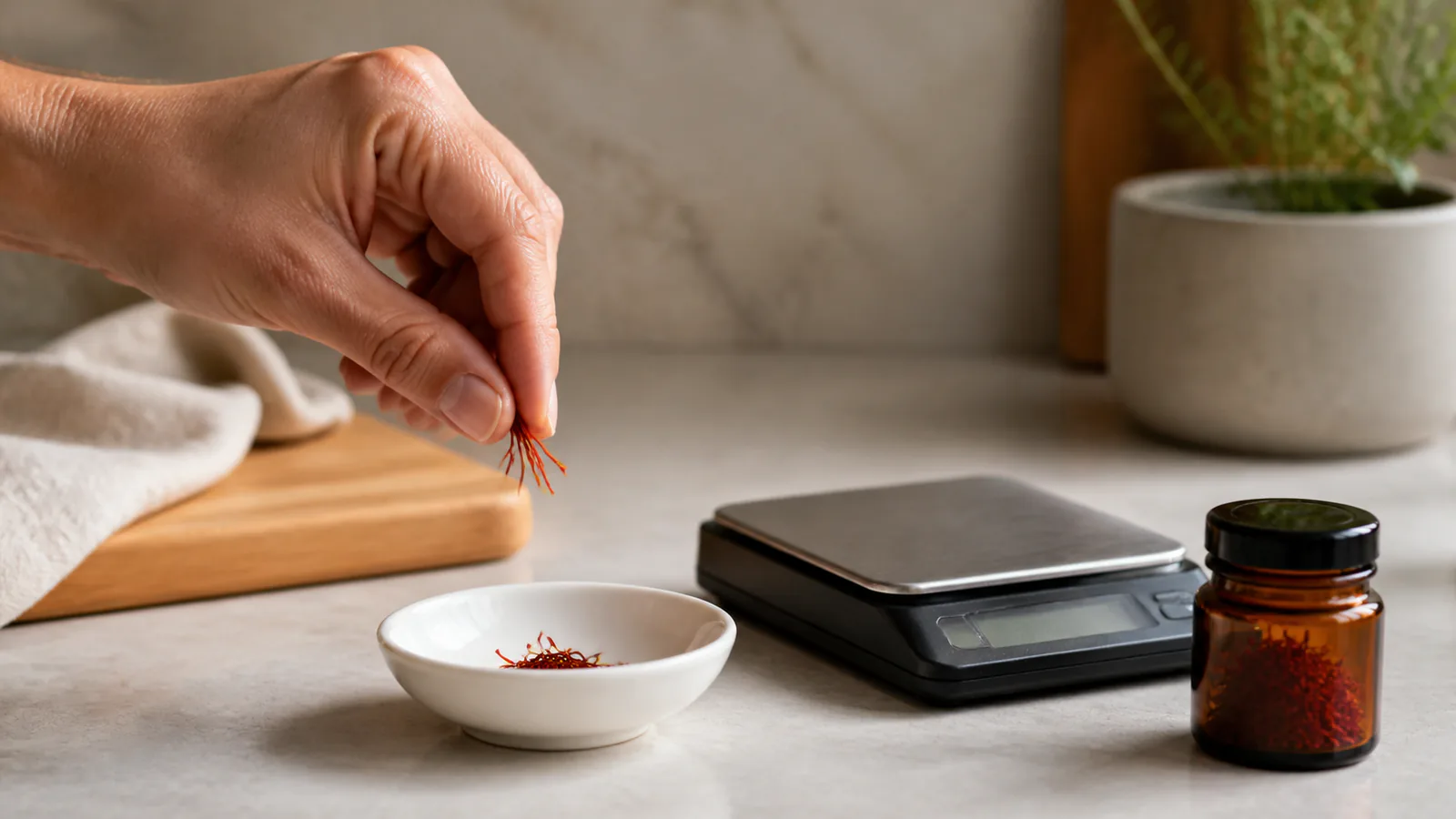
Good saffron can add colour and aroma that few other ingredients provide. The practical question is how to enjoy that quality without overpaying, buying an adulterated product or turning a spice into an unmonitored treatment.
1. Saffron is expensive
Each Crocus sativus flower produces only three red stigmas. Flowers are picked during a short harvest period, and the stigmas are separated and dried with considerable hand labour. Those constraints make genuine saffron expensive by weight.
The cost can tempt buyers toward very cheap powder or poorly documented threads. A low price is not proof of fraud, but a large unexplained discount should prompt questions about grade, age, origin and testing. Buying a smaller pack of traceable threads is often more useful than buying a large amount that loses aroma before it is used.
2. Quality is difficult to judge at a glance
Colour alone does not establish purity or strength. Saffron can be mixed with dyed fibres, excess yellow style material or another plant; old saffron can also retain colour while losing much of its aroma. Powder is particularly difficult for a consumer to inspect.
For a commercial purchase, ask for a lot number and a recent batch-specific certificate of analysis. For home use, choose a supplier who identifies origin and packing details, and prefer intact threads when you want to examine the material yourself.
3. Too much can spoil a dish
Saffron is potent. An excessive culinary amount can make food bitter or medicinal rather than aromatic. It can also dominate delicate ingredients and turn a balanced recipe into a one-note dish.
Start with the quantity specified by a tested recipe and distribute the colour and aroma through a short infusion or another suitable preparation method. Adding more after tasting is easier than correcting an over-saffroned dish.
4. Light, air and moisture reduce quality
Saffron is not difficult to store, but poor storage wastes an expensive ingredient. Repeated exposure to light, humid air and heat weakens its characteristic colour and aroma. A loose paper packet beside a cooker is therefore a poor long-term container.
Keep dry threads in a sealed food-safe container, away from direct light and heat. Avoid using a wet spoon, and buy an amount you can use while it is still fragrant.
5. Supplements are not the same as culinary saffron
A pinch in a family meal is not equivalent to a capsule, tincture or standardised extract. Supplements may concentrate selected compounds, are taken repeatedly and can vary in composition. The evidence for one research preparation cannot simply be transferred to every product with “saffron” on the label.
A 2026 systematic review of saffron adverse events included 102 clinical trials and one case report. It estimated that adverse events related to saffron occurred in about 17.5% of use in the included evidence; gastrointestinal problems were the most frequently reported and were generally minor and self-limiting. The reviewers concluded that medicinal use at higher amounts or for longer periods may warrant clinical monitoring.
That figure should not be read as the risk from ordinary food. It comes from a mixed body of clinical studies using different saffron preparations, amounts, populations and treatment periods.
6. Headache, nausea and appetite changes can occur
Clinical studies and safety reviews have reported complaints such as nausea, stomach discomfort, headache, dry mouth and appetite changes. Not every event is necessarily caused by saffron, and rates vary between trials, but new symptoms after starting a supplement deserve attention.
Stop using a product and seek medical advice for a severe or unexpected reaction. Bring the package with you so the ingredient list, amount and batch can be identified.
7. Pregnancy and breastfeeding need extra caution
Evidence about saffron supplements in pregnancy remains limited and inconclusive. A 2026 review of pregnancy evidence found widespread cultural use but insufficient information to establish a clear safety profile.
One small case-control study previously discussed on this page observed a higher miscarriage rate among Iranian saffron-farm workers with regular occupational exposure during harvest. That involved handling raw stigmas and inhaling plant dust; it did not test saffron eaten in food or prove that saffron caused the outcome.
Normal culinary use and concentrated products should therefore be kept distinct. Someone who is pregnant or breastfeeding should discuss saffron supplements, extracts or unusually large amounts with their healthcare professional.
8. Medicine interactions are not fully mapped
Specific clinical interaction data for saffron are limited. That uncertainty matters if a person takes medicines for blood pressure, mood, blood clotting or another condition that overlaps with effects being studied for saffron.
The US Food and Drug Administration advises people to discuss supplements with a health professional because botanical ingredients can alter how medicines are absorbed, metabolised or removed. This is also important before surgery and when combining several supplements.
9. Health marketing can overstate the evidence
Saffron has been studied for mood, cognition, sleep and metabolic markers, but research findings do not make it a cure-all. A seller should not turn a small trial, an animal experiment or an antioxidant mechanism into a treatment promise.
Do not substitute a saffron supplement for prescribed medicine. If a product claims to cure cancer, dementia, hypertension or another disease, the claim itself is a reason to be sceptical.
How to reduce the disadvantages
- buy traceable threads in a quantity you can use while fresh;
- check the origin, lot number and supplier documentation;
- store saffron sealed, dry, cool and away from light;
- use recipe-scale quantities rather than assuming more is better;
- treat concentrated products as supplements, not as ordinary food;
- ask a clinician or pharmacist about pregnancy, surgery, health conditions and medicines.
Saffron’s disadvantages are manageable when its culinary and medicinal uses are not blurred. Careful buying, modest use and realistic health claims protect both the ingredient’s quality and the person using it.

![Exporting Saffron to Turkey + Price Guide [Complete 0 to 100]](https://img.rowhanisaffron.com/20260827003933/saffron-export-turkey-quality-inspection.webp)



