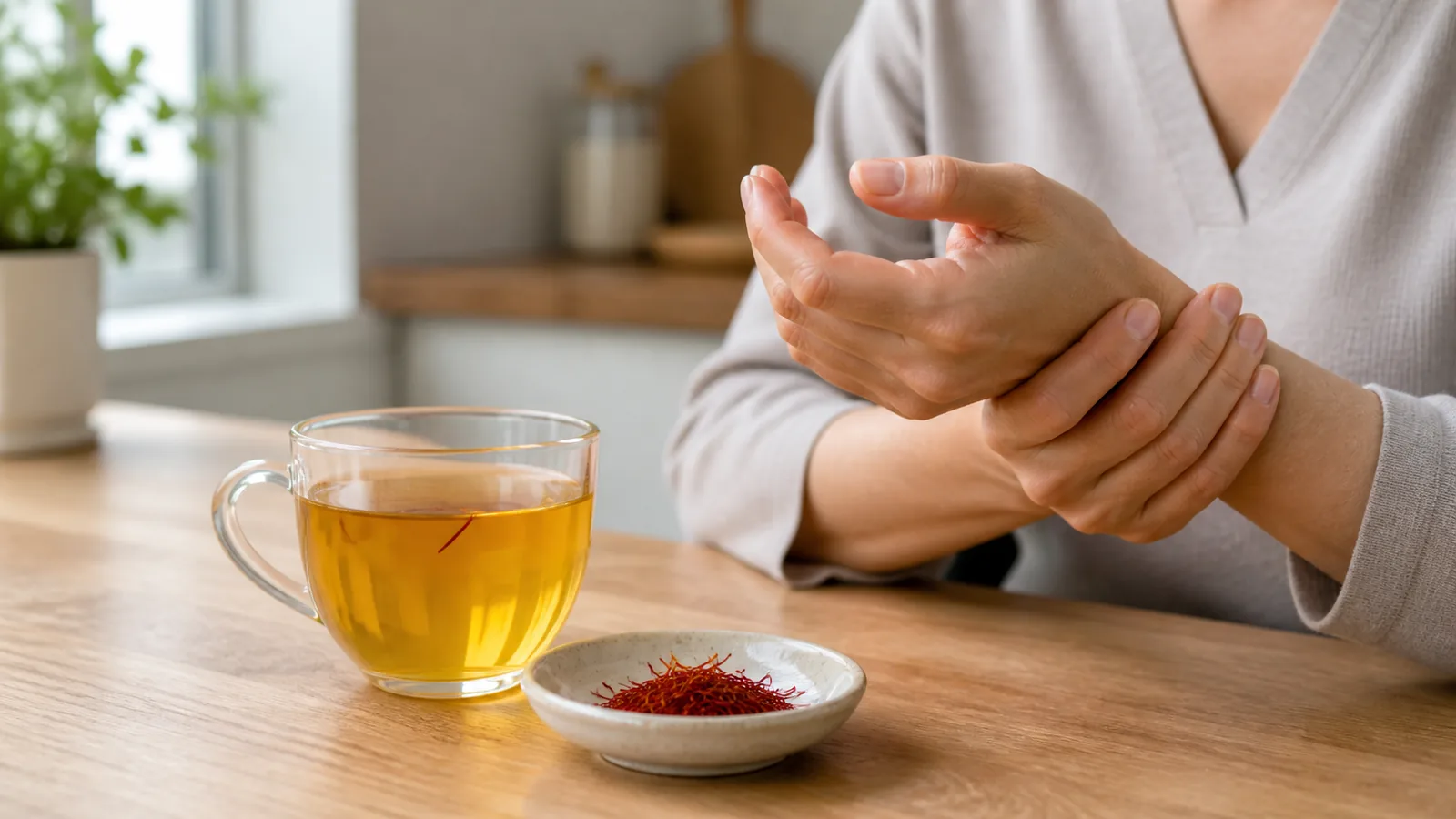
Saffron has been tested in a small trial of delayed-onset muscle soreness after exercise, but the evidence is not strong enough to call it an established treatment. Muscle soreness, osteoarthritis, rheumatoid arthritis and fibromyalgia are different conditions. A result in one cannot be applied automatically to the others.
The old version of this page also recommended rubbing saffron tea on painful areas. No reliable clinical evidence supports that method, and a kitchen infusion is not the same as a tested oral preparation.
What delayed-onset muscle soreness is
Delayed-onset muscle soreness (DOMS) commonly develops after unfamiliar or intense exercise, especially movements in which a muscle lengthens under load. Tenderness and stiffness usually become noticeable later rather than during the workout and may peak over the next day or two.
DOMS is different from a sudden strain, a torn muscle or joint pain. Severe swelling, marked weakness, dark urine, a visible injury or pain that keeps worsening needs medical assessment rather than a supplement experiment.
The small saffron muscle-soreness trial
A randomised double-blind trial published in 2015 involved 39 inactive male university students. Researchers assigned 12 participants to saffron, 12 to indomethacin and 15 to placebo. They used a controlled eccentric-exercise protocol and measured perceived pain, muscle force, range of movement, thigh circumference and blood markers.
The saffron group received capsules for ten days, beginning one week before the exercise session. The study reported less perceived soreness and favourable changes in strength and selected muscle-damage markers compared with placebo.
This is an interesting finding, but it came from a single small group of young men in a laboratory setting. It does not tell us whether the effect is reproducible in women, older adults, trained athletes or people with an injury. It also tested prevention around one exercise protocol, not treatment of ongoing unexplained pain.
Why the result does not become a home dose
The trial’s preparation and schedule belong to its research protocol. Repeating them without supervision is not justified by one small study. Commercial products may differ in plant material, purity and active constituents, while individual health conditions and medicines change the risk.
Culinary saffron in food or tea is a lower and less controlled exposure. It may be enjoyable, but there is no basis for promising that a particular recipe will prevent DOMS.
Saffron and rheumatoid arthritis
Rheumatoid arthritis (RA) is an autoimmune inflammatory disease, not ordinary muscle soreness. It requires diagnosis and disease-modifying treatment to limit joint damage.
One 2020 placebo-controlled trial in 66 women with active RA reported improvements in pain, swollen and tender joint counts and disease activity after 12 weeks of saffron supplementation. However, another randomised trial in newly diagnosed RA found no significant difference in disease activity between saffron and placebo when both were added to standard therapy.
A 2021 synthesis of trials in rheumatic diseases concluded that the evidence was too heterogeneous and poorly standardised to establish a direction of effect. These mixed findings are a reason for better trials, not a reason to replace methotrexate, anti-inflammatory treatment or specialist care.
Osteoarthritis and fibromyalgia are separate
Osteoarthritis involves changes in a joint’s cartilage and surrounding tissues. Fibromyalgia is a chronic condition involving widespread pain, fatigue and other symptoms. Each has different diagnostic and treatment considerations.
Small saffron or crocin studies have examined pain and inflammatory markers in these groups. The number and size of trials remain limited, and some outcomes improve in both treatment and control groups. A positive biomarker does not necessarily mean better daily function or durable pain relief.
Can saffron tea be rubbed on sore muscles?
There is no sound clinical evidence that applying saffron tea to the skin treats DOMS, arthritis or rheumatic pain. A homemade liquid also has no standard concentration or tested absorption. It may stain skin and fabric, and adding other ingredients creates further irritation or allergy possibilities.
Topical medicines and physical therapies should be chosen for the actual cause of pain. Do not apply a home preparation to broken or inflamed skin.
What usually helps after exercise
For ordinary post-exercise soreness, recovery generally centres on time, sleep, hydration, normal meals and light movement as tolerated. Training plans that increase unfamiliar load gradually can reduce the severity of future soreness. Pain medicine is not appropriate for everyone, so ask a pharmacist or clinician if you are unsure.
Persistent or recurring pain deserves a diagnosis. Muscle pain can arise from injury, infection, a medicine, an electrolyte or endocrine problem, an inflammatory disease or another cause that saffron research does not address.
If you are considering a saffron supplement
- identify whether your problem is exercise soreness, joint disease or unexplained pain;
- check whether the cited study involved the same condition and preparation;
- do not stop prescribed arthritis or pain treatment;
- ask about interactions if you take medicines or are preparing for surgery;
- choose a product with traceable ingredients and independent quality evidence.
Saffron and muscle soreness is a legitimate research topic, led by one notable but small DOMS trial and a mixed set of rheumatic-disease studies. The evidence supports cautious investigation, not the claim that saffron is “very effective” for every sore muscle or joint.