Counterfeit saffron testing is most effective before a packet reaches the customer. Visual clues and a warm-water check can expose an obvious problem, but professional assurance depends on traceable lots, representative sampling, suitable laboratory methods and a supplier that acts when a result fails.
The original report behind this page described market inspections, standard marks and the difficulty of identifying sophisticated imitation threads. Those concerns remain relevant. What has changed is the need to explain them as a complete assurance system rather than promise one “principle” or home trick.
Counterfeit Saffron: Why Traceability and Testing Matter
Counterfeit saffron is not one fixed product
Fraud can involve substituting another plant, adding dyed fibres, mixing in yellow style, selling exhausted saffron after valuable compounds have been extracted, increasing weight with moisture or coating material, or mislabelling origin and grade. Powder can conceal additions more easily because the natural stigma shape is no longer visible.
A 2026 systematic review of methods used to detect saffron fraud documents a wide range of adulterants and analytical approaches. That variety explains why one observation cannot detect every fraud type.
What a buyer can inspect
Whole Crocus sativus stigmas are irregular, fine threads that widen slightly at one end. Their colour is generally deep red, sometimes with an orange or yellow portion where the stigma joined the style. Genuine lots vary, so perfect uniformity is not the target.
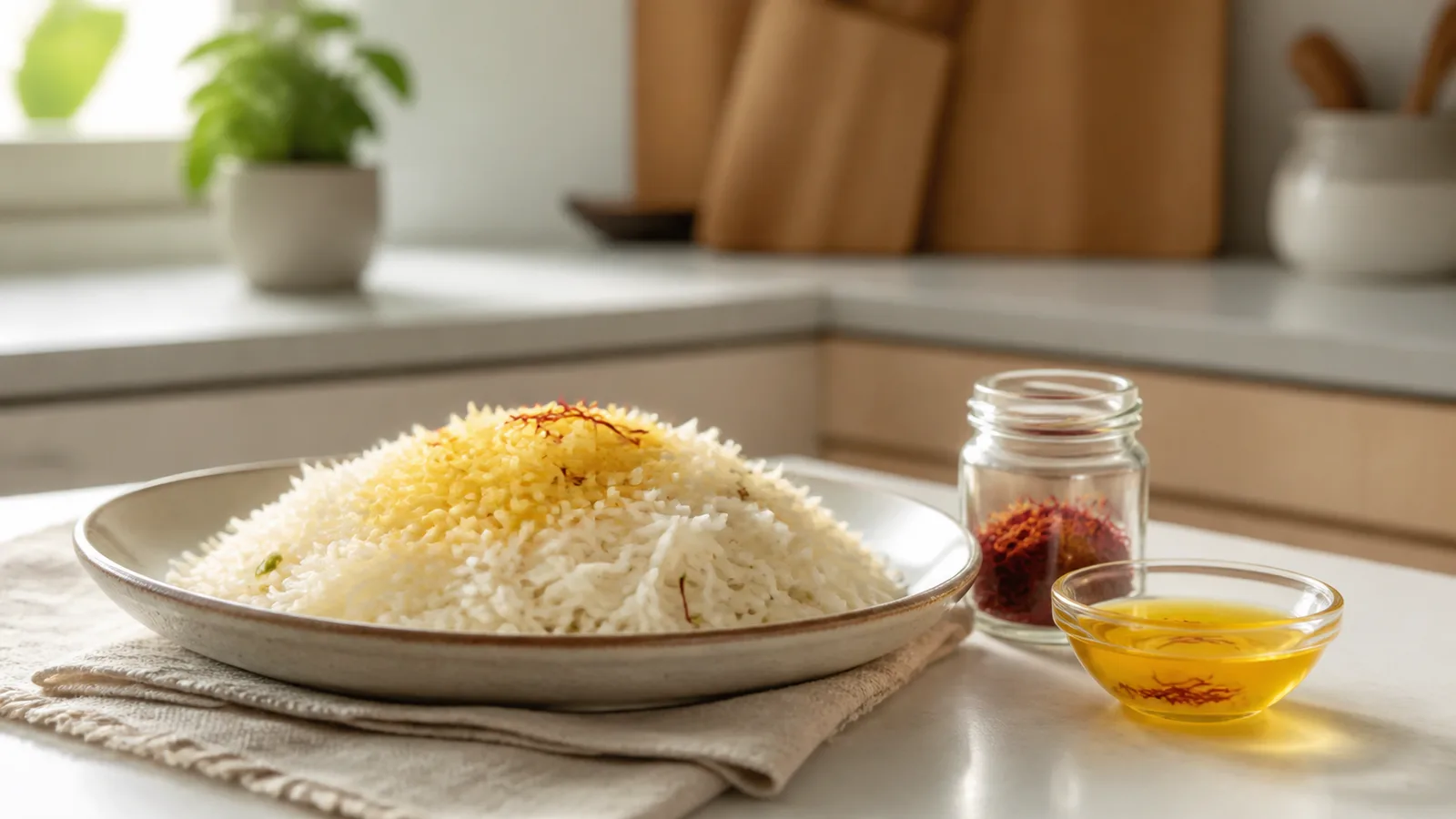
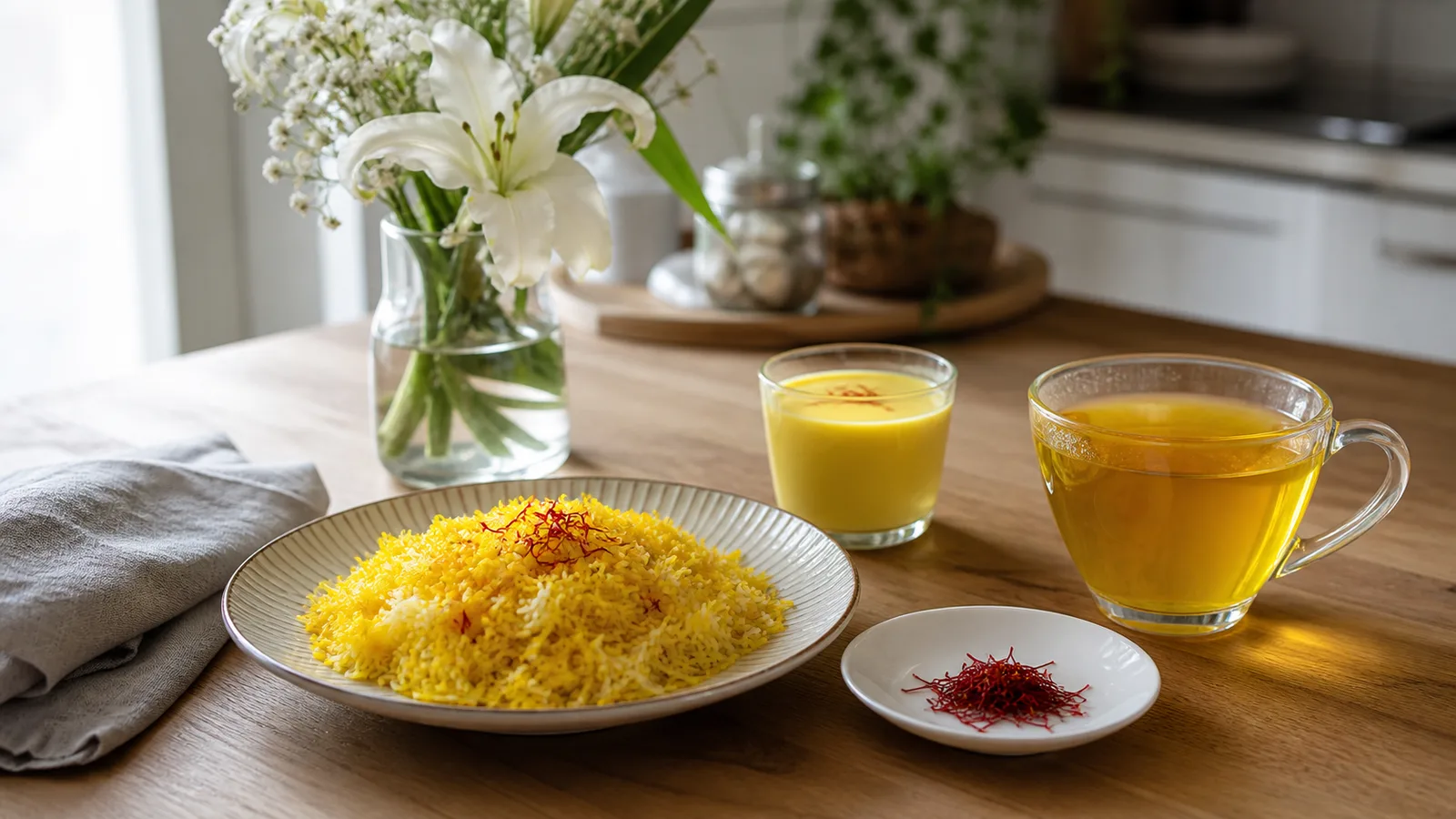
In warm water, genuine threads usually release a golden-yellow colour gradually while retaining their basic structure. An instant red cloud or quickly bleached fibres can be warning signs of a surface dye. Temperature, crushing, storage and grade all change the behaviour, however. Passing the water check is not proof of authenticity.
Our detailed guide to recognising counterfeit saffron and the limits of home tests covers appearance, water, paper, aroma and powder risks. Use those checks for screening, not certification.
A reliable control system starts with the supplier
A processor or importer should know who supplied the lot, where it was produced, when it was harvested or packed, and how it moved through storage. Each transfer needs an identifier that stays connected to the physical product. If two lots are mixed without records, even a good certificate becomes difficult to interpret.
Supplier approval should examine more than a polished website. Useful evidence includes a consistent business identity, documented quality controls, relevant food-safety practices, previous results, complaint handling and the ability to trace a finished pack back to its input lot.
Sampling is as important as the instrument
A laboratory can only test the material it receives. Taking a pinch from the top of one container may miss adulteration elsewhere in a large lot. A sampling plan should define how containers and locations are selected, how portions are combined or kept separate, how the sample is sealed, and who maintains custody.
This is why the old interview’s emphasis on sampling and testing before packaging was sound. The process must be documented, though. “Laboratory tested” without a lot number, date, method, result and responsible laboratory tells a buyer very little.
What ISO 3632 contributes
The current ISO 3632-1:2025 specification applies to dried saffron in filaments, cut filaments and powder. The ISO framework addresses characteristics relevant to identity and quality and provides recognised test context for international trade.
Measurements related to colouring strength, aroma, bitterness, moisture and foreign matter can help describe a lot. They do not by themselves prove every origin claim or detect every possible undeclared material. More targeted methods may be needed when a particular dye, plant substitute or authenticity issue is suspected.
Why advanced fraud can look convincing
Simple imitation threads can be made from plant material and dyed. More sophisticated material may be formed, coated or blended to resemble natural stigmas. A customer may not be able to identify it by touch, and a photograph can hide scale, texture and aroma.
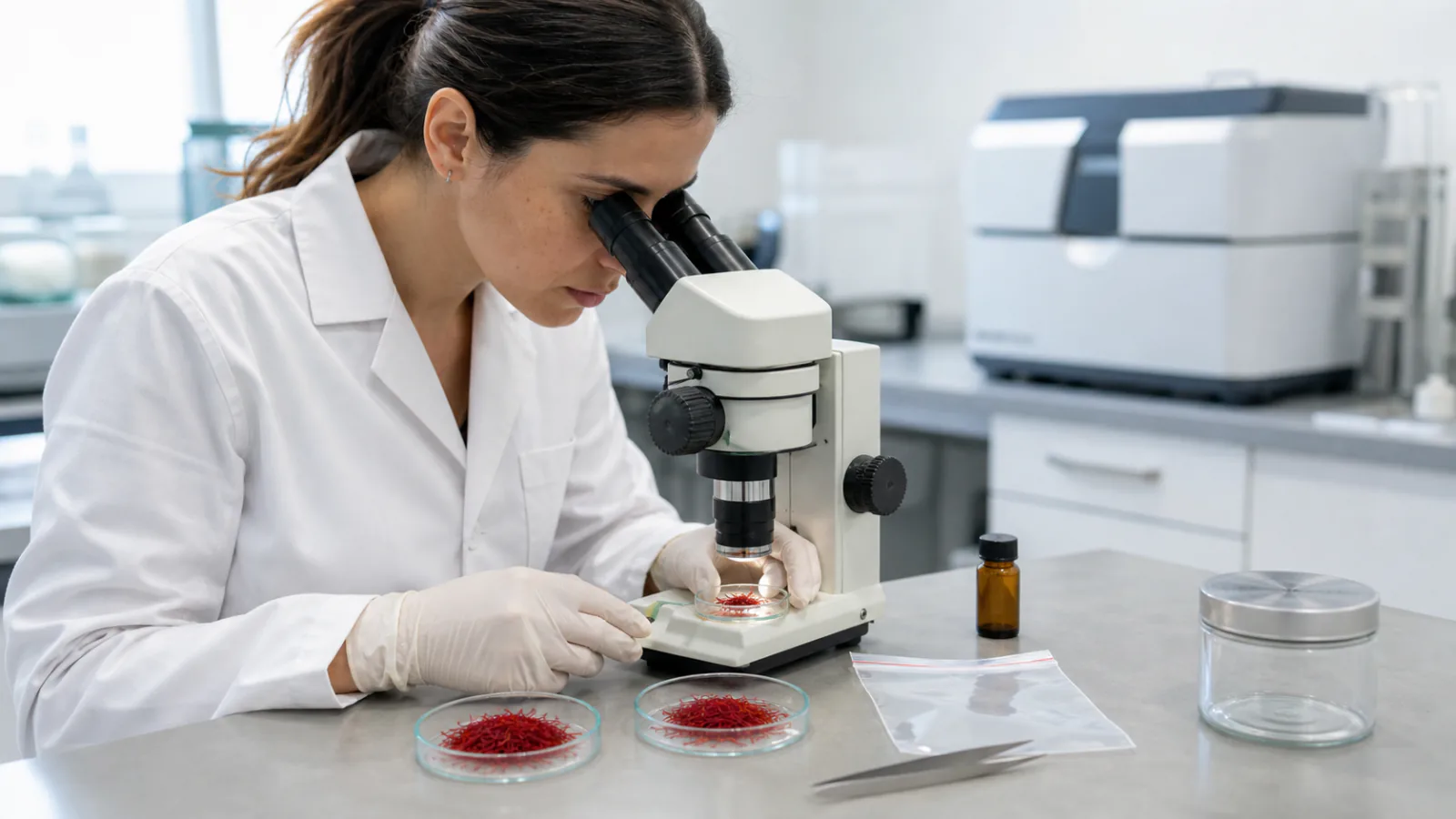
Laboratories may use microscopy, spectroscopy, chromatography, DNA-based methods or combinations of chemical markers, depending on the question. No method should be described as universal without its validation scope. The right test follows a defined risk: suspected added colour, plant substitution, excess moisture, origin claim or another problem.
Packaging and certificates must connect to the same lot
A useful retail pack should identify the food, net weight, responsible business, lot or batch, and relevant date and storage information. Tamper evidence helps preserve what was packed. Requirements differ by market, so an exporter must also follow the rules of the destination country.
A certificate is strongest when it names the tested lot and reports the laboratory, date, methods and actual results. A generic document used for every pack may belong to a different shipment. The certificate, internal lot record and package code should tell one consistent story.
Market monitoring still matters after release
Pre-release testing reduces risk but does not make later oversight unnecessary. Storage conditions can fail, labels can be misapplied, and fraudulent product can enter distribution outside an approved chain. Businesses need complaint records, retention samples and a clear procedure for stopping sale and tracing affected lots.
The historic interview referred to inspections, warnings and licence consequences in a particular regulatory setting. Those details should not be treated as current rules everywhere. The enduring principle is that food authorities and businesses need evidence strong enough to investigate, correct and recall a problematic lot.
What to do when a lot is suspicious
- Stop using or distributing the material and isolate the remaining lot.
- Preserve the package, invoice, lot code, supplier records and a representative sample.
- Record the observation without claiming a chemical identity that has not been tested.
- Contact the supplier and the relevant food-safety or trading authority.
- Use a qualified laboratory and a method suited to the suspected issue.
- Trace where the lot went and follow the applicable withdrawal or recall process if needed.
Confidence comes from connected evidence
A standard mark, a familiar brand, a water test and a laboratory report can each add information. None should stand alone. The strongest defence against counterfeit saffron connects a known supplier, an unbroken lot identity, representative sampling, appropriate testing, protective packaging and accountable follow-up.
For a household buyer, that means choosing intact threads in traceable packaging and reporting a suspicious product. For a commercial buyer, it means building verification into purchasing rather than asking the customer to discover fraud at the end of the chain.