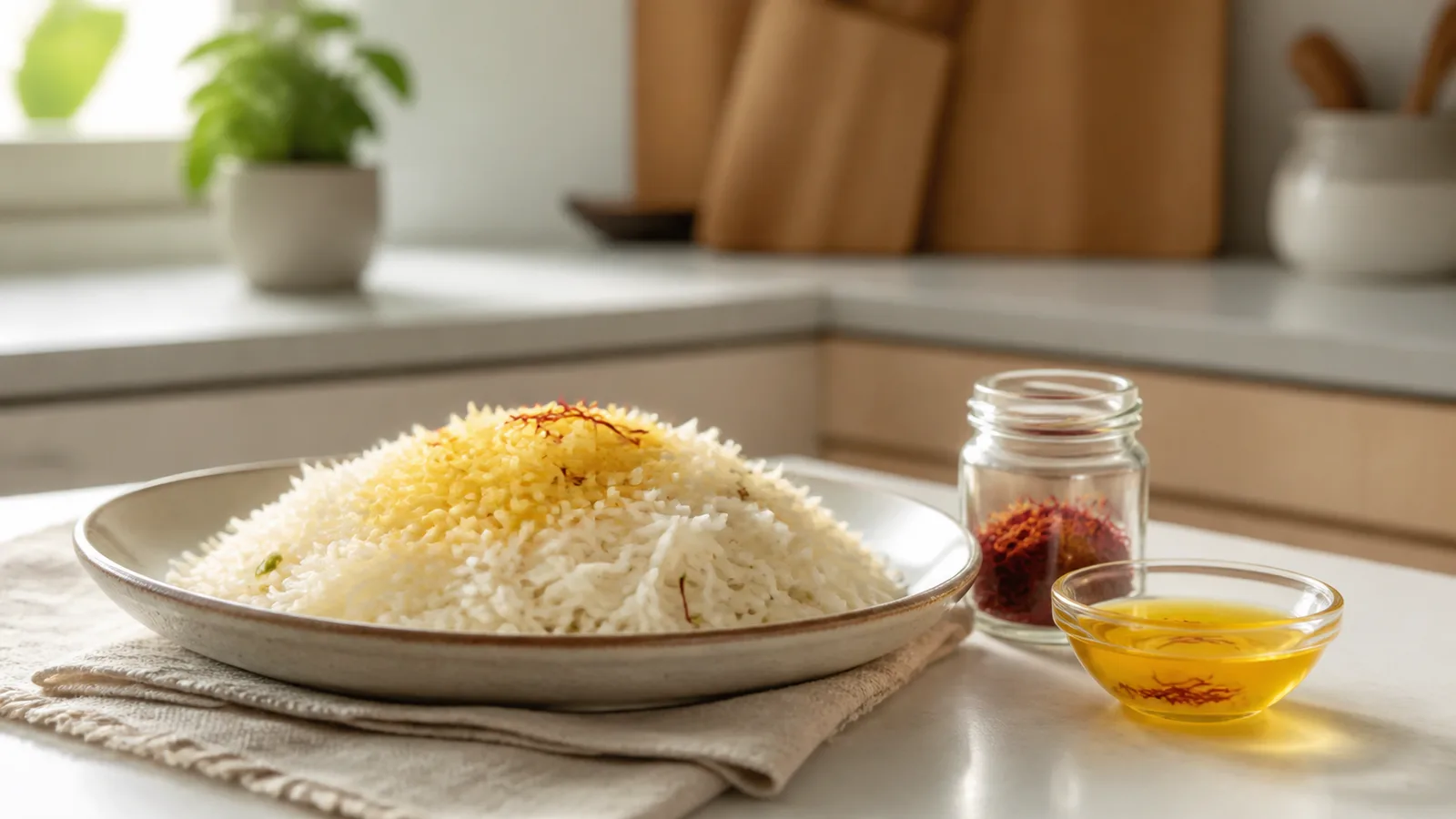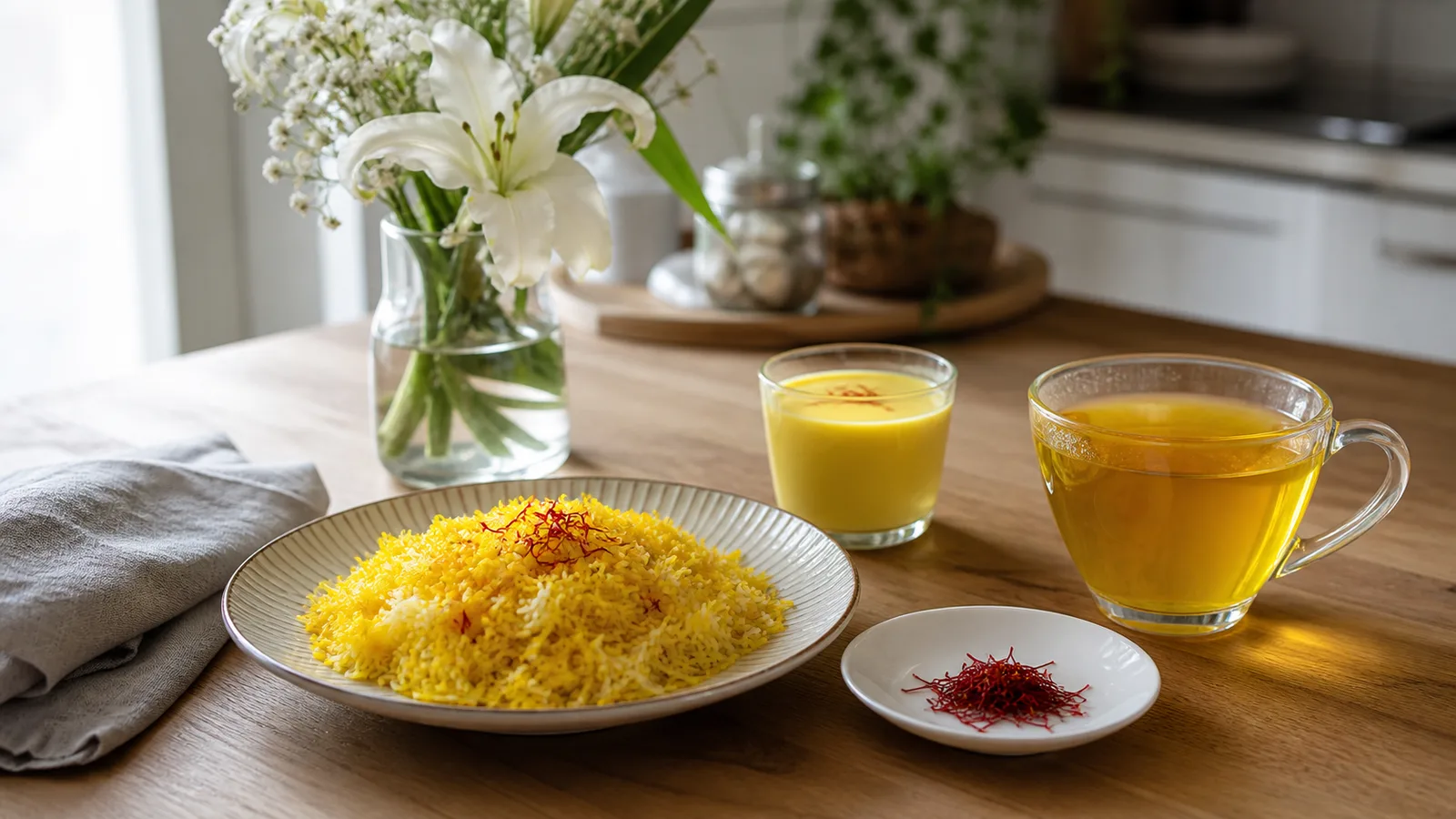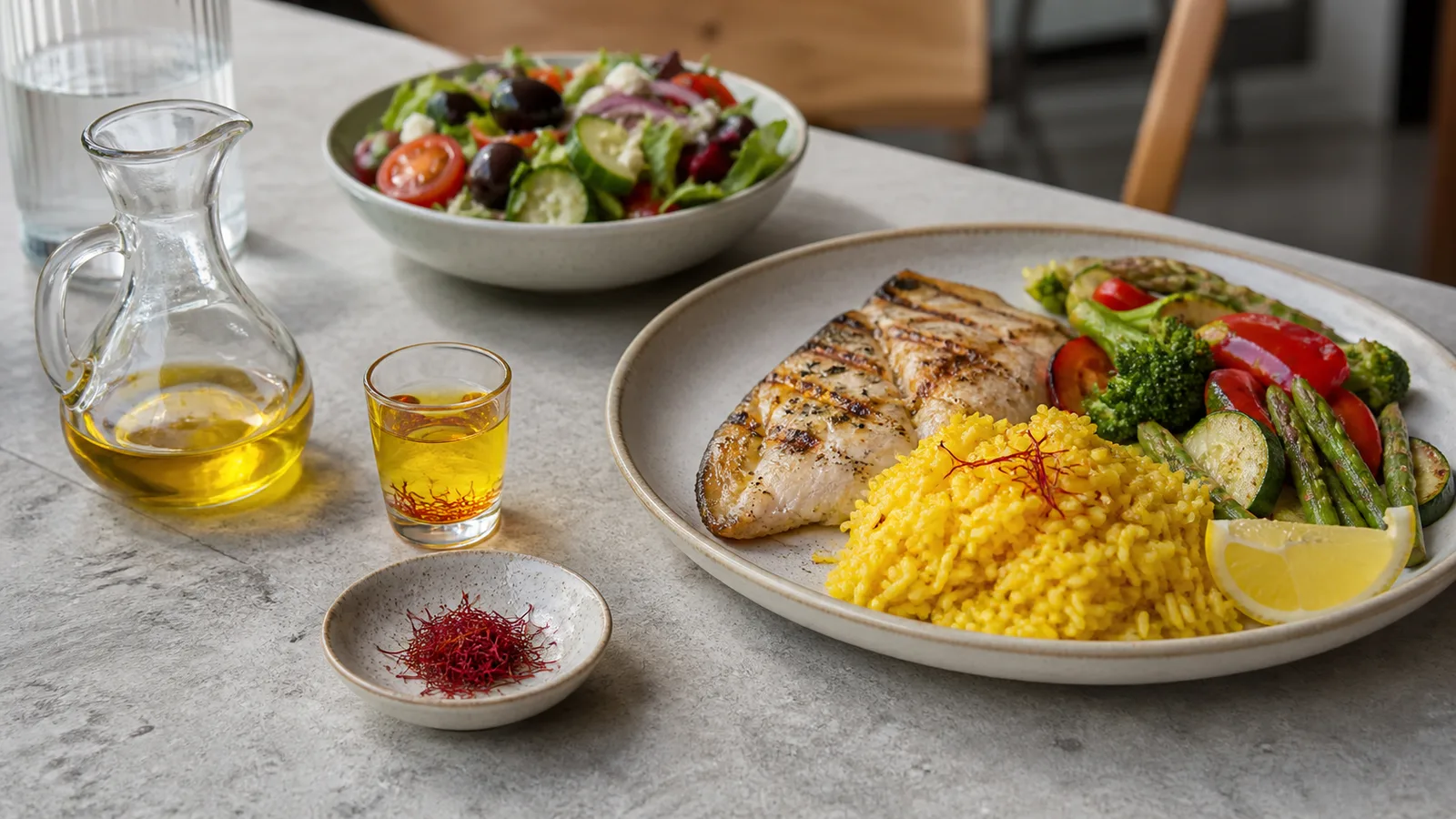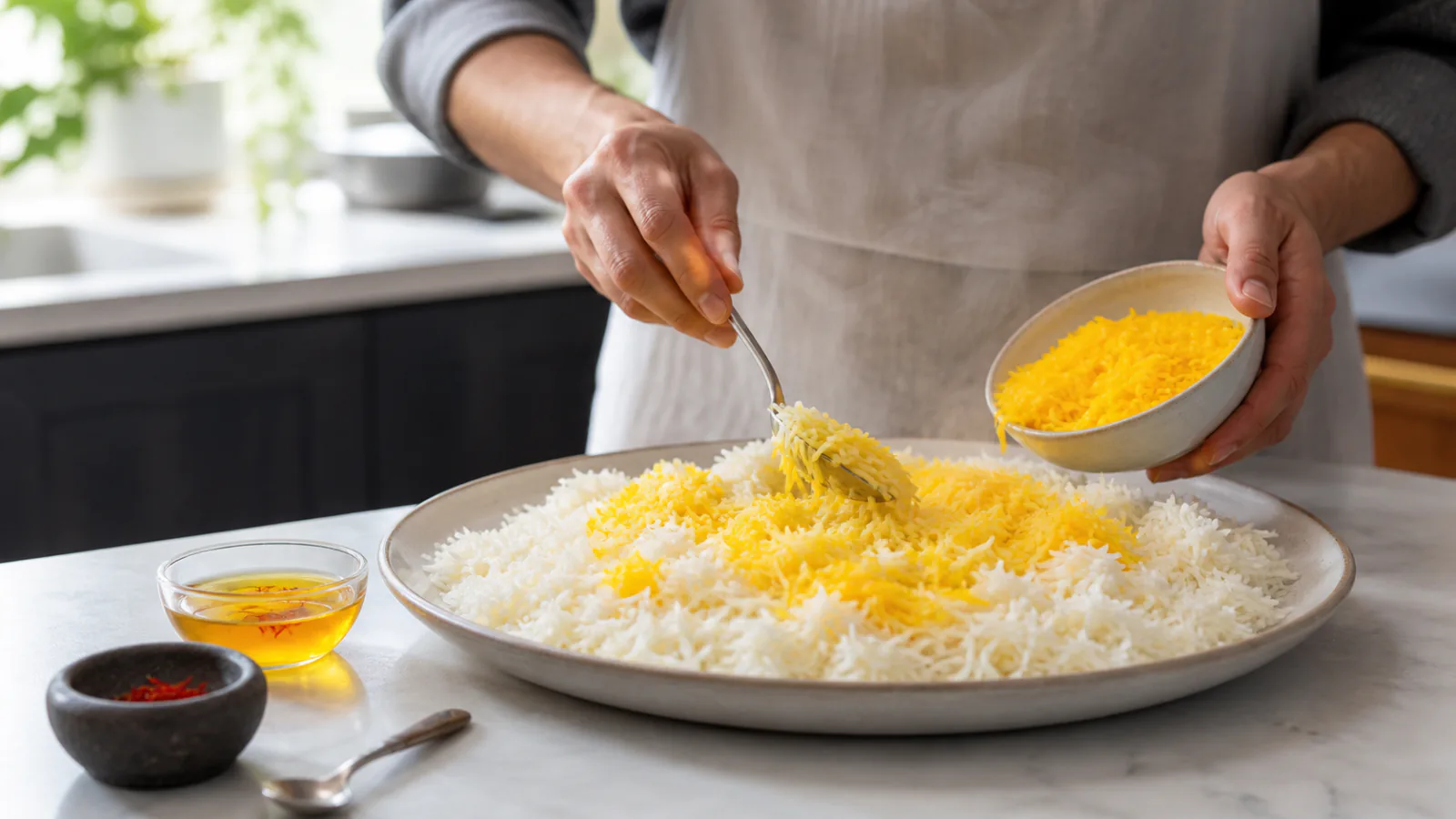
Better saffron color comes from crushing a small measured pinch, blooming it in warm water, and adding the infusion where it can spread evenly through the food. The goal is a clear golden-yellow tone with saffron’s own aroma—not a harsh orange or red dish.
Good technique extracts more from the threads you already have. It cannot turn weak, old or adulterated saffron into a strong spice, so colour also begins with product quality and storage.
How to Get Better Color from Saffron
Why saffron makes food golden
Crocin compounds are chiefly responsible for saffron’s colouring strength. They disperse readily in water, which is why a short infusion works better than leaving all the dry threads in one small part of a rice pot. Safranal contributes much of the aroma, while picrocrocin contributes bitterness; good preparation should preserve the whole sensory balance rather than chase colour alone.
Commercial laboratories can measure saffron characteristics under the ISO 3632 framework. The current ISO 3632-1:2025 specification covers dried saffron in filament, cut-filament and powder forms. A home cook does not need a laboratory, but this distinction is useful: the deepest-looking thread is not automatically the best lot, and the final dish should not be judged by redness alone.
Use a modest amount and a clean tool
Start with the amount your recipe requires. For a family-size rice dish, a small pinch is usually enough; exact strength varies by saffron and personal preference. Count on aroma as well as colour. Adding more and more threads can make the dish bitter and wastes an expensive ingredient.
Place the threads in a small dry mortar. Grind gently with a pestle until they are coarse, not dusty. If the threads slide around, a few grains of sugar or salt from the recipe can provide friction. Use sugar only in a sweet dish and salt only when it already belongs in the savoury recipe.
Bloom saffron in warm water
- Put the crushed saffron into a small heat-safe glass or cup.
- Add 2 to 4 tablespoons of warm water. It should be hot enough to infuse, but it does not need to be violently boiling.
- Cover the cup and leave it for 10 to 15 minutes.
- Stir once. The liquid should become clear gold to orange-gold and smell distinctly of saffron.
Milk can be used when it suits the recipe, but water lets you see the colour and distributes easily. Ice-blooming is a popular alternative; it works slowly as the ice melts, but it is not necessary for good results. The important steps are crushing, contact with liquid and enough time for extraction.
How to colour rice evenly
Cook the rice according to its usual method. When it is nearly ready, take a portion of the cooked white rice into a separate bowl and fold in some saffron infusion. This creates a vivid golden portion that can be scattered across the top without making every grain identical.
For a more uniform colour, drizzle the infusion across a wider area before the final steaming stage, then fold gently. Avoid pouring the entire cup into one spot. If the rice is already very wet, use a more concentrated bloom so you do not change its texture.
For tahdig, mix part of the infusion with the rice, yogurt or other base used in your chosen recipe. Watch the heat: browning comes from the cooking surface, while saffron supplies the golden hue and aroma. Burning the crust is not a stronger saffron colour.
Using saffron in stews, sauces and sweets
In a stew or soup, add the bloom late enough that the aroma remains noticeable but early enough to disperse. In a sauce, stir it into the liquid before final seasoning. For custard, cake or syrup, infuse saffron in a small part of the recipe’s liquid and then mix that liquid through the batch.
Fat-rich foods can carry aroma well, but the colour still needs a route through the mixture. A water-based bloom before combining with butter, cream or oil is a dependable approach.
Common reasons saffron colour looks weak
- The threads stayed whole: less surface area was exposed to the liquid.
- The infusion was poured into one spot: colour never reached the rest of the dish.
- The saffron was old or poorly stored: light, heat, air and moisture can diminish its useful qualities.
- The liquid was too large for the amount: the colour was diluted before it reached the food.
- The dish already had strong colours: tomato, turmeric or browning can mask saffron’s golden tone.
- The product was weak or adulterated: technique cannot restore compounds that are absent.
Do not use artificial colour as a saffron test
A product that releases an instant, intense red cloud may contain added colour, but one kitchen observation cannot certify authenticity. Genuine saffron also varies, and crushing changes how quickly colour appears. ISO notes that formal quality and purity assessment uses specifications and test methods, including checks relevant to foreign matter and colouring strength.
Buy whole threads from a traceable seller, keep them airtight in a dark, dry place, and use clean, dry utensils. Our guide to buying high-quality saffron explains the purchase checks that matter before cooking begins.
Better saffron colour is balanced colour
The best result is not the darkest possible plate. It is an even golden colour that arrives with saffron’s recognisable aroma and a clean taste. Crush gently, bloom in a small amount of warm water, distribute thoughtfully, and let the dish—not a food-colour comparison—tell you when enough is enough.