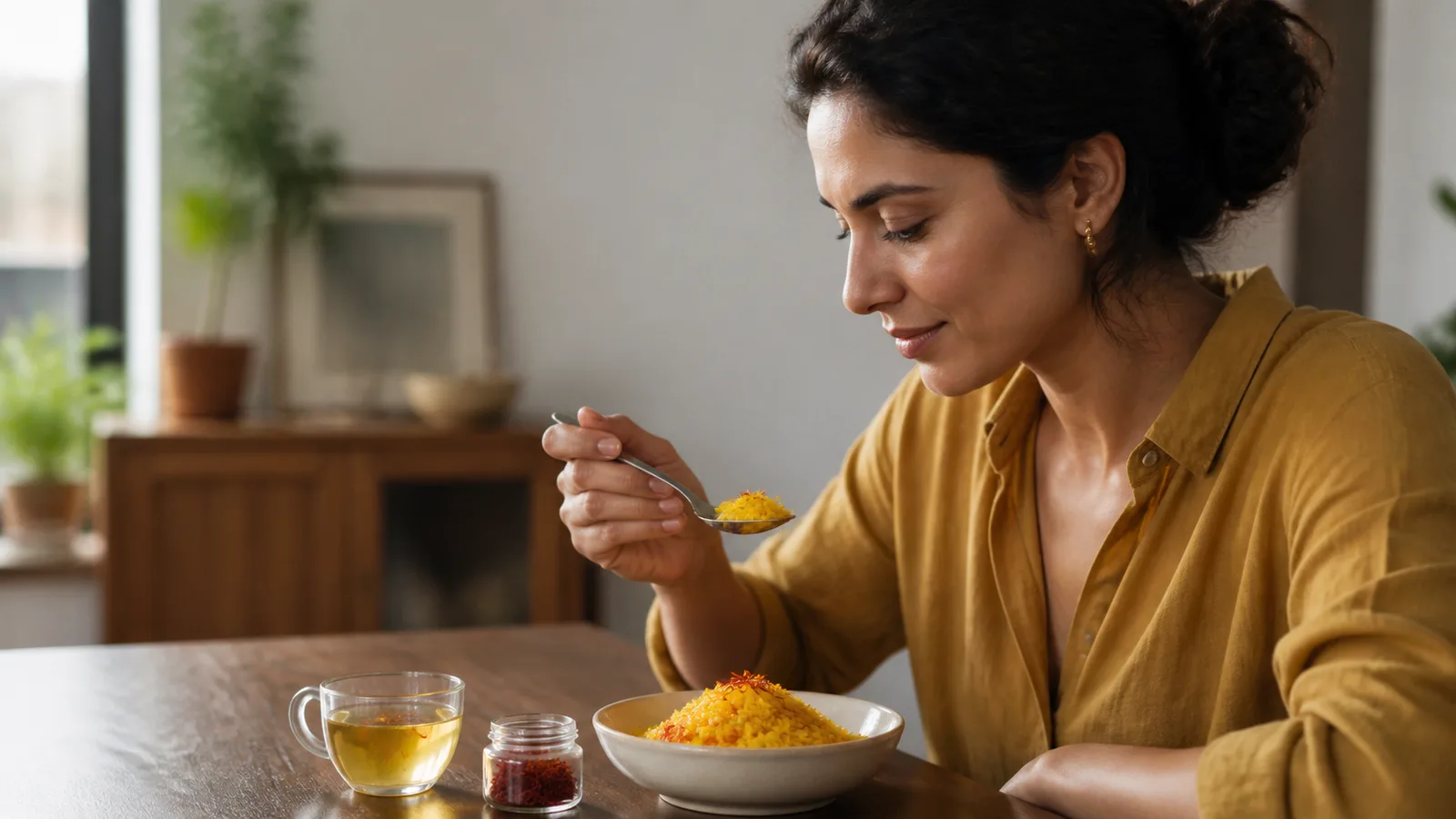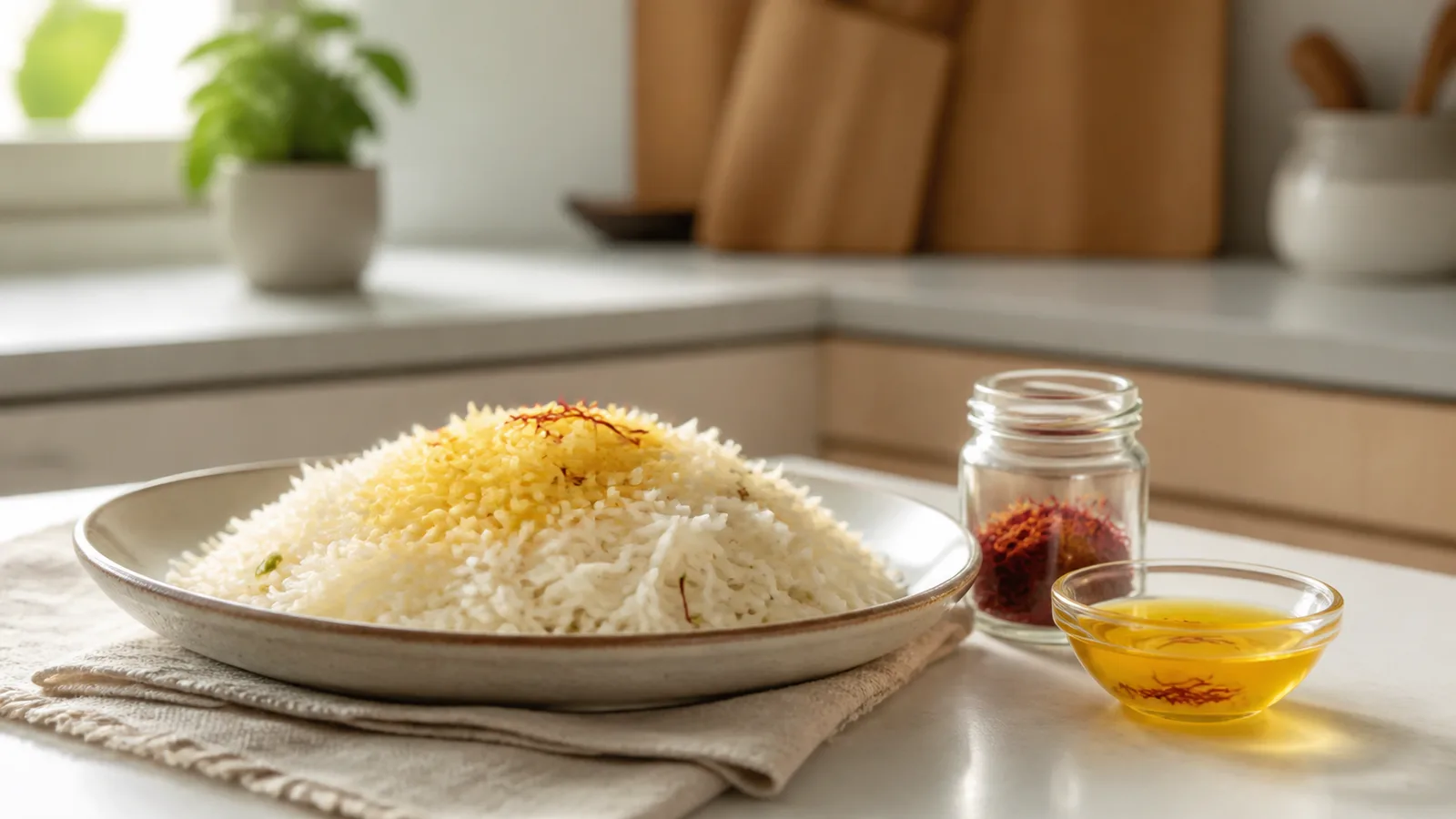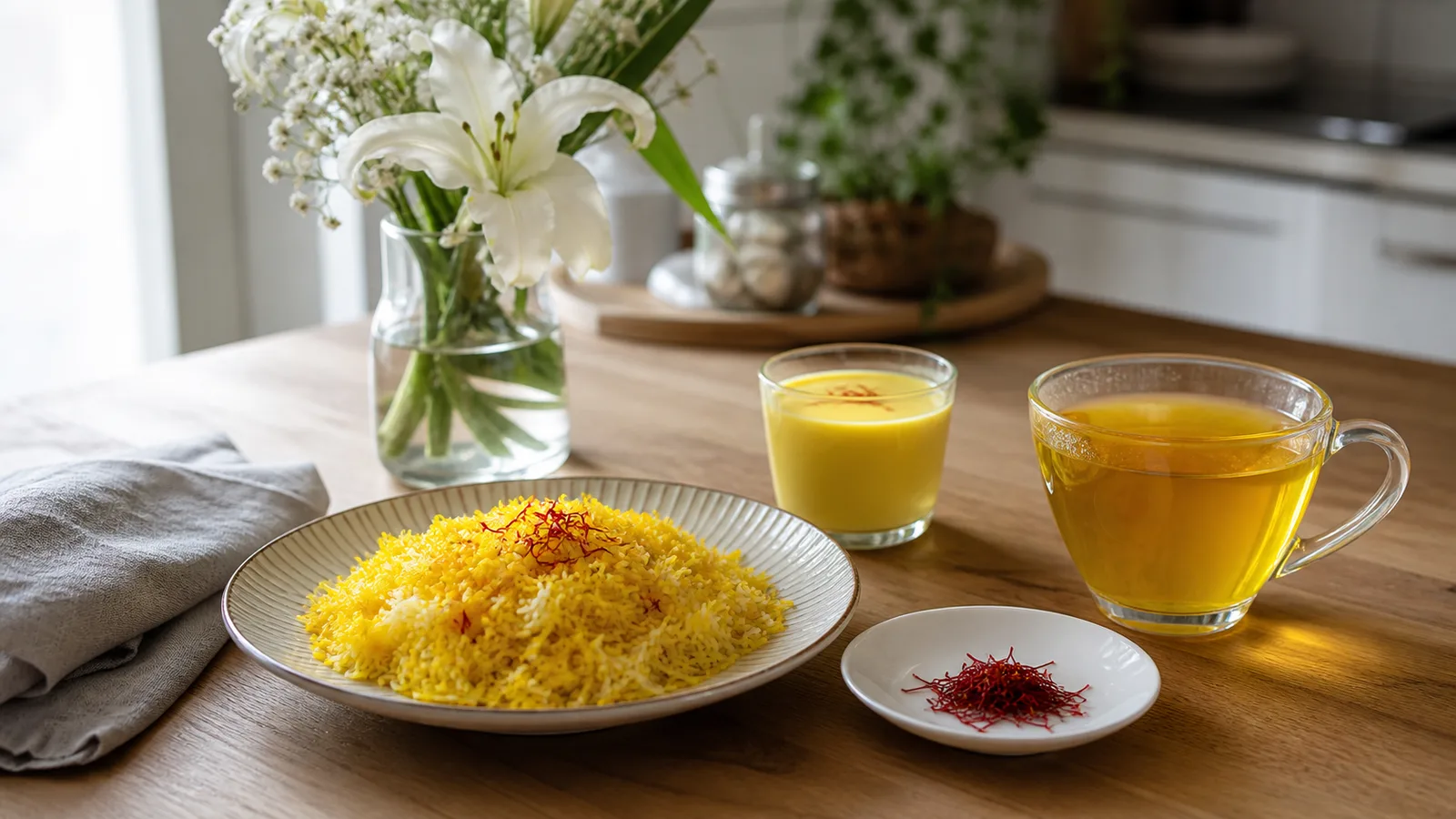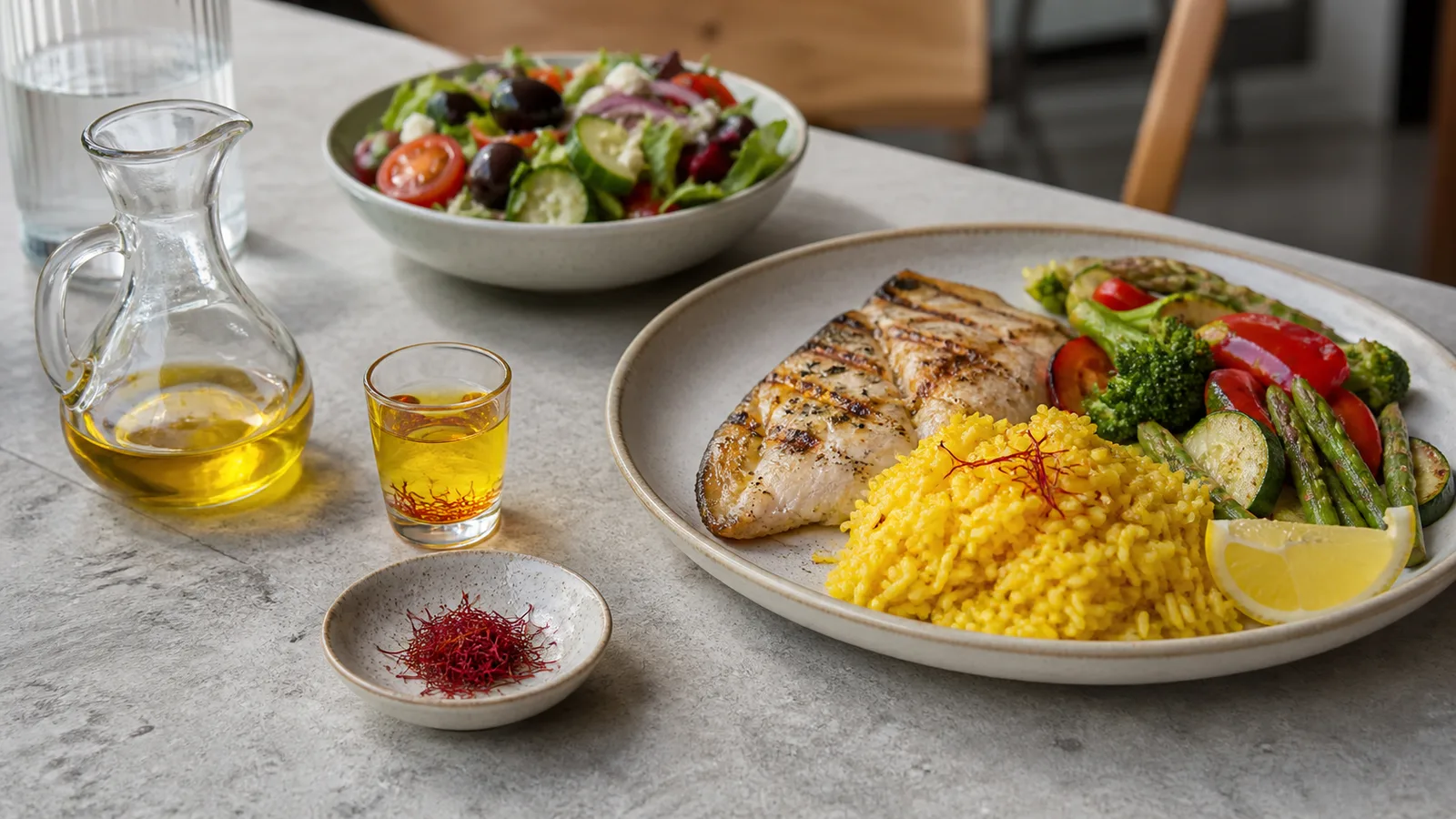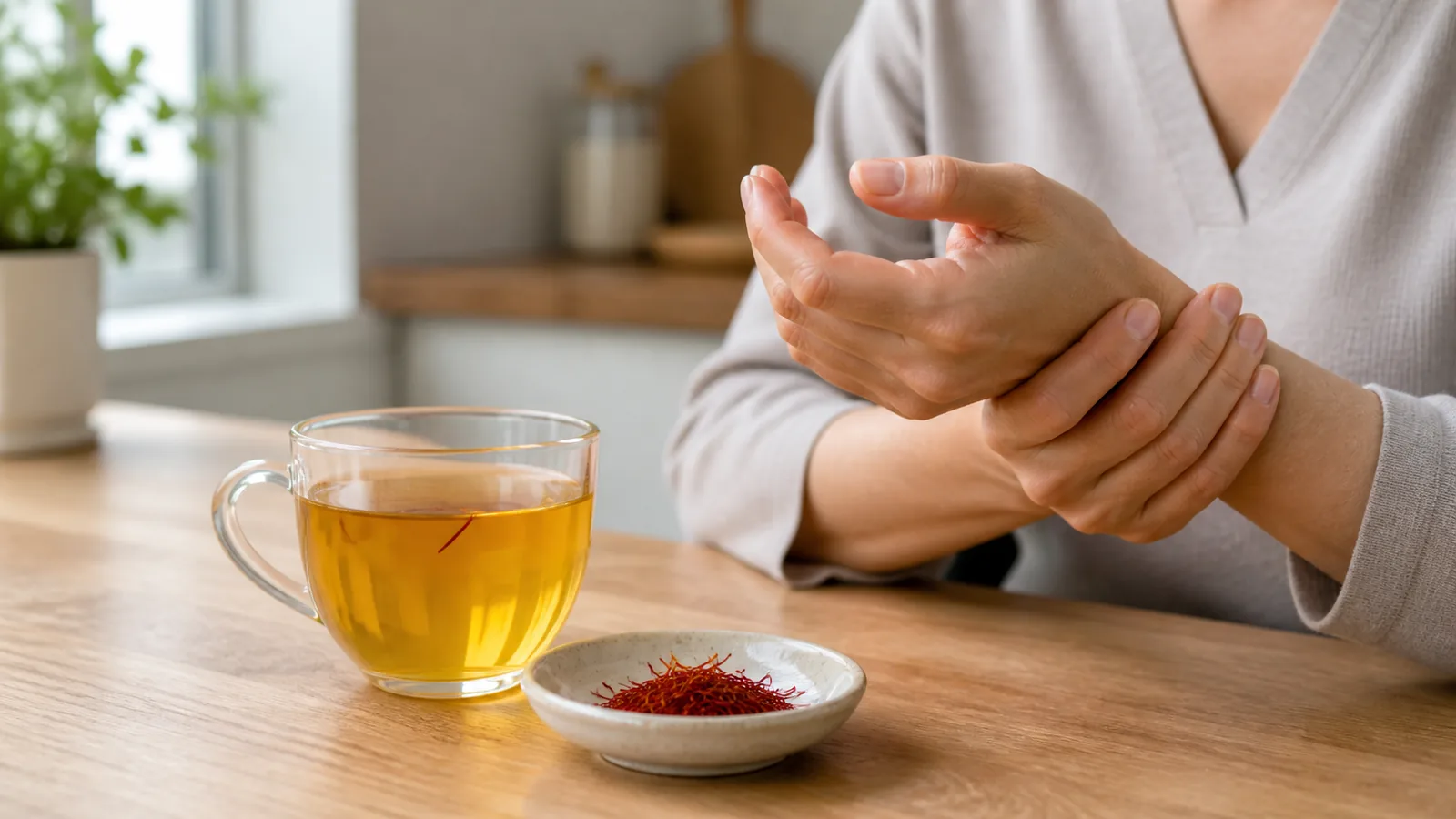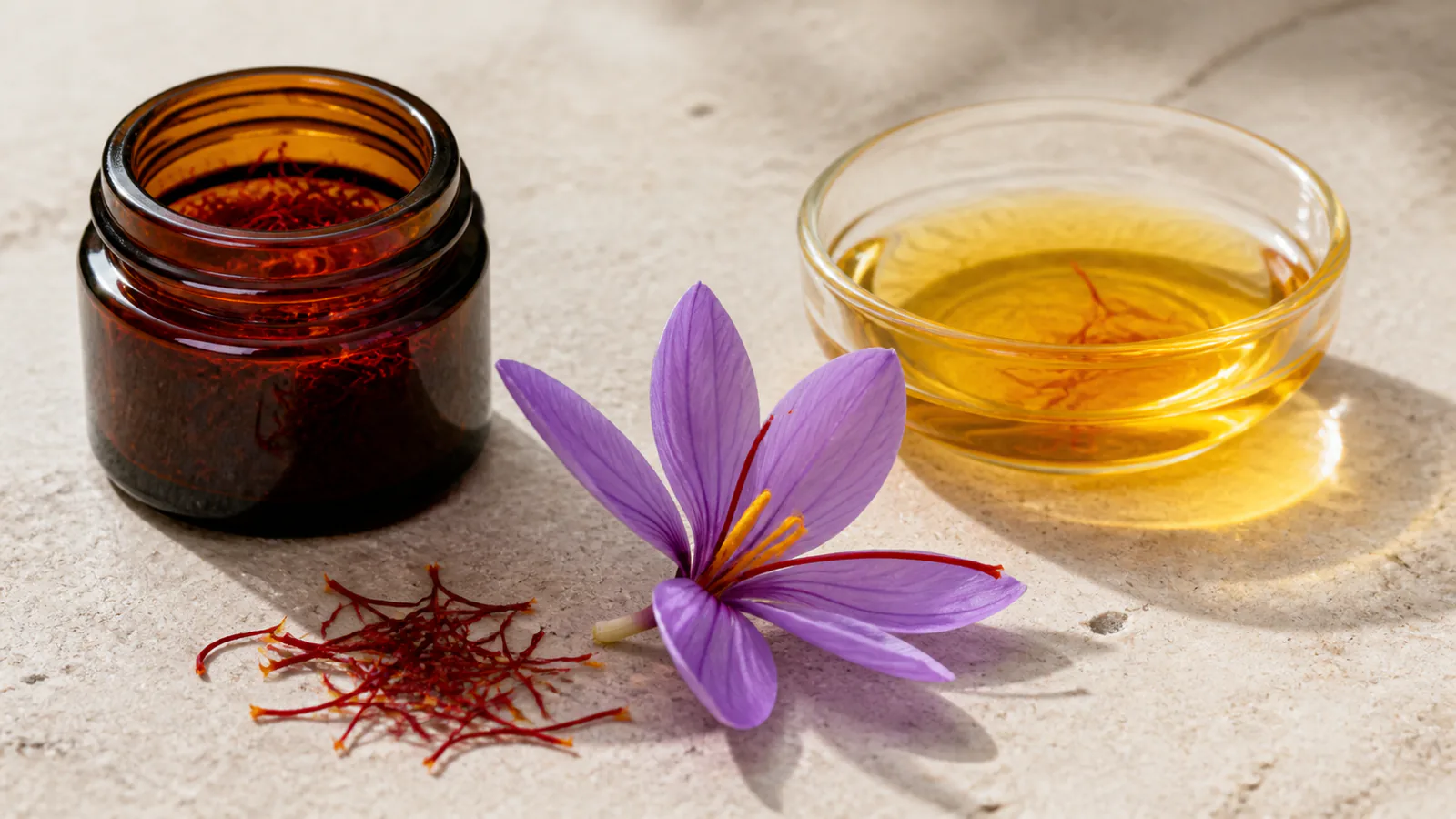
Familiarity with the properties of saffron begins with a simple distinction: some properties describe the spice itself, while others are possible health effects being studied. Saffron’s red threads, golden colour, delicate aroma and bitter edge are established characteristics. Claims that it treats a long list of diseases require much more caution.
This guide separates botany, sensory quality, culinary function and clinical research so that each claim is judged on the right kind of evidence.
Botanical properties of saffron
Saffron is produced from Crocus sativus, a perennial flowering plant in the iris family. It grows from an underground corm. Because cultivated saffron is sterile, growers normally multiply it by dividing and replanting corms rather than collecting viable seed.
The flower usually has six violet tepals. At its centre are three red stigmas, often collected with a small part of the style. Those dried floral parts become the spice. The flower is not orange, and the whole plant is not ground into commercial saffron.
This small yield helps explain the price. Flowers open during a compact harvest season and are picked by hand; the stigmas then have to be separated and dried. The exact flower-to-weight calculation varies with stigma size, moisture and processing, so a single universal number should not be treated as a guarantee.
Saffron’s sensory properties
Colour
Crocins, a group of water-soluble carotenoid pigments, create saffron’s characteristic golden colour in food and drink. Good threads release colour into water over time. They do not need to turn the liquid an artificial red.
Taste
Picrocrocin contributes a clean bitterness. In the right amount, that edge balances the aroma and gives a dish depth. Too much saffron can make bitterness dominate, so quality and extraction matter more than simply adding extra threads.
Aroma
Safranal is an important part of saffron’s aroma. The full fragrance is more complex than one molecule, and it changes with drying, age and storage. A clean, warm scent is desirable; damp, dusty or musty notes can signal poor storage.
An updated review of saffron phytochemistry and quality control identifies crocin, picrocrocin and safranal as its three principal characteristic compounds.
How these properties work in food
Saffron is used across the Middle East, South Asia and Mediterranean cooking, including dishes from Iran, India, Spain and Italy. It is valued because a small quantity can affect aroma, flavour and appearance together.
Crush the threads gently and steep them in warm water or milk before adding them to a recipe. This makes the colour and aroma easier to distribute. Avoid scorching the spice or boiling it hard for a long time, because delicate aromatic compounds can be lost. The practical steps are covered in our guide to using saffron when cooking.
Saffron contains small amounts of nutrients, but a culinary serving is tiny. It should not be presented as a meaningful source of fat, minerals or vitamins in an ordinary meal. Its sensory compounds, not macronutrient content, are why cooks use it.
Properties studied in human health research
Researchers have examined saffron powders, extracts and isolated compounds in areas that include mood, sleep, cognition, metabolic markers and inflammation. A result from an extract study does not automatically describe a pinch of saffron in rice, and a change in a laboratory marker is not the same as preventing a disease.
Mood and sleep
Mood is among the more extensively studied areas. A 2026 meta-analysis of 34 randomised controlled trials found improvements on some self-reported depression and anxiety scales, but not on every clinical measure. The review rated the evidence as moderate and found substantial differences between studies.
Small trials and reviews have also reported possible sleep benefits, but they vary in participants, preparation and dose. These findings do not make saffron a substitute for an assessment of persistent insomnia, depression or anxiety.
Cholesterol, blood pressure and inflammation
Some pooled trials report modest changes in certain cardiometabolic measurements. They do not prove that saffron prevents heart disease or treats high cholesterol. Differences in extract, dose, study population and duration make a broad promise especially unreliable.
Memory, vision and pain
Early human and laboratory research has investigated cognition, retinal conditions and inflammatory pathways. It is inaccurate to turn that work into claims that saffron restores damaged eye cells, reverses memory loss, dissolves kidney stones or treats arthritis. Those conditions need diagnosis and evidence-based care.
Claims that saffron prevents cancer or repairs carcinogenic gene sequences are also unsupported. Laboratory activity can help researchers choose what to test next; it does not establish prevention or treatment in people.
Safety is a property too
Normal culinary use and repeated medicinal-dose supplementation are different exposures. A 2026 systematic review of adverse events found that medicinal saffron preparations were generally tolerated, but side effects occurred and were most often gastrointestinal. The authors advised clinical monitoring for higher-dose or prolonged medicinal use.
Pregnant people, children, people with health conditions and anyone taking medicines should seek individual medical advice before using concentrated saffron products. The US Food and Drug Administration also notes that dietary supplements are not approved to diagnose, treat, cure or prevent disease and should not replace prescription medicine.
How to judge saffron quality at home
- Prefer intact red threads when you want to inspect the material yourself.
- Expect a clean, distinctive aroma rather than a sugary perfume.
- Look for gradual golden colour release when the threads are steeped.
- Avoid damp product, excessive yellow style, unexplained powder or instant red dye.
- Store saffron airtight, cool, dry and away from light.
Real familiarity with the properties of saffron means appreciating what is certain and staying honest about what is still under study. Its botanical identity and culinary performance are clear. Its medical potential is a research subject, not a licence for a cure-all label.