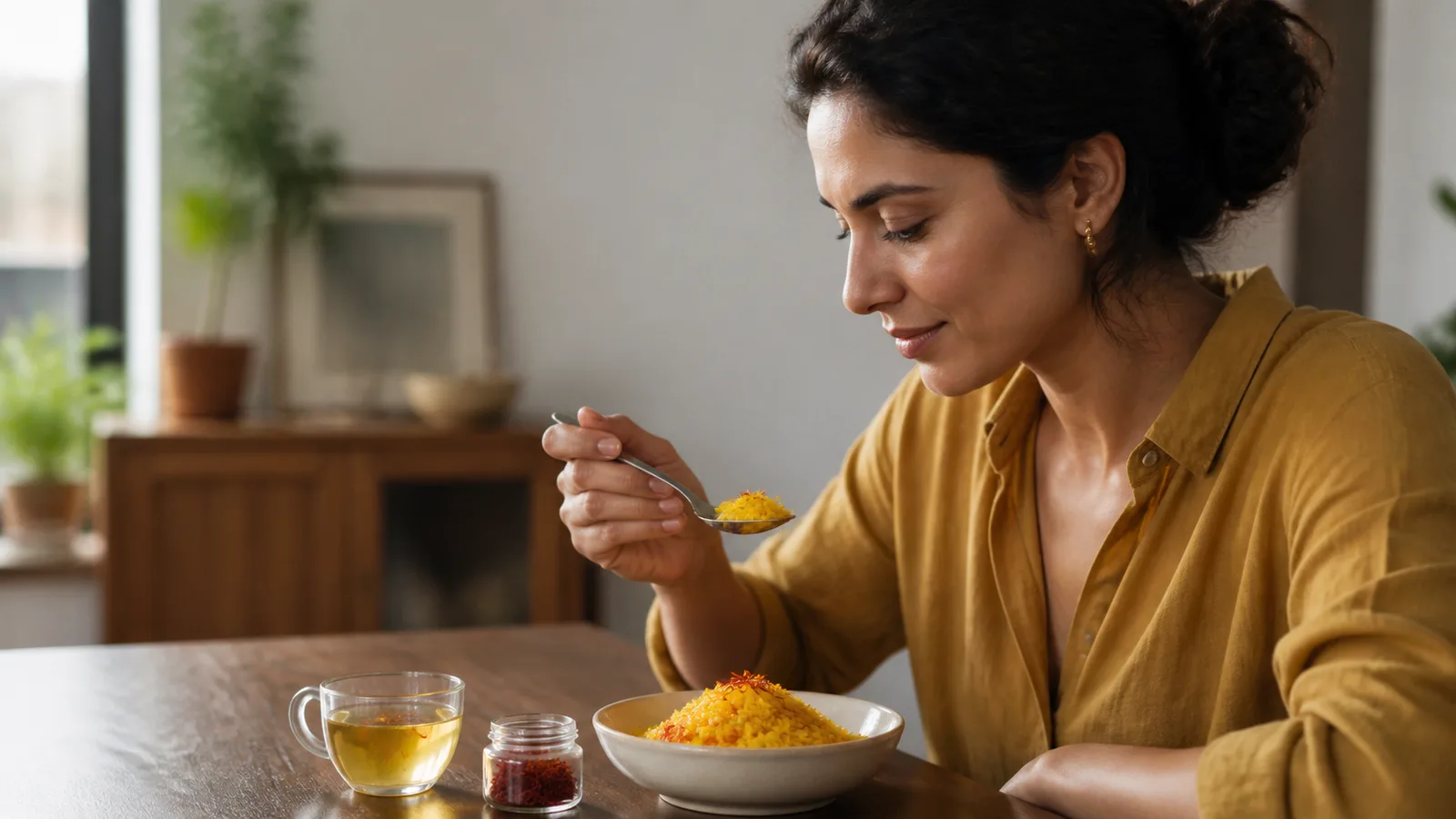
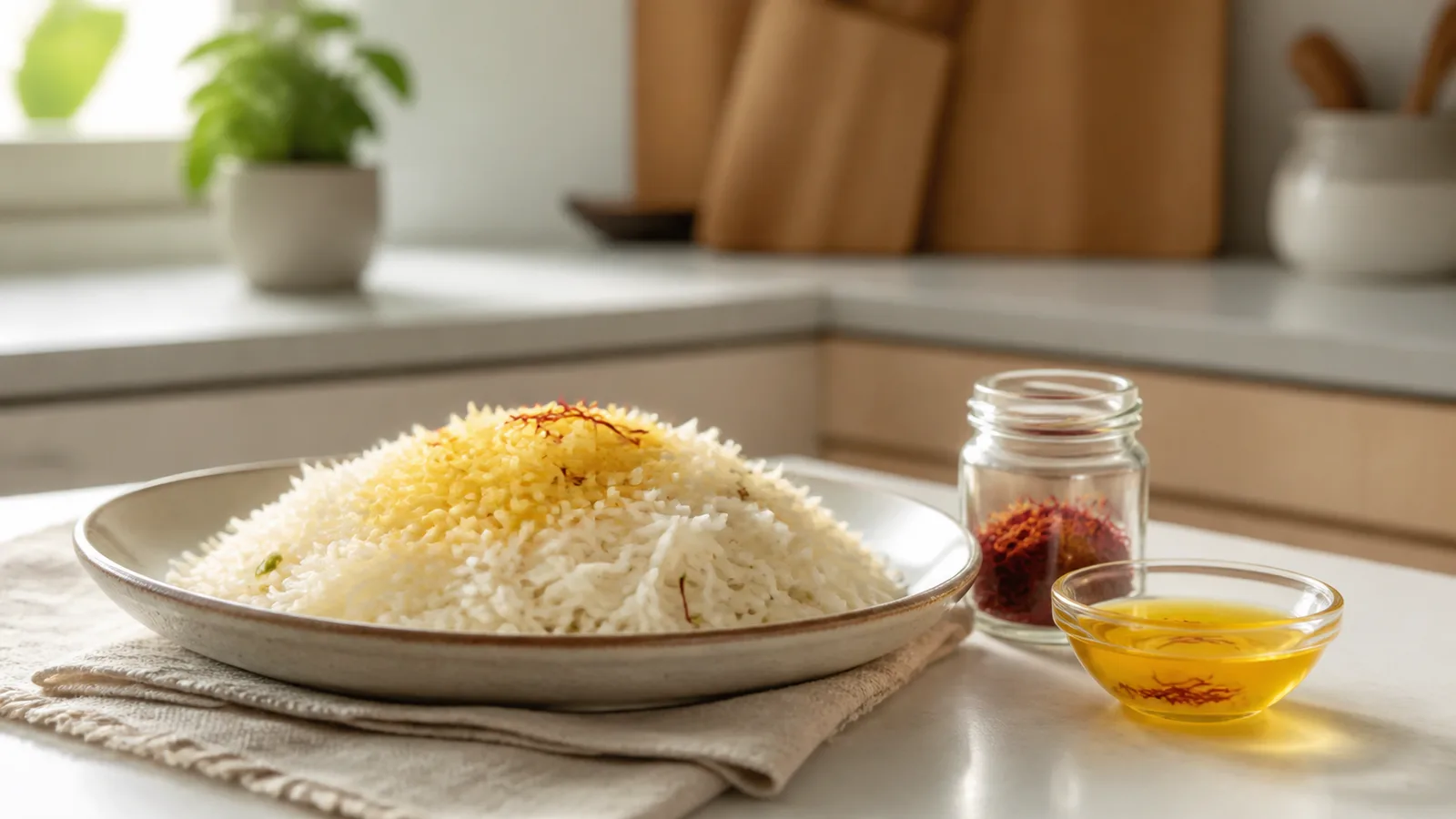
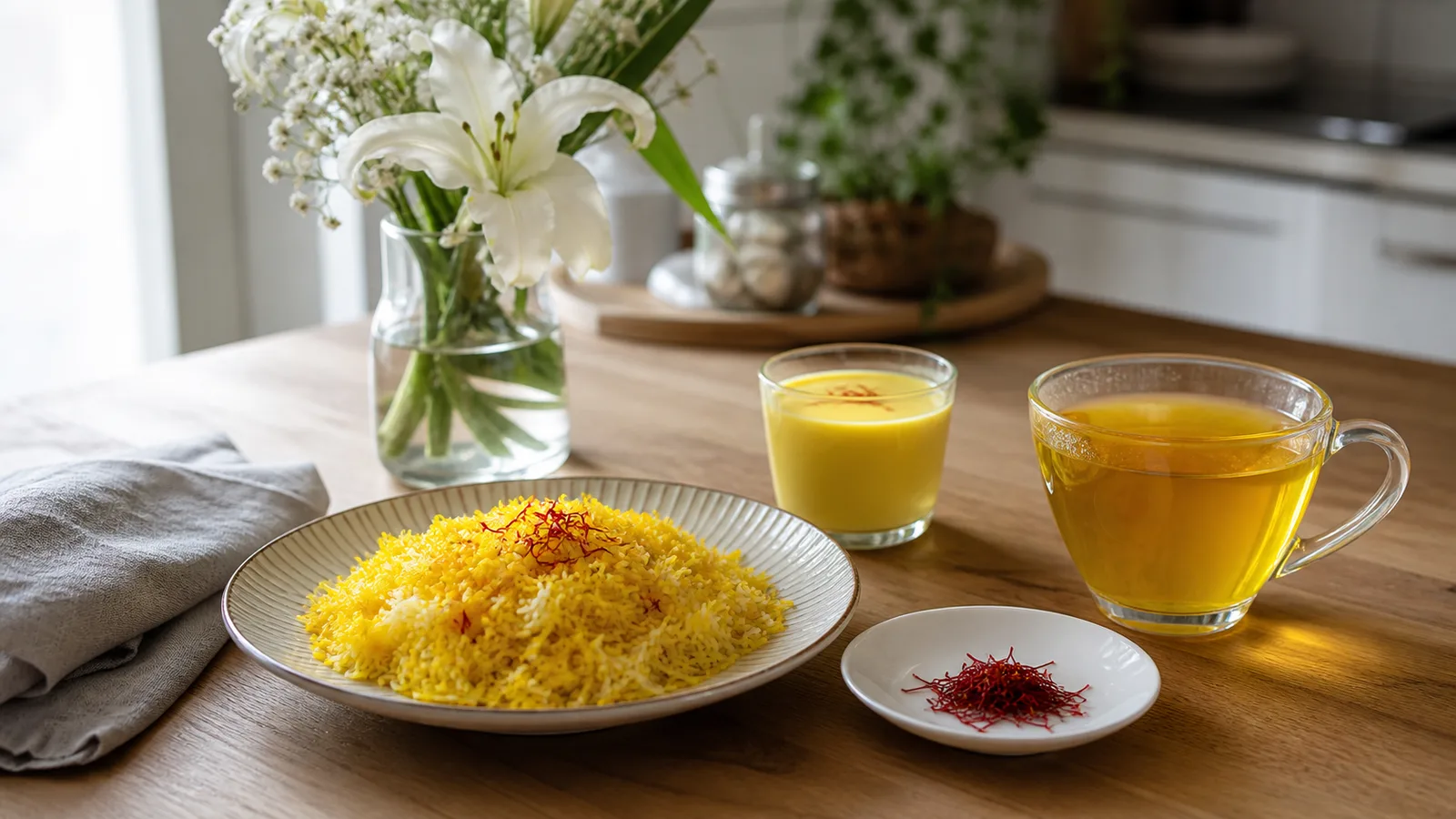
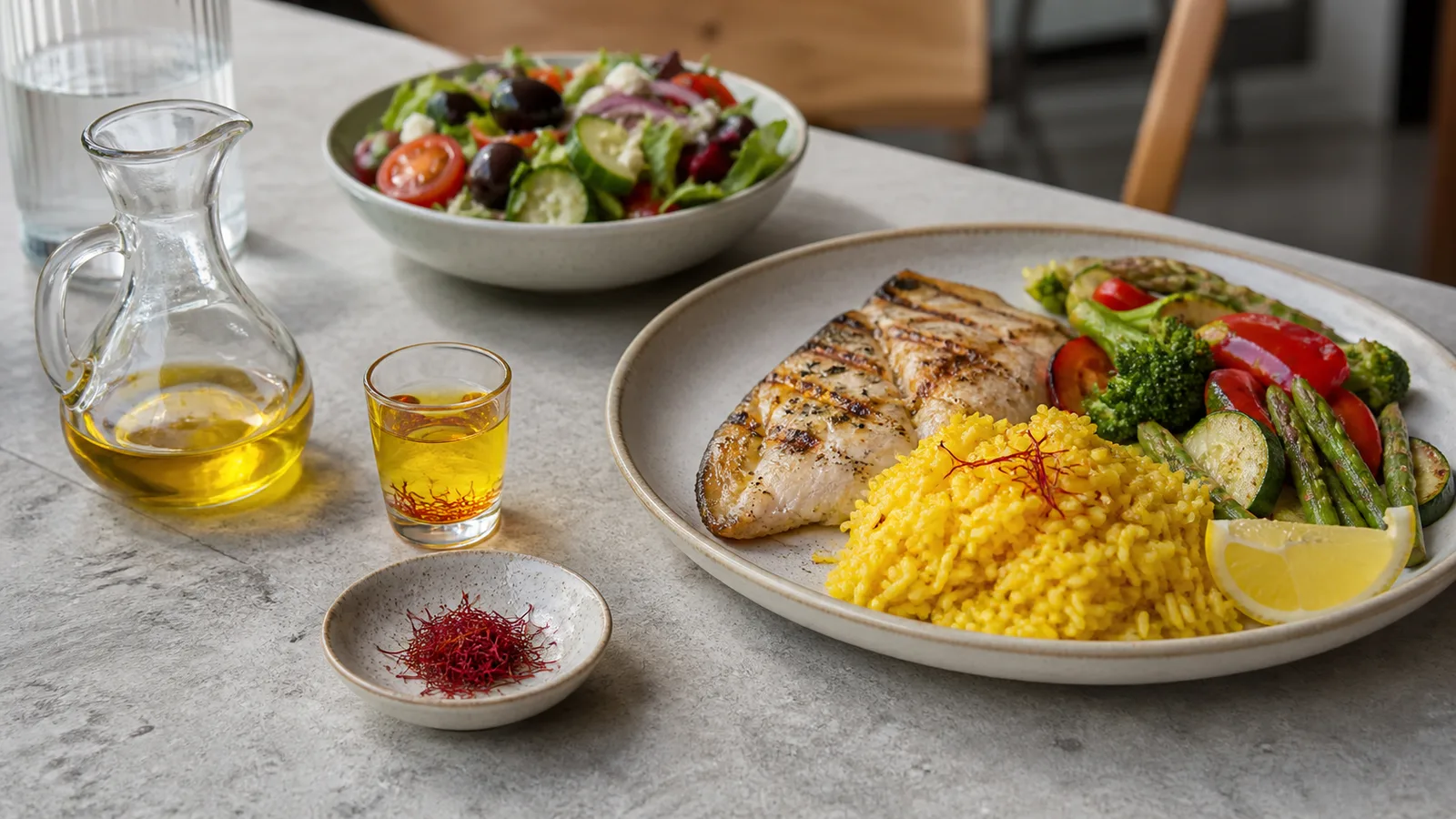
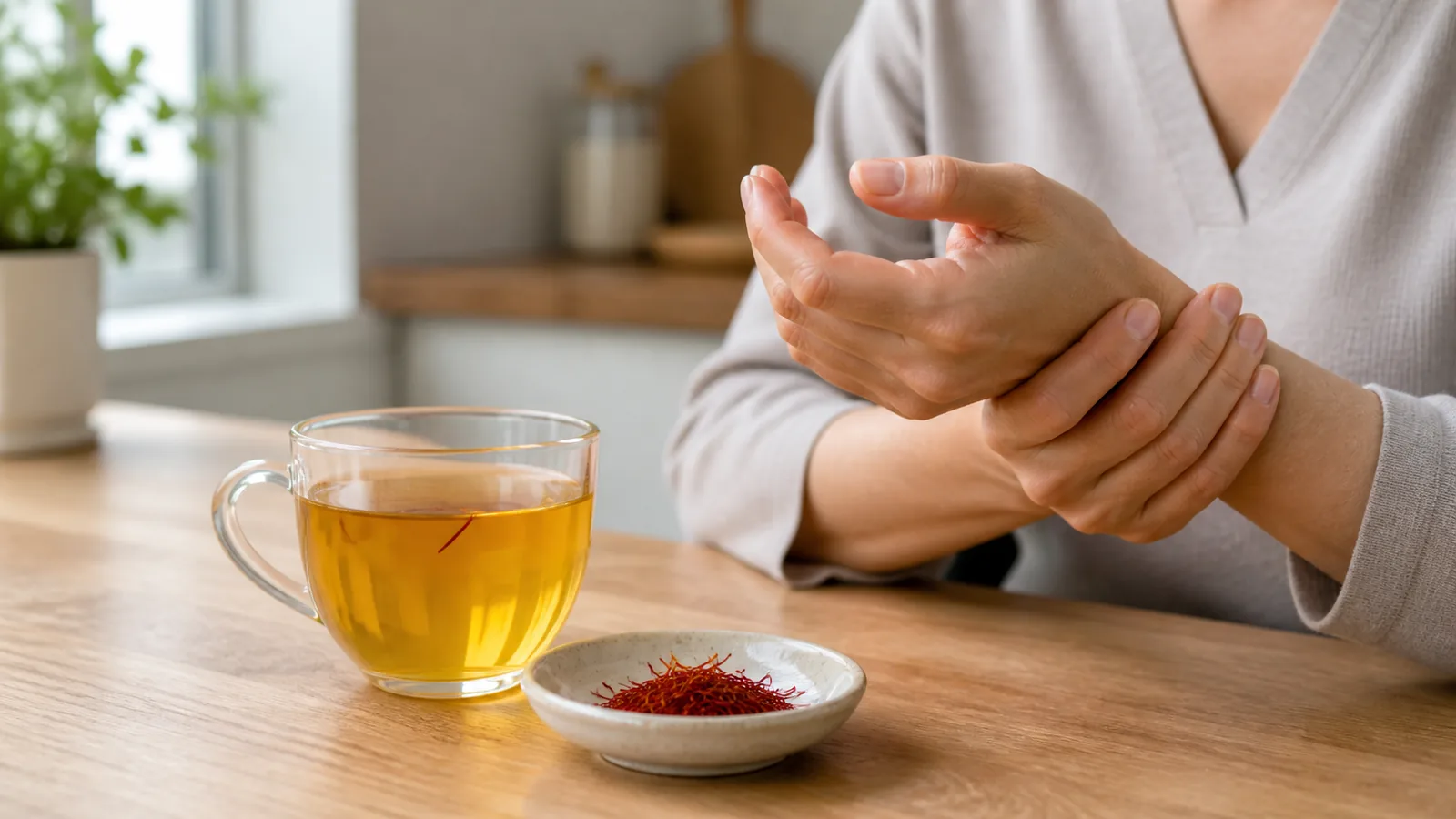
Saffron can make food more aromatic and colourful, and extracts of Crocus sativus have been studied for several health outcomes. Those are two different uses. A pinch in rice or tea is not the same intervention as a standardised capsule used in a clinical trial, and neither should be described as a cure.
This evidence-led review explains the potential benefits and harms of saffron without turning early research into medical advice. Anyone considering an extract for a diagnosed condition should discuss the product, dose and medicines they take with a qualified clinician.
The saffron plant and the spice
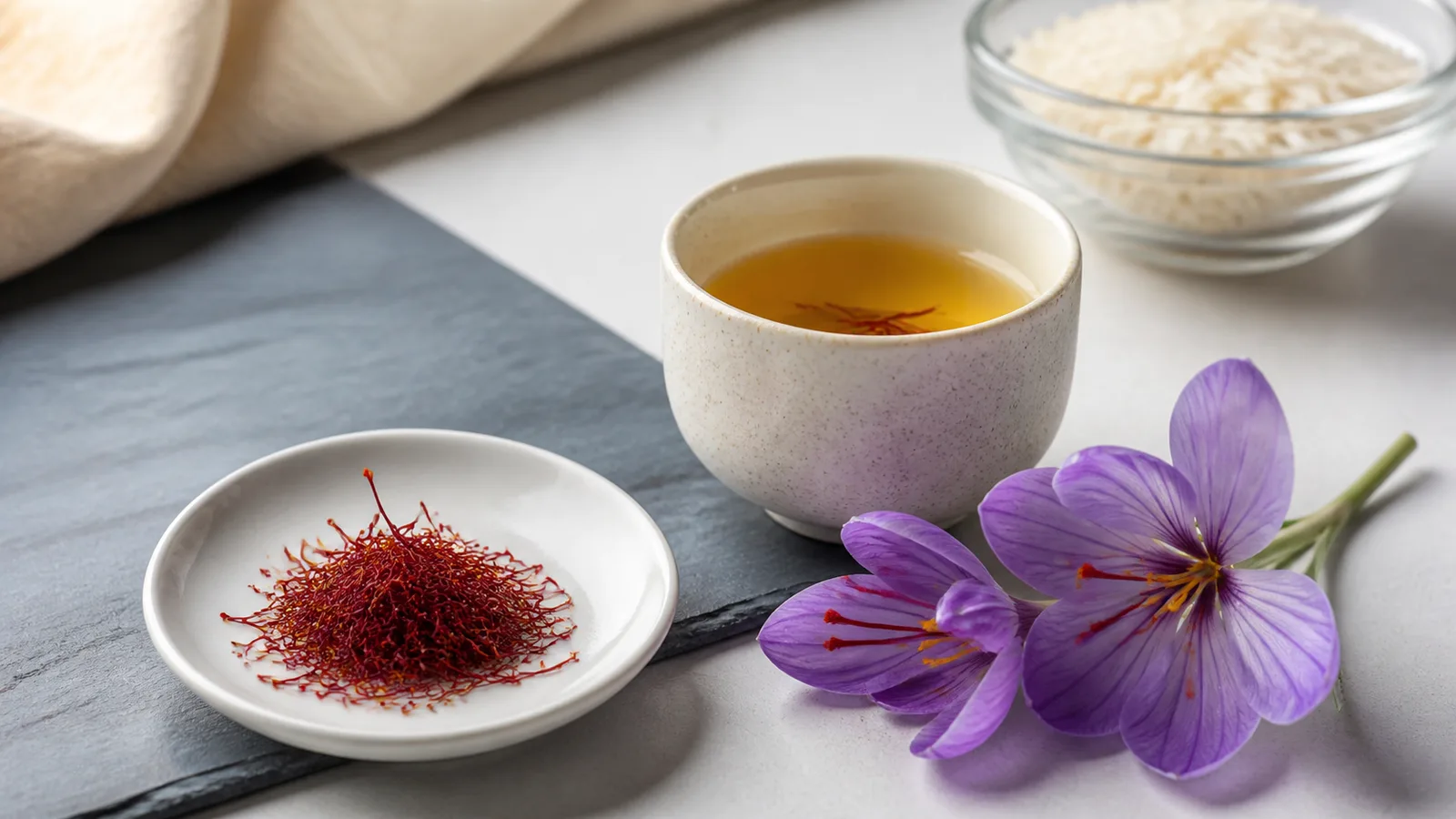
Culinary saffron comes from the dried red stigmas of Crocus sativus. Each purple flower normally carries three stigmas. They are separated from the flowers and dried, work that is still heavily dependent on careful hand labour. The amount of flower material needed for a small weight of finished spice helps explain saffron’s price.
Crocin and related crocins contribute much of the colour, picrocrocin is associated with bitterness and taste, and safranal is an important volatile aroma compound. Laboratory measures of these components help describe a batch, but the presence of a bioactive compound does not by itself prove a health benefit in people.
Is saffron rich in vitamins and minerals?
Nutrient tables calculated per 100 g can make saffron appear rich in manganese, iron, potassium, vitamin C and vitamin B6. A normal recipe uses a tiny fraction of that amount. It is therefore misleading to present saffron as a practical way to correct a vitamin or mineral deficiency, regulate blood sugar or supply enough iron to form blood cells.
Use saffron for flavour and colour. Treat nutrition or deficiency with a balanced diet and professional assessment rather than scaling up an expensive spice to reach a number in a nutrient table.
What human research says about mood
Depression and anxiety are the best-known areas of human saffron research. Meta-analyses of randomised trials have found improvements in some symptom scores with saffron extracts. A 2026 GRADE-assessed review of 34 trials found benefits on self-reported depression and anxiety scales, but not on several clinician-rated scales; heterogeneity was high and the certainty was judged moderate.
An earlier systematic review of 23 studies also reported promising results but identified publication bias and limited geographic diversity. Those limitations matter. Many trials were small, short and conducted with specific extracts; their findings cannot be transferred automatically to any jar of saffron or cup of tea.
Saffron is therefore not an “excellent antidepressant drug,” and it should not replace prescribed treatment on the strength of a blog article. Stopping an antidepressant abruptly can be harmful. A person with persistent low mood, impaired daily function or thoughts of self-harm needs professional help; in an immediate crisis, use the local emergency service.
Memory and neurological claims
Saffron and its constituents have been investigated in laboratory models and small human studies related to cognition. The original article referred to protection from aluminium-related memory loss, but it did not identify a human trial. Evidence from cells or animals can generate a hypothesis; it cannot show that culinary saffron prevents memory loss or neurological disease in a person.
New confusion, progressive memory change or loss of daily function deserves medical assessment. It can have many causes, some of which require prompt treatment. Adding more saffron to food should not delay that evaluation.
Cancer claims require a firm boundary
Crocin, crocetin and saffron extracts have produced interesting results in cell and animal experiments. That does not make saffron an anticancer drug. A substance can affect tumour cells in a laboratory yet fail to reach the same concentration safely in the human body, fail in controlled trials or interact with treatment.
There is no basis in the evidence reviewed here for using saffron to treat cancer or inhibit a tumour. People receiving chemotherapy, radiotherapy, immunotherapy or other cancer care should ask their oncology team before taking a concentrated botanical supplement.
Blood pressure, bleeding and digestion
The old article said saffron “dilutes” blood, lowers blood pressure, causes nosebleeds and improves digestion. That language is too certain. Trials have reported changes in cardiovascular measures, and laboratory work suggests several biological effects, but results depend on preparation and dose. A culinary pinch should not be used to manage hypertension, clotting or a stomach disorder.
Concentrated supplements deserve more caution if you take anticoagulants, antiplatelet medicines, blood-pressure drugs or several medicines together. Do not alter a prescription in response to a supplement claim. Ask a pharmacist or clinician to check the exact product and ingredient list.
Pregnancy and saffron
The original article warned that overuse might cause uterine bleeding or miscarriage, but it did not define a dose or cite evidence. The correct conclusion is more measured: evidence about medicinal saffron use during pregnancy is limited, different exposures cannot be assumed equivalent, and high or concentrated doses should not be self-prescribed.
A 2026 integrative review of saffron in pregnancy described the evidence as limited and inconclusive and reported greater concern with higher doses or occupational exposure. Anyone who is pregnant, trying to conceive or breastfeeding should ask an obstetric clinician before using saffron supplements. That precaution does not mean an ordinary food containing a small amount is proven to cause miscarriage.
Side effects and supplement quality
In food quantities, saffron is generally used without difficulty. Concentrated preparations can cause adverse effects. A 2026 systematic review of human safety evidence found that gastrointestinal complaints were the most frequently reported events and were usually minor and self-limiting; it also called for clinical monitoring with higher-dose or prolonged medicinal use.
- Stop and seek advice for a suspected allergic reaction, persistent vomiting or other unexpected symptoms.
- Keep saffron and extracts away from children, who can consume a concentrated amount quickly.
- Check supplements for a complete ingredient list, standardised amount, lot number and independent quality testing.
- Do not assume “natural” means compatible with pregnancy, surgery or prescription medicine.
- Never confuse culinary Crocus sativus with meadow saffron or autumn crocus (Colchicum), a different and poisonous plant.
How to brew saffron for food
For culinary use, grind a small pinch of threads and steep it in a few tablespoons of hot—not violently boiling—water for about 15 to 20 minutes. Cover the cup to retain aroma, then add the liquid to rice, stews, desserts or dough. This method disperses the colour and flavour without turning a recipe into a supplement dose.
The previous directions used a teaspoon in one glass and suggested one-third teaspoon in a teapot of tea. Those measurements are much larger than many dishes need and were not supported as health doses. Begin with less, because excessive saffron tastes bitter and cannot be removed once added. Our detailed guide explains how to brew saffron for cooking.
A useful way to read saffron health claims
Ask four questions: Was the evidence from people, was the study randomised, what exact extract and dose were tested, and did the outcome matter clinically? Then look for replication, safety reporting and longer follow-up. A colourful compound, traditional use or laboratory mechanism is not a substitute for those steps.
Saffron remains an exceptional culinary ingredient. Its health research is active and sometimes promising, particularly for mood symptoms, but the responsible description is “under study”—not a treatment for cancer, memory loss, blood pressure or depression.