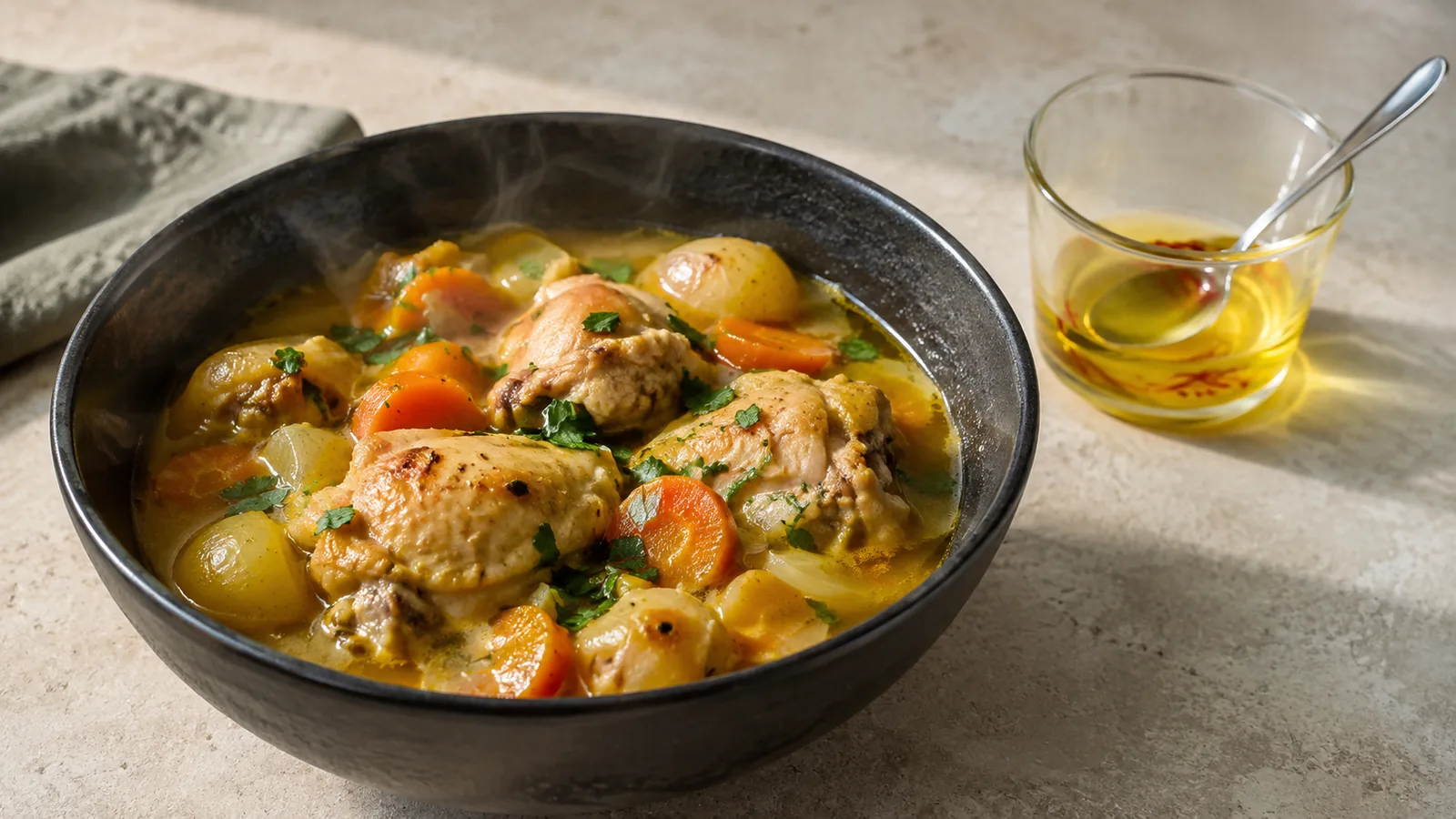
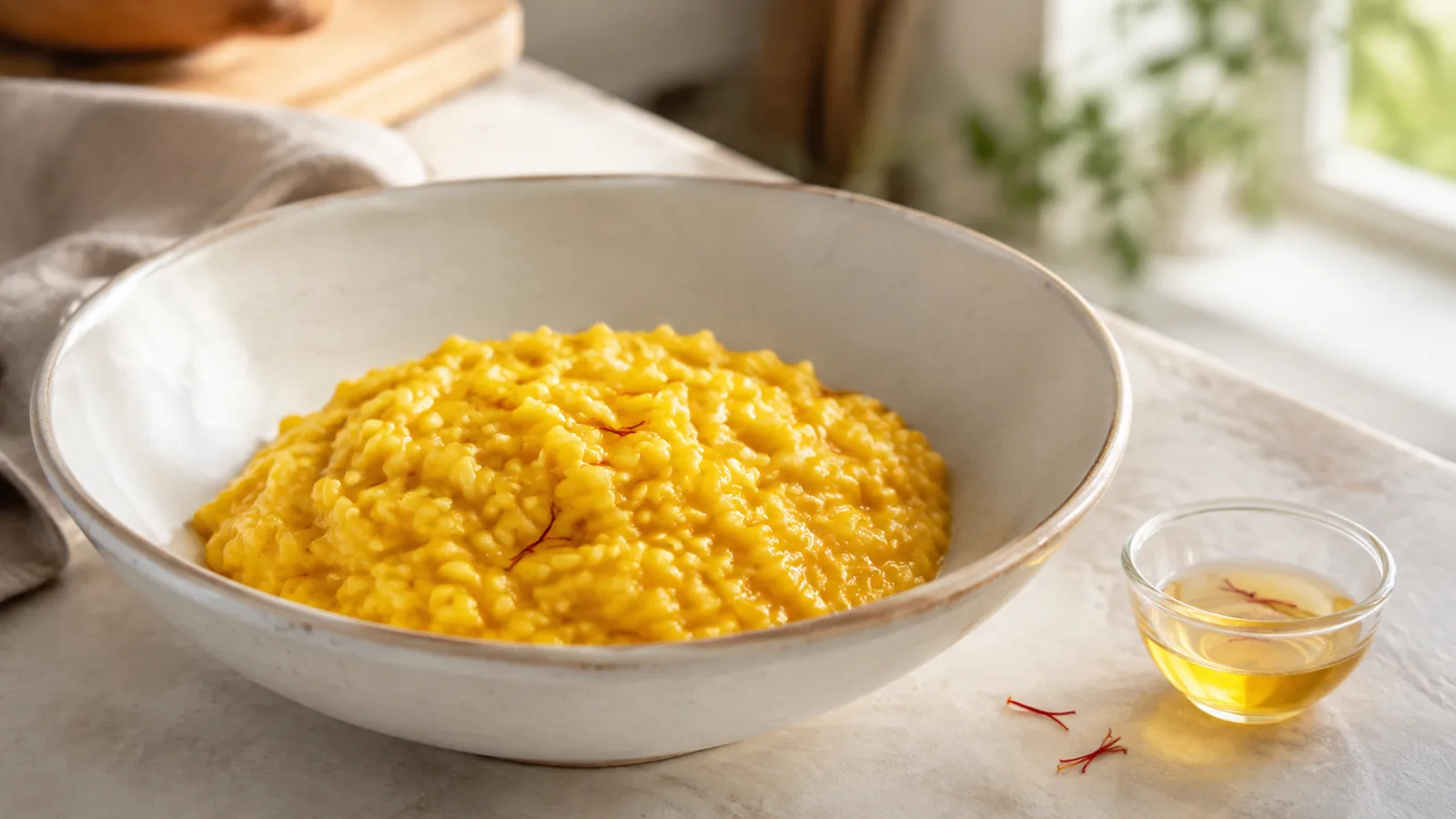
This recipe makes fragrant rice with cardamom and cloves, coloured with a small saffron infusion. The whole spices stay warm and aromatic without overwhelming the rice, while a short rest leaves the grains tender rather than wet.
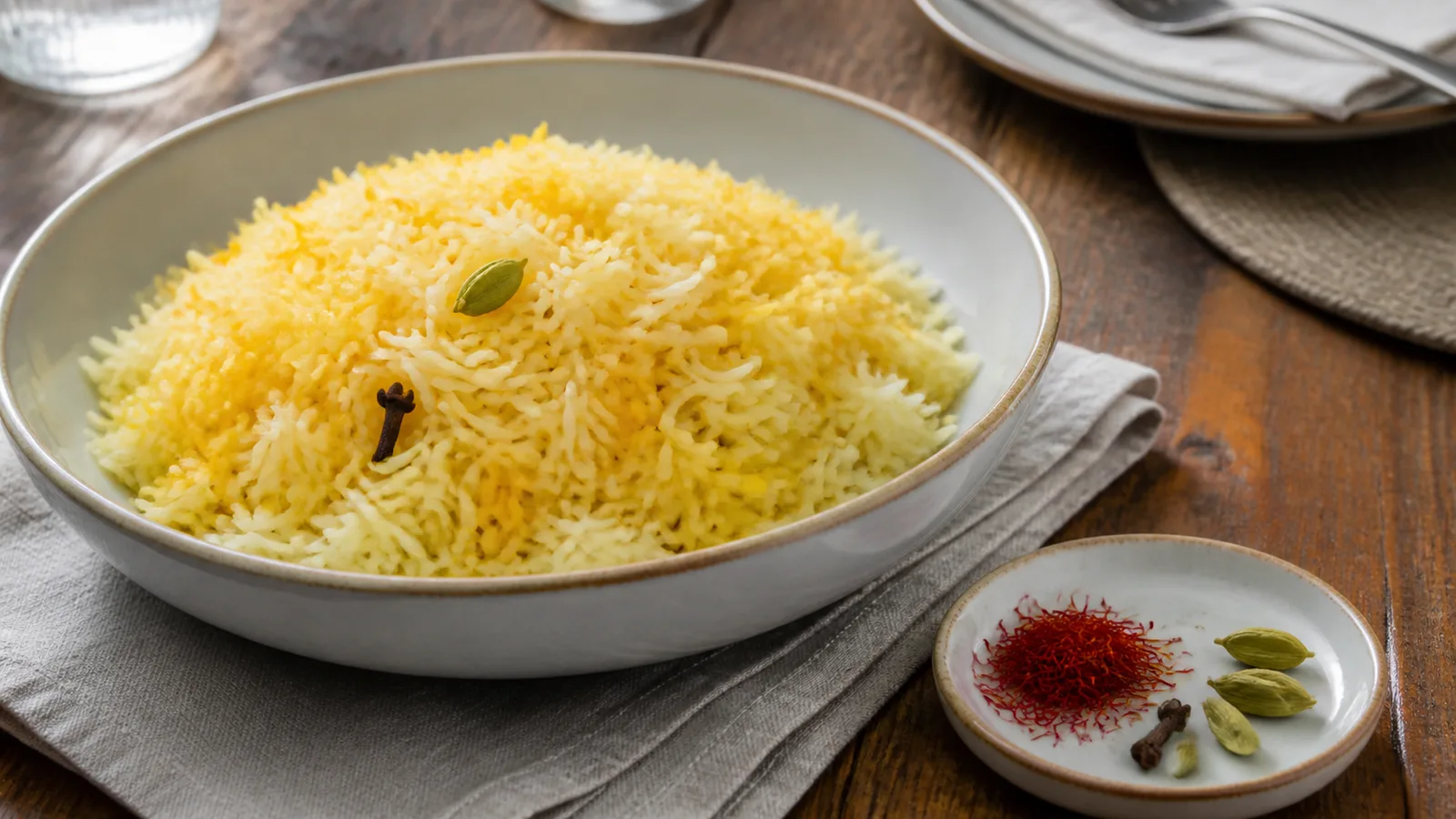
The original recipe for cooking rice with the taste of cardamom cloves and saffron had the right core ingredients, but its translated method left several practical questions unanswered. This version keeps the 200 g rice, chicken broth, four cardamom pods, two cloves, saffron, salt and water, then gives them a reliable one-pot sequence.
Ingredients for cardamom cloves and saffron rice
Serves 2–3 as a side dish.
- 200 g basmati rice, approximately 1 cup;
- 3 tablespoons unsalted chicken broth, not concentrated bouillon;
- 4 green cardamom pods, lightly cracked;
- 2 whole cloves;
- ¼ teaspoon finely ground saffron;
- 2 cups water in total, divided;
- ½ teaspoon salt, optional and adjustable; and
- 1 tablespoon neutral oil or butter.
Rice brands absorb water differently. Keep a few tablespoons of hot water nearby during the first attempt, but do not add it unless the grains are still firm after the measured liquid has gone.
How to cook rice with cloves and cardamom
1. Rinse and soak the rice
Rinse the rice in several changes of cool water until the water is much less cloudy. Cover it with fresh water and soak for 30 minutes. The old method suggested a few hours; that also works for sturdy basmati, but a shorter soak is enough for this small absorption-style batch. Drain well before cooking.
2. Bloom the saffron
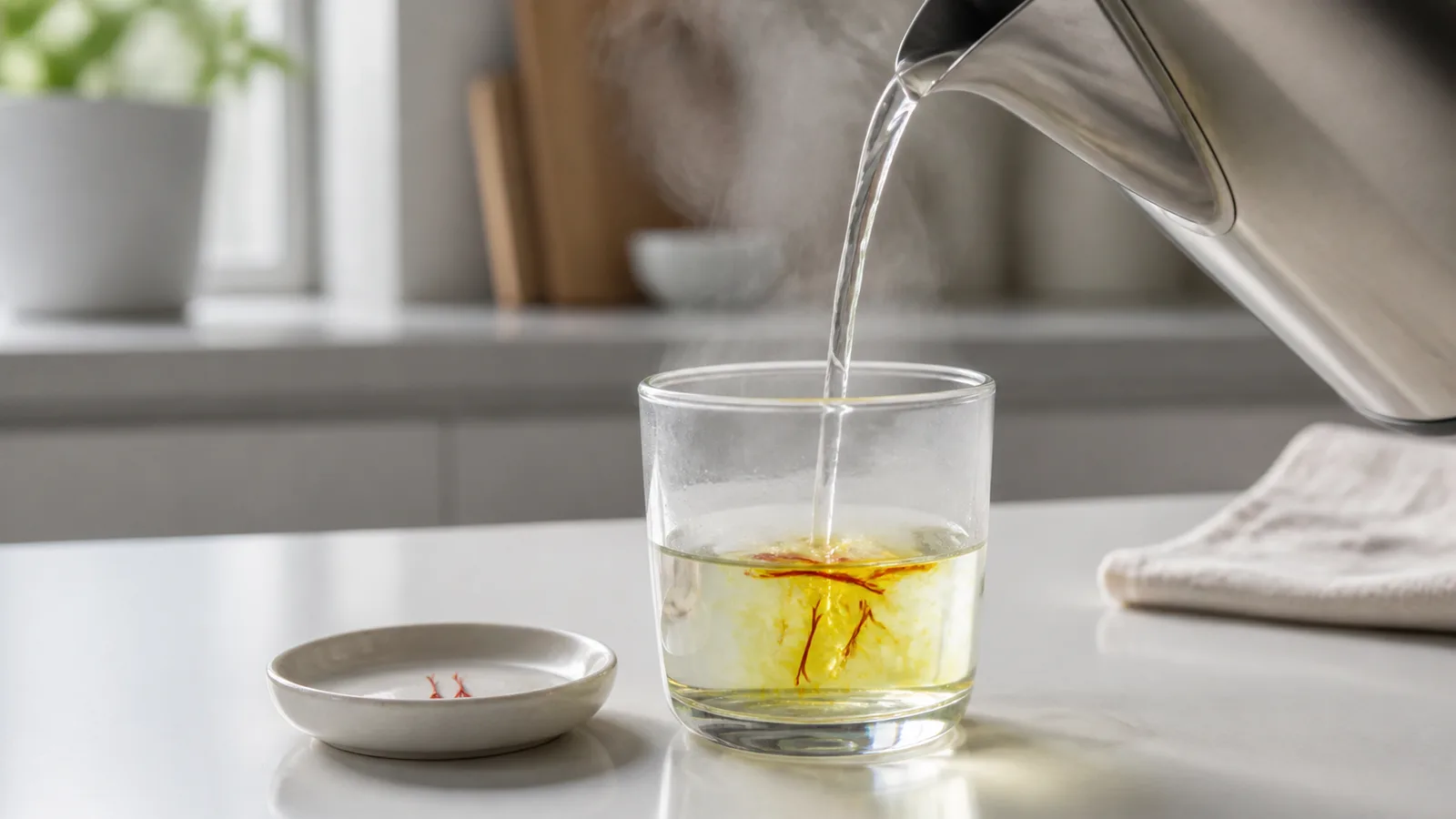
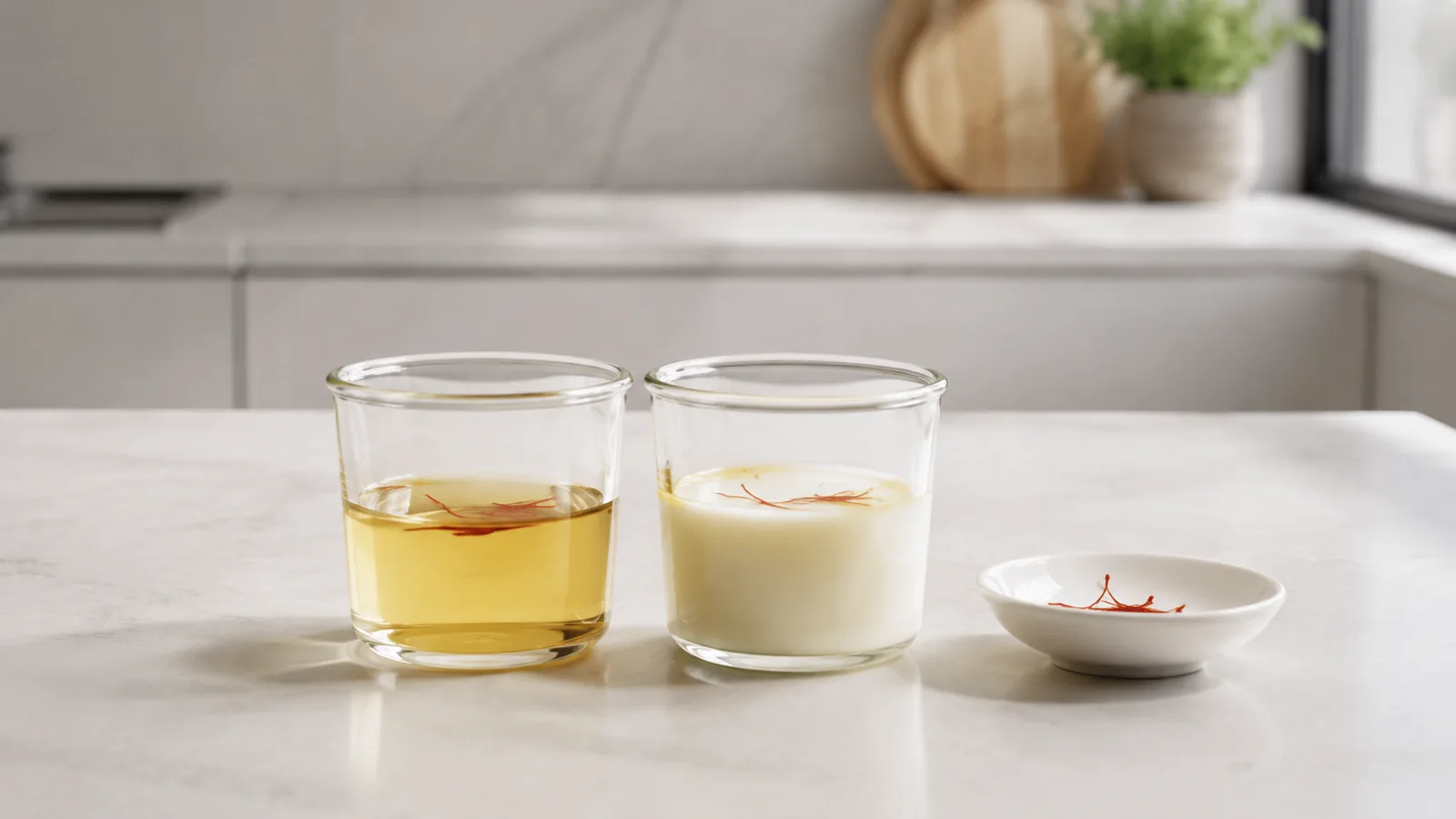
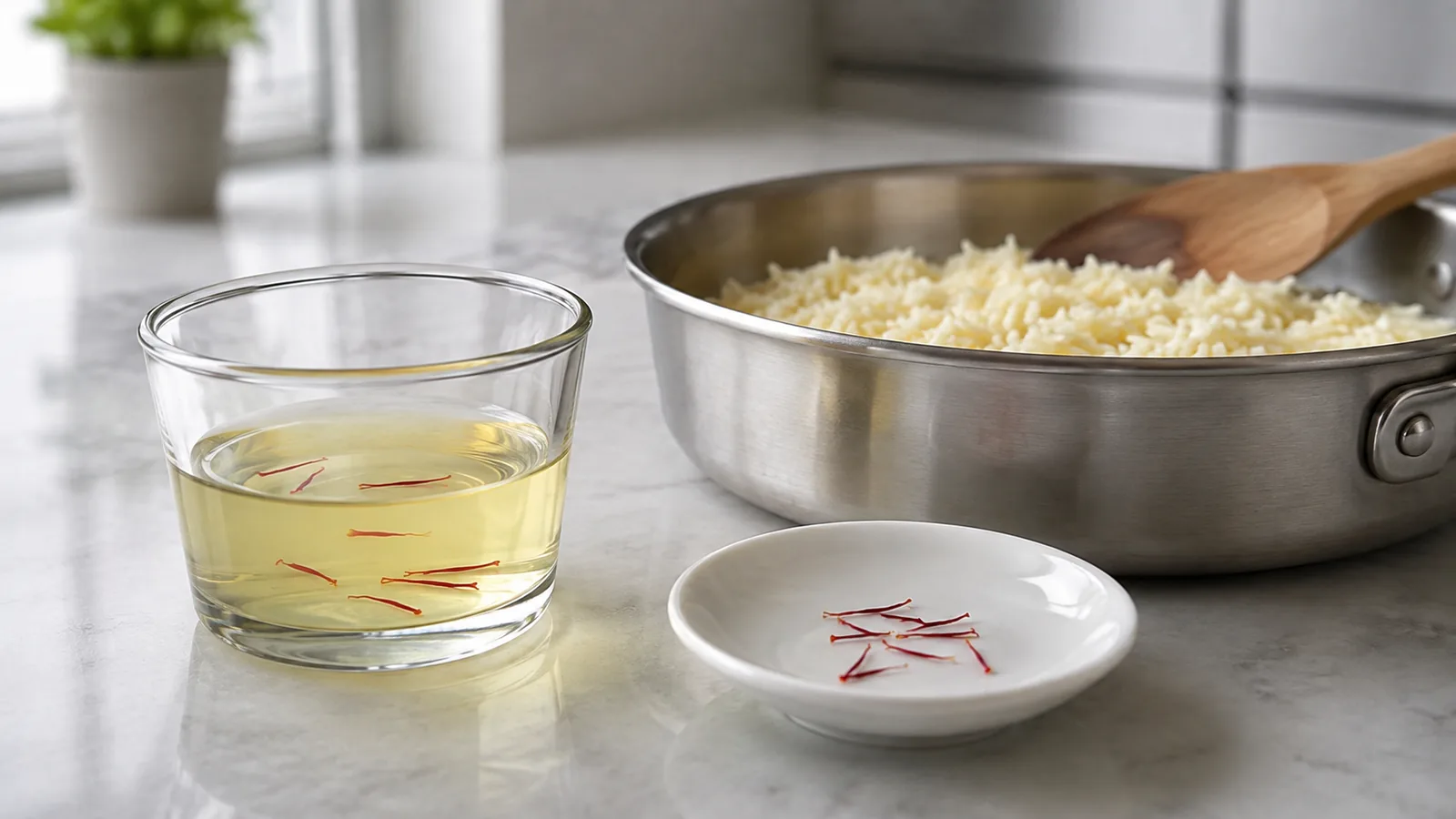
Take 2 tablespoons from the measured water, heat it until hot but not aggressively boiling, and pour it over the ground saffron. Leave it for 10 minutes. Blooming distributes the colour and aroma more evenly than scattering dry powder over the pot. For a deeper look at this step, see how to add saffron to rice.
3. Warm the cardamom and cloves
Put the 3 tablespoons of unsalted chicken broth in a small saucepan with the cracked cardamom pods and whole cloves. Bring it just to a simmer and warm for one minute, as in the original recipe. This starts the infusion without grinding the spices into the rice.
4. Cook until the water is absorbed
Place the drained rice in a heavy saucepan. Add the spiced broth, saffron infusion, remaining measured water, oil or butter, and salt if using. Bring to a boil over medium heat. Stir once so nothing catches, then lower the heat, cover tightly and cook for 12–15 minutes.
When the liquid has been absorbed, taste a grain. If the centre is still chalky, add 1–2 tablespoons of hot water, cover and cook for another 2–3 minutes. The old instruction to leave this small absorption pot for one hour would likely overcook the rice or scorch the bottom, so it has been corrected.
5. Rest, remove the whole spices and serve
Turn off the heat and leave the covered pot undisturbed for 10 minutes. Lift out the cardamom pods and cloves, then fluff gently with a fork. Serve hot with grilled vegetables, chicken, fish or a stew whose sauce is not heavily spiced.
How strong should the clove flavour be?
Clove is more forceful than cardamom or saffron. Two whole cloves give this quantity of rice a noticeable but restrained warmth. Crushing them would release flavour faster and can make the dish medicinal or bitter, so keep them whole and remove them before serving.
If this spice is unfamiliar, start with one clove in rice rather than two. You may also see the dish described online as “clove rice,” “cloves rice,” “cloves in rice” or simply “rice with cloves.” Those phrases point to the same practical question: use a small number of whole cloves and give them time to infuse.
What does saffron taste like in rice?
Saffron gives rice a warm hay-like, floral aroma with a faint earthy bitterness. It should not taste sugary, hot or aggressively perfumed. In this recipe, cardamom adds a fresh citrus-eucalyptus note and cloves provide darker warmth, so the saffron is part of a layered aroma rather than the only flavour.
Using much more than ¼ teaspoon does not automatically improve the result. The better route is to grind the threads finely, bloom them in a small amount of hot water and spread that infusion throughout the pot.
Using chicken broth without making the rice salty
The “3 soup spoons of chicken juice” in the old translation is best treated as 3 tablespoons of unsalted chicken broth. It contributes a mild savoury background. A stock cube or concentrated paste can contain much more salt, so it should not be substituted spoon for spoon.
For a lower-sodium version, use unsalted broth and omit the added ½ teaspoon of salt. Spices can make reduced-salt food more interesting, but this dish does not treat high blood pressure. The FDA’s sodium guidance recommends comparing Nutrition Facts labels and notes a Daily Value below 2,300 mg for adults and children aged 14 or older.
Troubleshooting this clove rice
- Rice is hard: add 1–2 tablespoons of hot water, cover and continue on low heat for a few minutes.
- Rice is wet: remove the lid for 1–2 minutes over very low heat, then rest it covered.
- Clove dominates: use one whole clove next time and do not crack or grind it.
- Cardamom is barely noticeable: crack the pods enough to expose the seeds, but leave the seeds inside for easy removal.
- Saffron colour is patchy: grind and bloom it before adding it to the pot.
This is how to cook a small pot of rice with cardamom and cloves without losing the saffron underneath them: control the whole spices, measure the liquid, and give the finished rice a proper rest.